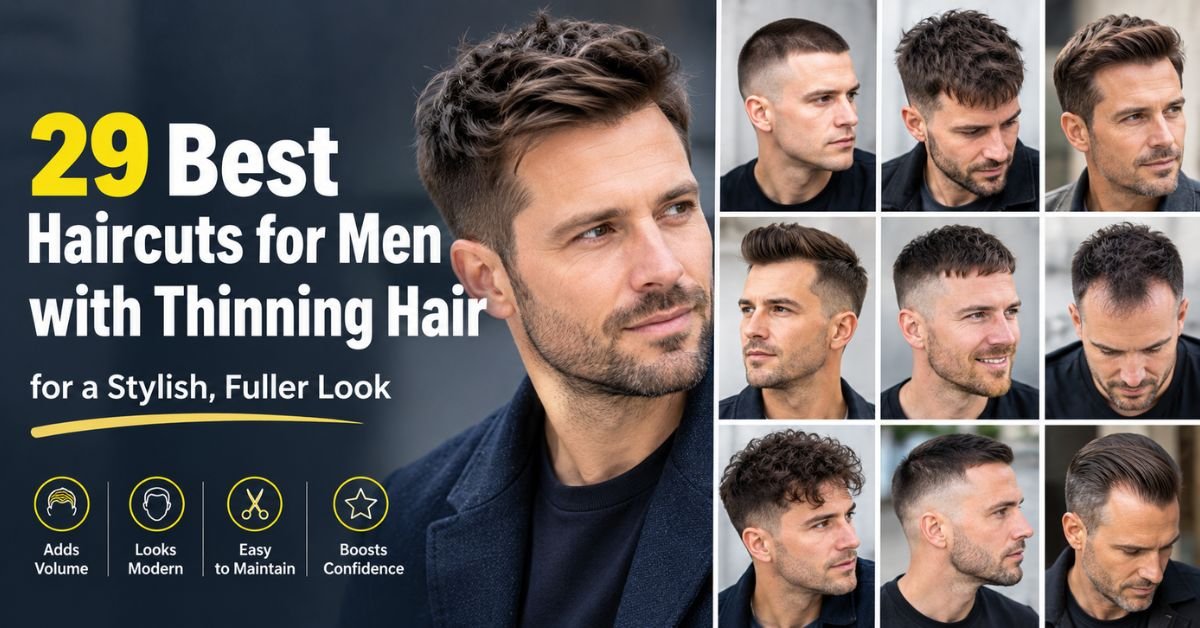
29 Best Haircuts for Men with Thinning Hair for a Stylish, Fuller Look
Thinning hair does not mean you are stuck with a boring style. It just means you need to choose smarter. This guide walks you through the best haircuts for thinning hair, and it explains why each one works. You will find short cuts, textured styles, fades, and even a few longer options that hold up well.
Every man’s hairline changes with age. Some men notice crown thinning. Others see it at the front, near the hairline. A few notice sparse hair all over the scalp. Whatever your pattern, this list of haircuts for thinning hair men has something that fits. We will also cover styling, products, and what to say to your barber, so you leave the chair happy every time.
What Is Thinning Hair in Men?
Thinning hair happens when hair density drops over time. You had more hair before. Now you have less. This is different from fine hair, which means each strand is naturally thin. Many men deal with both thin hair and thinning hair at once, especially after age 40. The main cause is a hormone called DHT. It shrinks hair follicles slowly, year after year. This process is called androgenetic alopecia, and it affects roughly half of all men by age 50.
Thinning shows up in different patterns. Some men get a receding hairline. Others notice crown thinning at the back of the head. Some see scalp visibility across the whole scalp, which doctors call diffuse thinning. Knowing your pattern matters. It decides which haircuts for a receding hairline will work, and which ones will not. A cut that hides front thinning may do nothing for a thin crown. The right hairstyles for men with thinning hair always start with an honest look at your own pattern.
28 Best Haircuts for Men with Thinning Hair
This is the full list of haircuts for men with thin hair that actually work. Each style below adds hair volume, hides scalp visibility, or builds natural volume in a different way. Some use hair texture to trick the eye. Others use length and shape to add hair coverage. Read through all 27, then match one to your hair type and thinning pattern using the sections further down.
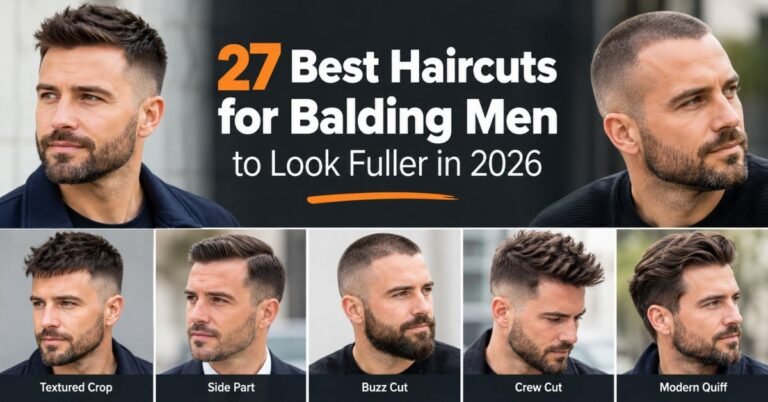
Read More: 27 Best Haircuts for Balding Men to Look Fuller in 2026
Buzz Cut
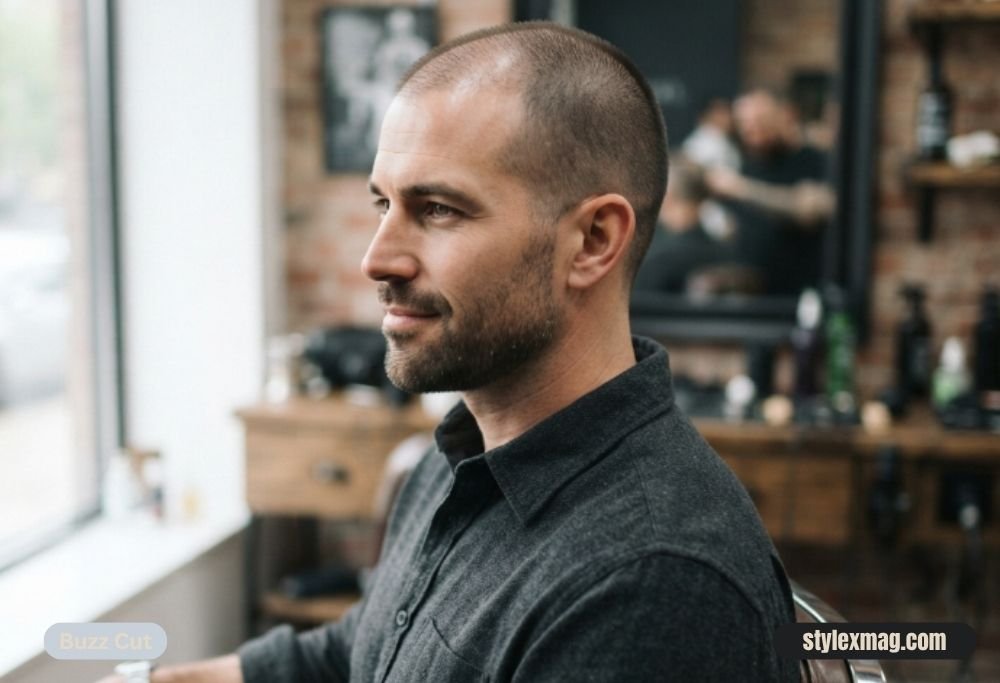
The buzz cut is the simplest short haircut on this list. Clippers cut the whole head to one even length, usually a number 2 or 3 guard. There is no length difference between thick spots and thin spots, so the whole head looks the same. This is one of the best short haircuts for thinning hair because it needs almost no styling. Pair it with stubble for a stronger look. Trim it every one to two weeks to keep it sharp.
Crew Cut
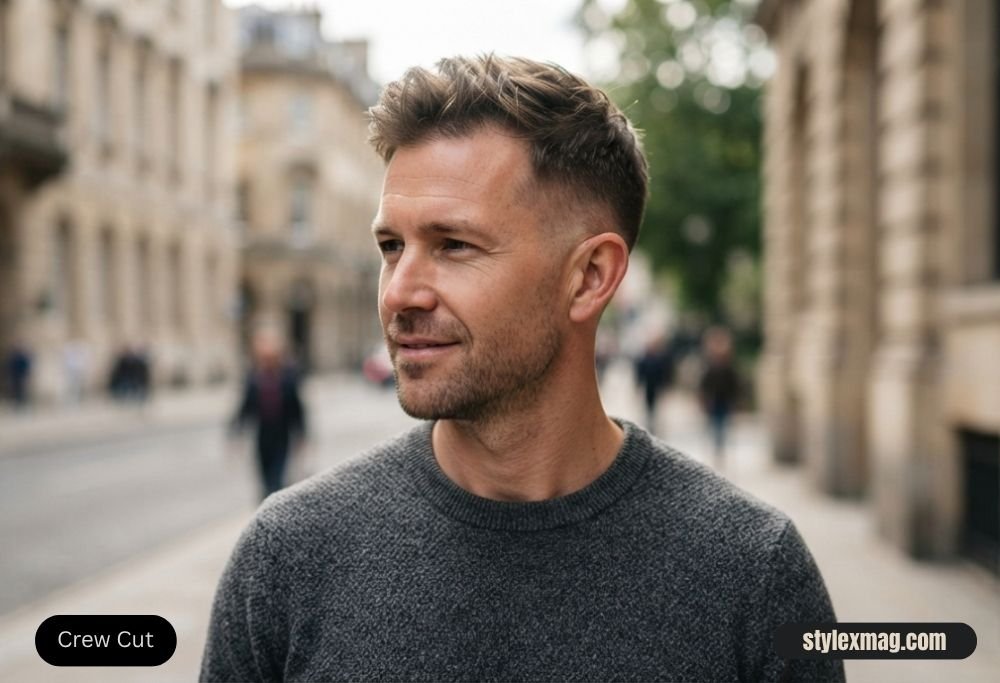
The crew cut is longer at the front and shorter near the crown. This puts more hair exactly where thinning often starts. It is a classic among haircuts for thinning hair men, and it works at any age. Older men especially like this cut because it looks neat without trying too hard. A light matte paste on the front section is all you need. Trim every three to four weeks.
Caesar Cut
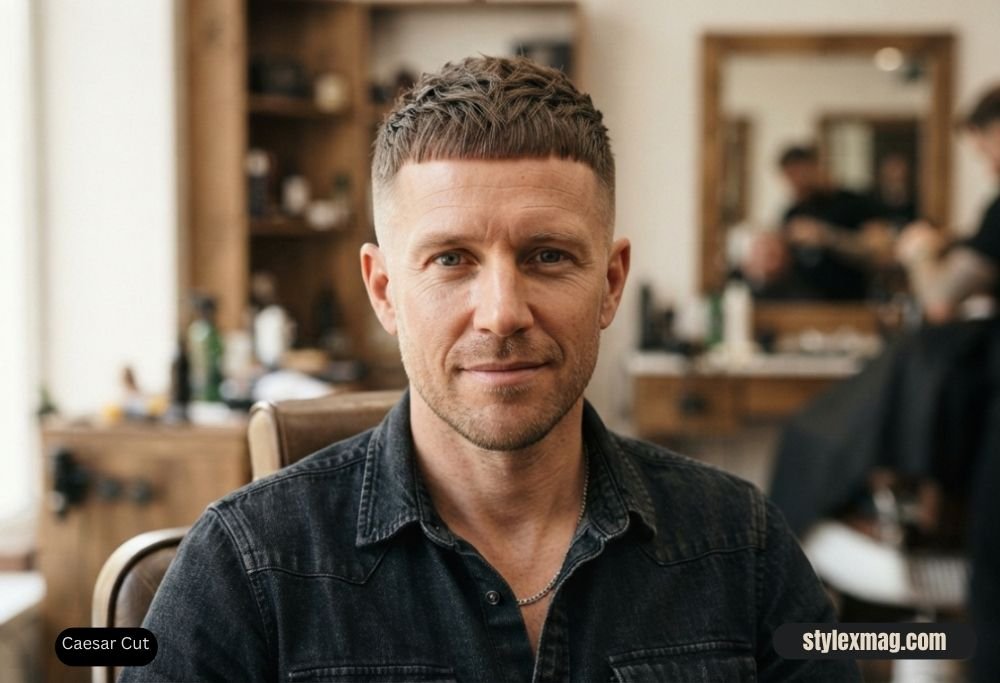
The Caesar cut has a short, blunt fringe pushed forward, paired with a low fade on the sides. The fringe line covers the forehead and drapes down toward the crown. This makes it one of the strongest haircuts for a receding hairline, since it hides thinning at the front in one simple move. Push styling cream forward and let it sit naturally. Trim every three to four weeks.
Read More: Oblong Face Shape Haircuts for Men: 20 Best Styles for 2026
French Crop
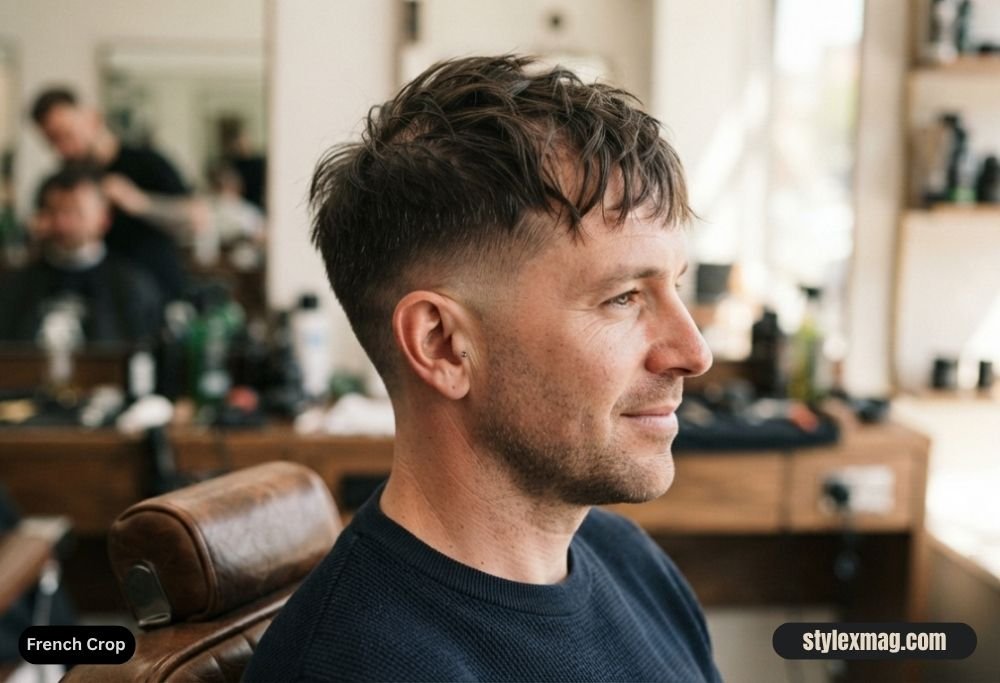
The French crop is a heavier version of the Caesar, with a straight fringe and a tight fade on the sides. It is bolder and more structured. Straight fringe lines create a clean edge that hides thinning underneath. This is a strong pick among modern haircuts for thinning hair because it looks current without being extreme. Blow-dry the fringe forward on low heat. Trim every three to four weeks.
Textured Crop

The textured crop is short and choppy on top, with a fade or taper on the sides. Barbers recommend this one more than almost any other cut for thin hair. The choppy layers point in different directions, which fills visual gaps between thin spots. It is easily one of the best haircuts for thinning hair available right now. Use texture powder at the roots for extra lift. Trim every three to four weeks.
Textured Fringe

A textured fringe falls forward and covers hairline thinning directly. Short, uneven layers create movement, and the eye follows that movement toward your face instead of your scalp. This is one of the best textured haircuts for thinning hair if your front hairline is your main concern. Blow-dry forward with your fingers, then use texture powder to hold it. Trim every three to four weeks.
Short Scissor Cut
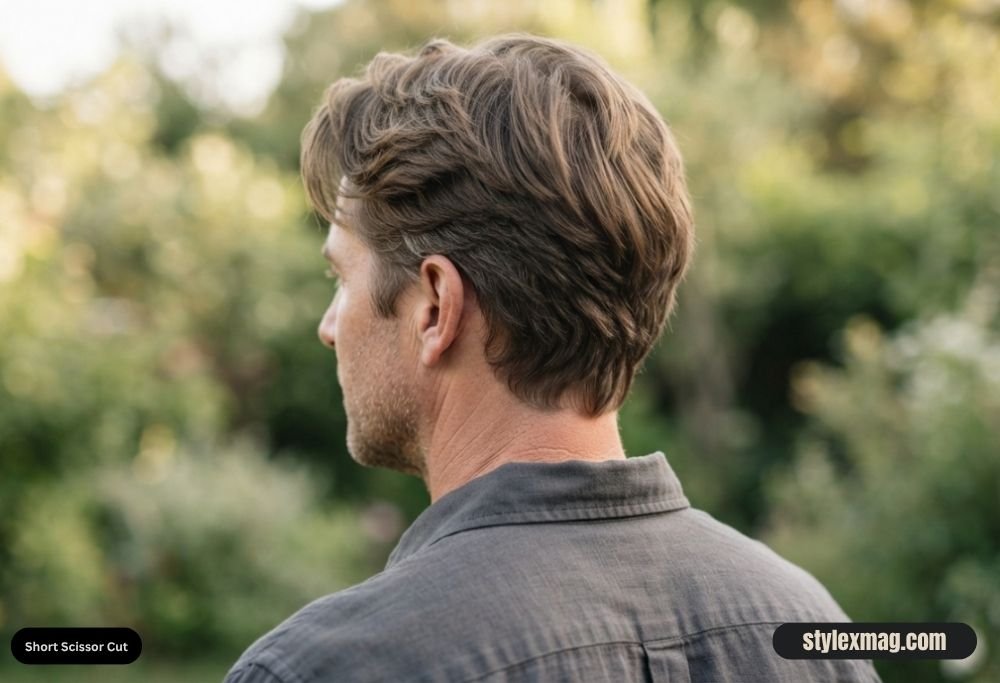
A scissor cut uses no clippers at all. Every cut is made with shears, which gives a softer finish than a clipper cut. It also grows out more gently, so you avoid that harsh two-week stage. This is a great short haircut for men who want their thin hair to look natural, not sharp or edgy. Use a small amount of lightweight clay to finish. Trim every four to five weeks.
Read More: 26 Short Curly Hairstyles for Men That Look Great in 2026
Ivy League

The Ivy League is a slightly longer version of the crew cut. It leaves enough length on top to part or sweep. This gives you more styling choices without needing much hair density to begin with. It works well for professional settings and suits men over 40 especially well. A light pomade and a natural part is all it needs. Trim every three to four weeks.
Side Part
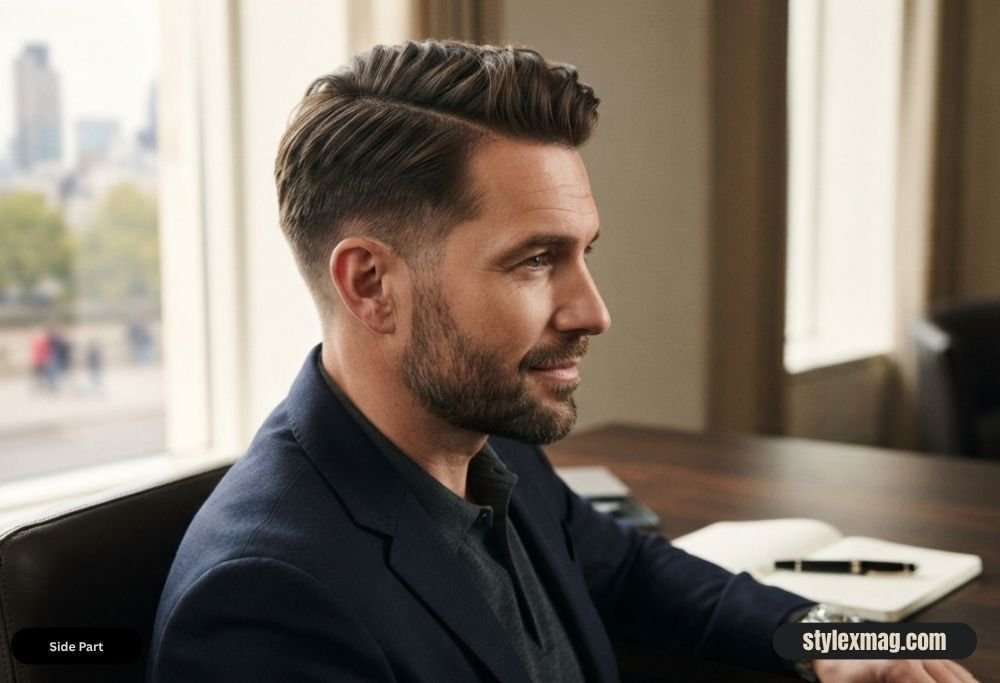
A side part is a classic style with hair combed and swept to one side. The direction of the sweep can cover thinning on one side of the head. It remains one of the most reliable hairstyles for thin hair men because it works in almost any professional setting. Apply pomade to damp hair, comb it into place, then let it air dry. Trim every four to five weeks.
Business Cut

The business cut sits between a crew cut and a side part. Sides are short and neat, and the top has just enough length to comb into place. This cut looks polished for the office, yet it still hides thin patches well. It is a safe, low-fuss choice among haircuts for thin hair men who need something reliable every single day. A small amount of cream keeps it controlled. Trim every three to four weeks.
Regulation Cut
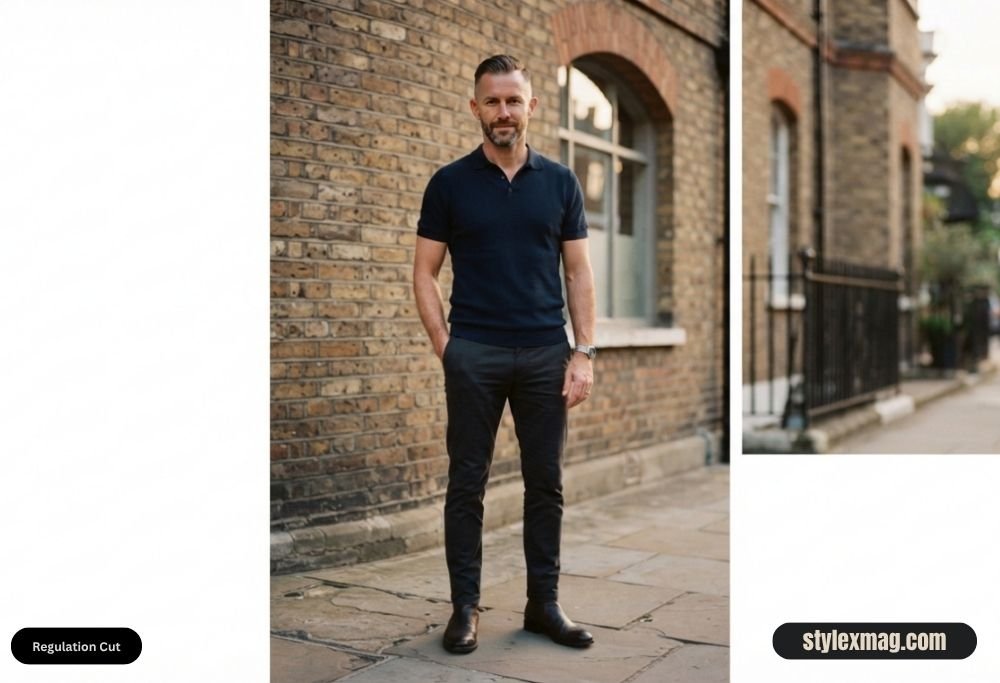
The regulation cut is inspired by military styles. Sides stay very short, and the top keeps a bit more length than a buzz cut. It is sharper and more structured than a crew cut. Many men with sparse hair on the sides like this cut, since short sides do not show thinning the way longer sides would. It needs almost no product. Trim every two to three weeks.
Side-Swept Fringe

A side-swept fringe moves diagonally across the forehead instead of falling straight down. This diagonal line breaks up thinning at the temples in a natural way. It suits men with a receding hairline on one side more than the other. Style it with a light cream, brushing the fringe across rather than forward. Trim every three to four weeks.
Angular Fringe
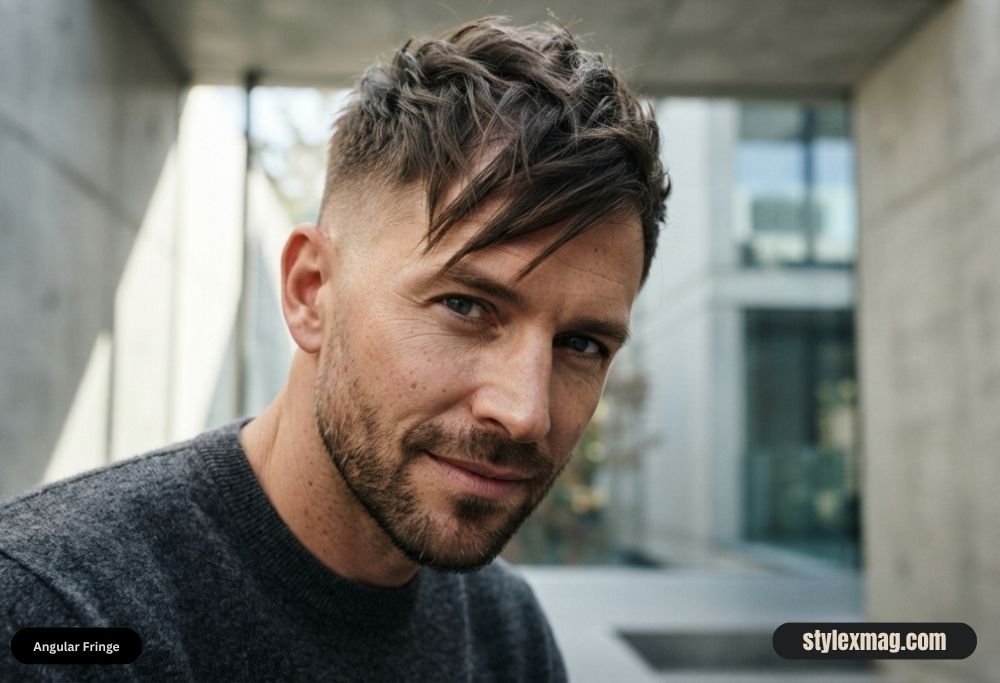
The angular fringe is cut at a sharp diagonal, giving a bold, modern shape. The uneven edge draws attention to the shape of the cut, not the scalp underneath it. This works well for men who want something a little edgier among hairstyles for men with thinning hair. Use sea salt spray for texture before shaping the fringe with your fingers. Trim every three to four weeks.
Choppy Fringe
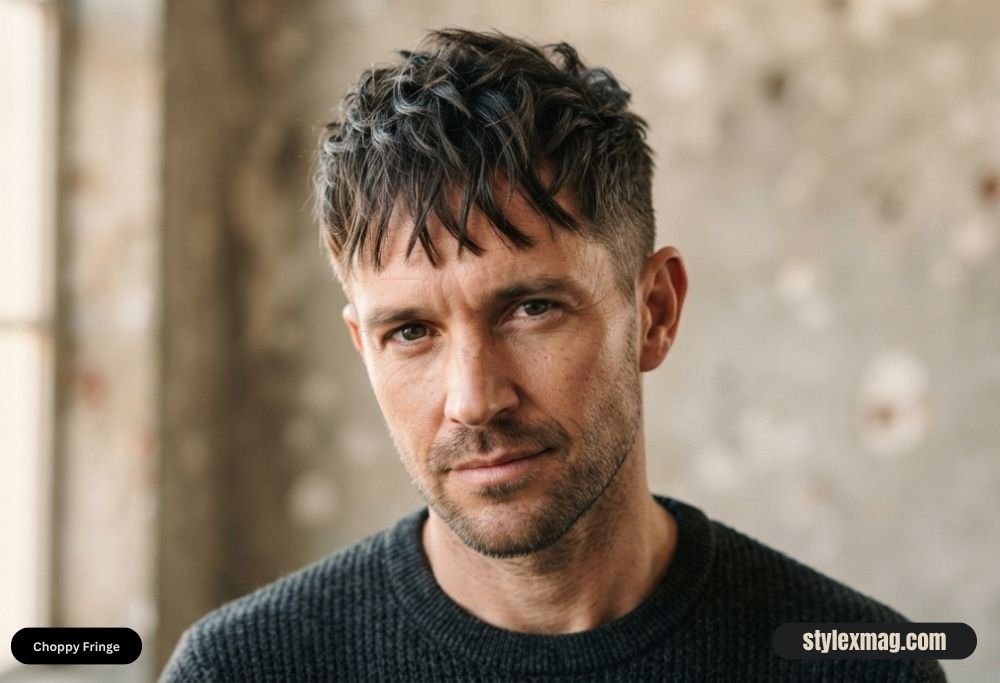
A choppy fringe falls forward with uneven, piece-y ends. The broken lines create constant movement, and movement is one of the best tools against scalp visibility. It has an edgy look without going too far. Sea salt spray on damp hair works best here, finger-styled into loose pieces. Trim every three to four weeks.
Long Fringe
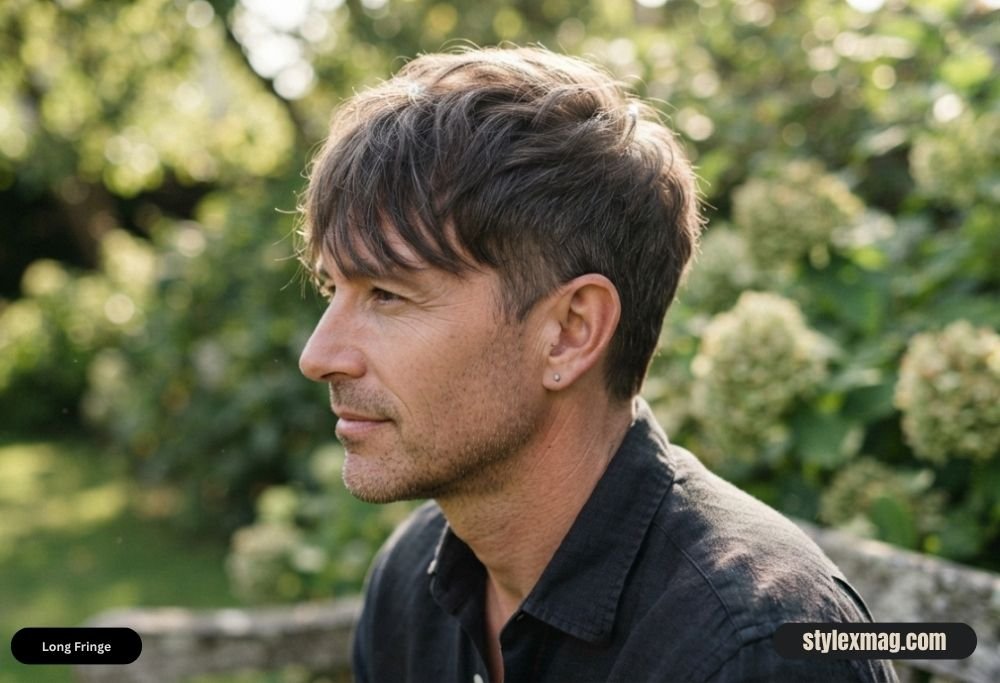
A long fringe covers more of the forehead than a short one. It only works well during early-stage thinning, when there is still enough hair to support the extra length. If overdone, a long fringe can fall flat and expose more scalp than it hides. Keep the rest of the head short to balance the length up front. Trim every three to four weeks.
Classic Quiff
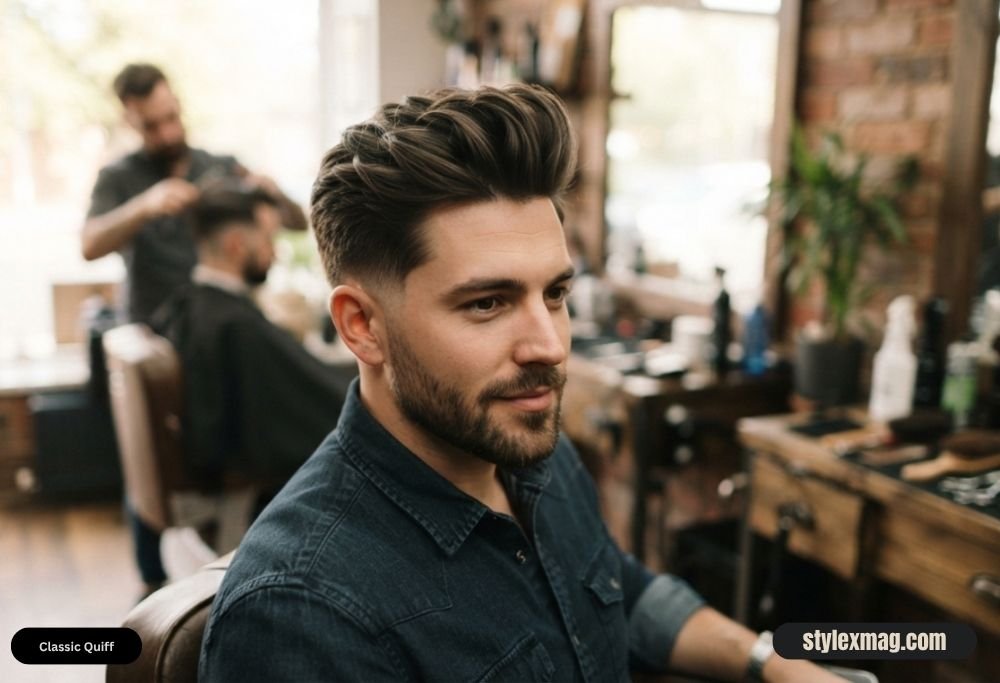
The classic quiff lifts the front section upward with volume, while the sides stay short. Height at the front pulls the eye up and away from thinning below it. It needs medium density to hold its shape properly. This is one of the more stylish volume-boosting haircuts for men, especially for those who still have decent hair up front. Blow-dry upward with a round brush. Trim every three to four weeks.
Faux Hawk
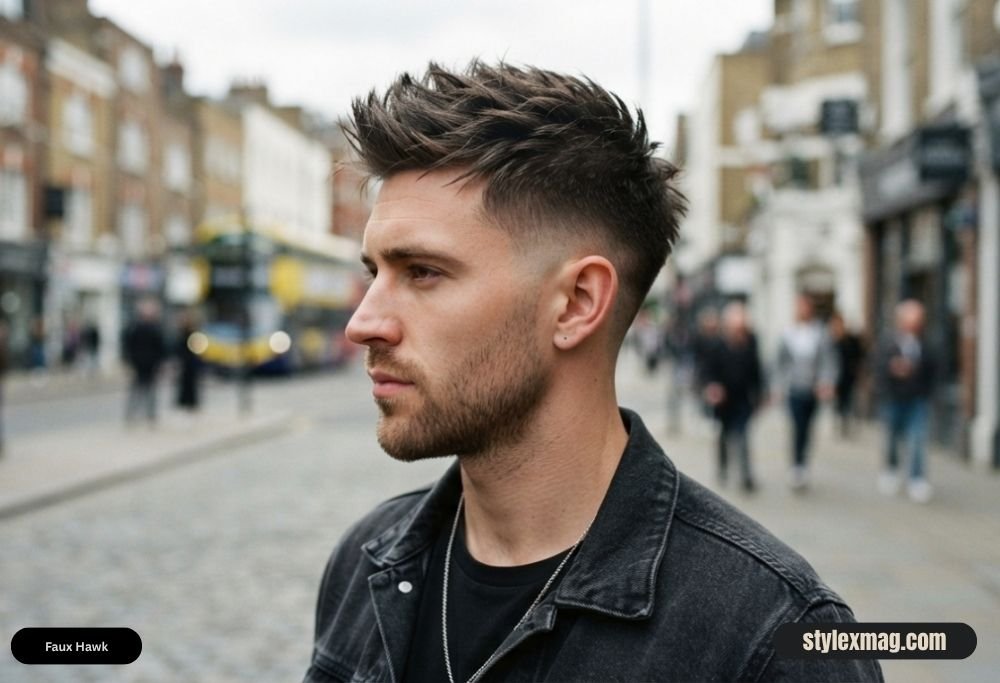
The faux hawk builds height down the center of the head, tapering out toward the sides. It is bolder than a quiff, and it works well for men who want a strong style statement. The central height creates a clear illusion of hair density even when the sides are thinning. Use a strong-hold paste to lift the center section. Trim every three to four weeks.
Spiky Haircut
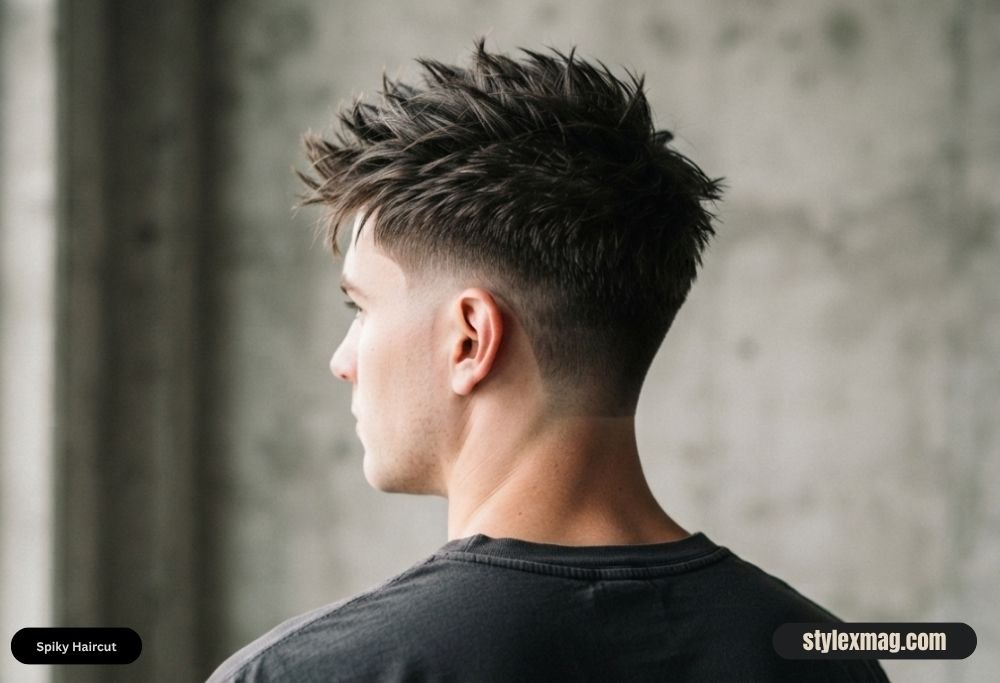
A spiky haircut uses short, layered pieces styled upward into small peaks. It adds both height and texture at once, which shrinks the look of thin patches. Keep this one subtle after age 40, since sharp spikes can look dated. A light matte wax on the tips only gives a clean, controlled finish. Trim every three to four weeks.
Slicked-Back Hair
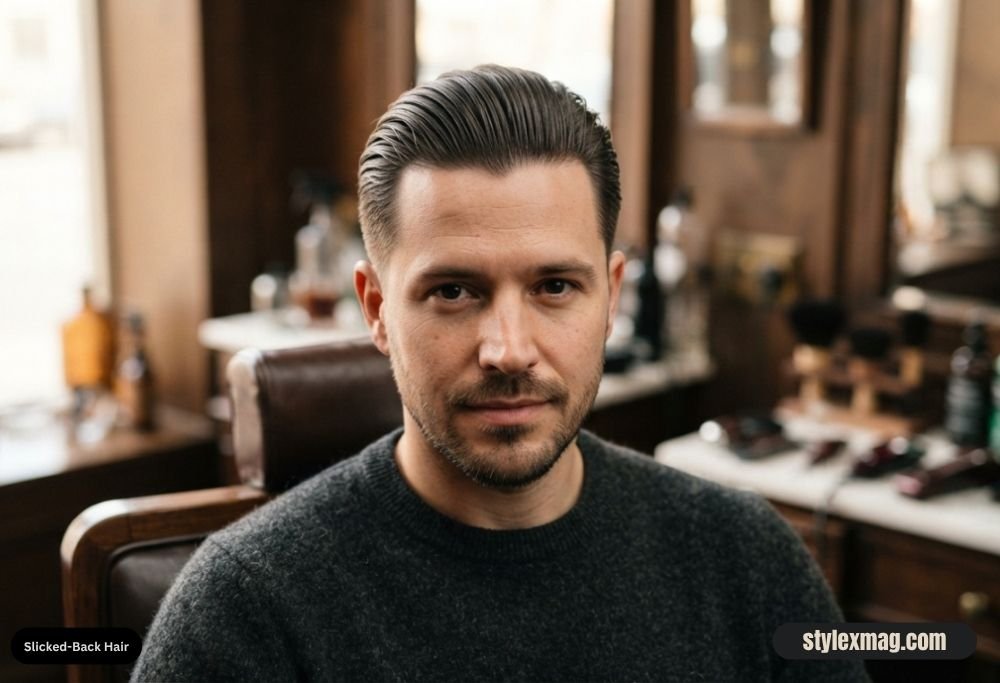
Slicked-back hair sweeps the whole top backward with a dry, matte finish. This only works during early thinning, when the front still has enough coverage to sweep back smoothly. Shine is the enemy here. A glossy pomade will separate thin strands and expose the scalp between them. Use a matte product only, applied to damp hair. Trim every four to five weeks.
Pompadour
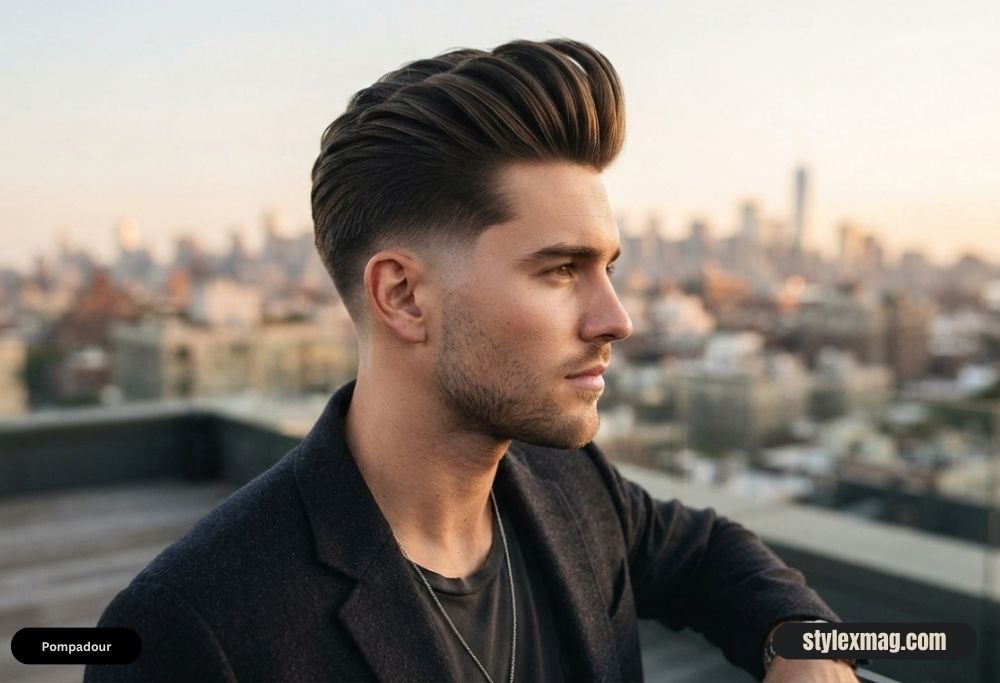
The pompadour lifts hair high at the front and sweeps it back with real volume. It is one of the boldest hairstyles that add volume to thin hair, but it needs strong product and decent density to hold its shape all day. A strong-hold cream or paste, blow-dried while lifting the roots, gives the best result. Trim every three to four weeks.
Messy Layered Cut

A messy layered cut uses uneven layers all over the top for a relaxed, natural look. The broken layers create texture in every direction, hiding thin spots without looking too structured. This is a good pick among low-maintenance haircuts for thinning hair, since it does not need daily precision styling. Scrunch in a light cream while the hair is still damp. Trim every four to five weeks.
Wavy Shag

The wavy shag is a layered, medium-length cut that only works well on wavy or curly hair. Natural wave adds body that straight hair cannot fake on its own. If your hair is straight and thin, skip this one, since it will likely fall flat. Sea salt spray and air drying bring out the wave. Trim every five to six weeks.
Bro Flow

Bro flow is a medium-length style with a natural bend, swept back off the face. Constant movement in the hair keeps the scalp from showing through, but it needs decent overall density to succeed. If your crown or front is already quite thin, this style will expose more than it hides. A lightweight cream gives flexible hold. Trim every five to six weeks.
Messy Textured Medium Cut
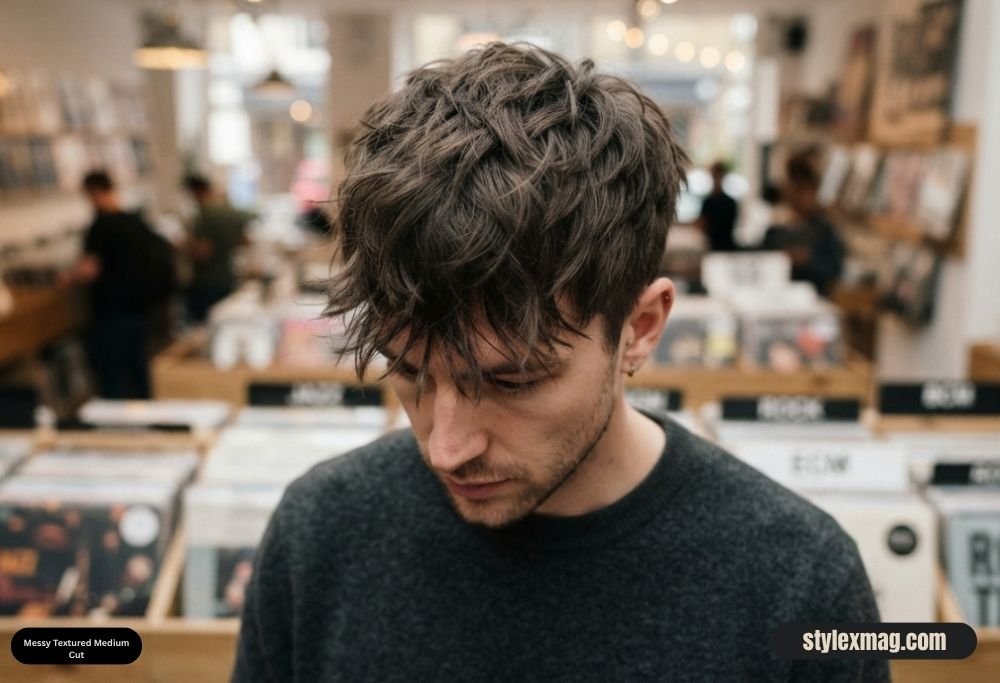
This cut keeps medium length on top with heavy texturizing throughout. It suits men who are not ready to go short, but still want thinning to be less obvious. The texturizing work is what makes it succeed, since flat medium hair would expose the scalp immediately. Use texture powder daily to keep the volume alive. Trim every four to five weeks.
Curly Fringe
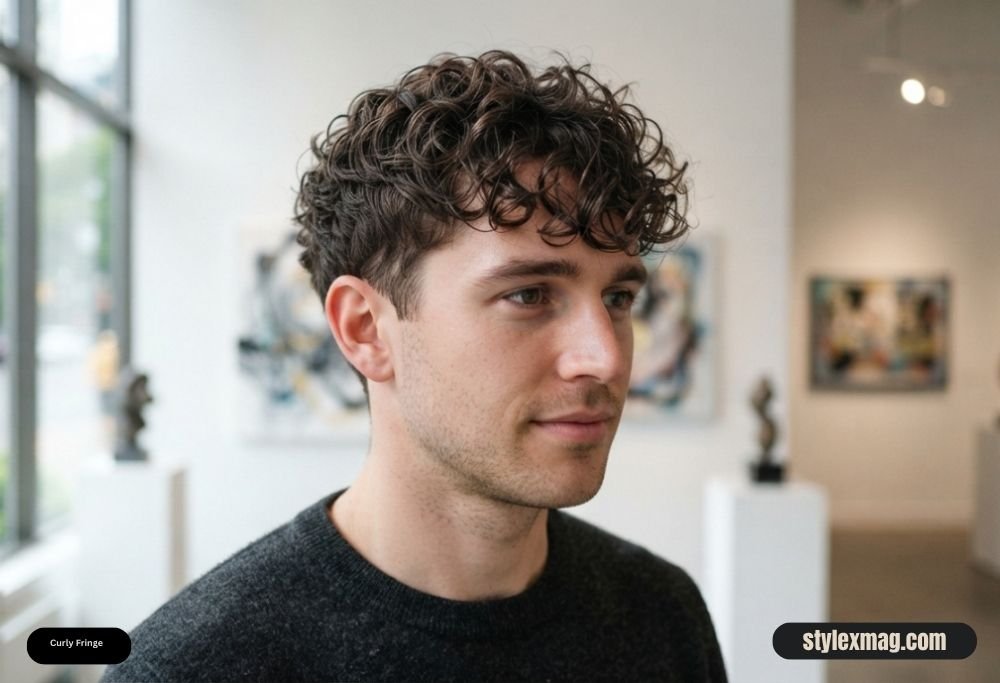
A curly fringe relies entirely on natural curl pattern to build volume at the front. Curls naturally lift away from the scalp, so this look works especially well for men with curly texture and thinning at the hairline. It is one of the more forgiving thinning hair hairstyles for curly-haired men specifically. A curl cream on damp hair, air-dried, gives the best shape. Trim every five to six weeks.
Mop Top

The mop top is a rounded, medium-length cut with soft layers all over. It works best with wavy or curly hair that already has natural lift. On straight, fine hair, it tends to fall flat quickly. This style suits men who want a relaxed, low-effort look, but only if their hair type supports it. A light cream is enough, applied sparingly. Trim every five to six weeks.
How to Choose the Right Haircut for Thinning Hair
With 27 options, picking one can feel overwhelming. The good news is that four simple factors narrow the list quickly. Your hair texture, your face shape, your thinning pattern, and the length you choose all work together. Get these four things right, and almost any cut on this list will look good on you.
Below, each factor gets its own short section. Read through all four before deciding, since they often work against each other. A cut that suits your face shape might not suit your hairline pattern, so balance matters more than picking just one favorite factor.
Choose a Cut Based on Your Hair Type
Straight hair, wavy hair, curly hair, and coily hair all behave differently once thinning starts. Straight fine hair performs best short, since length just pulls it flat. Wavy and curly hair can hold more length, because natural movement fights against scalp visibility on its own. Coily hair is often the most forgiving texture of all, since it naturally sits away from the scalp even at short lengths. Match your cut to your real texture, not the texture you wish you had.
Match the Cut to Your Face Shape
Thinning changes how your whole face looks, not just your scalp. A round face looks wider without volume on top. An oblong face looks even longer once the top thins out. The table below gives a quick guide for common face shapes.
| Face Shape | Best Cuts | Cuts to Avoid |
| Oval | Almost any style works well | Nothing specific |
| Round | Quiff, spiky haircut, textured crop | Buzz cut with no facial hair |
| Square | Crew cut, Caesar cut, buzz cut | Long, floppy styles |
| Oblong | Caesar cut, French crop, side part | Pompadour or tall quiff |
| Diamond or heart | Textured crop, taper fade with length | High fade with a bare face |
Consider Your Hairline and Thinning Pattern
A receding hairline needs a different fix than crown thinning. Front thinning responds well to a textured fringe or Caesar cut, since forward-moving hair covers the area directly. Crown thinning needs texture built up on top, paired with a low or mid fade, so the crown never sits flat. Diffuse thinning across the whole scalp usually calls for an all-over short cut, like a buzz cut or crew cut, since there is no single spot to hide.
Choose the Right Hair Length for Coverage
Length is the single biggest factor in hair coverage. Too much length pulls hair down and flattens it. Too little length can look severe if you are not ready for a very short cut. Most barbers suggest keeping the top between three and five inches, or roughly eight to thirteen centimeters. This gives enough length to style and lift, without enough weight to collapse.
What Are the Best Fades for Thinning Hair?
A fade haircut for thinning hair can be risky. Done well, it keeps the sides clean and makes the top look fuller by comparison. Done poorly, it exposes more skin and draws attention straight to the thin areas. The type of fade matters more than whether you get one at all.
There are four main fade heights to choose from, and each creates a different effect on scalp visibility. Below, each fade gets its own short breakdown, so you can pick the one that suits your thinning pattern best.
Low Fade with Thinning Hair
A low taper fade starts just above the ear. This keeps the transition subtle and quiet. Unlike a high fade, it never pulls the eye upward toward the scalp. This makes it one of the safest best fade for thinning hair options for most men, since it lets the top do the visual work instead of the sides.
Mid Fade with Thinning Hair
A mid fade starts partway up the side of the head. It balances clean, tidy sides with enough visible transition to frame the top properly. This works well when there is enough length on top for a textured crop or quiff. It suits men whose thinning is mild to moderate.
High Fade with Thinning Hair
A high fade starts much higher up the head, closer to the crown. It is the riskiest choice among fade haircuts for thinning hair, since it removes a large amount of hair and exposes more scalp near the top. Men with strong hair density on top can pull this off. Men with visible crown thinning usually should avoid it.
Taper Fade with Thinning Hair
A taper fade reduces length gradually, from the top down to the neckline, without ever showing bare skin. It is the softest and most forgiving fade style on this list. Even a burst fade, which tapers around the ear in a rounded shape rather than a straight line, follows this same gentle principle. Both suit thinning hair better than sharper, skin-exposing fades.
Does Thinning Hair Look Better Short or Long?
In most cases, short wins. Short hair stands up on its own, while long hair falls under its own weight and lies flat against the scalp. Studies on perception even back this up. Men with fully shaved heads are often rated as more confident and more dominant than men with visibly thinning hair at any length.
That does not mean everyone should shave their head, but it does support the general rule that shorter almost always beats longer for thin hair hairstyles men.
The table below breaks this down by a thinning pattern, so you know exactly where you stand.
| Thinning Pattern | Best Length | Reason |
| All-over thinning | Very short, textured | Nothing long enough to fall flat |
| Front or crown thinning | Two to three inches on top | Length can be styled directionally to cover the area |
| Wavy or curly hair | Slightly longer, under five inches | Natural wave adds body straight hair cannot match |
Interestingly, even the modern mullet trend, which keeps some length at the back while staying short up top and on the sides, follows this same rule. The thinning-prone areas stay short, while length is saved for parts of the head where it does not cause problems.
How to Style Thinning Hair to Look Fuller
The right cut only solves half the problem. Daily styling decides how the cut actually looks each morning. A great haircut with the wrong routine can still look flat and thin by lunchtime. A good routine, on the other hand, can stretch a simple cut much further than expected.
The five habits below cover everything you need to know about how to style thinning hair properly, from product choice to blow-drying technique.
Use Lightweight Styling Products
Heavy products weigh hair down fast. Lightweight products like matte clay, light creams, or texture powder give hold without extra weight. Always use less than you think you need, since thin hair shows product buildup quickly.
Add Texture Without Weighing Hair Down
Texture is what makes thin hair look thicker. A textured crop, textured fringe, or any choppy layered cut relies on this principle directly. Roughing up the hair with your fingers, rather than combing it smooth, keeps texture alive all day.
Blow-Dry for Lift and Volume
Blow-dry with medium heat, lifting the roots with your fingers as you go. Move the dryer in different directions, not just one, since drying from a single angle pushes hair flat. Finish with thirty seconds of cold air to lock the lift in place.
Choose a Part That Works With Your Hairline
A side part or natural part can hide thinning on one side of the head. Avoid a hard, razor-sharp part line, since it exposes a strip of bare scalp that only looks wider as hair thins around it. A soft, natural part always looks better than a blade-sharp one.
Avoid Heavy and Oily Products
Oily and shiny products separate thin strands and reflect light straight off the scalp underneath them. This is one of the biggest styling mistakes men make. Stick to matte finishes only, and your hair will always look thicker than it actually is.
What Haircuts Should You Avoid If Your Hair Is Thinning?
A few specific choices consistently work against you. Long, flat, unstyled hair is the biggest mistake, since length without texture pulls thin strands straight down and shows the scalp beneath. High skin fades on a visibly thin crown are another common error, since they remove too much hair too quickly and draw the eye upward.
Tight man buns and ponytails cause a different problem entirely. Constant pulling on weakened follicles can lead to traction alopecia, a type of hair loss caused by tension rather than genetics. A hard razor part is a smaller mistake but still worth avoiding, since it exposes a thin strip of scalp that widens as hair continues to thin around it. Avoiding these choices protects the progress your haircut is already making.
How to Ask Your Barber for a Haircut for Thinning Hair
Getting the right cut starts with the right conversation. Vague requests lead to vague results, so specific language matters here more than almost anywhere else in grooming.
Explain Your Thinning Pattern Clearly
Tell your barber exactly where the thinning is worst. Say something like, “My crown is thinning, so please keep the top textured with enough length to build coverage there.” Clear, direct language like this removes almost all the guesswork.
Bring a Reference Photo
A photo removes any confusion about the exact style you want. Barber terminology also varies by country, since guard numbers, inches, and millimeters are not used the same way everywhere. A photo bridges that gap instantly, no matter where you are in the world.
Ask for Texture and Natural Volume
Ask specifically for natural volume, not just “shorter” hair. Mention whether you want scissors or clippers on top, since scissors give a softer, more natural finish that grows out gently over time.
How to Maintain a Haircut for Thinning Hair
A great haircut fades fast without proper maintenance. Thinning hair in particular needs more attention than thicker hair, since even small amounts of extra length can flatten the whole style.
Keep Up With Regular Trims
Short, textured cuts need a trim every three to four weeks. Fades need attention even sooner, every two to three weeks. Longer, layered styles can stretch to five or six weeks. Hair that grows past its ideal length always looks thinner than hair that has just been cut.
Keep the Scalp and Hair Clean
A clean scalp supports healthier-looking hair. Washing every two to three days, rather than daily, keeps natural oils in place without letting buildup form. Product buildup weighs hair down just as much as the wrong product choice does.
Use the Right Hair Care Routine
A consistent routine, using the right shampoo, conditioner, and styling products together, makes the biggest long-term difference. Skipping steps or switching products constantly makes it harder to know what is actually working for your hair.
Best Hair Products for Men with Thinning Hair
The right products finish the job your haircut starts. Each product below plays a specific role, and using them together, rather than picking just one, gives the best results.
Sea Salt Spray
Sea salt spray adds texture and a slight matte finish, especially on wavy or curly hair. Apply it to damp hair, then air dry or scrunch for natural texture without added weight.
Texture Powder
Texture powder is one of the most useful styling products for thinning hair. It absorbs oil and adds grip at the roots, giving instant lift with almost no visible product.
Lightweight Clay
Lightweight clay offers a matte hold that never looks shiny. It works well on short, textured cuts like the textured crop or crew cut, adding definition without heaviness.
Volumizing Shampoo
A volumizing shampoo cleans without over-softening the hair. Regular shampoos can sometimes leave hair too soft to hold shape, while volumizing formulas keep just enough grip for styling.
Lightweight Conditioner
A lightweight conditioner, or skipping conditioner altogether every other wash, prevents the heaviness that regular conditioner often causes. Thin hair rarely needs the extra moisture that thicker hair does.
Frequently Asked Questions
What is the best haircut for men with thinning hair?
Short, textured cuts work best overall. A textured crop, crew cut, or Caesar cut all add volume while keeping thinning less visible. The best choice always depends on your exact thinning pattern and hair type.
Should men with thinning hair keep their hair short?
Yes, in most cases. Short hair stands up on its own, while long hair falls flat and exposes the scalp underneath. Some wavy or curly styles can hold slightly more length successfully.
What haircut makes thin hair look thicker?
Textured, layered cuts make thin hair look thicker. Choppy layers and short fringes create movement, and movement fills visual gaps between sparse areas far better than flat, straight styles ever could.
Is a fade good for thinning hair?
A low or mid fade usually works well. A high fade is riskier, since it removes more hair and can expose thinning near the crown. The height of the fade matters more than the fade itself.
How can I make thinning hair look fuller?
Combine a short, textured cut with lightweight styling products. Blow-dry with lift, avoid heavy or oily products, and get regular trims. Together, these habits build fuller-looking hair far better than any single step alone.
Final Thoughts
The right Haircuts for Men with Thinning Hair can make your hair look fuller, textured, and more balanced. Short, layered, and textured styles can add natural volume while working with your hairline and face shape. Choose a cut that fits your hair type and is easy to style and maintain.
StyleXMag Editorial Team shares the latest haircut and hairstyle ideas, from modern fades and comb overs to curly, long, slick-back, and face-shape styles. Our goal is to make finding your next look simple, useful, and inspiring.