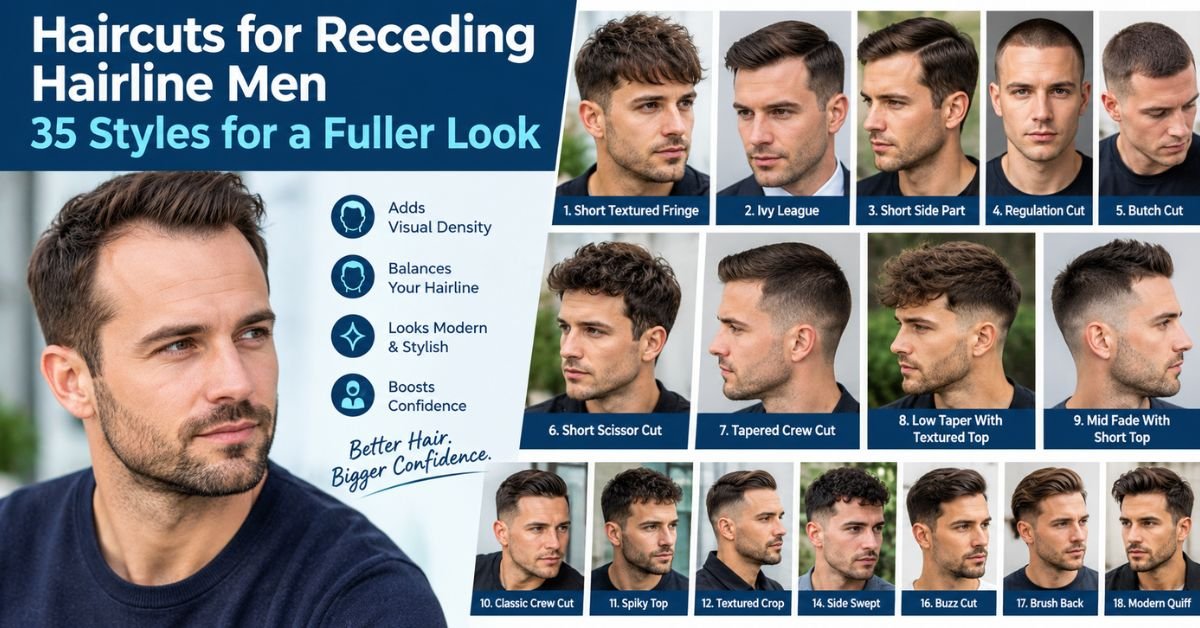
Haircuts for Receding Hairline Men 35 Styles for a Fuller Look
Haircuts for Receding Hairline Men can make a big difference in how your hair looks and feels. The right receding hairline haircut works with your natural hairline instead of fighting it, helping you create a clean, balanced appearance. Whether you’re dealing with early hair loss at the temples or a frontal hairline that’s moved back noticeably, there’s a style that can work for you.
This guide covers haircuts for balding men, short haircuts for receding hairline styles, fades, texture-focused cuts, and a few longer options. You’ll also find recommendations based on face shape and hair type, plus practical tips on what to tell your barber so you get the haircut you actually want. Let’s get into it.
What Is a Receding Hairline?
A receding hairline happens when hair pulls back at the temples, usually forming a rounded or M-shaped pattern across the frontal hairline. It’s different from a mature hairline, which settles once in your twenties and then stops moving. Hairline recession, on the other hand, keeps going. Dermatologists link most cases to male pattern baldness, a genetic condition tied to hormone sensitivity.
Recession doesn’t always move alone. Some men notice thinning hair on top or a balding crown developing at the same time. Others see recession stay isolated to the temples for years. Either way, understanding your pattern helps you pick a natural hairline-friendly cut instead of one that fights your head shape.
Early Signs of a Receding Hairline
The first sign is usually a wider gap at the temples. Your hair density there starts to drop, and the skin underneath becomes easier to see in bright light. A part that used to sit flat might start looking uneven, because sparse hair near the front catches less light than the thicker hair behind it.
You might also notice more strands in the shower drain or on your pillow. That’s normal to a point, but if it’s paired with visible scalp visibility at the hairline, it’s worth paying attention to. Photos taken a few months apart often reveal the pattern faster than a mirror does, since a mirror doesn’t capture gradual change well.
Common Causes of a Receding Hairline
Genetics drive most cases of male pattern baldness. A hormone called DHT (dihydrotestosterone) shrinks hair follicles at the temples and crown over time, which is why recession so often shows up as crown thinning alongside a shifting frontal hairline. If men in your family went bald early, there’s a decent chance you’re working with the same genetic blueprint.
Other factors play a smaller role. Stress, poor sleep, and a rough diet can speed up shedding, though they rarely cause recession on their own. Age matters too, since hair loss becomes more common as men move through their thirties and forties. None of this is anything to be ashamed of. It’s biology, not a personal failing, and it’s manageable with the right haircut and, if you want it, medical treatment.
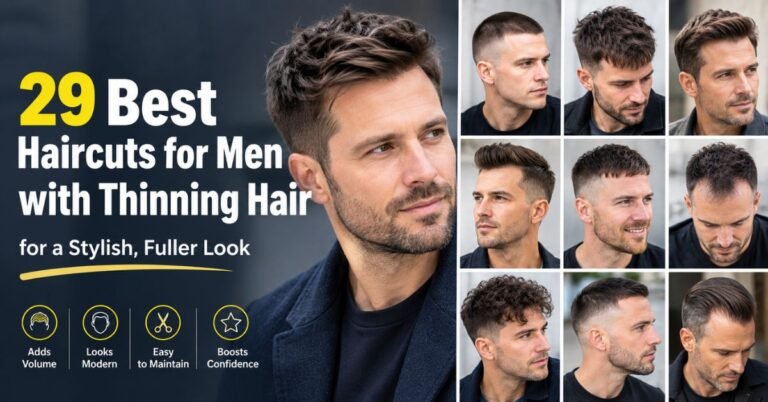
Read More: 29 Best Haircuts for Men with Thinning Hair for a Stylish, Fuller Look
How to Choose the Right Haircut for a Receding Hairline
Picking the best haircut for receding hairline patterns comes down to four rules. Get these right, and almost any style on this list will look sharp on you. Ignore them, and even a good cut can end up drawing attention to the exact spot you’d rather downplay.
The goal isn’t to hide your hairline completely. It’s to style around it so the eye moves naturally across your whole head, not straight to your temples.
Work With Your Natural Hairline
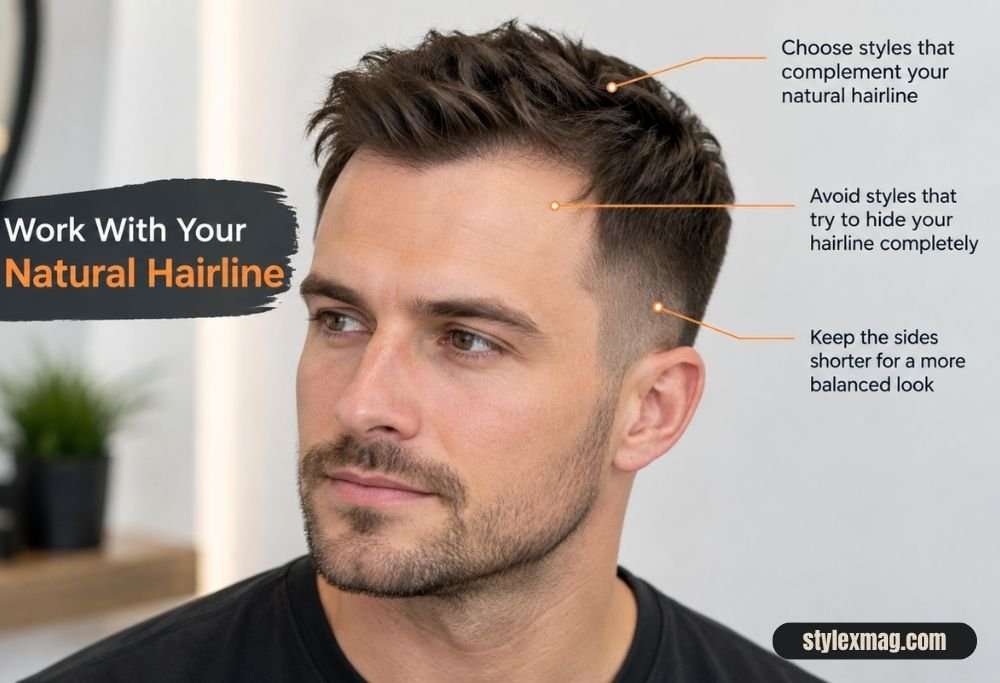
Don’t fight the shape you’ve got. A cut that respects your natural hairline rather than trying to disguise it will always look more convincing than a combover. Barbers can shape the hairline slightly to clean up strays, but the underlying pattern stays the same, so your style should complement it.
Keep the Sides Shorter Than the Top
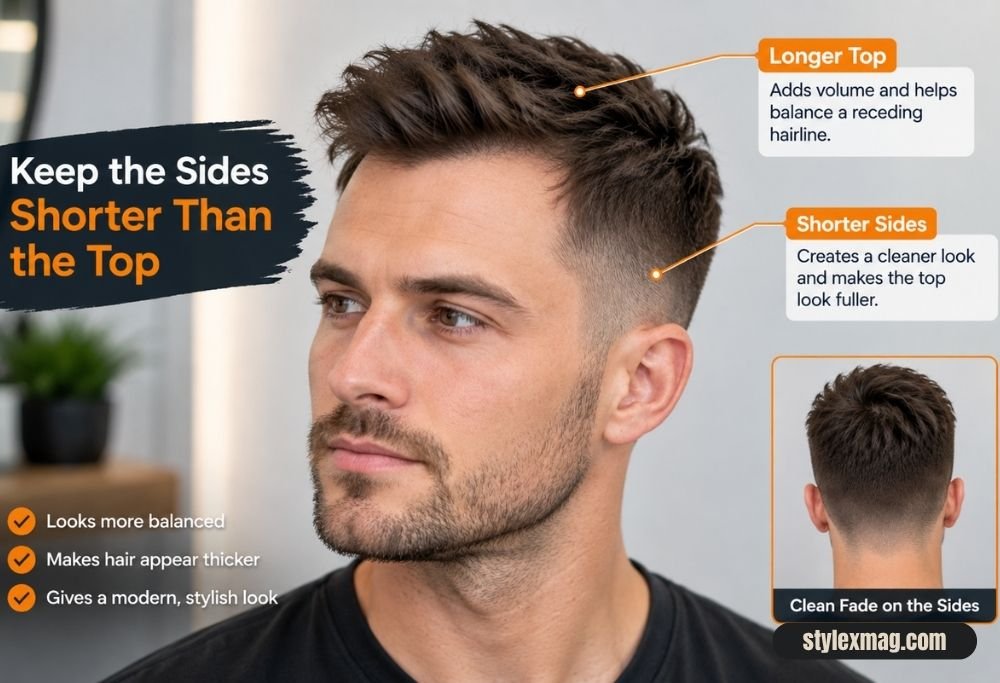
Short sides with more length on top create a natural sense of proportion. This is the single most reliable trick in this whole guide. When the sides fade or taper down, your eye reads the top as fuller than it might actually be, and the transition at your temples looks intentional rather than sparse.
Add Texture Instead of Excessive Height
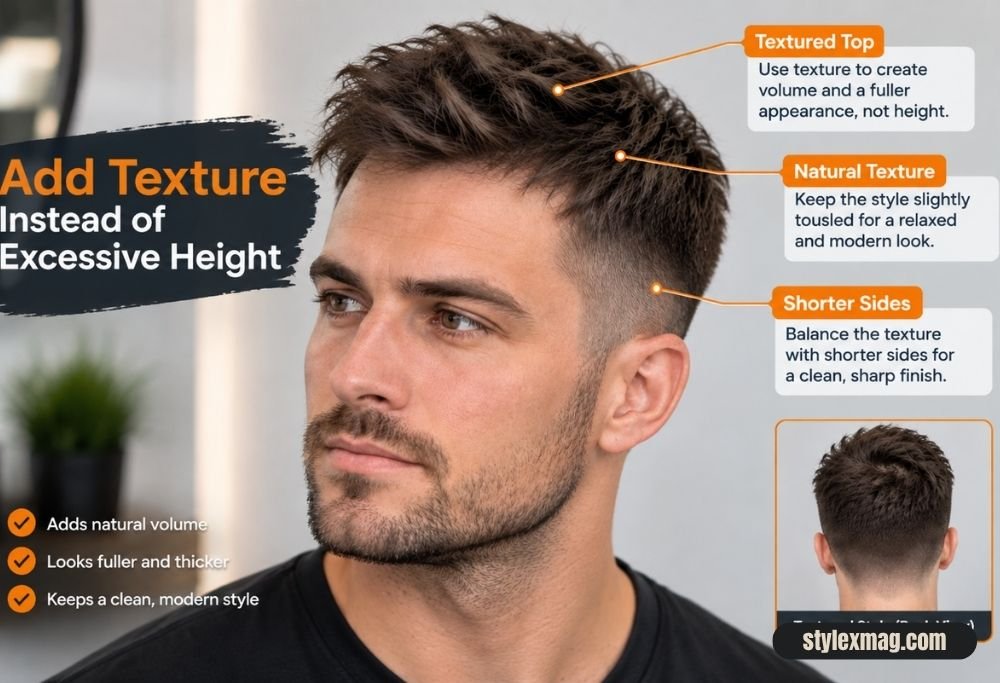
A textured top does more for a receding hairline than height ever will. Choppy, layered texture fills visual gaps and adds the illusion of hair volume without needing extra length. Big pompadours can actually work against you if your front density is thin, since height alone exposes what’s underneath it.
Choose Matte Styling Products
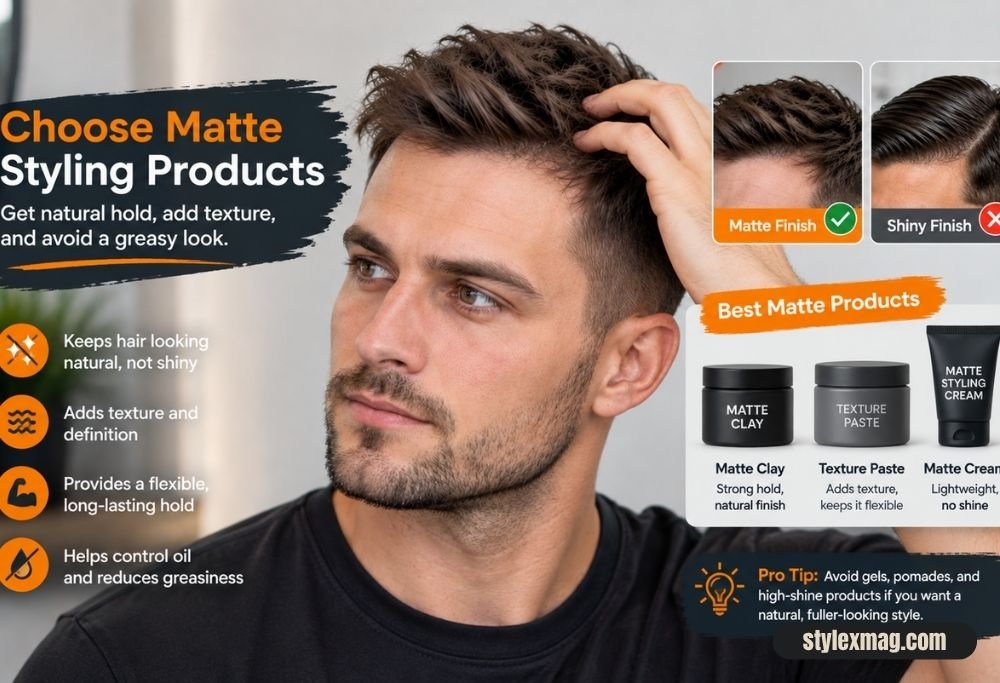
A matte styling product should be your go-to over anything glossy. Shine separates strands and makes thin hair look thinner, while matte clay or paste closes the gaps between strands visually. It’s a small swap that makes a bigger difference than most men expect.
Best Short Haircuts for Receding Hairline Men
Short haircuts for balding men remain the safest, most reliable category on this list. They close the gap between thick and thin areas almost entirely, since there’s little length to expose any unevenness. These styles also count among the most low-maintenance haircut options here, which matters if you don’t want to fuss with product every morning.
They work at any stage of recession, from mild temple thinning to more advanced patterns. If you’re not sure where to start, this section is it.
Buzz Cut
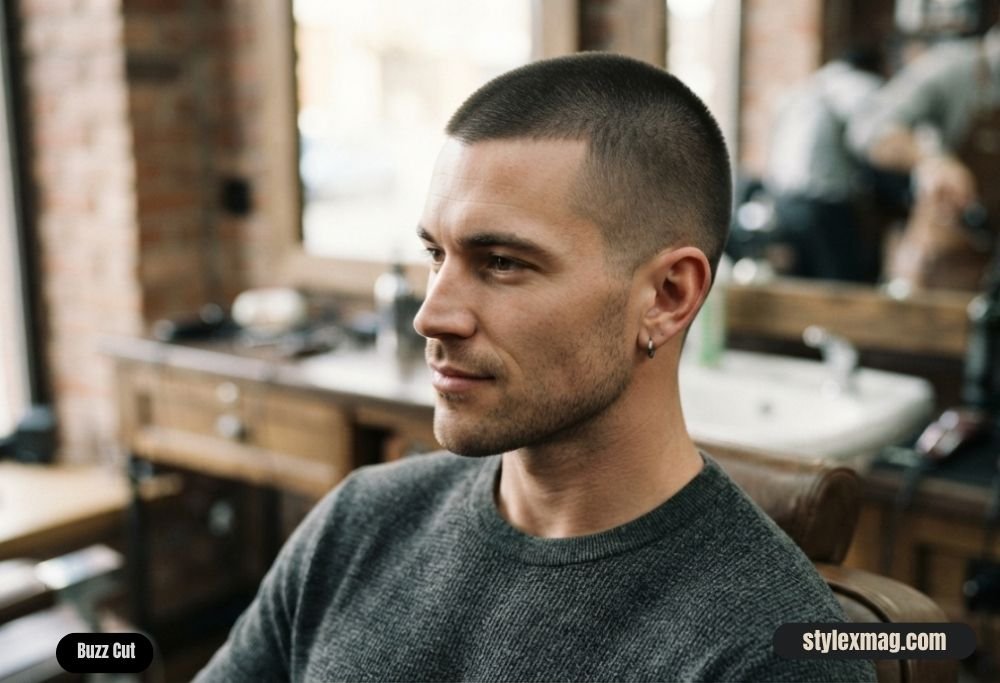
The buzz cut for receding hairline patterns is about as foolproof as haircuts get. Even length all over, usually a number 2 or 3 guard, means there’s no length difference to expose thin spots. It’s a genuinely low-maintenance haircut, and it pairs well with facial hair if you want extra structure around your jaw.
Read More: 27 Best Haircuts for Balding Men to Look Fuller in 2026
Close Cut
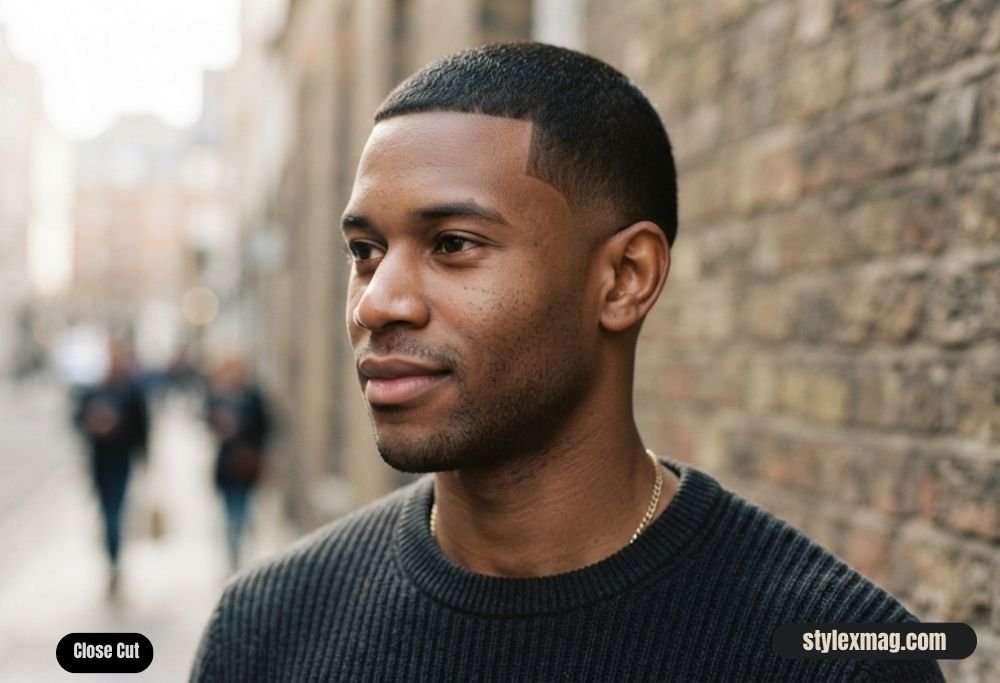
A close cut runs even shorter than a standard buzz, typically a number 1 guard or lower. It suits men whose temples have thinned noticeably, since almost no length remains to highlight the contrast between dense and sparse areas.
Butch Cut
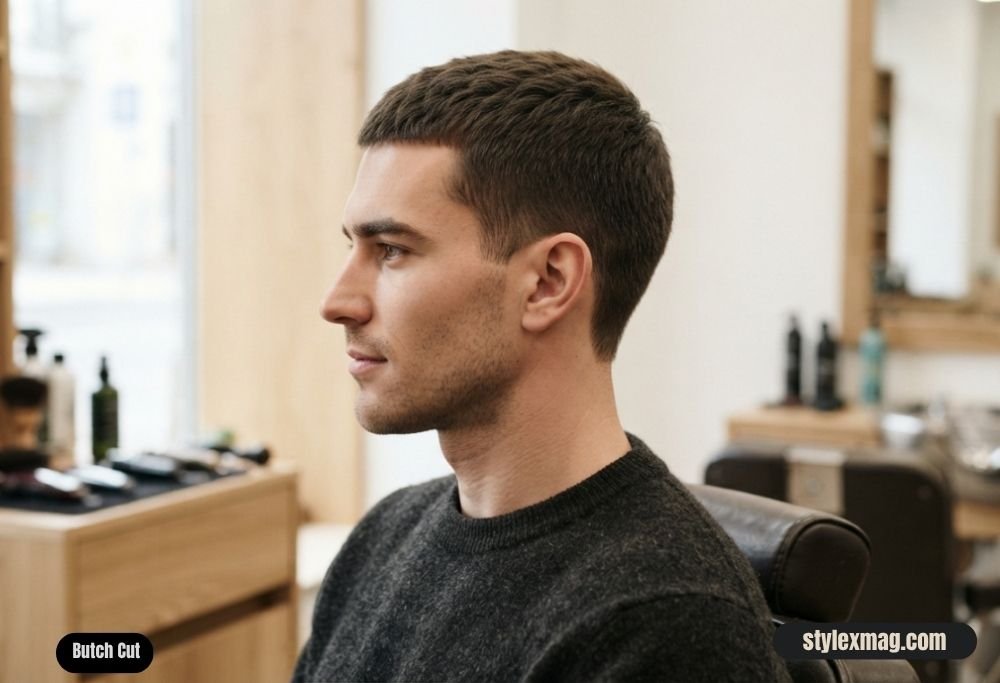
The butch cut takes things nearly to the skin, without going fully bald. It’s one of the most direct short hairstyles for receding hairline situations where recession has progressed well past the early stage, and it gives a clean, deliberate look that reads as confident rather than compensating.
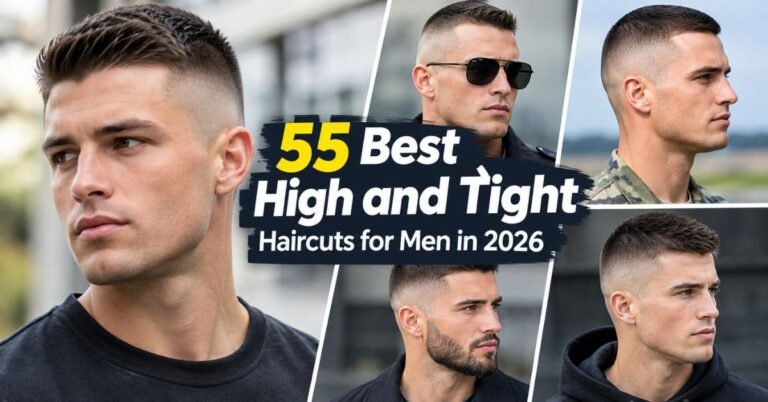
High and Tight
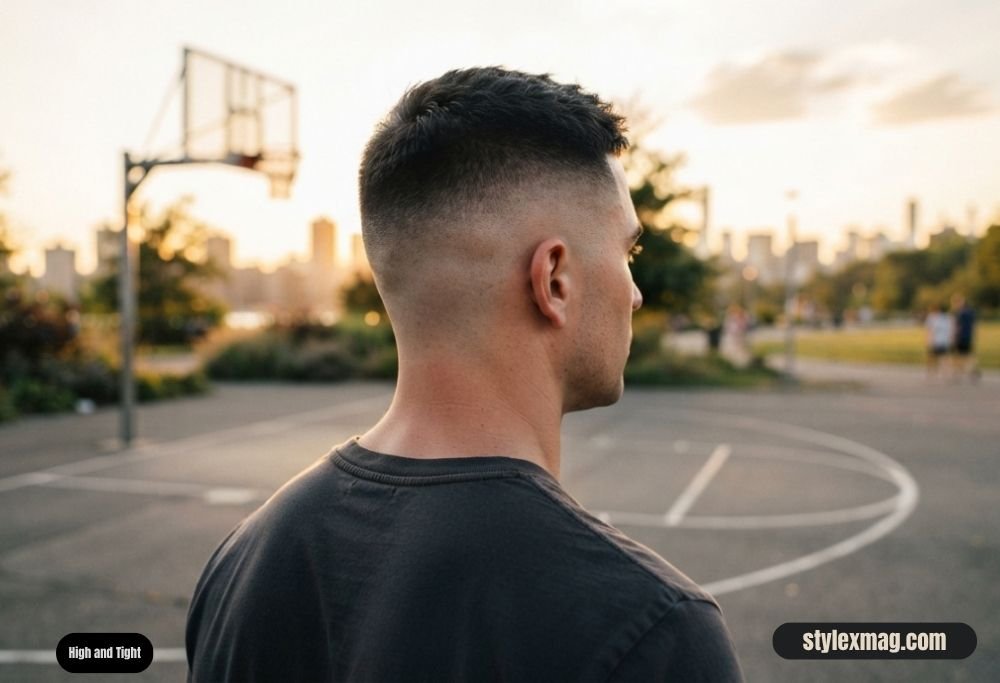
Tight sides and back with a slightly longer top define the high and tight. The sharp contrast between the shaved perimeter and the short top makes the whole look read as intentional, military-inspired styling rather than thinning hair.
Crew Cut
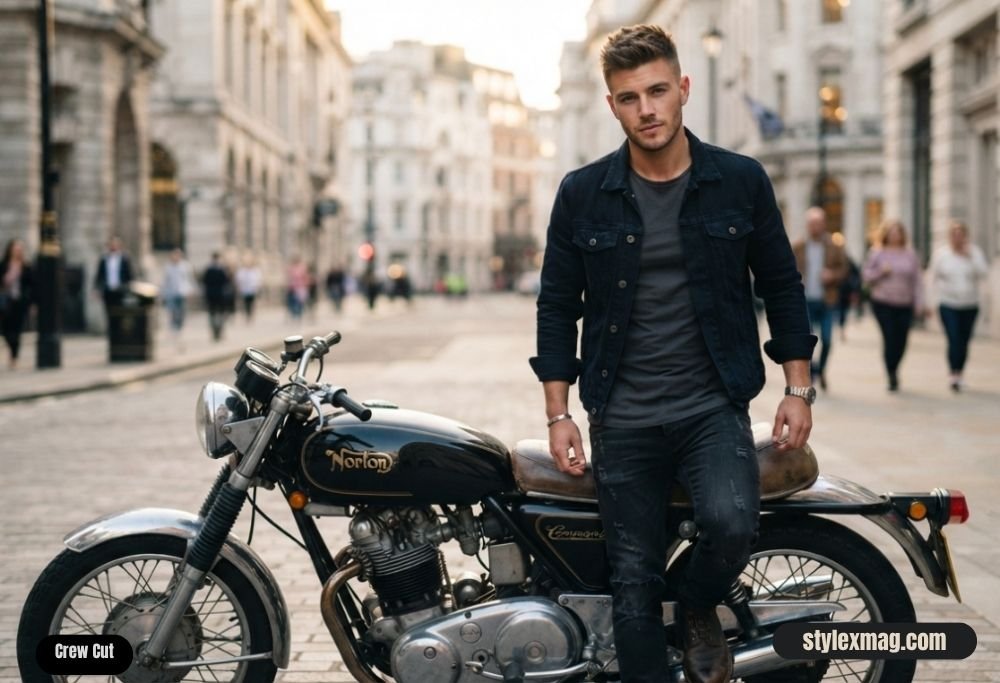
A crew cut tapers gradually from front to crown, keeping the most length exactly where recession shows most: right at the front. That extra bit of length at the hairline creates the impression of density without depending heavily on it.
Read More: Oblong Face Shape Haircuts for Men: 20 Best Styles for 2026
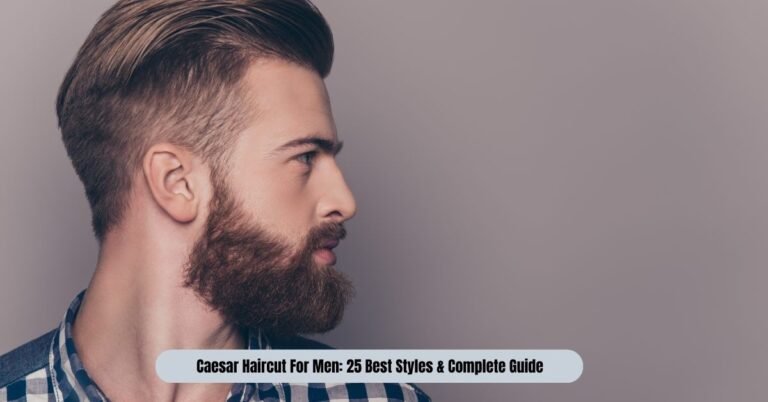
Caesar Cut
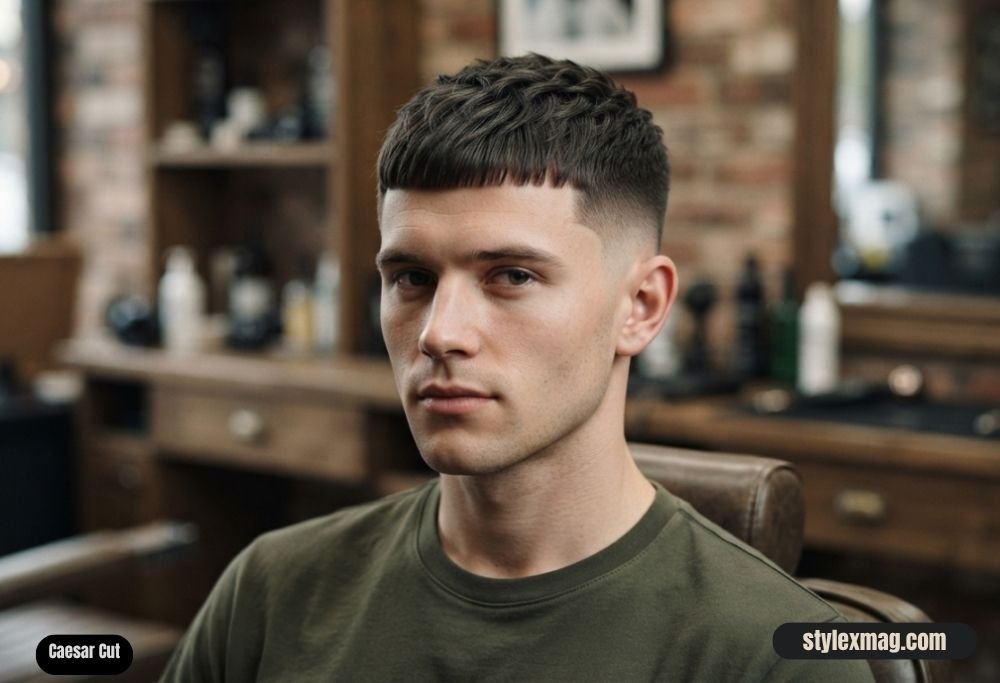
The Caesar cut brings a short, blunt fringe brushed forward, usually paired with a fade on the sides. That horizontal fringe line draws the eye across your forehead instead of up toward your temples, which makes it one of the better fade haircuts for receding hairline patterns shaped like a classic M.
French Crop
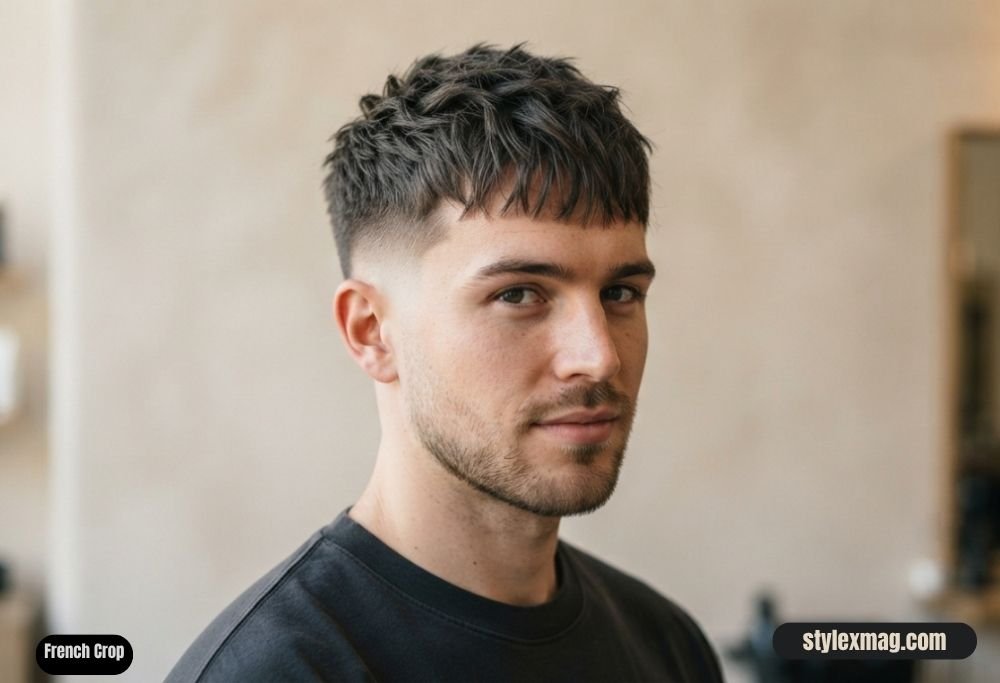
A French crop looks similar to the Caesar but with a slightly heavier, cleaner fringe line. It suits early-to-moderate recession best, since it relies on some front density to hold that forward fall of hair.
Textured Crop
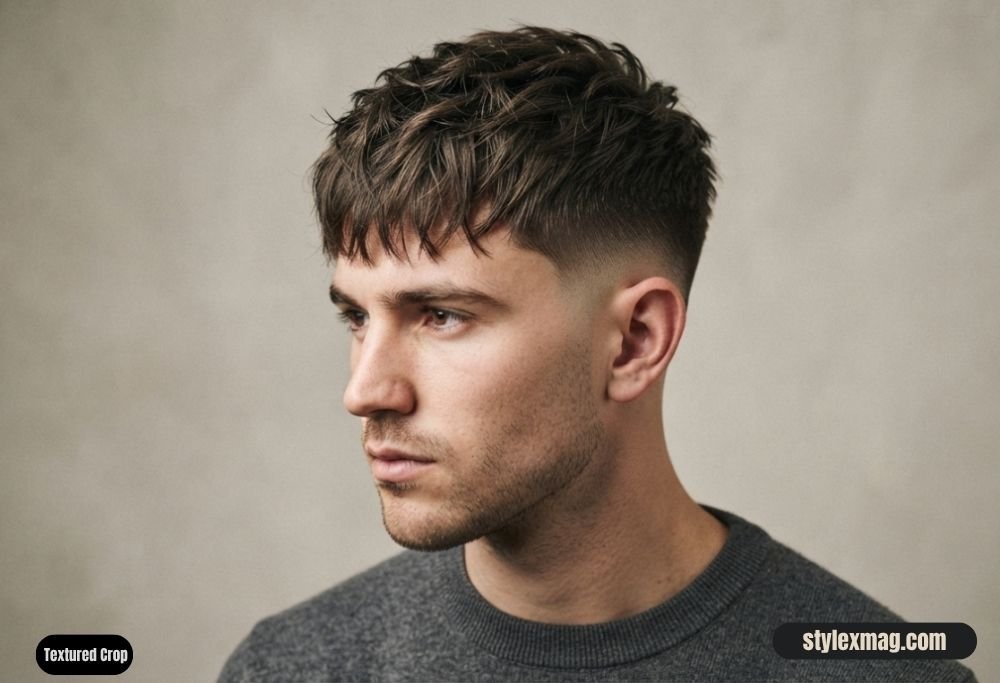
The textured crop might be the single most recommended cut on this whole list. Short, choppy layers create a textured top that fills in visually thin areas, while the forward fringe softens the hairline shape. Most barbers reach for this one first when a client sits down with early temple recession.
Best Fade Haircuts for a Receding Hairline
A fade haircut for receding hairline styling isn’t a standalone cut. It’s a side treatment that pairs with almost any style above it. What changes is how visible your recession looks, since the wrong fade level can pull the eye straight toward your temples.
These seven fade types range from soft and subtle to sharp and defined. Picking the right one comes down to how much contrast you want between your sides and your textured top.
| Fade type | Where it starts | Best for |
| High fade | Well above the ears | Bolder looks, more visible contrast |
| Mid fade | Middle of the head | Balanced, versatile everyday option |
| Taper fade | Gradual, no bare skin | Softest option, most forgiving between cuts |
| Skin fade | Down to bare skin | Sharp, modern, works best with dense hair up top |
| Bald fade | Fully bare at the base | Maximum contrast, needs confident styling |
| Burst fade | Curves around the ear | Complements naturally curved hairline shapes |
High Fade
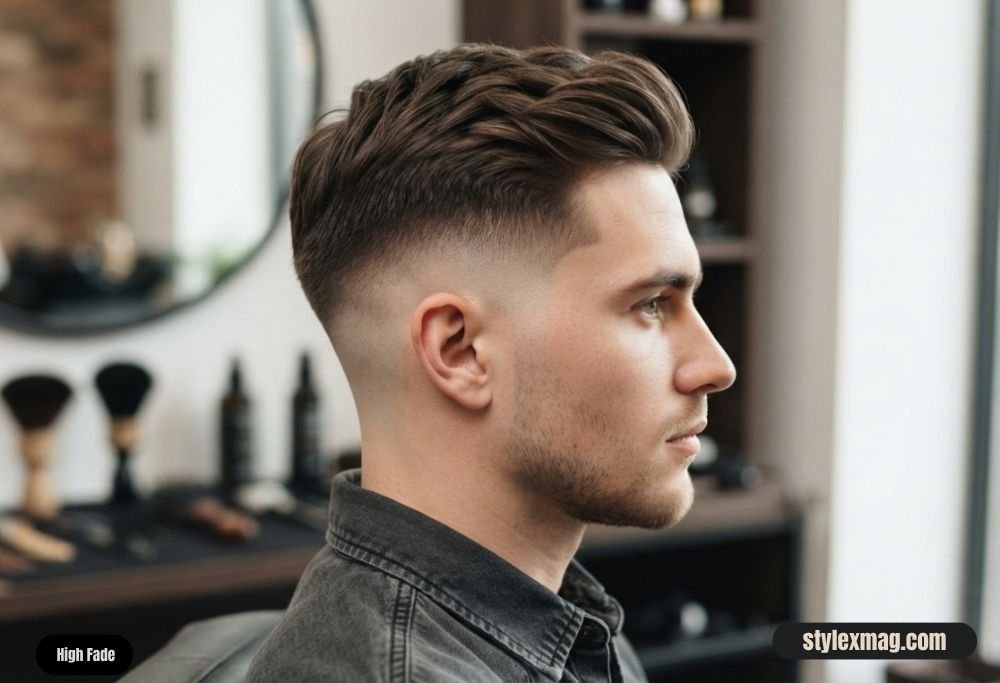
A high fade starts well above the ears, creating a bold, noticeable contrast between the sides and the top. It draws attention upward toward your textured top, which works well if your front and mid-scalp density are still holding up.
Mid Fade
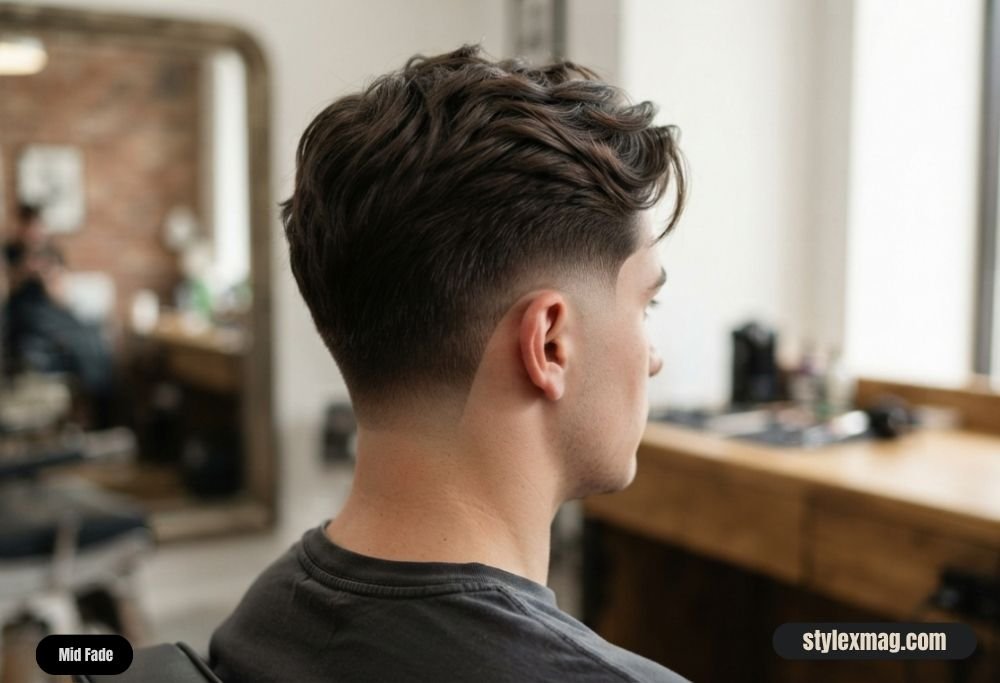
The mid fade sits in the middle ground, blending at roughly ear height. It’s the most versatile fade on this list, since it balances contrast without pulling too much focus toward the temples.
Taper Fade
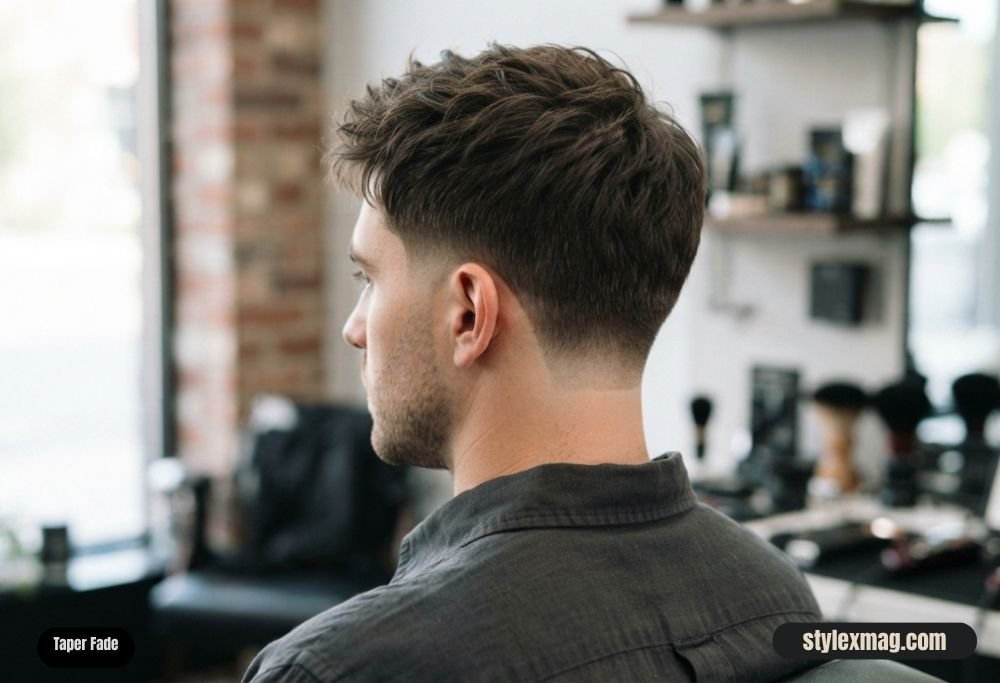
A taper fade reduces length gradually with no bare skin showing anywhere. It’s the softest, most forgiving fade here, and it still looks clean even a few weeks past your last barber visit.
Skin Fade
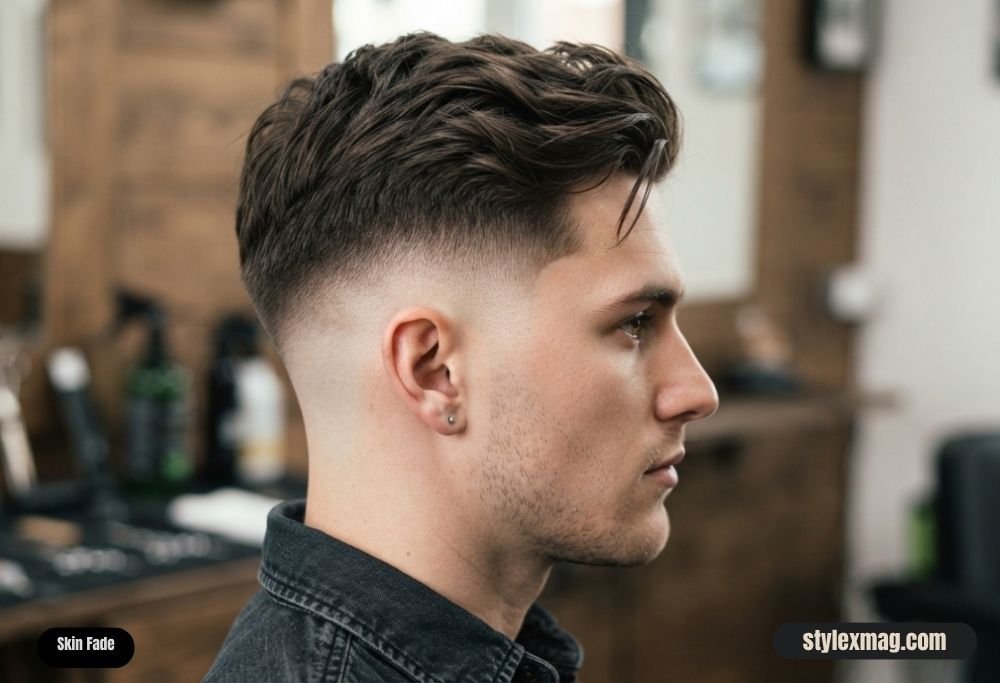
The skin fade goes all the way down to bare skin at the base. It looks sharp and modern, but it can spotlight temple recession if the jump from skin to hair happens too close to a thin patch, so ask your barber to keep the fade line a bit lower if that’s a concern.
Bald Fade
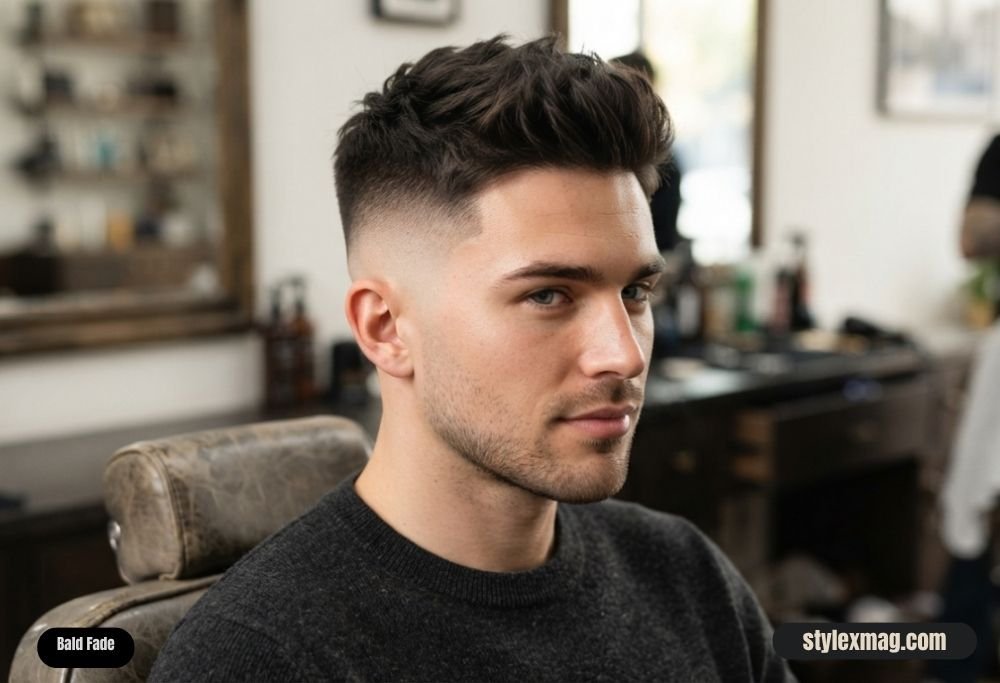
A bald fade takes the skin fade even further, with a longer stretch of bare skin before hair begins. It demands a confident attitude to pull off well, and it pairs best with a textured top that has decent length to balance the contrast.
Burst Fade
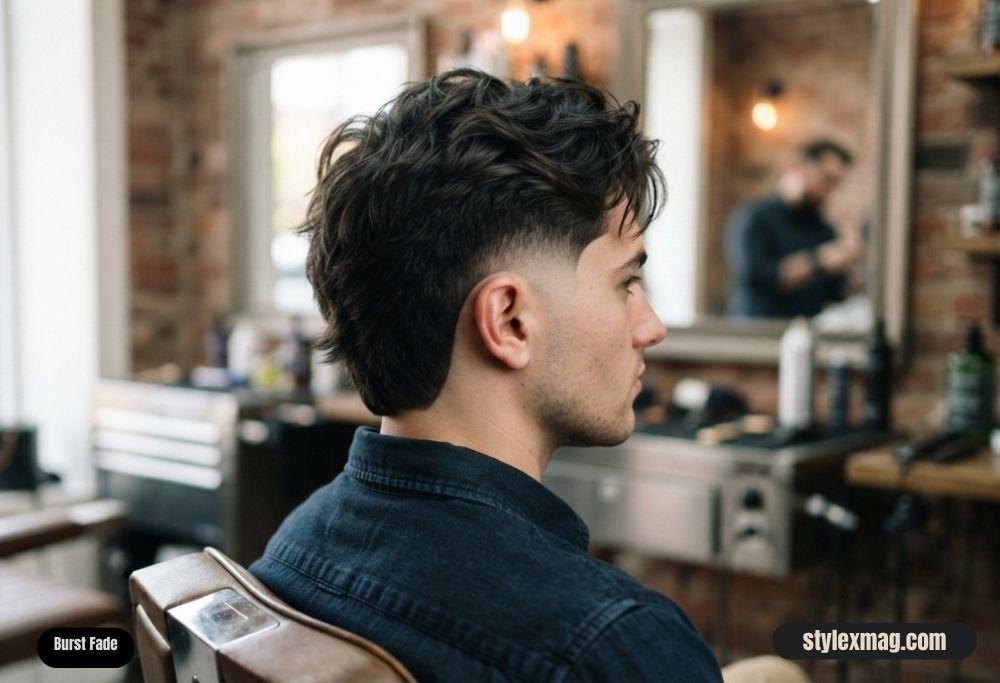
The burst fade curves around the ear instead of following a straight line. That curved shape complements the natural curve of a receding hairline rather than cutting against it, which makes it a smart, understated choice.
Fade With a Short Textured Top
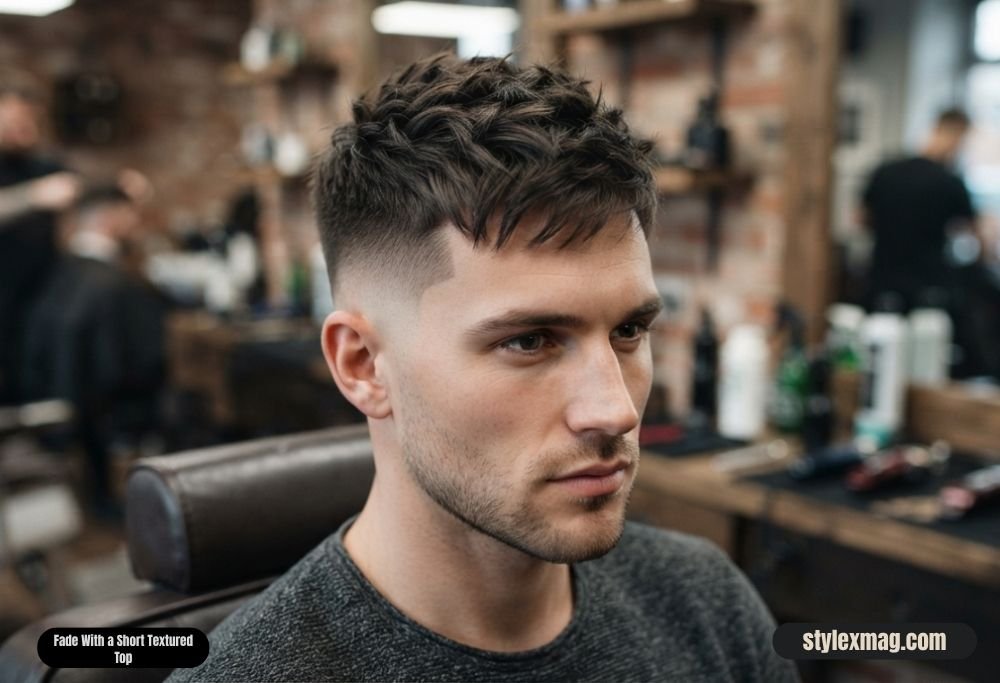
Pairing any fade with a textured top gives you the best of both categories. The fade handles the sides cleanly, while short layers on top add hair volume and visual density exactly where recession shows most.
Best Textured and Fringe Haircuts for Receding Hairlines
Texture and fringe work together to cover the transition zone where thick hair meets thin hair. These hairstyles for receding hairline patterns lean on choppy layers rather than length, since rough texture fills gaps far better than a smooth, flat surface ever could.
This category suits men who want more styling flexibility than a short cut offers, without moving into riskier long-hair territory.
Textured Brush Forward
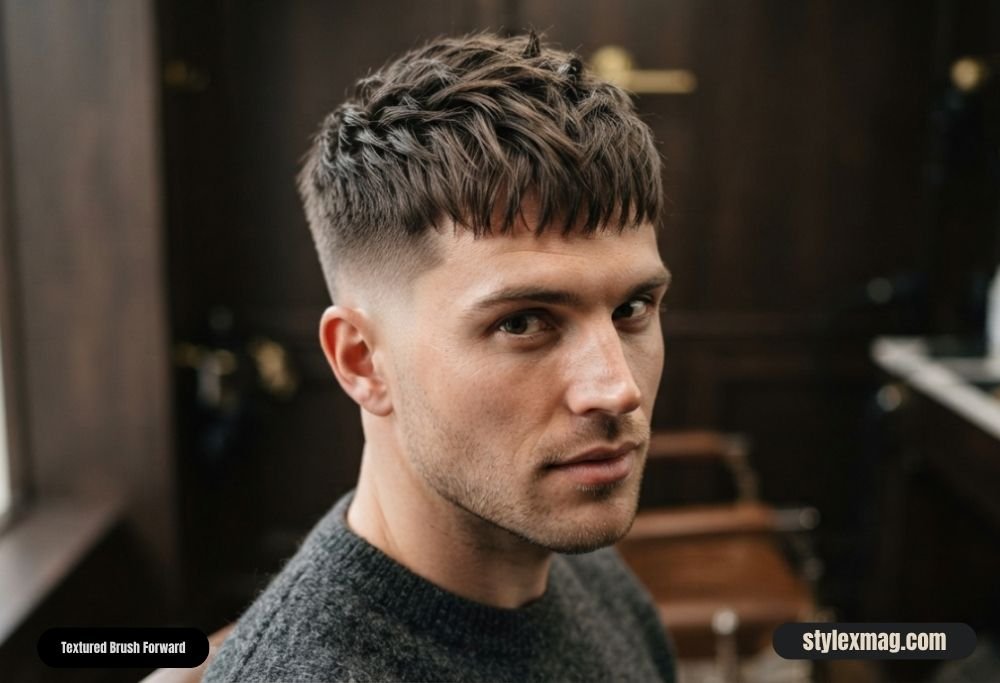
Brushing a textured top forward covers the hairline transition zone directly. It’s simple, quick to style each morning, and works especially well on straight or wavy hair that holds a bit of natural lift.
Short Textured Fringe
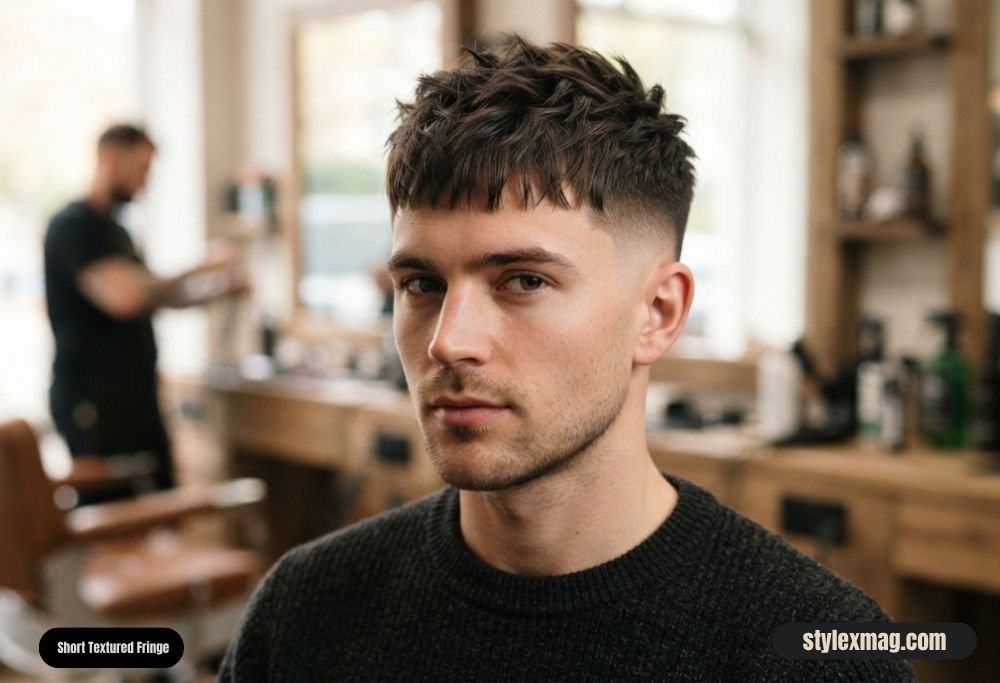
A short textured fringe sits just above the eyebrows, breaking up the line where your hairline recedes. Choppy ends catch the light unevenly, which distracts from any unevenness in the hairline itself.
Side-Swept Fringe
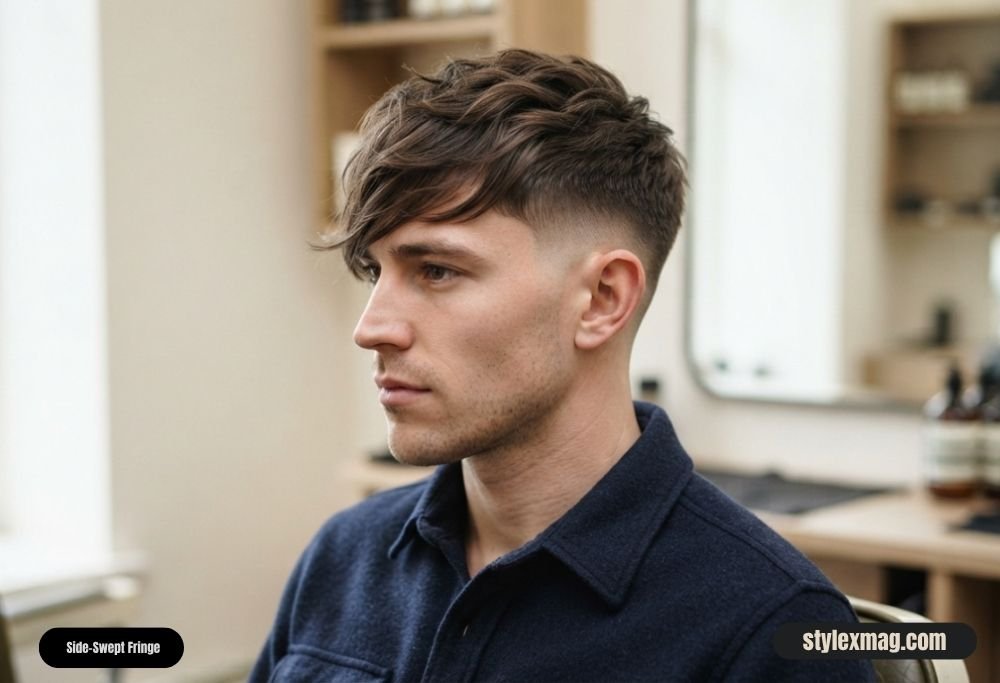
The side-swept fringe pushes hair diagonally across the forehead rather than straight forward. It suits an M-shaped recession particularly well, since the diagonal line disguises both receding corners at once.
Choppy Fringe
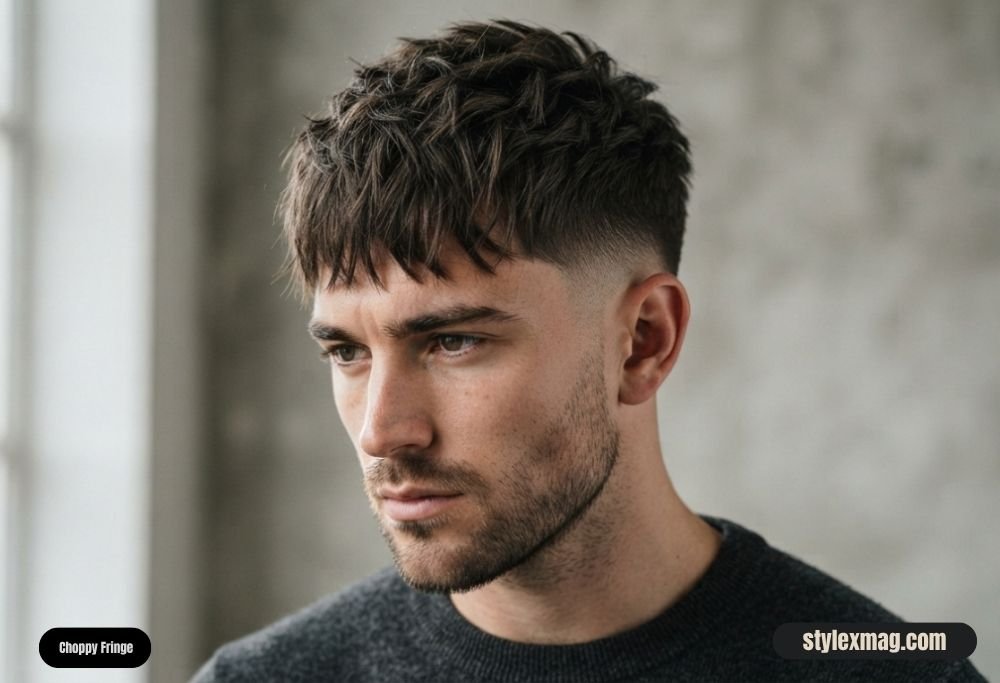
A choppy fringe brings piece-y, uneven lengths that fall forward at an angle. The natural movement distracts from any unevenness in the hairline, and it reads as more fashion-forward than a blunt, straight-cut fringe.
Modern Crop With Fringe
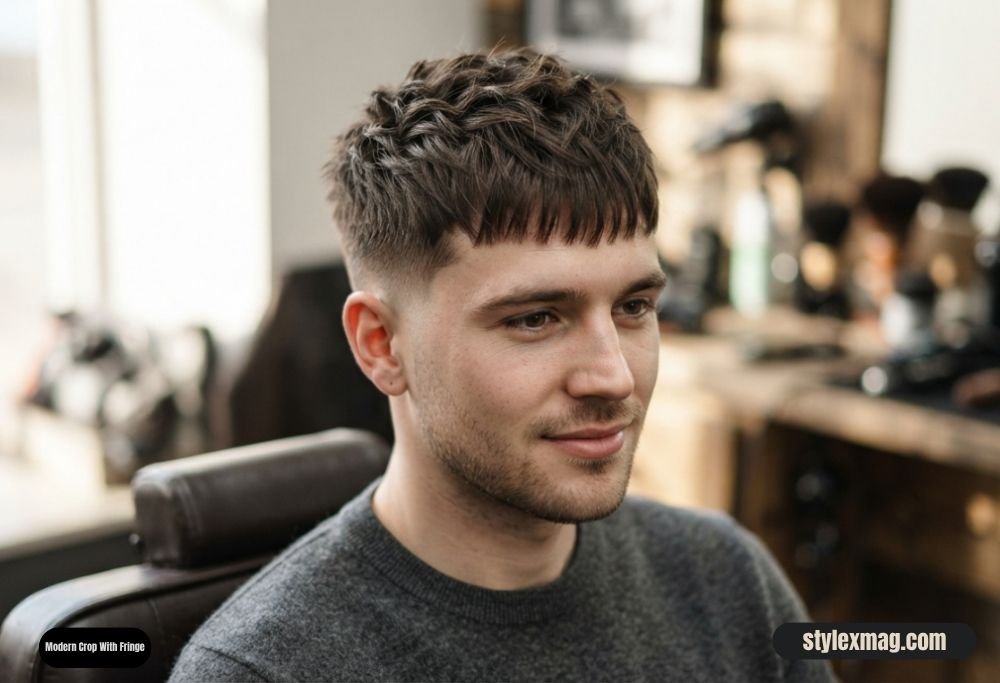
The modern crop with fringe combines a cropped textured top with a slightly longer, disconnected fringe piece. That extra length at the front gives more coverage over the temples than a uniform crop manages on its own.
Best Volume Haircuts for Receding Hairlines
Volume haircut styles lift hair upward and forward, shifting the eye’s focal point away from your temples. They only work if you’ve still got decent density through the front and mid-scalp, though, so this category suits early-to-moderate recession better than advanced patterns.
If your hairline has moved well past the point where height at the front looks natural, skip ahead to the short or fade categories instead.
Brushed-Up Quiff
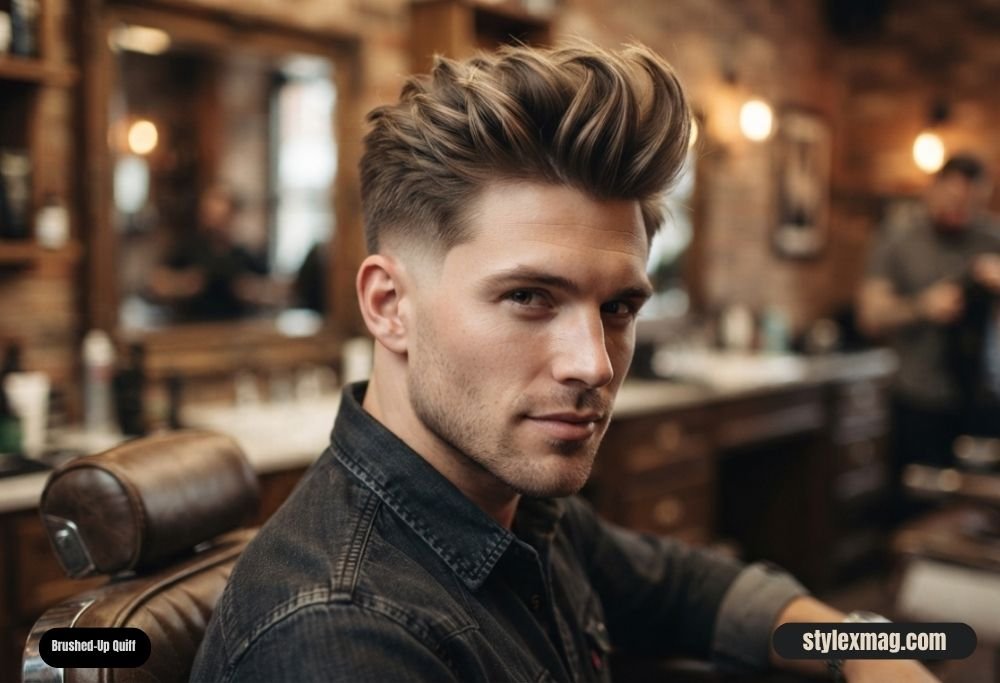
A quiff brushed straight up creates height that redirects attention away from receding corners. It needs medium density through the front and a bit of daily styling to hold its shape.
Soft Quiff
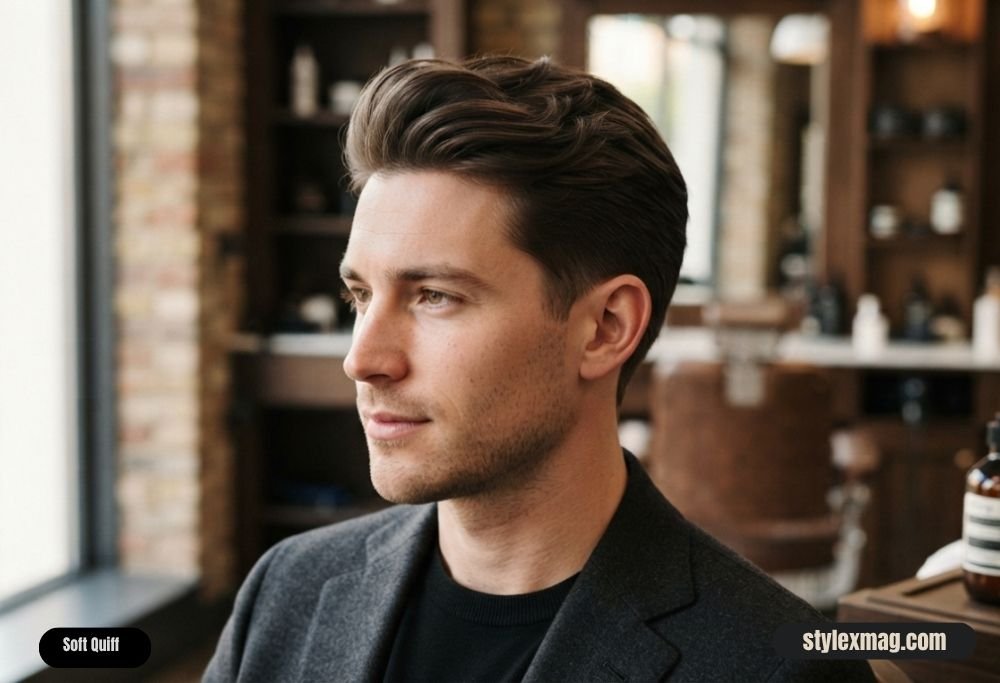
The soft quiff scales back the height for a subtler, more relaxed version of the same idea. It suits men who want the benefit of upward volume without a dramatic, styled-up look.
Quiff With Taper
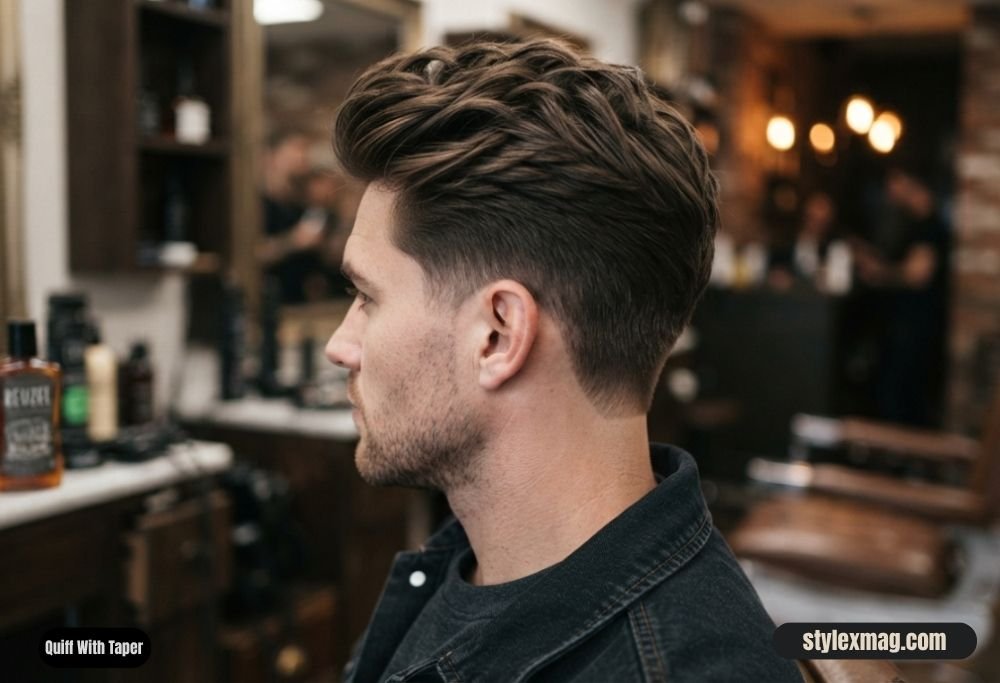
Pairing a quiff with a taper fade keeps the sides clean while the top does the heavy lifting. This combination balances contrast and volume in a way that reads as put-together rather than overdone.
Faux Hawk
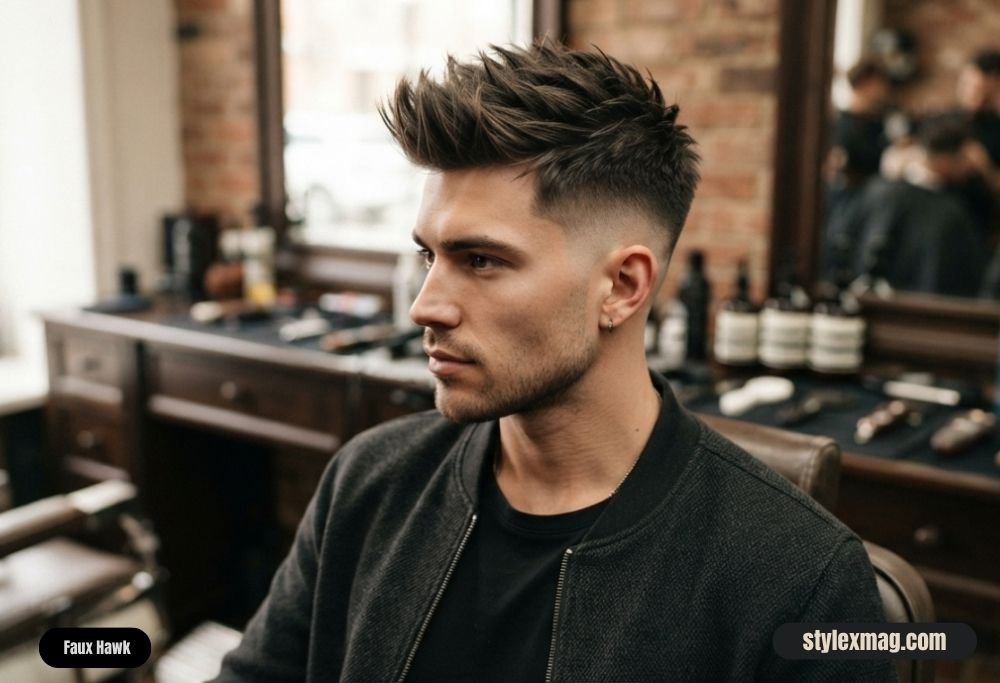
A faux hawk keeps the sides short with a slightly longer central ridge styled upward. That vertical strip pulls the eye to the midline of your head, away from the temples on either side.
Short Spiky Hair
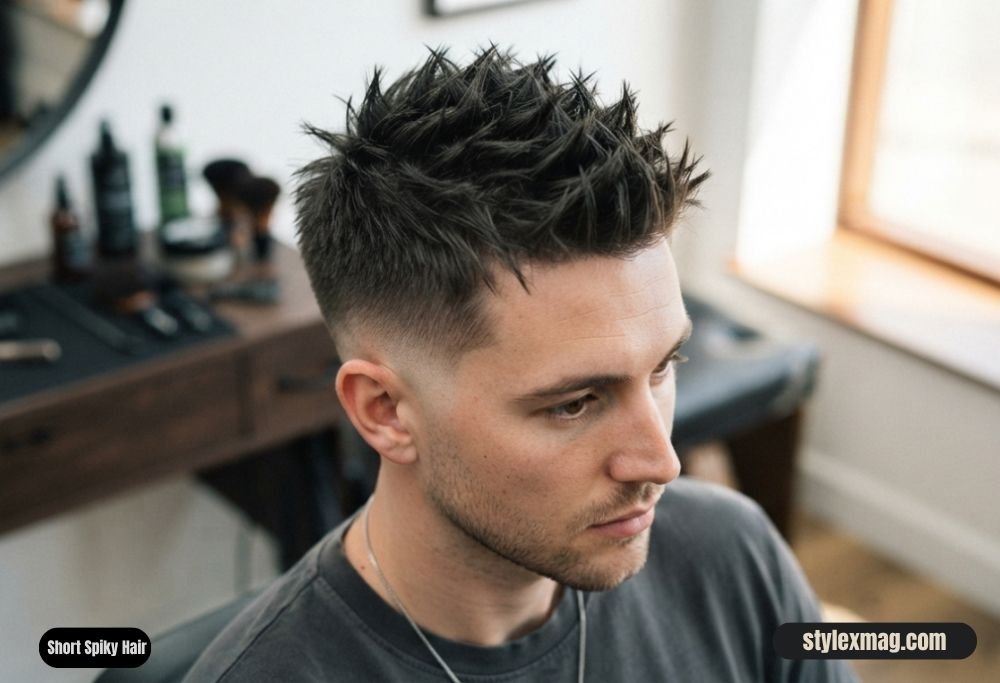
Spiky hair adds texture and height in equal measure, using a strong matte product to hold each piece separately. It works best on thicker hair that can support the added structure without looking flat by midday.
Pompadour With Fade
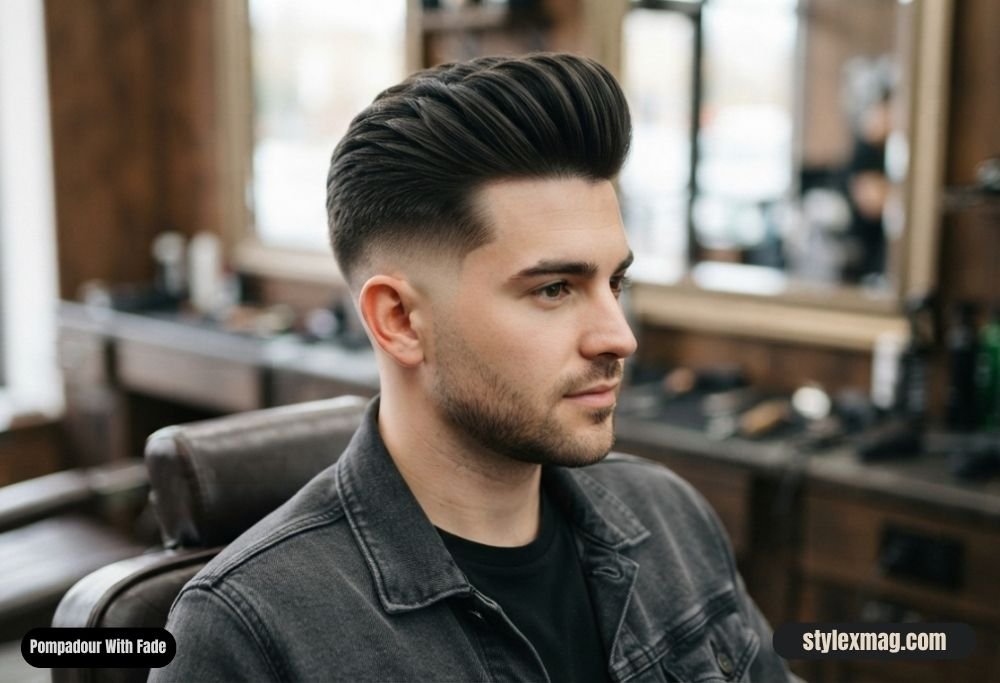
A pompadour paired with a fade brings noticeable lift at the front, tapered down cleanly at the sides. Scale the height back from a classic pompadour if your front density is on the thinner side, since too much height can expose more than it disguises.
Best Classic Haircuts for Receding Hairlines
Classic, structured cuts redirect attention across the top of your head rather than up toward the temples. These styles rely on decent mid-scalp density to hold a part or a swept shape, so they suit early-to-moderate recession best.
Each one below has stayed in rotation for decades, which says something about how dependable they are across different face shape types.
Side Part
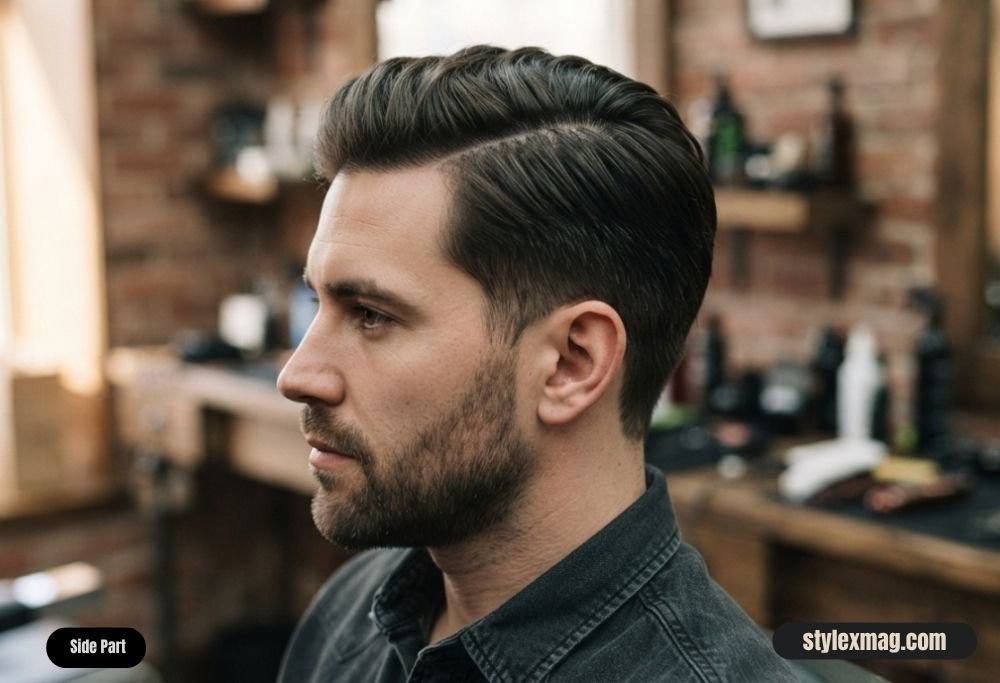
A side part placed just above the temple, with hair swept across, covers the receding corner on that side. Skip a hard, razor-cut part line, since it creates a visible strip of scalp that draws the eye exactly where you don’t want it.
Ivy League
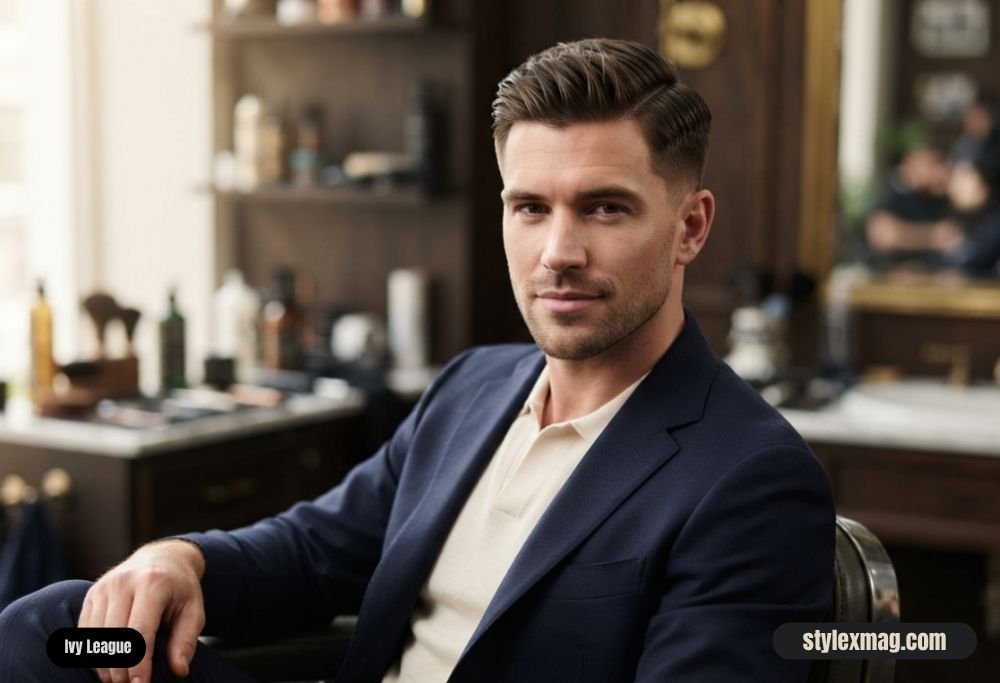
The Ivy League is a slightly longer crew cut with enough length on top to part or sweep. It offers real styling flexibility, forward, side-swept, or textured, without depending on density you might not have.
Business Cut
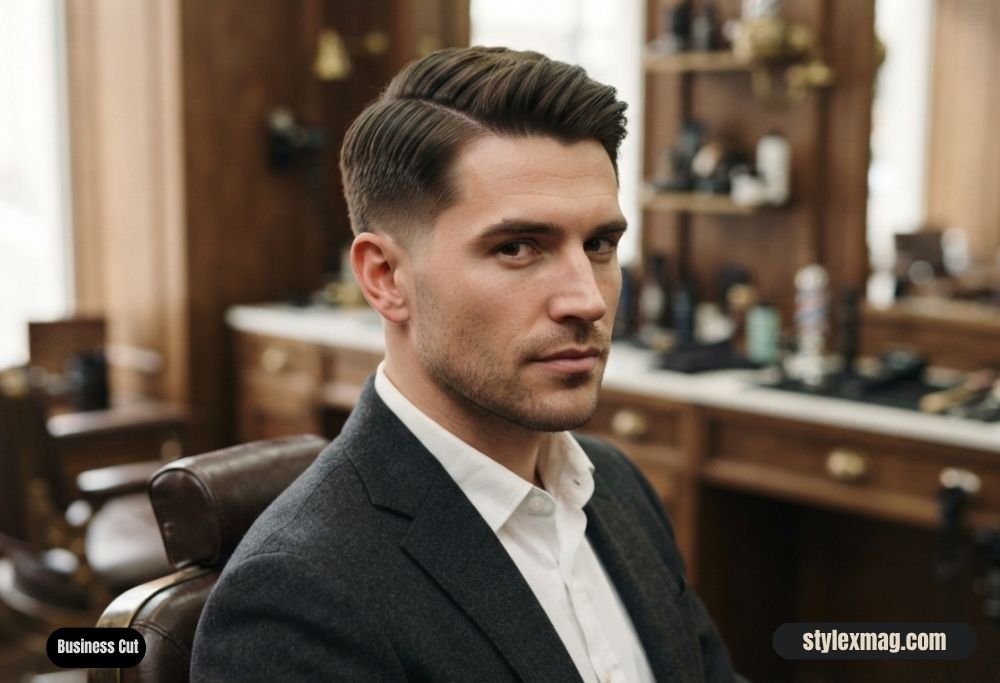
A business cut keeps things conservative: short sides, a clean side part, minimal fuss. It’s a solid pick for haircuts for men with receding hairlines in professional settings where a low-maintenance, polished look matters.
Regulation Cut
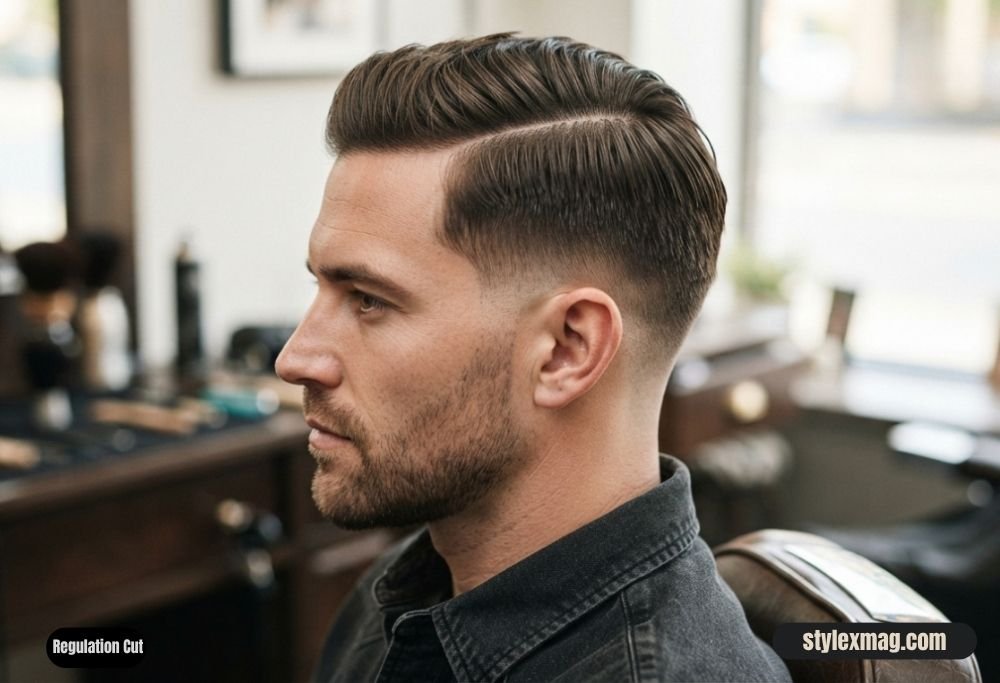
The regulation cut sits between a high and tight and an Ivy League, with slightly more length than a strict military cut. It gives a clean, structured shape that still allows a small amount of styling on top.
Slicked-Back Hair
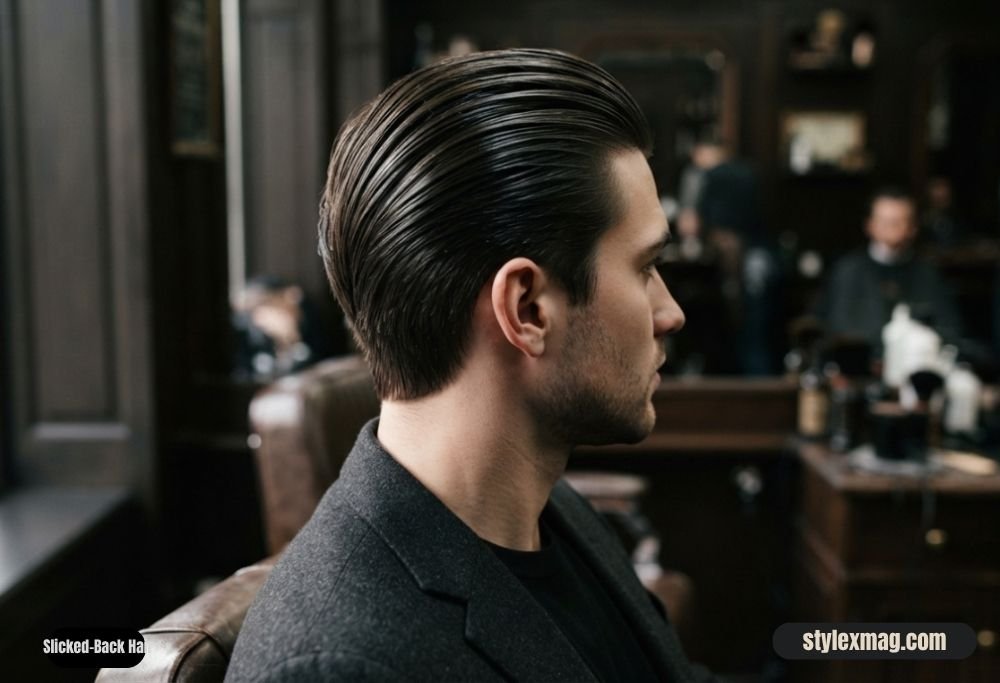
Slicked-back hair sweeps everything backward off the forehead using a matte finish. This one only really works at early recession, since it needs enough front density to hold the sweep without exposing bare patches underneath.
Modern Comb Over
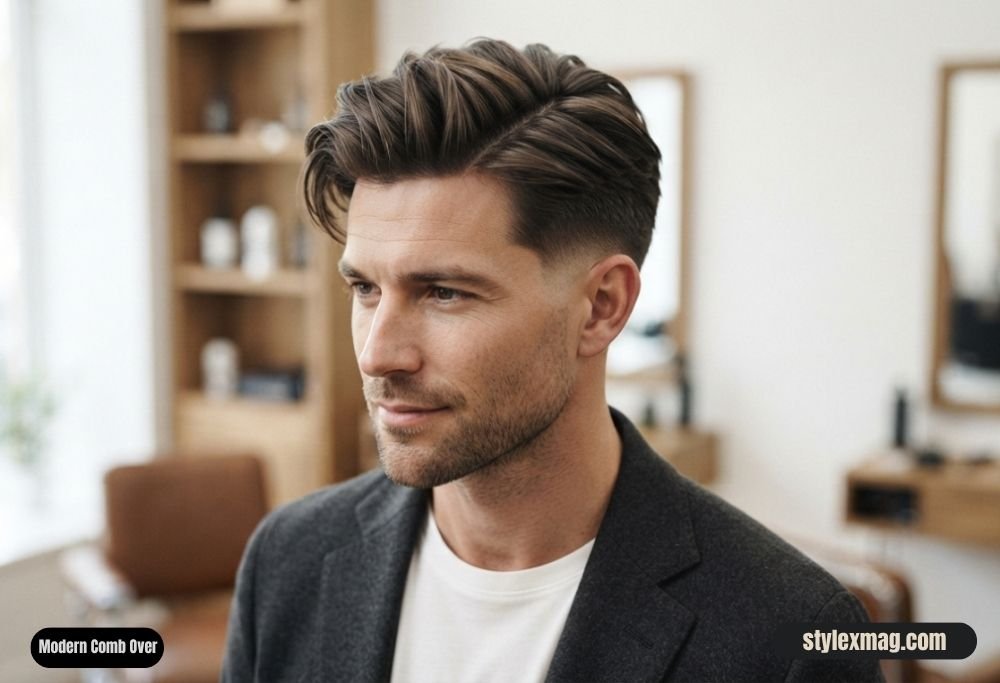
A modern comb over has little in common with the dated, over-the-top version. Short and textured, swept to one side, it actually uses the recession line as a natural starting point for the sweep, which makes the whole style look deliberate.
Medium and Long Haircuts for Receding Hairlines
Longer styles carry more risk than anything else on this list, because extra length amplifies the contrast between dense and thin areas. Thick sections look thicker, and thin sections look thinner by comparison, so these five options come with real conditions attached.
They can still work, though, especially if your recession has stayed mild and you’ve got the density to back up the length.
Side-Swept Medium Hair

Medium-length hair swept to one side gives a bit more styling range than short cuts allow. It suits men with wavy or thick hair, since texture helps the length hold its shape through the day.
Middle Part and Curtains
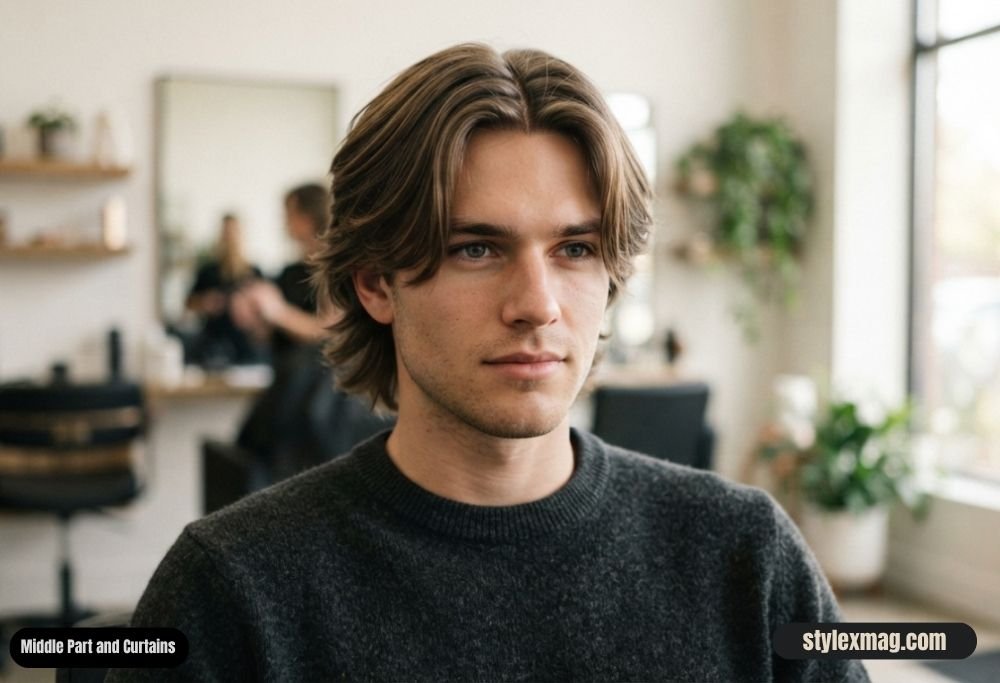
Curtain bangs with a centre part can work, but only with strong front density and a soft part rather than a sharp, razor-thin line. If your recession touches both temples evenly, a hard centre part will frame the M-shape rather than hide it, so keep this one loose and natural.
Layered Medium-Length Hair
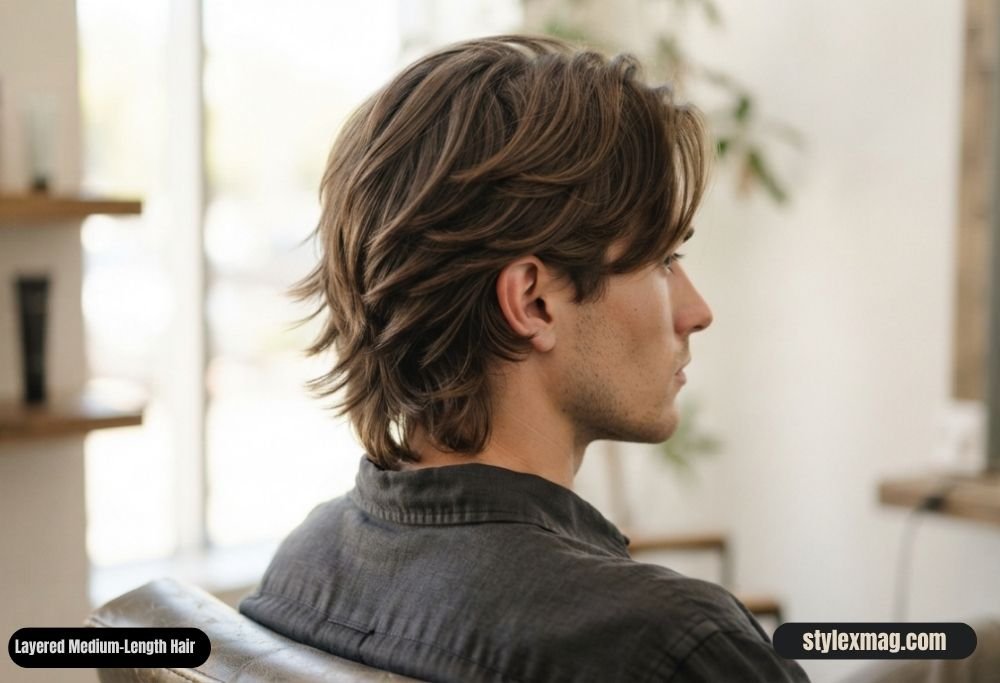
Layers through medium-length hair add movement and fill visual gaps better than one flat length ever could. This works particularly well on wavy or curly hair, where natural texture does a lot of the heavy lifting.
Long Wavy Hair
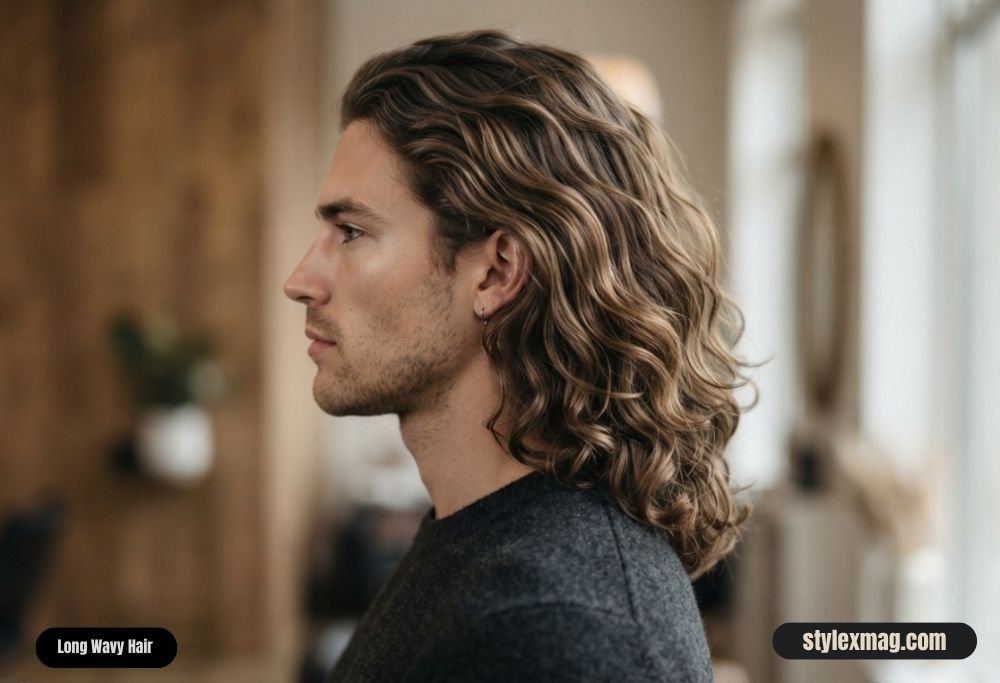
Long, wavy hair can look genuinely great with a receding hairline, provided your front density holds up. Once the temples thin out noticeably, though, this length starts to expose more than it conceals, so treat it as a style for milder recession only.
Top Knot
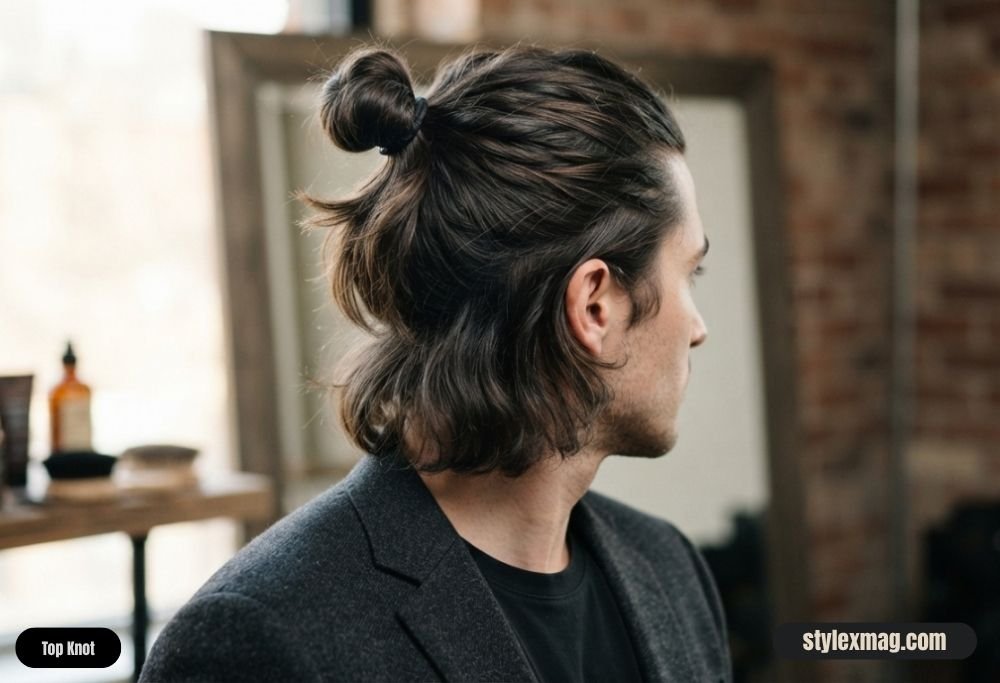
A top knot pulls length up and back, which can either work beautifully or backfire depending on your hairline shape. It suits a receded hairline better than a low ponytail does, since pulling hair fully back off the face highlights recession at every angle.
Best Haircuts for a Receding Hairline and Big Forehead
A face shape with a larger forehead needs a slightly different approach than recession alone. The goal here is horizontal balance: something that visually shortens the forehead rather than adding more height on top of it.
Four cuts from earlier in this guide do that job better than anything else. The short textured crop brings a forward fringe that shortens the forehead directly. Side-swept fringe does something similar with a diagonal line instead of a straight one. The Caesar cut uses its horizontal fringe to the same effect, and the buzz cut removes the issue of length altogether by keeping everything uniform.
Haircuts for Receding Hairlines by Hair Type
Your natural hair type changes which cuts hold their shape best. Curly and wavy hair naturally fills gaps and adds hair volume, so those textures can push a style further into recession territory than straight, fine hair can.
| Hair type | Best cuts | Why it works |
| Straight hair | Buzz cut, crew cut, Caesar cut | Shows scalp faster, so shorter cuts perform better |
| Wavy hair | Textured crop, quiff, side-swept fringe | Natural movement fills gaps without much product |
| Curly hair | Wolf-style texture, textured brush forward | Curl pattern hides thinning naturally |
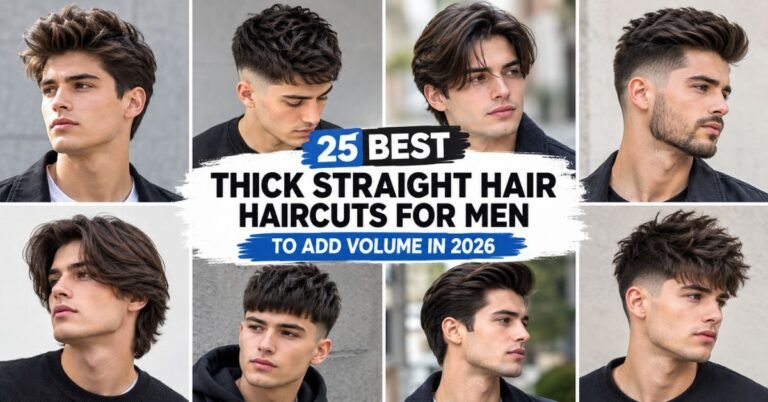
| Thick hair | Pompadour, faux hawk, spiky styles | Can support height and volume without going flat |
| Thin or fine hair | Buzz cut, French crop, taper fade | Shorter length avoids exposing gaps between strands |
Haircuts to Avoid With a Receding Hairline
Some combinations make recession harder to disguise, not easier. Knowing what to steer clear of matters just as much as knowing what works, so run through this list before your next barber visit.
Heavy Comb Overs
An old-fashioned, heavy comb over pulls long strands sideways across a bald or thinning patch. It rarely fools anyone, and any wind or movement exposes exactly what it’s trying to hide.
Very Long Front Layers
Very long layers at the front put the full weight of length right where your hair density is lowest. That combination almost always looks thinner than shorter styling would.
Wet-Look Slick Backs
A wet, glossy slick-back finish separates individual strands and increases scalp visibility between them. Swap it for a matte product, and the same style looks noticeably fuller.
Flat Hairstyles With No Texture
Flat, unstyled hair with no texture lets thinning hair on top sit close to the scalp with nothing to lift it. Even a small amount of texture changes how much volume the eye perceives.
How to Style Hair With a Receding Hairline
Styling technique matters just as much as the cut itself. The right styling techniques can make an average haircut look great, while the wrong ones can undercut even a well-chosen style.
Three habits make the biggest difference day to day, and none of them take more than a few extra minutes each morning.
Use Texture to Create Natural Coverage
Work a matte styling product through towel-dried hair with your fingers, not a comb. Fingers create uneven, natural texture, while a comb tends to flatten everything into one smooth, revealing surface.
Build Volume Without Exposing the Hairline
Blow-dry hair away from the root at the crown, then style the front forward or to the side rather than straight back. This builds hair volume without pulling attention toward the hairline itself.
Pick the Right Styling Products
Stick with matte clay, paste, or texture powder over anything with shine. These products close visual gaps between strands, which does more for a fuller-looking hair result than switching haircuts ever could on its own.
When Should You Consider a Buzz Cut or Shaved Head?
There’s a point where styling around recession stops paying off, and a fully short cut becomes the stronger option. Knowing when you’ve hit that point saves you time in the chair and frustration at home.
When a Short Cut Works Best
If a number 3 guard buzz still shows patchy hair density at the front, that’s a clear signal. When your barber spends more time creating an illusion than actually cutting your hair, a shorter, more direct style will usually look sharper.
When Shaving Can Create a Cleaner Look
A fully clean shave removes the problem outright: no length variation, nothing left to disguise. Pair it with a well-groomed beard if you want to balance the lower half of your face, since a bare scalp without facial hair can leave a narrow jawline looking a bit exposed.
What to Tell Your Barber About Your Receding Hairline
Clear communication saves you from a haircut that misses the mark. Name the style, point out where your recession sits, and tell your barber whether you want to disguise it or lean into it fully.
If you’re after coverage, try something like, “I’d like a textured crop with the fringe brought forward, sides at a 1 or 2 guard, blended into the top.” If you’d rather own the look outright, say, “Take it down to a number 2 all over, even and clean, no fade.” And if you’re not sure, just ask directly what they’d recommend for your frontal hairline and how far you’re willing to go shorter.
FAQ’s
What is the best haircut for a receding hairline?
The textured crop and buzz cut rank among the most reliable choices, since both work with short sides and a textured top rather than fighting your natural hairline shape.
Is short or long hair better for a receding hairline?
Short hair is almost always the safer bet. Longer styles can work with strong front density, but they amplify the contrast between thick and thin areas far more than short haircuts for balding men do.
What haircut makes a receding hairline less noticeable?
Forward-styled fringe cuts, like the Caesar cut and French crop, do the best job of softening a visible hairline without looking like a disguise.
Do fades work with receding hairlines?
Yes, especially a taper fade or low mid fade. A high skin fade can sometimes draw more attention to the temples, so ask your barber to keep the fade line a bit lower if that’s a concern for you.
Can a receding hairline grow back?
Not usually on its own. Finasteride and minoxidil can slow or partly reverse early-stage hairline recession for some men, though results vary. See a dermatologist if your hairline is changing quickly, since early treatment tends to work better than starting late.
Here’s a concise, SEO-friendly final thoughts section using your exact focus keyword naturally:
Final Thoughts
The best Haircuts for Receding Hairline Men work with your natural hairline while creating a clean, balanced appearance. Short crops, buzz cuts, crew cuts, textured styles, and fades can all help make thinning areas less noticeable.
Choose a haircut that suits your hair type, face shape, and level of recession. With the right cut and simple styling, you can achieve a confident, fuller-looking hairstyle without trying to hide your hairline.
StyleXMag Editorial Team shares the latest haircut and hairstyle ideas, from modern fades and comb overs to curly, long, slick-back, and face-shape styles. Our goal is to make finding your next look simple, useful, and inspiring.