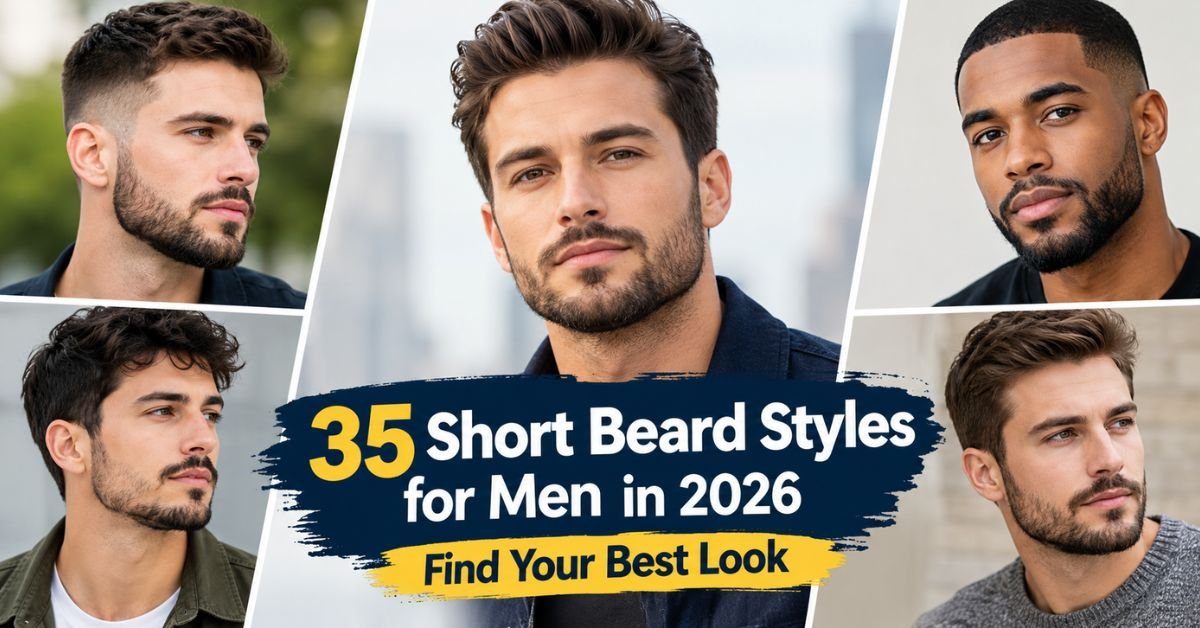
35 Short Beard Styles for Men in 2026: Find Your Best Look
A sharp short beard can change your whole face in ten minutes. It adds structure and hides weak spots. It also asks for far less effort than a full beard. That’s why short beard styles for men keep topping grooming lists, and why modern men’s grooming trends lean toward neat, tight facial hair. You get a well-groomed masculine appearance without a daily battle with a comb.
This guide uses one simple rule. Stubble runs from 0.5 to 3mm (up to about 0.1 inch). A short beard runs from 3 to 20mm (about 0.1 to 0.8 inch). You’ll find 35 styles here, and each one comes with a length, a face shape match, and a note on who should pass. The “Sharp Line-Up” section covers a finishing technique, so it doesn’t count toward the 35. Guard numbers differ by brand. Always check your own trimmer’s chart.
Best Short Beard Styles for Men
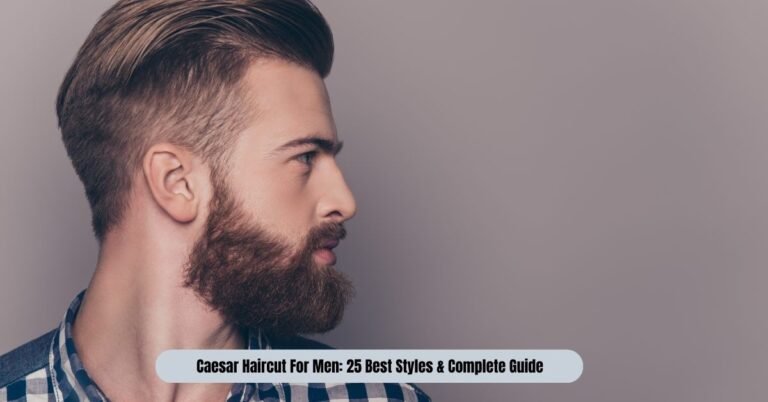
These are the best short beard styles for men who want an easy start. They cover everything from squared-off edges to loose, textured growth. Each one gives you clean and professional beard looks or a relaxed, natural short facial hair feel. You can wear most of them to work, a wedding, or a weekend hike.
Each entry below shows the length in millimeters, the face shapes it flatters, and a “pass on it” note. Think of it as a menu with the prices listed. Read all nine, then pick two or three to try. A beard that suits your face shape and your growth will always beat a trendy one that doesn’t.
Read More: 20 Best Beard Styles Without Mustache 2026: Find Your Look
Short Boxed Beard
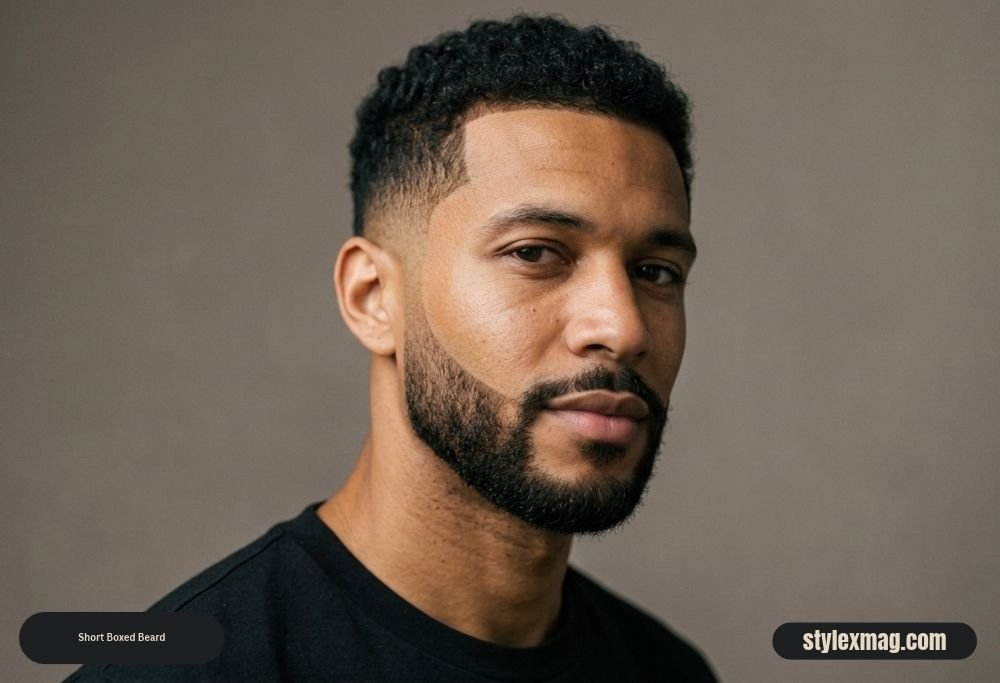
The short boxed beard is the most requested cut in many barber chairs. It frames the jaw with straight cheek lines, a flat bottom edge, and an even beard length. This short boxed beard style men love sits at 12 to 20mm. Set your neckline about two finger-widths above your Adam’s apple. It flatters oval, square, and rectangular faces. Pass on it if your cheeks grow in patchy, because the boxed shape exposes gaps.
Corporate Beard

The corporate beard style is the softer cousin of the boxed cut. The cheek line follows your natural growth, and the length sits at 8 to 12mm. Barbers sometimes call it a tight beard. It says “I take care of myself” without shouting it. It suits oval and oblong faces and fits nearly every office. Pick something bolder if you want a statement, because this cut stays quiet on purpose.
Heavy Stubble (5 O’Clock Shadow)

Heavy stubble sits at 4 to 5mm and blends rugged with polished. Research backs its appeal. Researchers at the University of New South Wales found that women rated 10-day stubble as most attractive in a 2013 study. A later 2016 study with thousands of female raters also ranked heavy stubble highly. Note that the study’s “heavy stubble” meant 10 days of growth, which runs a bit longer than 5mm. Clean the neckline, and the look turns deliberate. Round faces gain the most. Go slightly longer if your growth is light or blonde.
Short Stubble (3-Day Beard)
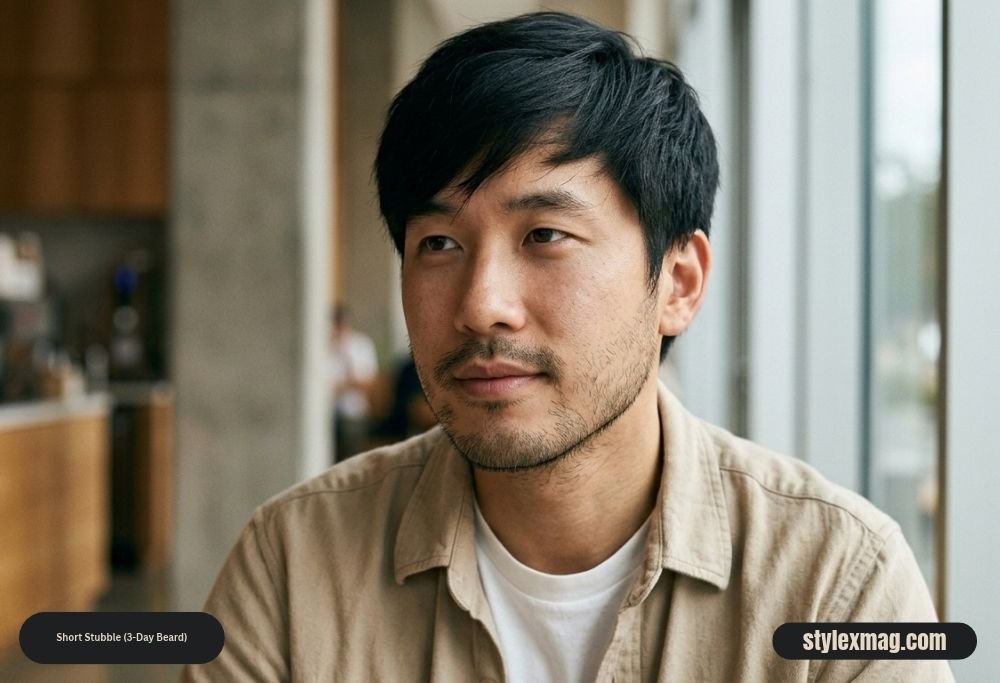
A short stubble beard measures 1 to 3mm. It works well for men with thin growth, because short hair doesn’t expose gaps. It’s also a perfect low beard style for busy mornings. Diamond and heart-shaped faces carry it best, since it adds texture without adding weight. Keep the neckline crisp. If your growth is dense and dark, think twice, because it can look like you simply forgot to shave.
Read More: 46 Best Messy Hairstyles for Men in 2026: Stylish Looks for Every Hair Type
Classic Short Beard
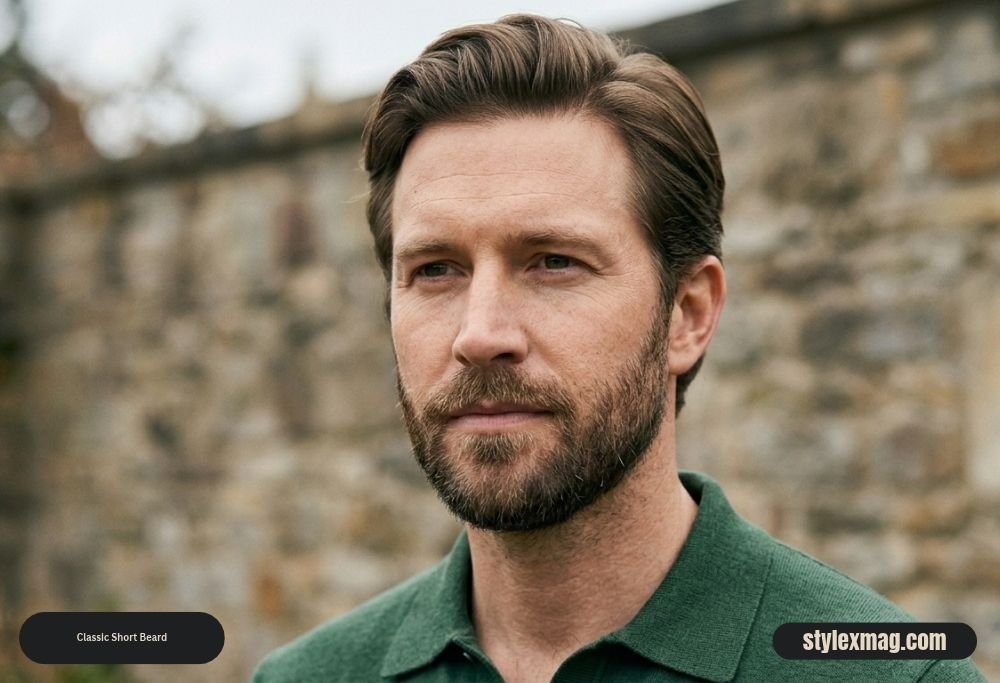
The classic short beard keeps one even length across the jaw, cheeks, and chin. Aim for 8 to 12mm. Leave your natural growth pattern alone, with no hard carving. The result feels masculine and relaxed. Oval and oblong faces wear it well, because the even coverage doesn’t add width. A very round face needs a different plan. Try shorter sides and a slightly longer chin instead.
Rounded Short Beard
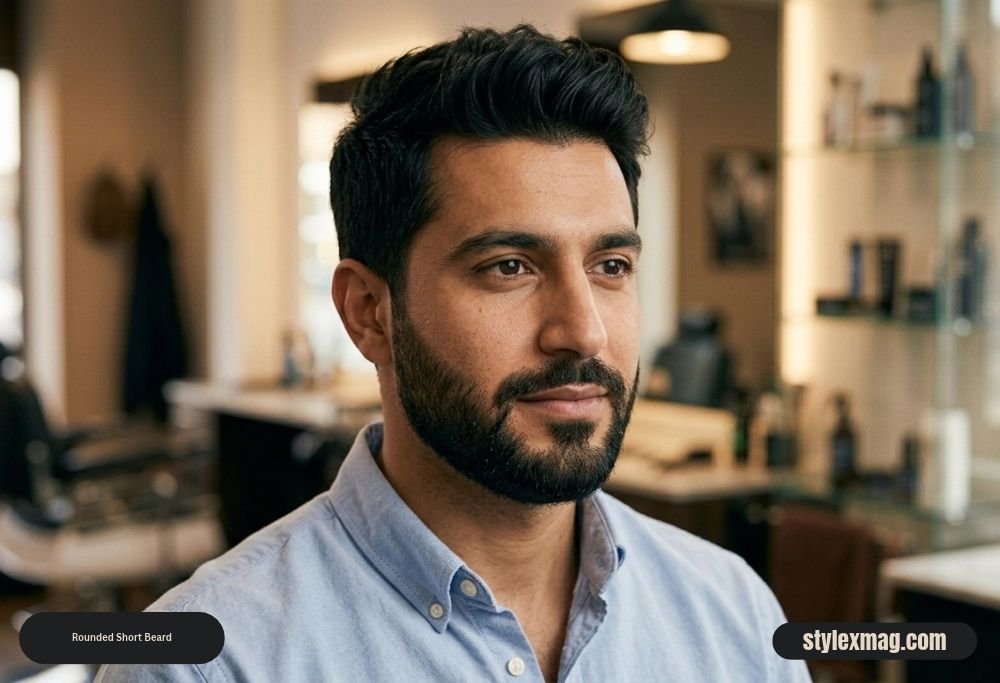
This cut swaps straight lines for soft curves. Use 8 to 12mm and round the corners at the cheek and chin. It looks relaxed and friendly. Oval faces and softer jaws handle it easily. On a round face, keep the curves tight and let the chin run a little longer. That adds vertical length. If you want to sharpen a square jaw, choose a boxed shape instead.
Short Shaggy Beard
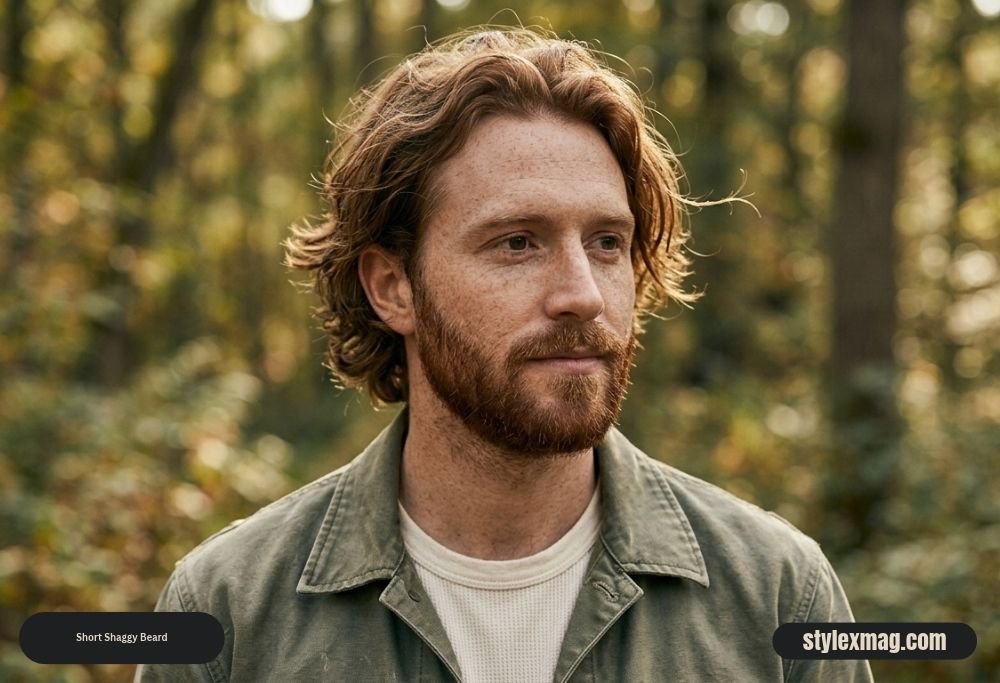
The shaggy cut works with uneven growth, not against it. Keep it around 8 to 12mm and skip the obsessive edge work. The texture becomes the point. It forgives thin cheeks better than most options, which makes it a smart short full beard for guys with mixed density. A clean neckline stops it from looking sloppy. Strict formal workplaces may frown on it.
Hollywoodian Beard

The Hollywoodian joins the mustache to a chin and jaw beard. The cheeks stay short or clean. Use about 8 to 15mm on the jaw. It suits men whose cheek growth lags behind their chin growth. You turn a weakness into a design choice. Oval and heart-shaped faces carry it well. Skip it if you grow strong, even cheek hair, because you’d shave off your best feature.
Short Ducktail Beard
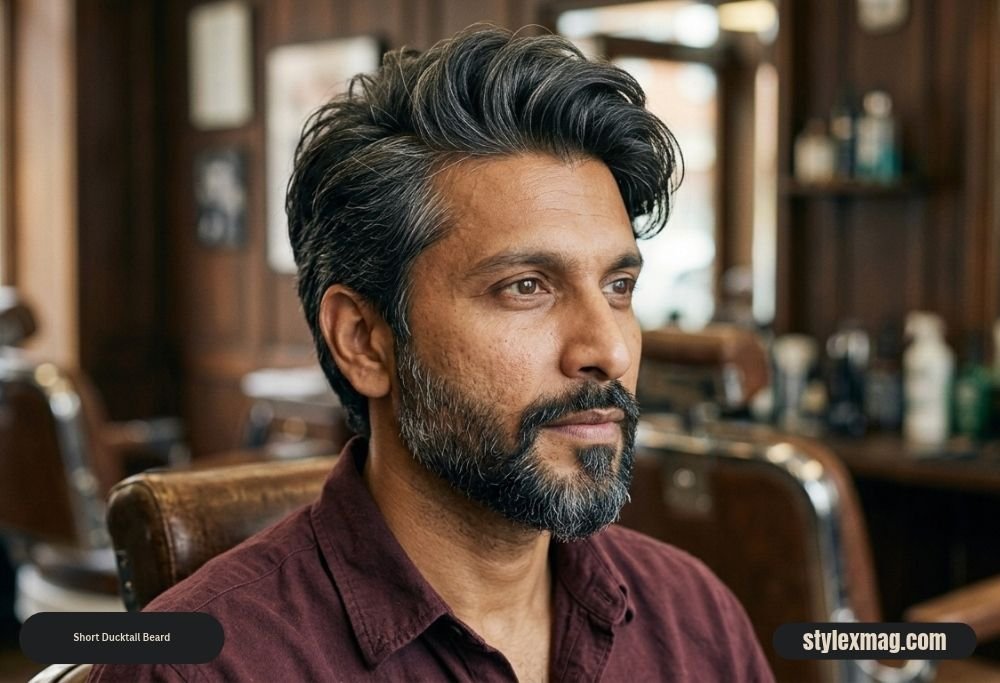
The short ducktail keeps the sides rounded while the chin tapers to a soft point. Use 8 to 12mm on the sides and let the chin run a few millimeters longer. The point adds jawline emphasis and vertical length. Round and square faces both look good with it. Trim the tip every few days. It loses its shape fast.
Short Beard Styles with a Defined Chin and Jawline
Chin-focused cuts put the hair where most men grow it thickest. The cheeks stay clean or very light. That makes these styles a natural pick for anyone seeking a short beard for patchy facial hair. They also create a short beard with a sharp jawline effect, because the bare cheeks make the jaw look crisp.
These styles demand a detail trimmer. Small shapes show every mistake. A slightly crooked circle or anchor looks worse than no shape at all. Plan on touch-ups every two to three days. If you’re new to this, ask a barber to set the outline once. Then you can copy it at home.
Circle Beard
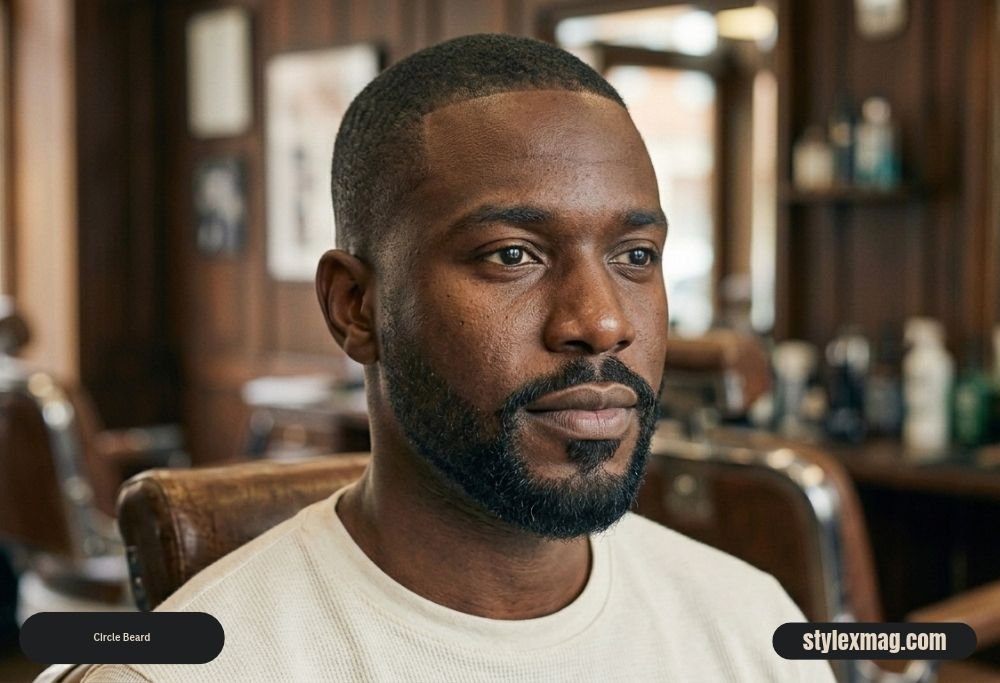
The circle beard joins a rounded goatee to the mustache. The two form a ring around the mouth. Use 2 to 4mm and shave the cheeks clean. Proportion matters. Too small, and it vanishes. Too wide, and it becomes a different style. Oval, square, and angular faces suit it, since the circle softens hard lines. A very round face may find that it echoes the roundness.
Anchor Beard
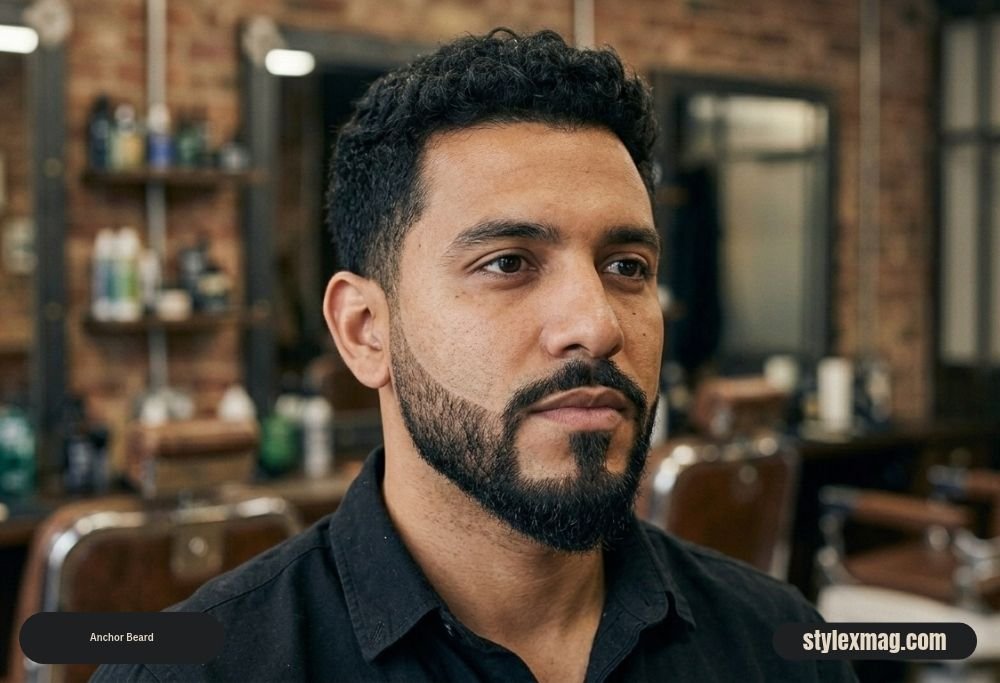
The anchor pairs a pointed chin beard with a soul patch and a mustache. Together they look like a ship’s anchor. Carve the shape with a detail trimmer. Round and oval faces benefit from the vertical emphasis. You need decent chin density to hold the form. If your chin hair grows sparse, choose a goatee or stubble style instead.
Balbo Beard
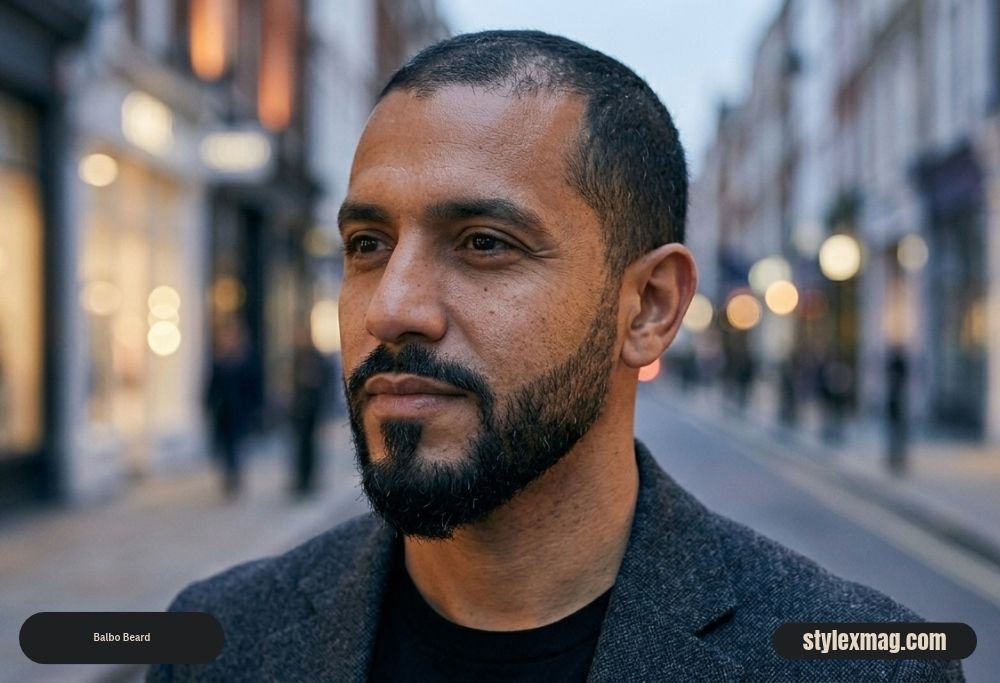
The Balbo has a floating mustache and a chin beard. It has no sideburns and no cheek hair. The mustache and beard never touch. That means two parts to maintain, and both need sharp edges. Round faces gain the most, since the cut adds length without width. It’s a high-effort choice. Beginners should practice with a simpler goatee first.
Extended Goatee
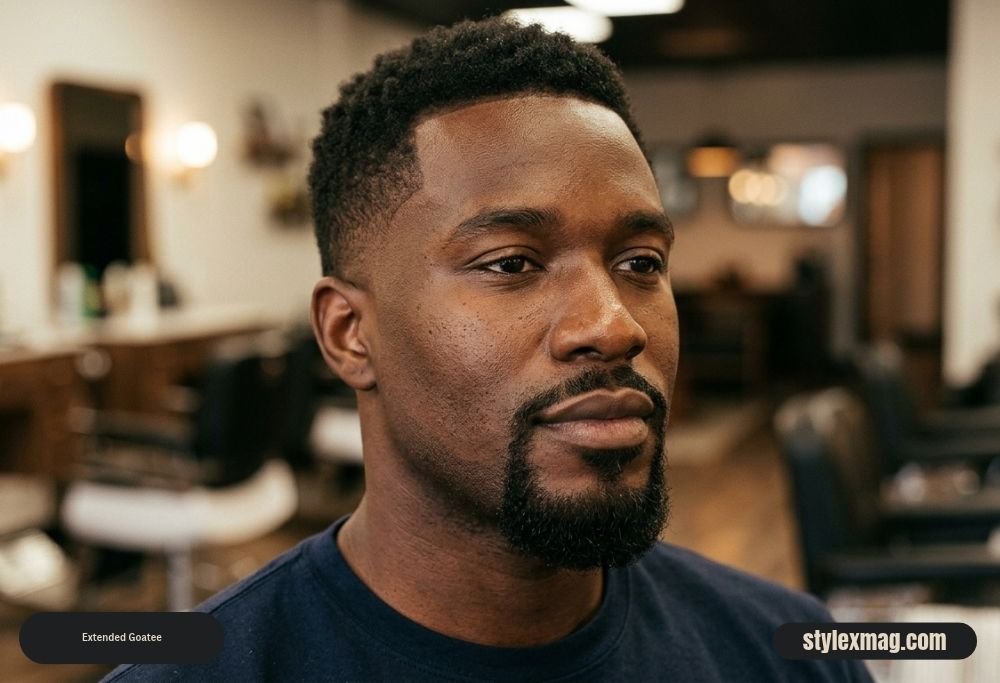
The extended goatee stretches the classic goatee along the jawline. It stops before it reaches full sideburns. Think of it as a halfway point between a goatee and a Hollywoodian. Use 2 to 4mm. Square and oval faces carry it well. Skip it if your growth turns patchy near the ears, because the fade-out will look uneven.
Royal Beard
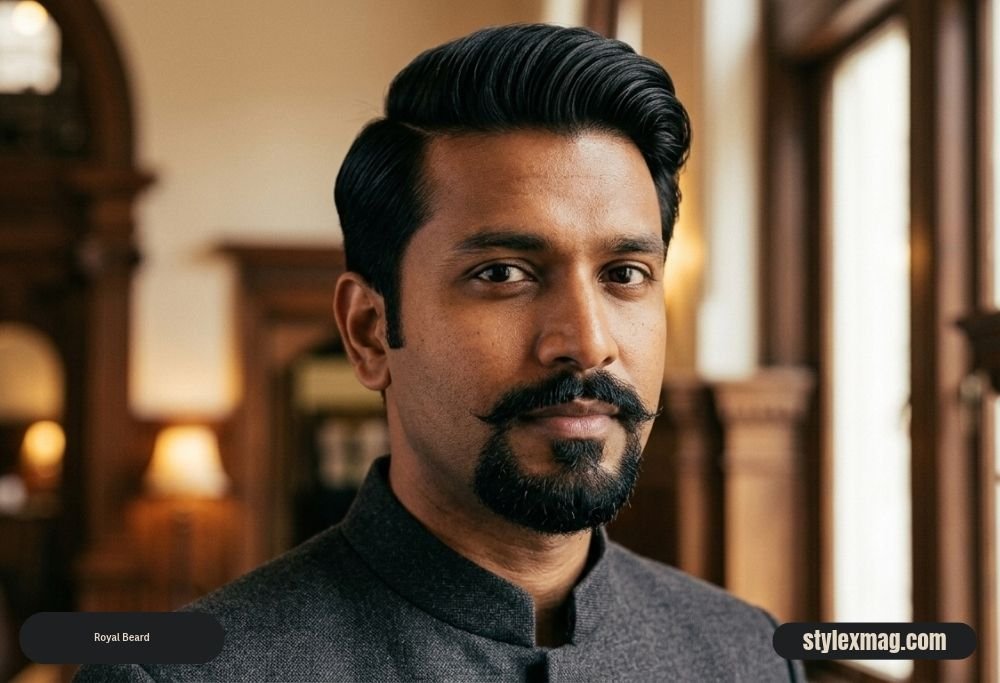
The royal beard pairs a gently curved mustache with a vertical, T-shaped chin beard. The cheeks and neck stay clean. The tall shape stretches a round face and adds a refined, almost regal look. It needs precise trimming, so it’s not for the rushed. One lopsided side ruins the whole effect.
Goatee with Short Stubble

Among short goatee styles, this one stays the most casual. Keep a defined goatee and let light stubble cover the cheeks at about 1 to 2mm. The stubble gives the goatee context. It also hides small patches nicely. It works on most faces and sits well in everyday settings. Trim the stubble every two to three days so it stays even.
Van Dyke Beard
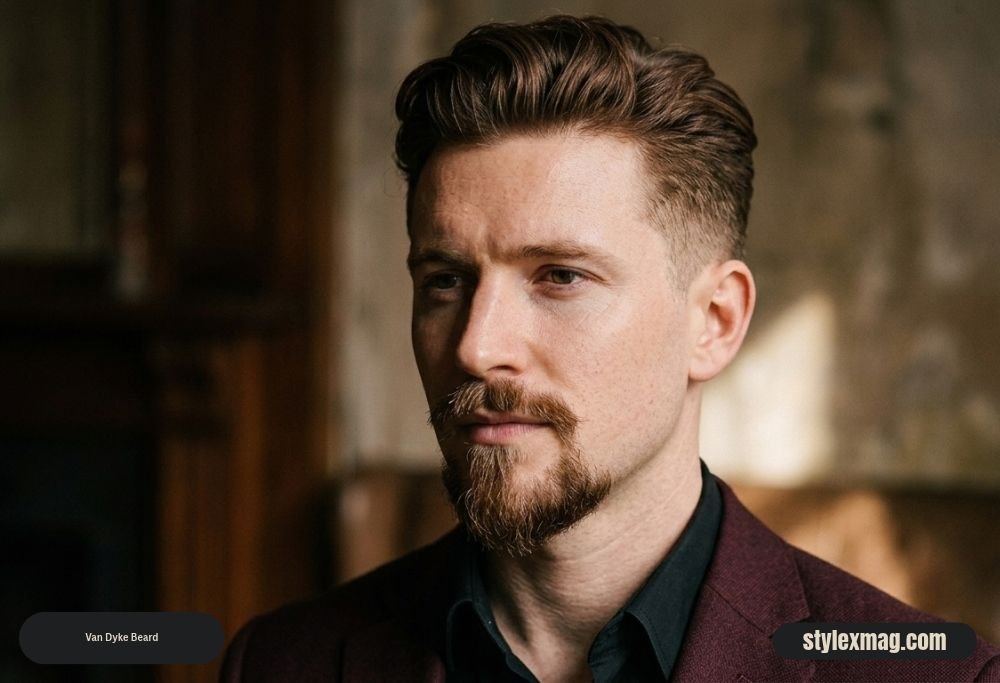
The Van Dyke pairs a pointed chin beard with a separate mustache. The cheeks stay clean. It reads as artistic and bold. Oval, heart-shaped, and long faces handle the pointed chin best. Use 3 to 6mm on the chin. Keep the mustache neat and slightly shorter than the beard. Pass on it if you want something understated for a conservative office.
Chin Strap Beard
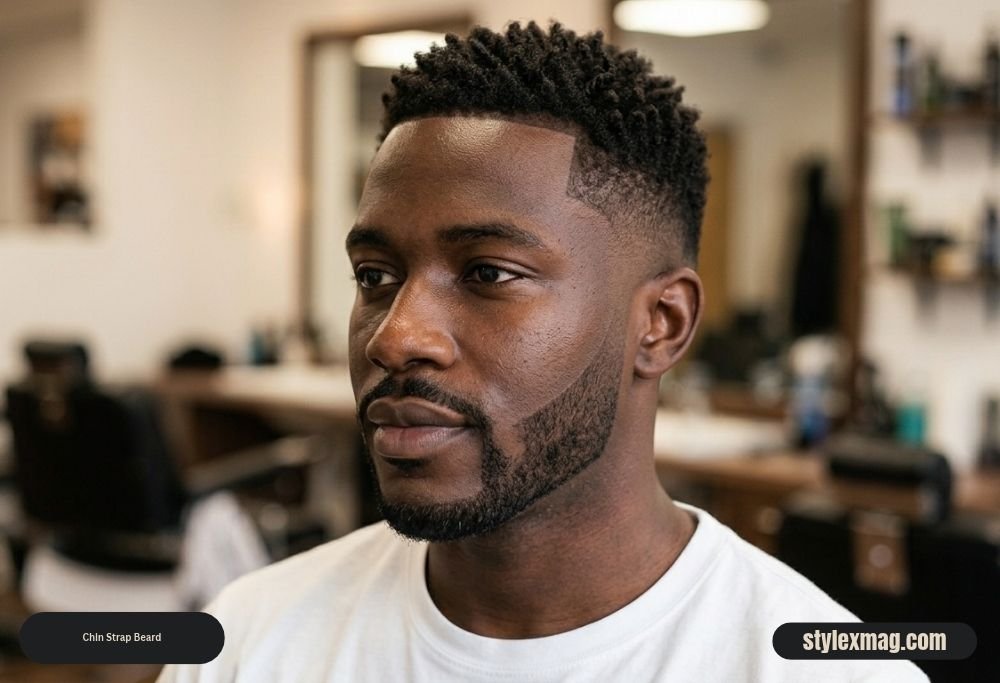
A short chin strap beard runs a thin line of hair along the jaw from ear to ear. The modern version is narrower and better blended than the heavy early-2000s look. Keep it at 2 to 4mm. Square and oval jaws show it off best. It works well for men who want definition with almost no coverage. Avoid it if your jawline is soft, because the thin line may draw attention to that.
Soul Patch with Stubble
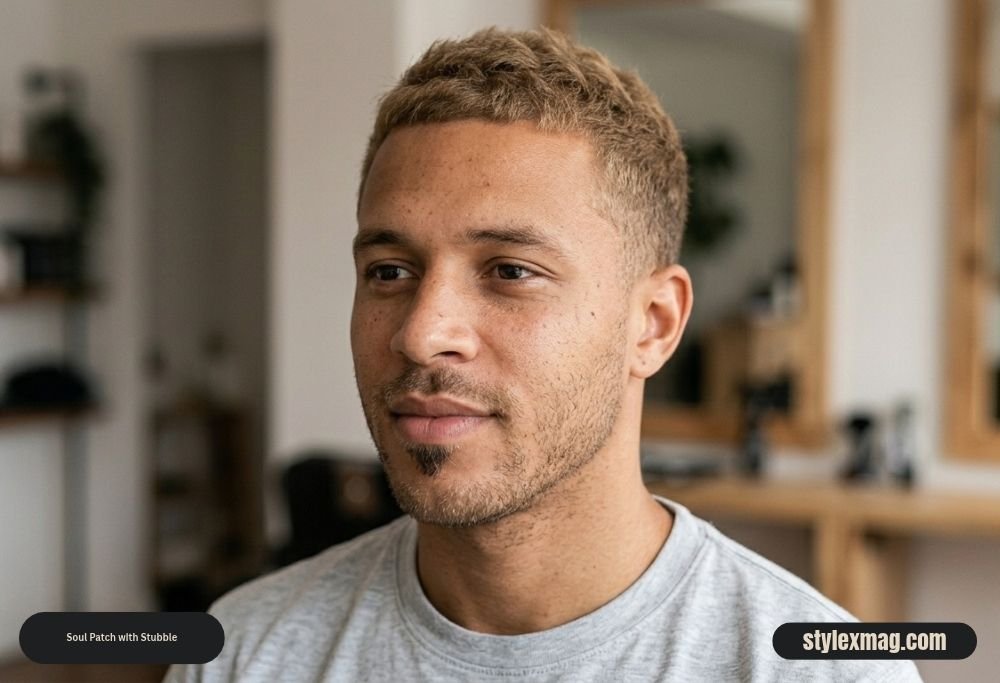
This is the quietest style on the list. A small tuft sits below the lower lip. Light stubble covers the rest of the face at about 1mm. The stubble keeps the patch from looking unfinished. It barely changes your face proportions, so it works on almost every shape. Skip it if you want your beard to make a strong visual impact.
Short Beard Styles with Different Mustaches
A mustache moves the focal point to the center of your face. That changes the whole look, even when the beard stays tiny. A short beard with mustache can feel classic, playful, or sharp. The key is a balanced mustache and beard. If one overpowers the other, the face looks off.
Expect more upkeep with these cuts. Mustache hair grows into your lip and catches food. Trim it every few days. Use small scissors for the lip line. Here are four combinations worth trying, from low effort to high drama.
Short Beard with a Chevron Mustache

The chevron is thick and follows the upper lip line. Pair it with a short beard at 4 to 8mm. It adds weight to the center of the face without the theater of a handlebar. Square and oval faces handle the extra horizontal emphasis well. Thin mustache growth is a problem. A chevron needs real density to hold its shape.
Beardstache
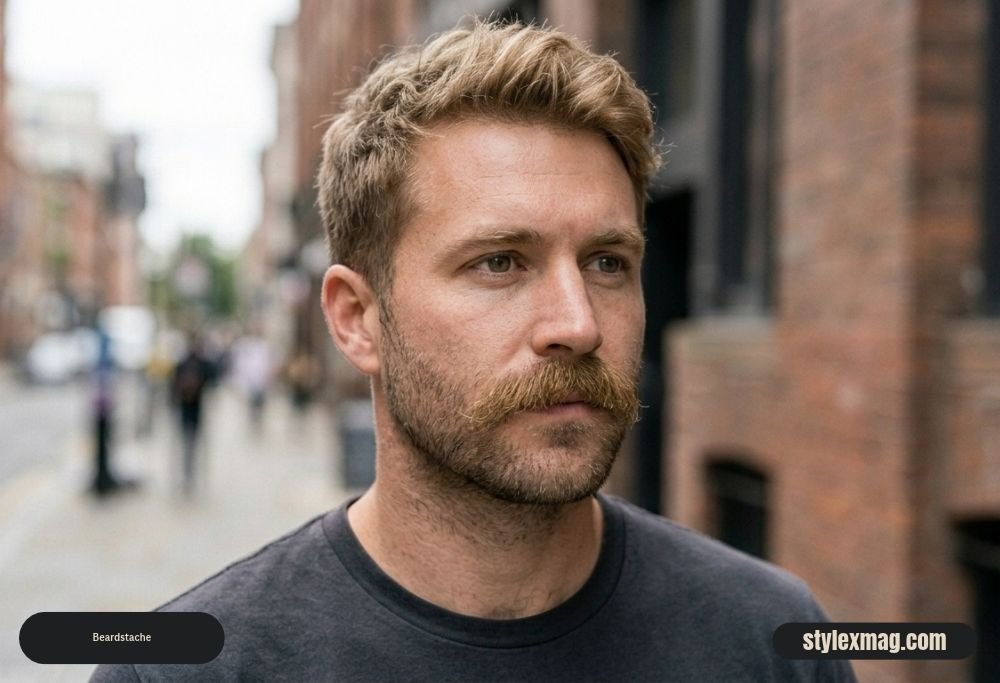
The beardstache is a full mustache over light stubble at 1 to 2mm. The contrast creates a bold, deliberate look. Grow the mustache first, then trim the rest of the face short. It suits most face shapes, since the mustache carries the style. Skip it if your mustache grows thinner than your beard. The whole idea needs a heavy mustache over lighter hair.
Short Beard with a Handlebar Mustache
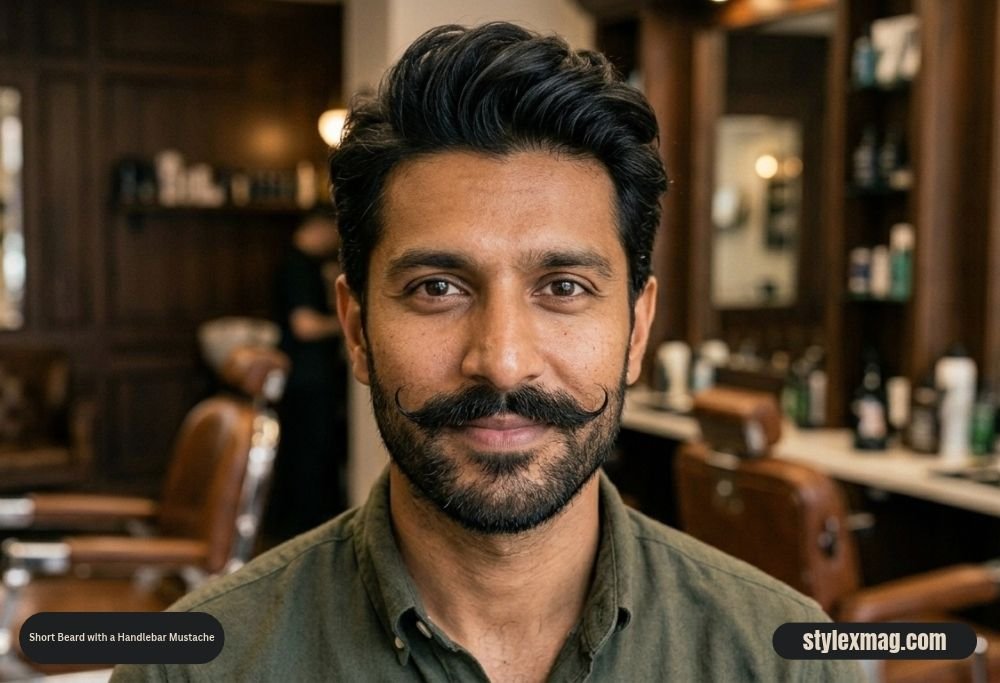
A waxed handlebar with curled ends sits above a clean, short beard at 4 to 8mm. It takes daily styling with firm mustache wax and a steady hand. The payoff is high. The short beard keeps the rest of your face grounded. It’s a great fit if you enjoy grooming as a ritual. Impatient men should skip it, since an unwaxed handlebar just looks overgrown.
Short Beard with a Long Mustache
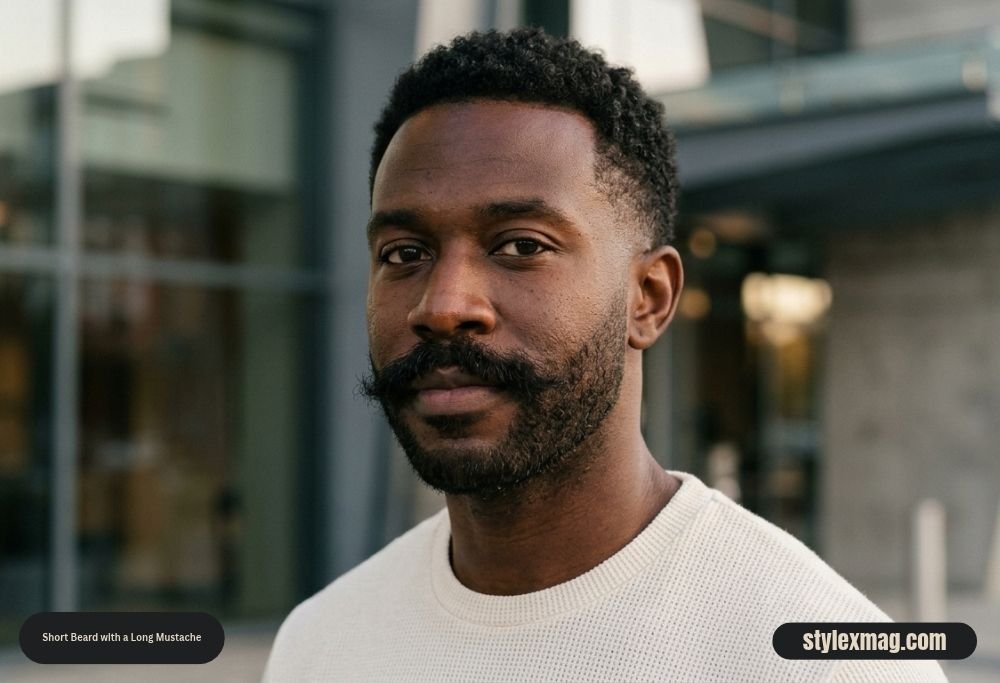
Here, the mustache grows past the lip corners while the beard stays cropped at 4 to 8mm. The mustache becomes the statement. It feels vintage and expressive. Comb the ends daily to train them. Oval and oblong faces wear it best. Some workplaces still read a long mustache as a bold personal choice, so think about your job first.
Modern Short Beard Styles with Fades and Tapers
A beard fade blends the hair from full density down to near-skin. It’s one of the biggest modern short beard styles right now. The gradient ties the beard to your haircut, so the head and face look like one design. Beard fade blending techniques take practice, so many men visit a barber for the first shaping.
Fades also support beard contouring and shaping. A darker, denser zone near the chin and a lighter zone near the cheekbone create shadow and depth. That shadow can sharpen a jaw or slim a face. Once a barber sets the outline, you can maintain the fade at home with a trimmer and a steady hand.
Short Beard Fade

A short beard fade keeps 8 to 12mm at the chin and steps down toward the sideburns. The gradient meets your haircut at the temple. It looks polished and current. A short beard with a fade haircut works especially well. Pair it with a low or mid fade on top. The style fits every face shape. Home beginners should expect a learning curve.
Shadow Fade Beard
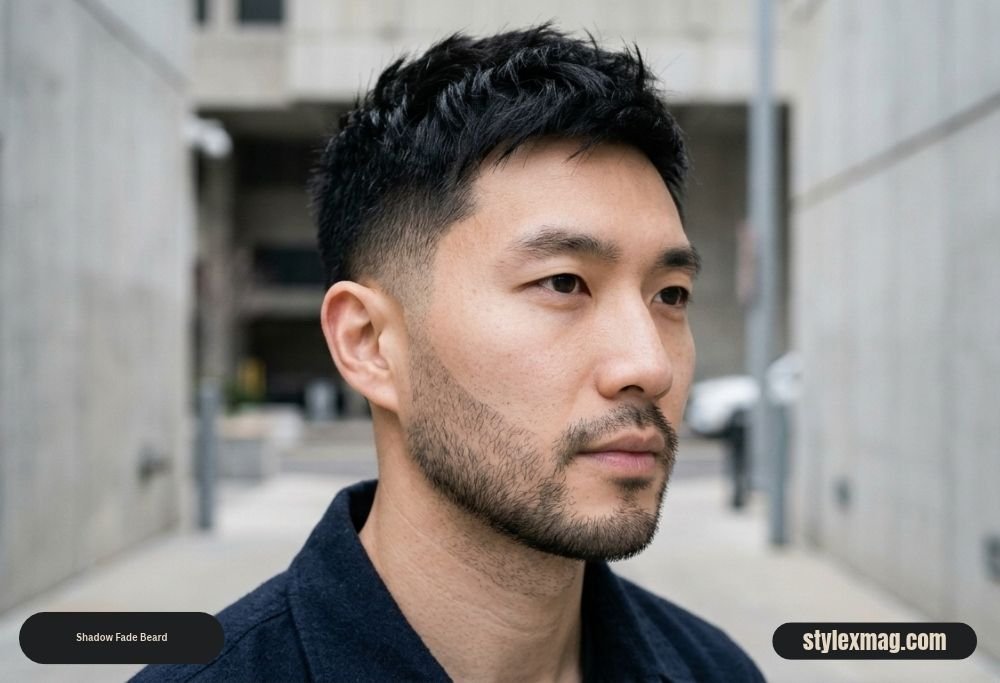
The shadow fade is the dramatic version. It runs from a dense chin to near-skin at the upper cheeks. The result looks sculpted and architectural. Angular faces gain the most, since the shadow accentuates bone structure. You need strong density contrast for the effect to read. Men with very light growth should choose a standard fade instead.
Short Beard with a Taper Fade

The taper starts higher on the sideburns and shortens slowly toward the chin. It’s softer than a full fade, so it’s easy to wear every day. Offices accept it without a blink. It also grows out gracefully. Compared with a skin fade, a taper has less contrast and less maintenance. Choose it if you want a subtle polish.
Short Beard with a Buzz Cut

A short beard with a buzz cut is the ultimate low-effort, high-impact pairing. The buzz keeps the head simple. The beard at 8 to 12mm then carries all the visual interest. The contrast draws attention to the jawline. Strong jaws look excellent here. If you want your hairstyle to do the talking, pick another pairing.
Short Beard with a Low Fade
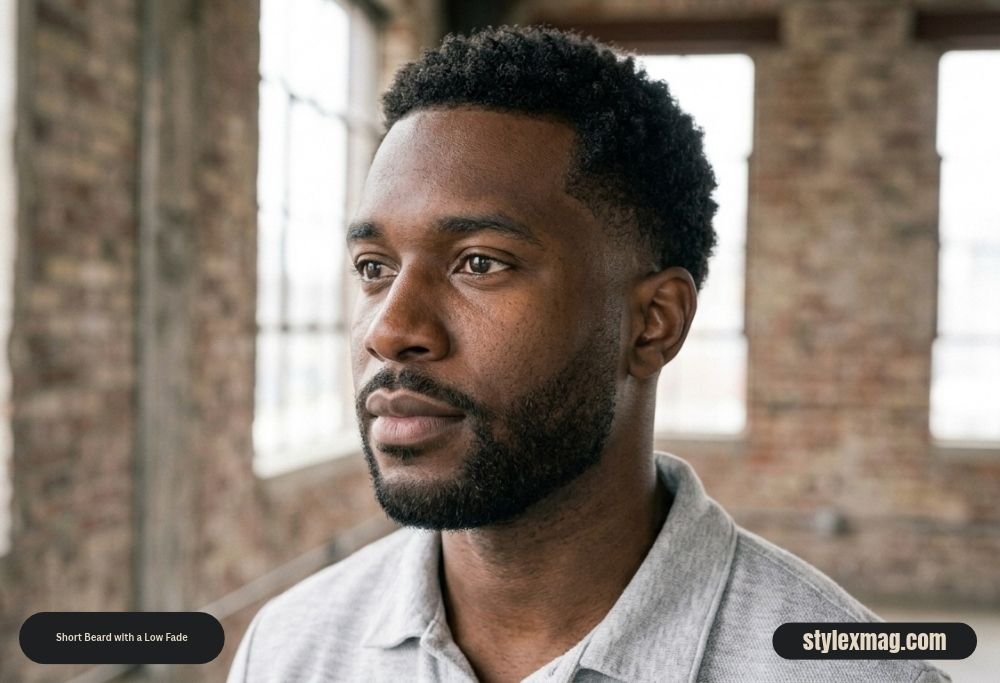
A low fade starts just above the ear and blends into the beard in one smooth line. This pairing creates the cleanest transition of all. Use a short boxed beard or heavy stubble at the cheek. It’s a very safe choice for work and weekends. Ask your barber to match the beard’s taper to the fade’s height.
Short Beard with a Sharp Line-Up

This one isn’t a separate style. It’s a finishing technique that upgrades every other cut. A line-up means crisp, razor-clean borders on the cheek line, the neckline, and around the mustache. The same beard goes from rough to refined with it. You’ll get defined beard cheek lines and a sharp beard neckline. A detail trimmer does the job in about three minutes.
Short Beard Styles for Different Hair Types and Textures
Hair type changes how a short beard looks and behaves. Coarse, curly, wavy, and straight hair each need slightly different handling. Growth speed, color, and skin sensitivity matter too. Two men can use the same guard and get totally different results.
Your beard growth patterns also play a role. Some men grow thick on the chin and thin on the cheeks. Others grow evenly but slowly. Study your face in good light for two weeks before picking a style. That small test saves you from a lot of bad haircuts. The styles below match the most common hair types.
Short Beard for Black Men
Coily facial hair behaves differently at short lengths. The goal is control and clean lines. Use 2 to 4mm in most cases, and carve crisp cheek and neck lines with a detail trimmer. Moisturize daily, since coily hair dries out fast and dry skin shows more under short hair. Sharp edges transform the look. If you get razor bumps, shave or trim with the grain and use a gentle trimmer on a slightly longer setting.
Curly Short Beard
Curly hair adds natural fullness, even at short lengths. Your beard looks thicker than it is. Keep the length at 8 to 12mm and the outline clean. Trim the edges every three to four days, since curls lose their shape faster than straight hair. Don’t straighten it. A short curly beard with clean lines has more character than a flat one.
Short Beard for Wavy Hair
Wavy facial hair sits between straight and curly. It tends to lift slightly at the cheeks. Use 6 to 10mm and a light beard balm to keep the waves flat and soft. Brush it downward after washing. If the waves flare out too much, cut a few millimeters shorter. This type suits short beard for fine facial hair goals, too, since waves create the look of extra volume.
Short Beard for Straight Hair
Straight hair shows every gap and every uneven edge. That makes even beard length and sharp lines essential. Use 5 to 10mm and trim carefully against the grain. Fine, straight hair benefits from a slightly longer cut, because very short hair on light skin can look sparse. A faint fade near the cheekbones hides thin spots.
Short Beard for Thick Facial Hair
Short beard styles for thick facial hair need more frequent trims. Dense hair puffs out fast and can look bulky within a week. Keep it at 5 to 10mm, soften the cheek line, and taper the sides tighter than the chin. A boxed shape suits thick growth well. Use a good beard brush to lift hair before trimming. Otherwise you’ll miss strands that hide underneath.
Short Beard for Patchy Growth
A short beard for patchy growth is easy to pull off. Short lengths turn gaps into texture. Use 1 to 3mm and focus the shape on the chin and mustache, where most men grow densest. Circle beards, anchors, and goatees all work well. Avoid longer lengths, since they expose the gaps. If you try a short beard for patchy facial hair at 10mm, expect the patches to show.
Salt-and-Pepper Short Beard
The mix of grey and dark hair adds depth. It makes a short beard look fuller at the same length. Keep it at 8 to 12mm with sharp edges. Crisp lines make grey hair look distinguished. Fuzzy edges make it look tired. Don’t dye it flat. A natural two-tone beard looks better up close than a solid dye job. It’s also one of the best options for older men.
Short Viking Beard
The short Viking beard keeps the cheeks short at about 3mm. The chin grows a little longer at 10 to 15mm. That creates a strong horizontal jawline with a rugged edge. Round and oval faces benefit from the extra chin length. Keep the neck and cheek lines clean. If your chin hair grows slower than your cheek hair, this cut won’t work.
Short Beard Styles for Different Face Shapes
The right style follows one simple rule. Angles and vertical length balance roundness. Soft curves balance sharp jaws. Understanding beard shape and face proportions helps you choose in minutes. You don’t need a barber’s eye. You need a mirror and a minute.
Here’s a quick table before the detailed notes. It shows the best matches for short beard for different face shapes, and it also works as a guide to beard styles for different jawlines. Use it as a starting point, then adjust for your growth and your job.
| Face shape | Best styles | Why it works |
| Round | Anchor, Balbo, royal, short boxed, Viking | Angles and vertical length slim the face |
| Oval | Nearly everything | Balanced proportions give you wide freedom |
| Square | Circle, extended goatee, chevron combos | Soft shapes ease strong corners |
| Long and oblong | Corporate, classic short, long-mustache combos | Fuller sides add width, not length |
| Heart-shaped | Hollywoodian, short stubble, fuller chin styles | More chin weight balances a narrow jaw |
Short Beard for Round Faces
A short beard for round face shapes needs angles and height. Pick a short boxed beard, an anchor, or a royal beard. Keep the sides short at 3 to 6mm and let the chin run slightly longer. That draws the eye down and makes the face look longer. Avoid a rounded, full-length beard, since it repeats the curve of your cheeks.
Short Beard for Oval Faces
A short beard for oval face shapes is the easiest match. The balanced proportions carry almost any cut. A short boxed beard, a corporate beard, or a goatee all look great. Pick based on your growth and your job, not your face. The only thing to avoid is a style that adds too much length, because it can make an oval face look stretched.
Short Beard for Square Faces
A short beard for square face shapes can go two ways. You can soften the jaw with a circle beard or an extended goatee. You can also play up the angles with a boxed beard at 8 to 12mm. Decide which look you want. Both work. A sharp line-up helps either choice. Heavy fades at the corners can make a square jaw look even stronger.
Short Beard for Long and Oblong Faces
Long faces need width, not height. Keep the chin short and let the sides run fuller at 8 to 12mm. A corporate beard or a classic short beard fits perfectly. Skip pointed chin styles like the Van Dyke, since they stretch the face even more. A mustache with a short beard also adds helpful horizontal weight across the middle.
Short Beard for Heart-Shaped Faces
Heart-shaped faces have a wide forehead and a narrow chin. Add weight at the bottom. A Hollywoodian, a fuller chin beard, or a short stubble beard at 2 to 3mm balances the shape well. Keep the cheeks light. Avoid thin chin straps or tight goatees, because they make the chin look smaller.
How to Choose the Right Short Beard Style
Picking a style takes five minutes when you ask four questions. What’s your face shape? What haircut do you wear? How dense is your growth? How much time will you spend each week? Those four answers narrow 35 styles down to three or four options. Follow the steps below, and don’t skip the growth check.
Most men choose with their eyes and ignore the math. They pick a look from a photo and forget that their hair grows differently. A cut should suit the beard you can actually grow. Use the next four steps as a filter, and your first attempt will look far better.
Choose a Beard Style Based on Your Face Shape
Start with the table above. Find your face shape, then pick one or two styles that match. Measure your face with a mirror if you’re unsure. Compare the width of your forehead, cheekbones, and jaw. The widest part gives you the shape. If you sit between two shapes, pick the style that appears in both columns.
Match Your Beard to Your Haircut
A short beard with a haircut should feel like one design. A mismatch looks accidental. This table shows the easiest pairings.
| Haircut | Best short beard pairing | Why it works |
| Low fade | Short boxed beard, heavy stubble | The fade blends into the beard |
| Mid fade | Beard fade, corporate beard | The mid-level transition balances both |
| High fade | Shadow fade beard, stubble | The contrast matches the fade |
| Buzz cut | Heavy stubble, short boxed beard | The simple head shifts focus to the jaw |
| Textured crop | Short shaggy beard, stubble | Texture on top matches texture below |
| Slick back | Corporate beard, short boxed beard | Polished hair meets a polished beard |
Consider Your Facial Hair Growth and Density
Facial hair density decides which styles work. Grow your beard for two weeks without trimming. Then look at the map. Mark the thick zones and the thin zones. Take Marco, an example case. His chin grows dense, but his cheeks grow thin. He first tried a boxed beard, and the gaps showed.
He switched to a circle beard and stubble on the cheeks. Suddenly his face looked balanced. Good beard density and coverage guide the choice, not the other way around.
Select a Beard Length That Suits Your Lifestyle
Think about your week. Do you have ten minutes each morning? A low-maintenance facial hair choice like heavy stubble or a corporate beard fits. Do you enjoy grooming? A handlebar or a beard fade rewards the effort. Consider your job too.
A short beard for everyday wear should look tidy in a meeting and relaxed on a weekend. Pick the length you’ll actually keep up.
Short Beard Length Guide: Trimmer Guards and Millimeters
Length is the biggest lever in any beard. A 2mm difference changes the whole look. That’s why short beard length deserves its own section. You should know the numbers in millimeters, inches, and guard settings. The guard number on your trimmer means little by itself, since brands differ.
Always check your own trimmer. Wahl, Philips, Braun, and others use different scales. Many guard systems list the length in millimeters on the guard itself. When in doubt, start longer and step down. You can always cut more. You can’t glue it back. Good beard length and trimming guards habits prevent most disasters.
Short Beard Lengths in Millimeters and Inches
Use this table for quick reference. It follows the one rule from the intro. Stubble runs 0.5 to 3mm. A short beard runs 3 to 20mm.
| Style | Length (mm) | Length (inches) | Best for |
| Short stubble | 1–3 | 0.04–0.12 | Thin growth, low effort |
| Heavy stubble | 4–5 | 0.16–0.20 | Rugged and polished |
| Very short beard | 5–8 | 0.20–0.31 | Clean professional look |
| Short beard | 8–12 | 0.31–0.47 | Balanced, even coverage |
| Short boxed beard | 12–20 | 0.47–0.79 | Fuller look with sharp edges |
Which Trimmer Guard Should You Use for a Short Beard?
Beard trimmer guard settings vary, so read the mm on your guard. Many trimmers use a guard around 3 to 4 for about 10 to 13mm. Start with a longer guard and trim the whole beard. Step down one setting at a time. Stop when you like the result. Never jump straight to your target. Check your length in good light, from both sides, and tilt your chin up to see the underside.
Stubble vs. a Short Beard: Understanding the Difference
The stubble vs short beard question comes down to length and the neckline. Stubble sits at 3mm or less. A short beard starts above 3mm. Heavy stubble at 4 to 5mm lives right on the border. A clean neckline is what separates them in practice. With a crisp neckline, heavy stubble reads as a short beard. Without one, it looks like a missed shave.
How to Trim and Maintain a Short Beard
Short beards show more skin, so skin care matters as much as beard care. Good short beard grooming takes about five minutes a day. You don’t need a shelf full of products. You need a trimmer, a comb, some oil, and a little consistency. A simple at-home beard grooming routine keeps the beard sharp between barber visits.
The steps below cover how to shape a short beard and how to maintain a short beard from week to week. Follow them in order. Skip nothing in the first month. After that, the routine becomes habit. You’ll finish before your coffee cools.
How to Trim a Short Beard at Home
Good short beard trimming starts with a dry, combed beard. Comb it downward so every hair lies flat. Attach a longer guard first and run the trimmer against the grain, from neck to cheek. Check the result. Then step down a guard if needed. These beard trimming techniques protect you from cutting too short. Finish by removing the guard to trace the neckline and cheek edges.
How to Shape Your Neckline and Cheek Line
Beard neckline shaping starts with one rule. Place the line about two finger-widths above your Adam’s apple. Curve it gently from ear to ear, passing just under the chin. The beard cheek line follows your natural growth border. Don’t carve it too high. Clean everything above it with a razor or detail trimmer. You’ll get neatly trimmed beard styles and a clear frame for your face.
How Often Should You Trim a Short Beard?
Your beard maintenance routine depends on style. Trim the overall length every three to five days. Touch up the neckline and cheek line every two to three days. Stubble needs more frequent trims, since even 1mm changes the look. Use the table below as a guide.
| Style | Length trim | Edge touch-up |
| Stubble | Every 2–3 days | Every 2–3 days |
| Corporate or classic short | Every 3–5 days | Every 2–3 days |
| Short boxed beard | Every 4–5 days | Every 2–3 days |
| Beard fade | Every 3–4 days | Every 2 days |
Best Products for Keeping a Short Beard Healthy
You only need four beard grooming products. A gentle beard wash cleans without stripping oils. Use it three or four times a week. Beard oil keeps skin soft and cuts itch. Apply it daily. A small amount of balm adds light hold once your beard passes 8mm. A comb or brush spreads the oil and trains the hair. Regular shampoo can dry your skin, so leave it for your scalp.
Common Short Beard Grooming Mistakes to Avoid
Most mistakes are simple. Men skip the neckline, and the whole beard looks messy. They pick the wrong guard and cut too short. They trim wet hair, which stretches and then shrinks. They forget to moisturize the skin below. Some over-trim the cheek line and lose their shape. Slow down, work in layers, and check your work in two mirrors.
Short Beard vs. Stubble vs. Full Beard: Key Differences
Each beard length makes a different statement. Stubble looks casual and quick. A short beard looks sharp and balanced. A full beard looks bold and demands time. Knowing these differences helps you choose a style that matches your life. It also answers the common short beard vs full beard debate.
Think about upkeep, growth time, and workplace rules. A full beard needs daily attention and months of patience. A short beard needs a few minutes every few days. Many men find that a short beard gives the best return. It delivers structure without the commitment. The table below sets them side by side.
| Feature | Stubble | Short beard | Full beard |
| Length | 0.5–3mm | 3–20mm | 20mm and up |
| Maintenance | Every 2–3 days | Every 3–5 days | Daily attention |
| Growth time | A few days | 2–4 weeks | Several months |
| Look | Rugged, casual | Sharp, balanced | Bold, statement |
| Office-friendly | Yes | Yes | Depends on workplace |
Frequently Asked Questions
What is the most attractive short beard style for men?
Heavy stubble and the corporate beard rank highest in most reports. Research on stubble found that women rated it well. A 2016 study with thousands of female raters also placed heavy stubble on top. Still, attractiveness depends on grooming. A clean neckline and sharp edges matter more than any single style.
Which short beard style is easiest to maintain?
Short stubble and the corporate beard take the least effort. You trim every few days and clean the neckline. Neither needs wax, shaping tools, or daily styling. A soul patch with stubble also works for busy men. Avoid the Balbo and the handlebar if you want an easy routine.
What is the best short beard style for a patchy beard?
Pick a short length at 1 to 3mm and focus on the chin. Circle beards, anchors, goatees, and stubble styles all hide gaps well. Short hair makes patches look like texture. Avoid long cuts and boxed shapes, because they highlight thin spots.
How short should a man’s beard be?
A short beard sits between 3 and 20mm. Stubble sits below that. Choose a length based on your face shape, job, and growth. Most men look best between 8 and 12mm. Heavy growth can go shorter. Thin growth often looks better a bit longer.
Do short beards make men look older or younger?
It depends on grooming and color. Crisp edges and a tidy shape usually look younger and sharper. Grey hair can add age if it looks untidy. Facial hair generally adds a mature, masculine impression. A neat salt-and-pepper beard can look distinguished, not old.
How can I make my short beard look thicker?
Keep your lines sharp and your length even. A fade adds depth and makes the beard seem fuller. Healthy skin helps hair grow well, so moisturize and wash gently. Choose a length that suits your density. Don’t buy miracle products that promise instant growth. Patience and good grooming work better.
Final Thoughts
You now have 35 ways to wear a short beard. The decision path is simple. Match your face shape, your haircut, your growth, and your lifestyle. That combination gives you the best short beard for you. Remember the core rule. Stubble runs up to 3mm. A short beard runs from 3 to 20mm.
Try one style for two weeks before you judge it. Take a photo each morning. Adjust the length by a millimeter or two. Keep the neckline sharp. Small changes make a huge difference. Pick a style, grab your trimmer, and enjoy the new look.
StyleXMag Editorial Team shares the latest haircut and hairstyle ideas, from modern fades and comb overs to curly, long, slick-back, and face-shape styles. Our goal is to make finding your next look simple, useful, and inspiring.