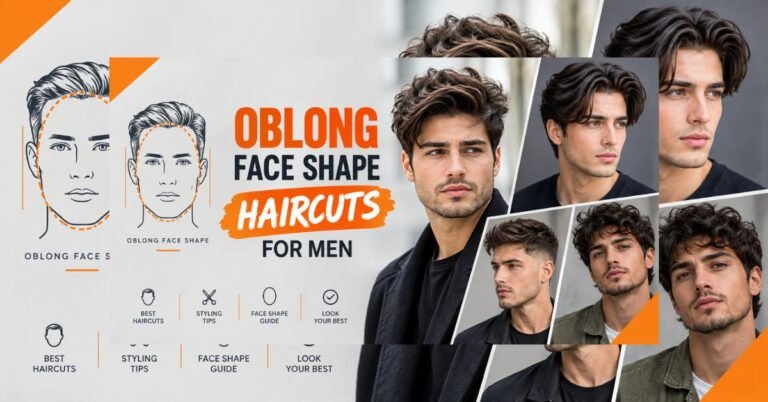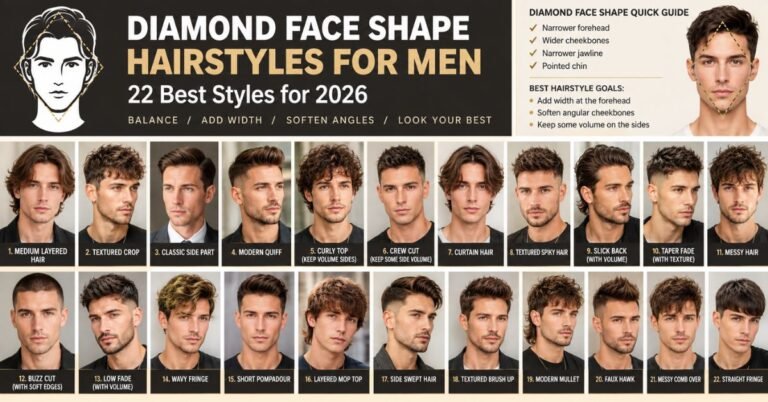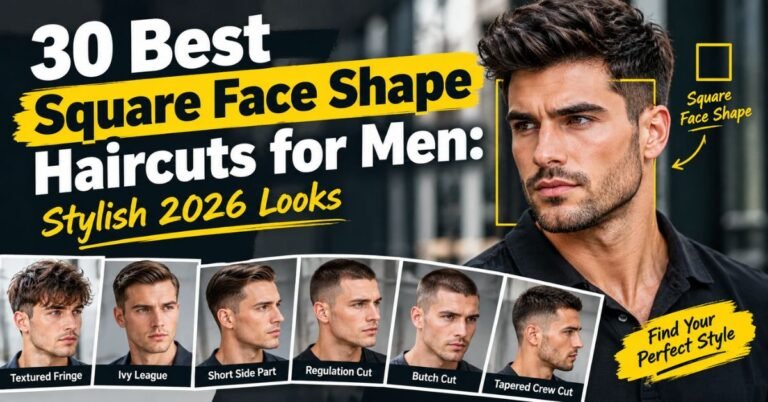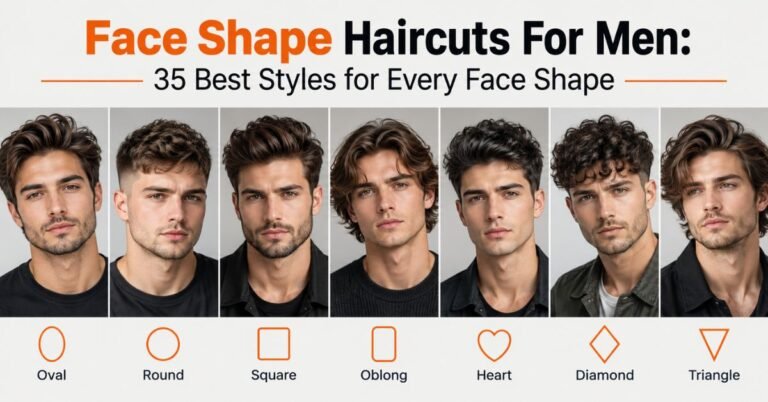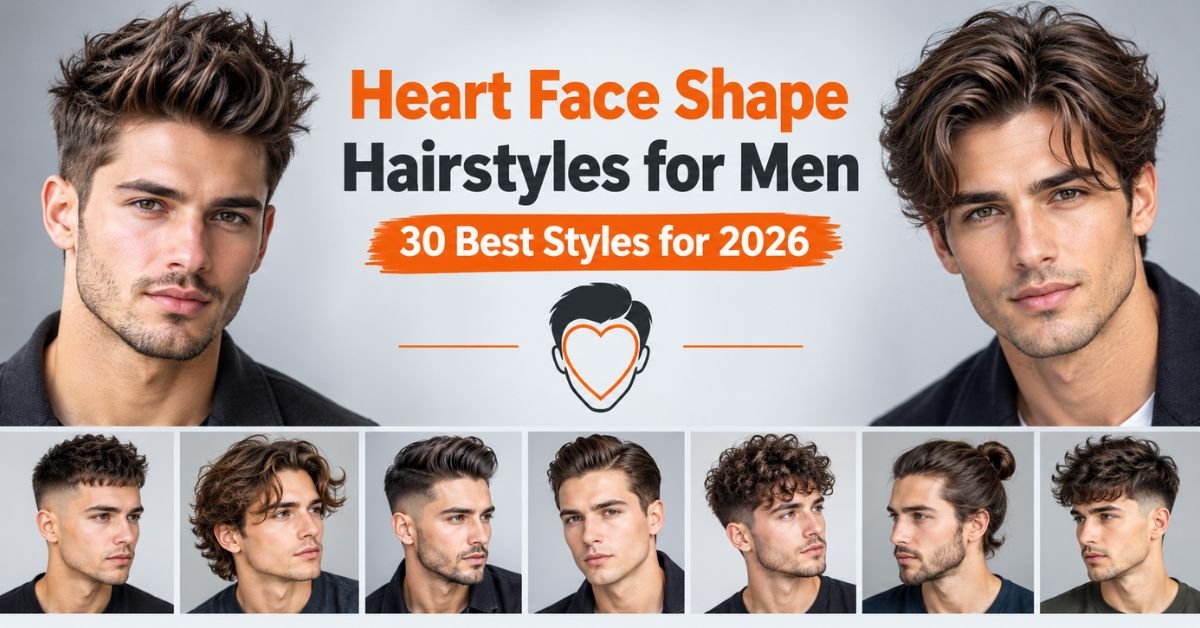
Heart Face Shape Hairstyles for Men 30 Best Styles for 2026
Heart shaped face hairstyles work best when they soften a wider forehead and build width near the jawline. A side-swept fringe, curtain hairstyle, textured crop, or low fade all help create facial balance. Skip high skin fades. They only make the forehead look bigger.
If you’ve got a heart face shape, you already know the drill. Your forehead sits wide. Your cheekbones follow. Your chin tapers down to a narrow chin or a pointed chin. It’s a strong, striking shape and plenty of well-known faces share it. But the wrong haircut can throw off your facial proportions. The right one balances them out.
This guide walks through 30 of the best hairstyles for heart shaped face men for 2026. You’ll find short cuts, long cuts, fades, and fringe styles. We’ll also cover how hair texture changes which cuts work, which fade suits you best, and what to avoid entirely. Whether you’ve got straight hair, wavy hair, or curly hair, there’s a style here built for your heart shaped facial structure.
Do You Have a Heart-Shaped Face?
A heart face shape has three clear markers. Your forehead is the widest part of your face. Your cheekbones sit at a medium width. Your chin narrows to a point. Most men with this shape also have a face that’s longer than it is wide, and many carry a widow’s peak, too.
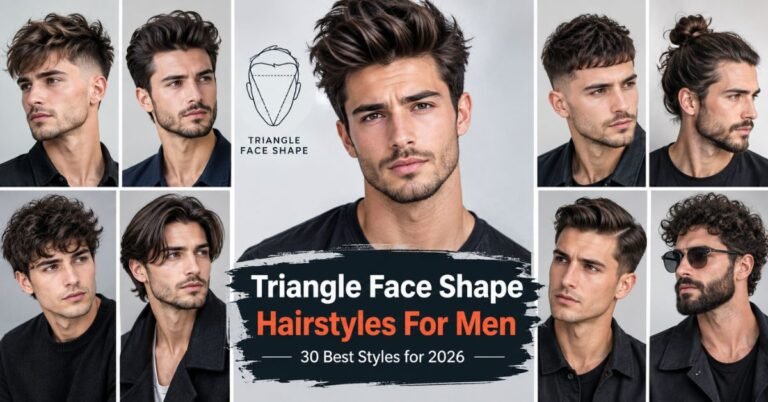
Read More: Triangle Face Shape Hairstyles For Men: 30 Best Styles for 2026
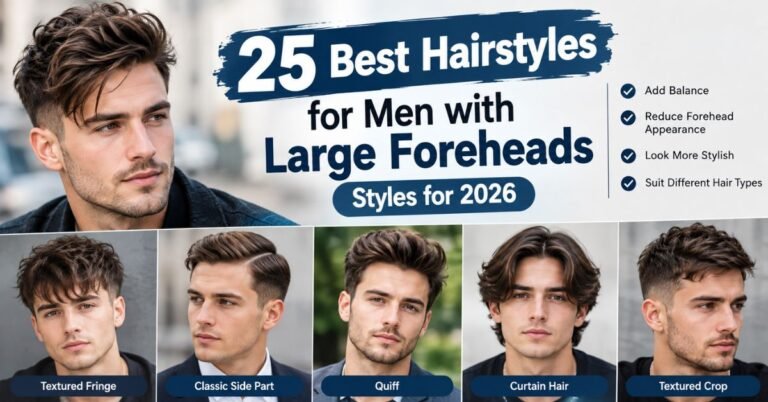
Read More: 25 Best Hairstyles for Men with Large Foreheads Styles for 2026
Here’s a simple way to check. Measure your forehead width at the widest point. Measure your cheekbone width just below your eyes. Then measure your chin width at the jaw’s narrowest point. If your forehead measurement beats both the others, and your chin comes in smallest, you’re looking at a heart shaped face haircut situation. People often mix up heart and diamond shapes. The difference comes down to prominent cheekbones. On a diamond face, the cheekbones are the widest point. On a heart face, the forehead wins that spot.
| Face Feature | Heart Face Shape | Diamond Face Shape |
| Widest point | Forehead | Cheekbones |
| Chin shape | Narrow or pointed | Narrow or pointed |
| Forehead width | Wide | Narrow to medium |
| Overall length | Longer than wide | Longer than wide |
Best Heart Face Shape Hairstyles for Men
Below are 30 cuts built around one goal: creating facial balance. Each one either softens the forehead, adds width near the jaw, or does both at once. Some use a fringe. Others lean on tapered sides or a textured top. Pick based on your hair length, your hair texture, and how much upkeep you want.
We’ll walk through each cut, one by one, and explain why it works for a heart face shape men situation specifically.
Side-Swept Fringe
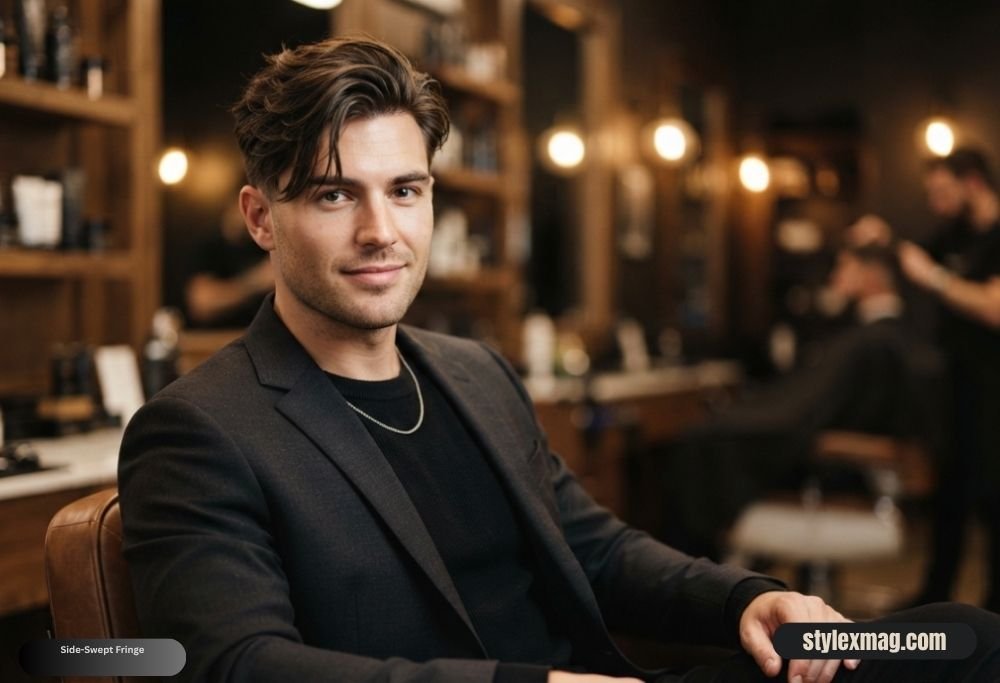
Picture your fringe as a curtain pulled slightly to one side rather than hanging straight down. That’s the side-swept fringe, and it’s one of the most reliable heart face shape haircut male options out there. The diagonal line breaks up a wider forehead and pulls the eye sideways instead of upward.
This style suits straight hair and wavy hair equally well. Ask your barber for length at the front, enough to sweep diagonally, paired with a low fade or mid fade on the sides. Most guys stretch this look three to four weeks between trims before the fringe loses its angle.
Textured Crop
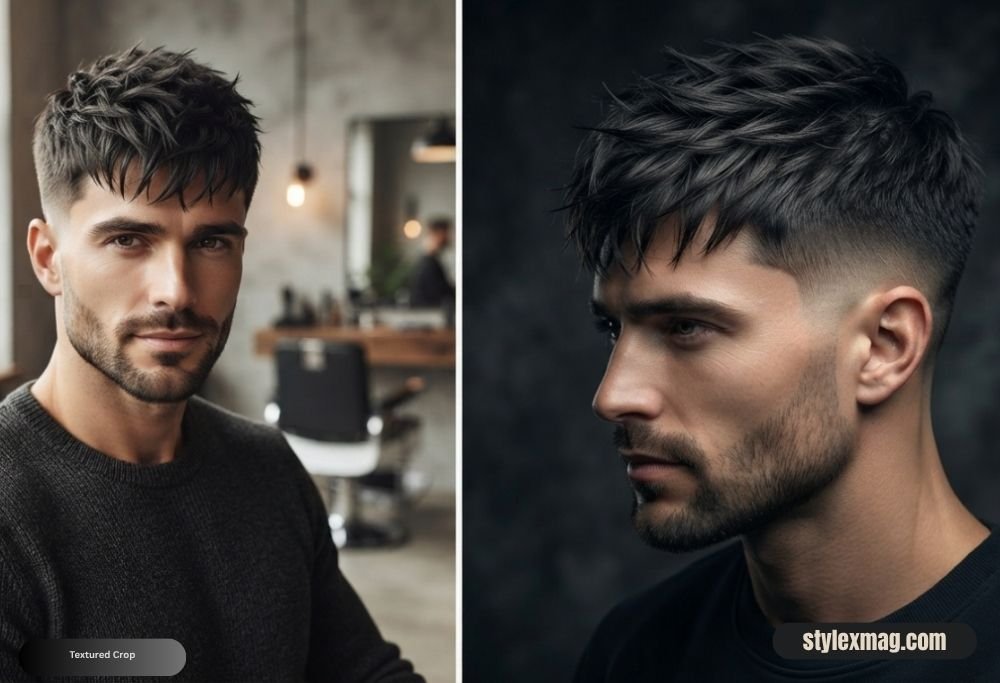
The textured crop keeps things short on the sides while building choppy, layered texture up top, with a slight forward push at the front. It’s one of the most requested cuts among barbers in 2026, and for heart-shaped faces, it does real work. The forward push shortens how much forehead shows, while the texture itself softens sharper features.
Wavy hair gives this cut natural separation without much effort. Ask for choppy layers, a fringe pushed slightly forward, and a matte finish rather than gloss. Trim every three to four weeks, since the front section grows out fastest.
French Crop
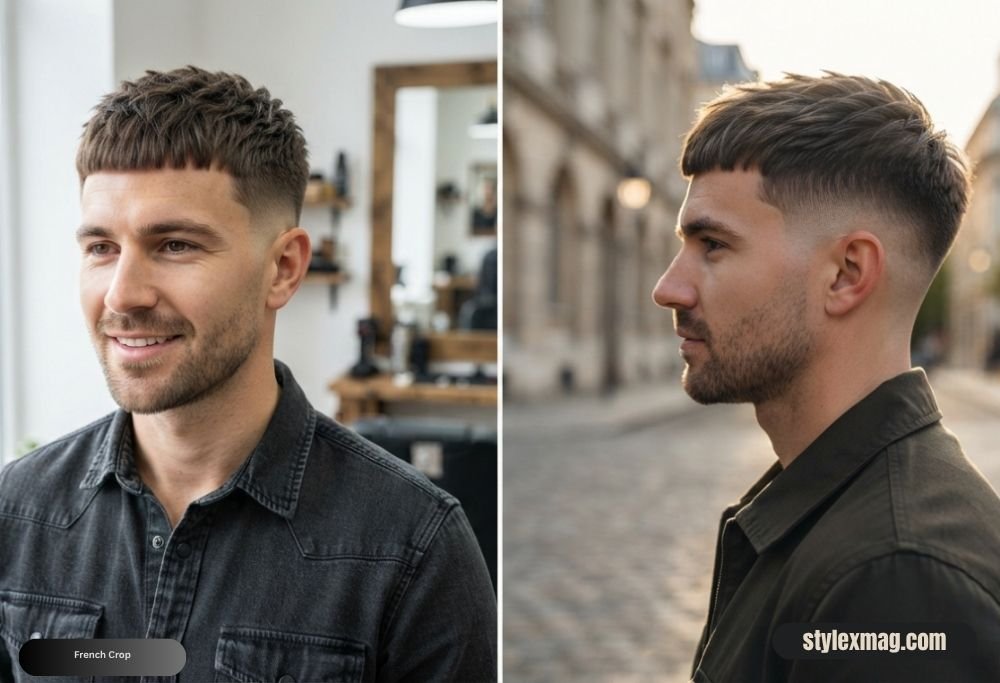
A French crop places a short, straight fringe right across the forehead, paired with tapered sides or a fade and textured length on top. The blunt line visually shortens forehead height, something a plain buzz cut can’t do. The 2026 take on this classic leans choppier than older, blockier versions.
Straight hair holds the fringe’s horizontal line cleanly, which makes this a strong pick if your hair doesn’t have much natural movement. Ask for a forward fringe, a mid fade, and texture rather than a flat finish. Trim every three to four weeks to keep the line sharp.
Temple Fade with High Top
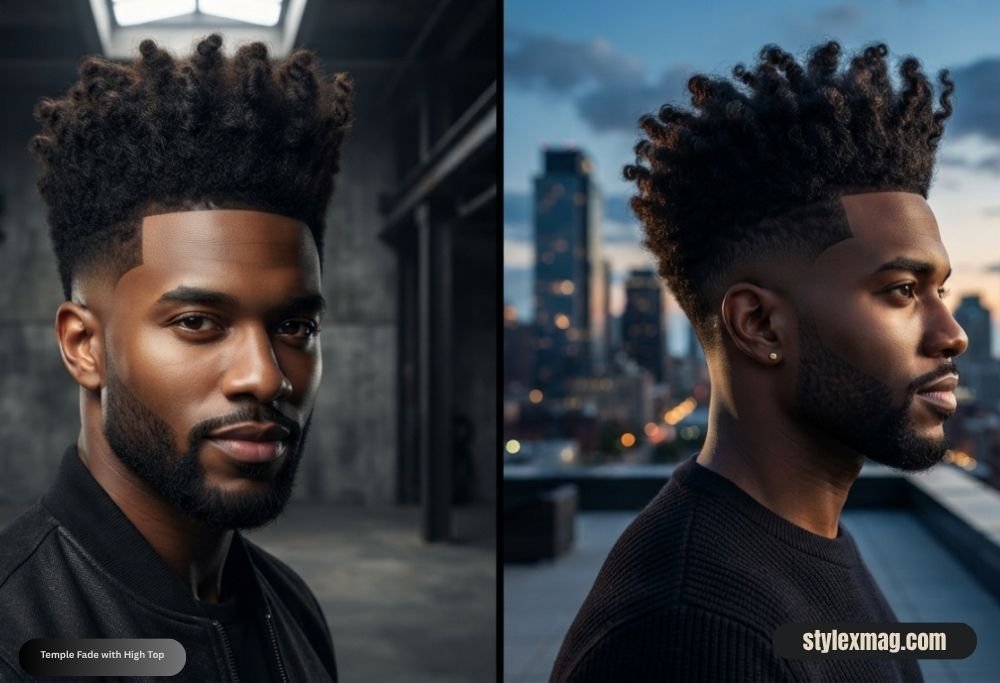
This cut tightens the fade right around the temples and hairline, then builds height on top. The height draws attention upward, away from forehead width, while the tight temples keep things neat without stripping all the side volume away. It’s a sharper, more structured look than most cuts on this list.
Thick hair holds the height best here. Ask your barber to keep it tight at the hairline and temples but fuller just above, brushed upward for lift. The temple lines soften first, so plan for a touch-up every two to three weeks.
Crew Cut with Low Taper
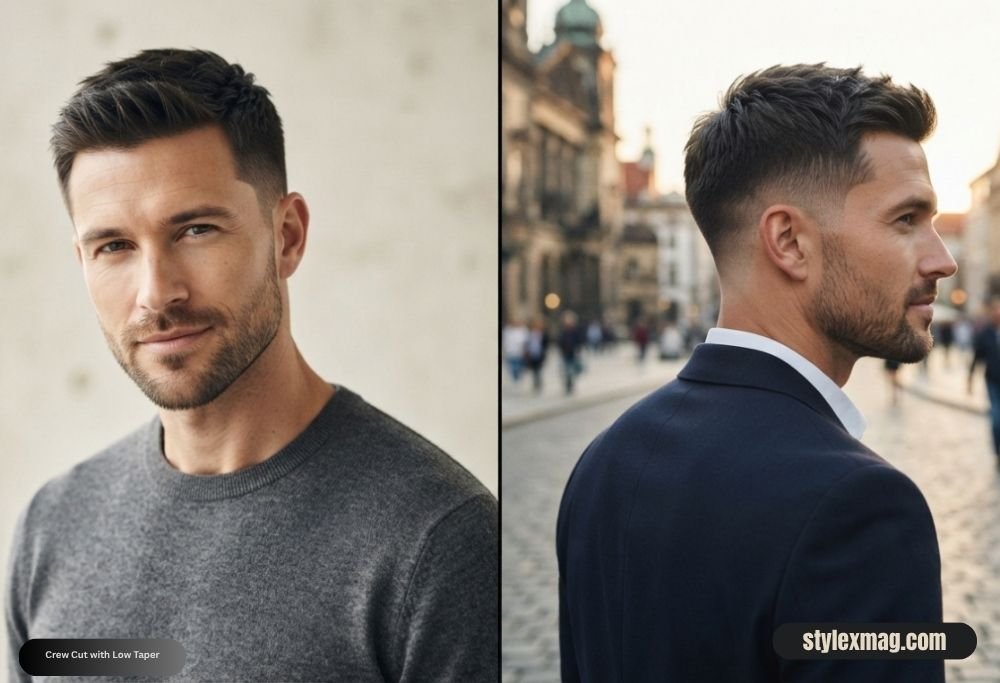
Think of this as the reliable, no-fuss option. You get one and a half to two inches on top, paired with a low taper rather than a fade. Keeping the sides fuller adds horizontal width right at jaw level, exactly where a heart shaped face needs it. It’s short, sharp, and genuinely low-maintenance.
This works across every hair texture, though fine hair benefits most since a taper never looks bare the way a fade can. Ask for a slight side sweep on top instead of a flat finish. Trim every three weeks.
Short Quiff with Taper
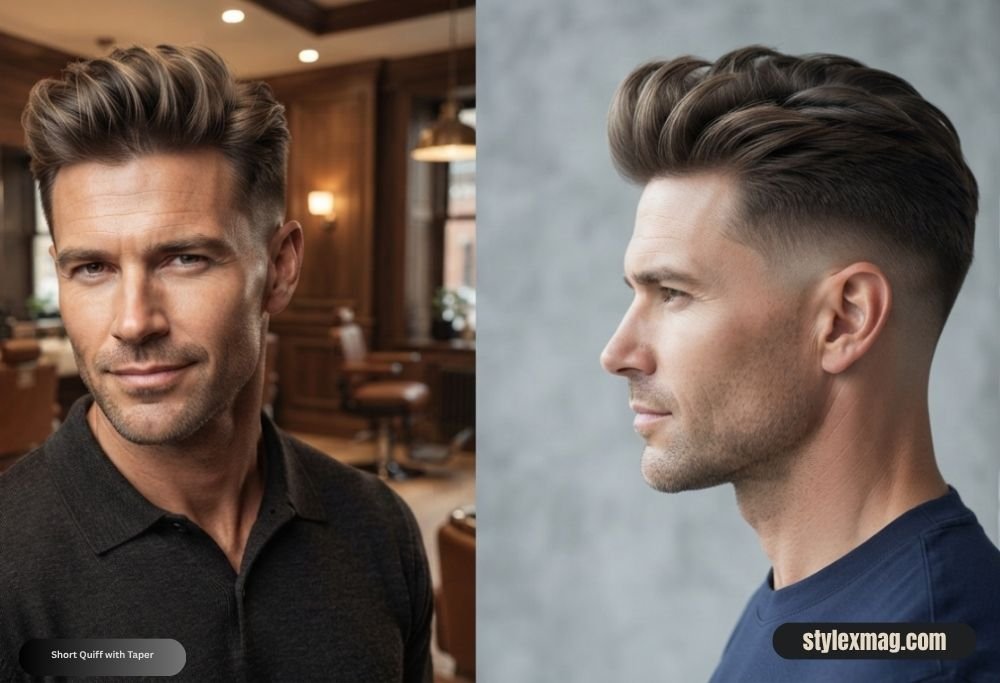
The quiff pushes volume up and forward at the front, and pairing it with a taper (not a fade) keeps more hair around the sides. That extra side hair fills out the jaw area, while the upward lift balances forehead width from above. It’s a style with real personality.
Medium to thick hair holds this shape without heavy product. Leave at least two and a half inches at the front for lift, and ask for a taper rather than a fade on the sides. It grows out gracefully, so four to five weeks between cuts works fine.
Buzz Cut with Beard
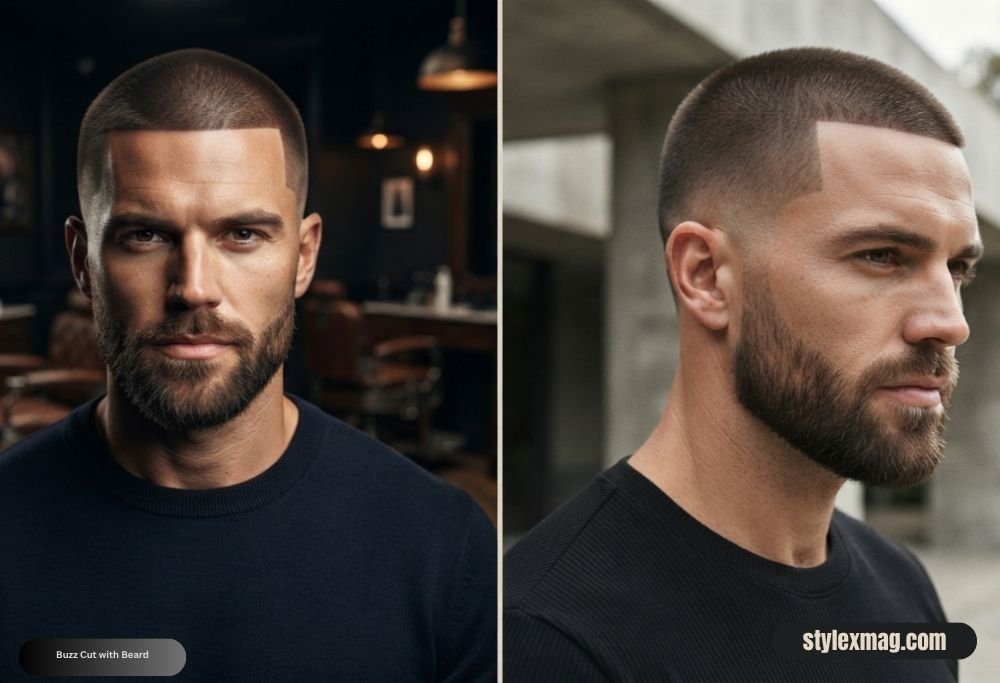
On its own, a buzz cut leaves your full forehead width on display, nothing softens it. Add a beard, though, and everything changes. The beard adds visual width down at the chin and jaw, balancing the equation the buzz cut alone can’t manage. Even five days of stubble makes a visible difference.
This combination works on any hair texture, since the cut itself stays uniform. Ask for a grade two or three buzz with a clean lineup, and shape your beard fuller near the chin than the cheeks. Refresh the cut every two to three weeks.
Classic Side Part
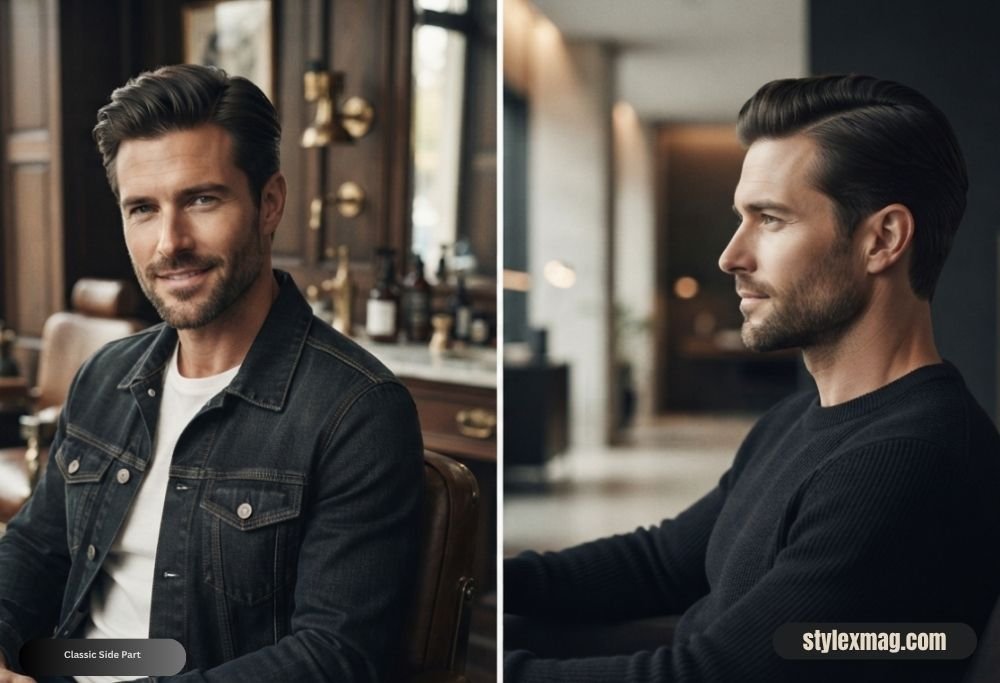
A natural side part, combed laterally with a medium hold, creates asymmetry that shifts focus away from a wide forehead. The 2026 version favors a softer part line and a matte finish over old-school pomade shine. It’s a timeless, polished option that still fits current trends.
This suits straight hair and wavy hair particularly well, and if you’ve got a widow’s peak, the part works naturally with your hairline’s direction. Ask for a soft, uncarved part with a low to mid fade underneath. It holds shape for three to four weeks.
Curtain Hairstyle
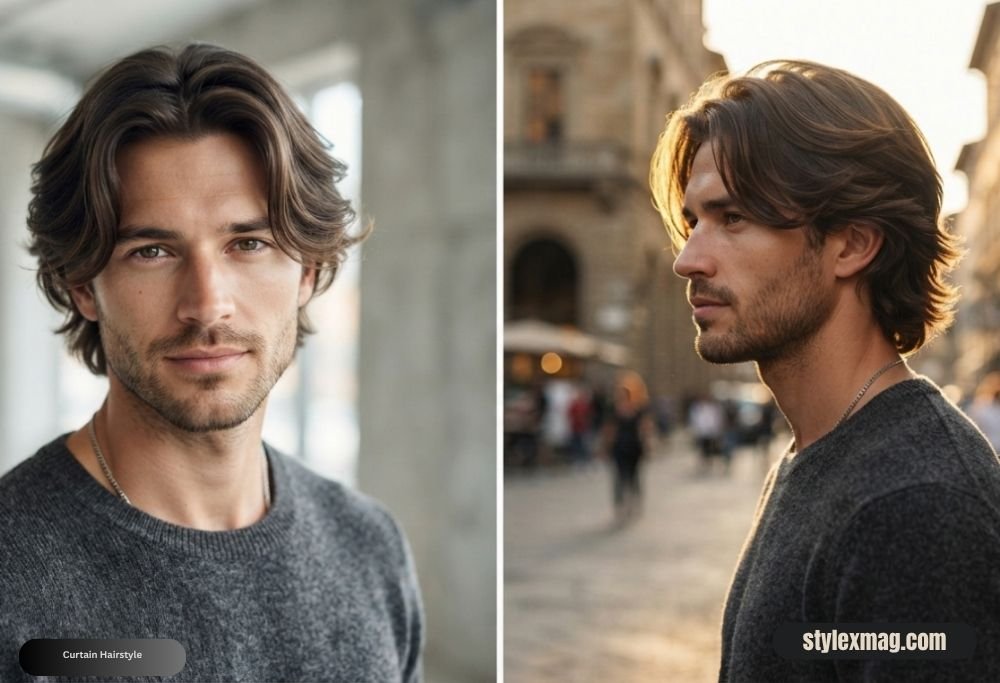
The curtain hairstyle parts down the center, or close to it, and lets hair fall naturally to both sides of the forehead. That movement frames the forehead symmetrically and visually narrows it, softening the wide-top, narrow-bottom effect a heart face creates. Barbers report strong demand for this cut specifically among men with heart-shaped faces.
If you’ve got a widow’s peak, a center part sits naturally with that V-shaped hairline. Wavy hair gets movement without any product. Ask for a center or slightly off-center part, medium length, with a natural fall. It holds its shape for four to five weeks.
Messy Quiff
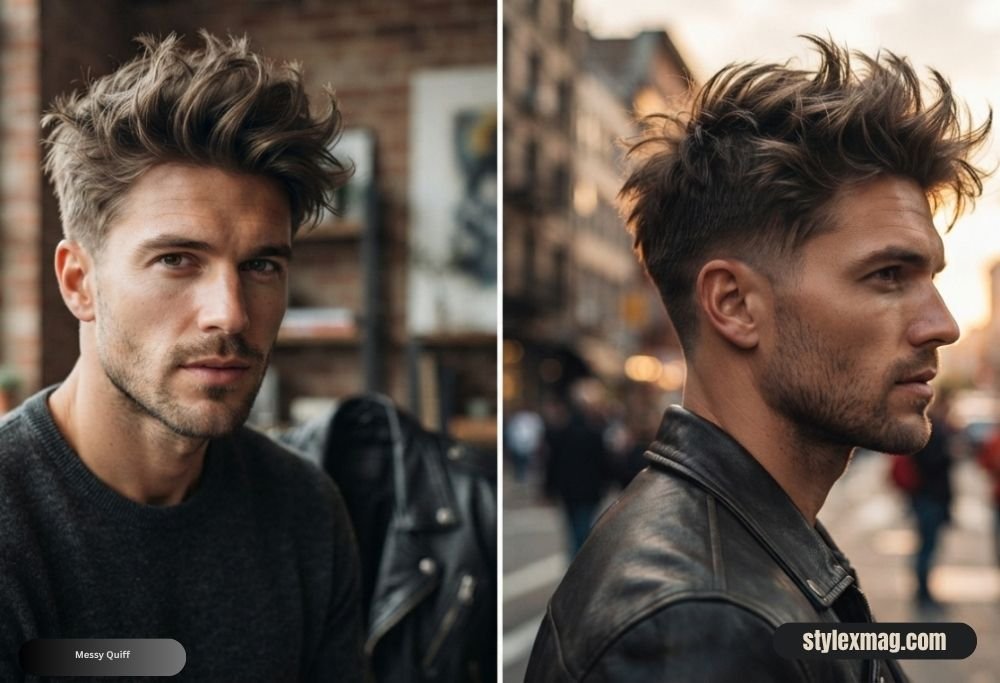
This takes the quiff’s forward, upward volume but keeps the finish loose and undone rather than sculpted. That softer texture avoids piling more sharpness onto a face that’s already got defined angles. It’s an easy, low-effort style that still does the balancing work.
Medium-density hair suits this best. Fine hair needs a bit more product to hold the messy look, while thick hair holds it on its own. Ask for loose volume at the front with a mid fade. It hides regrowth well, so three to four weeks between cuts is plenty.
Textured Quiff
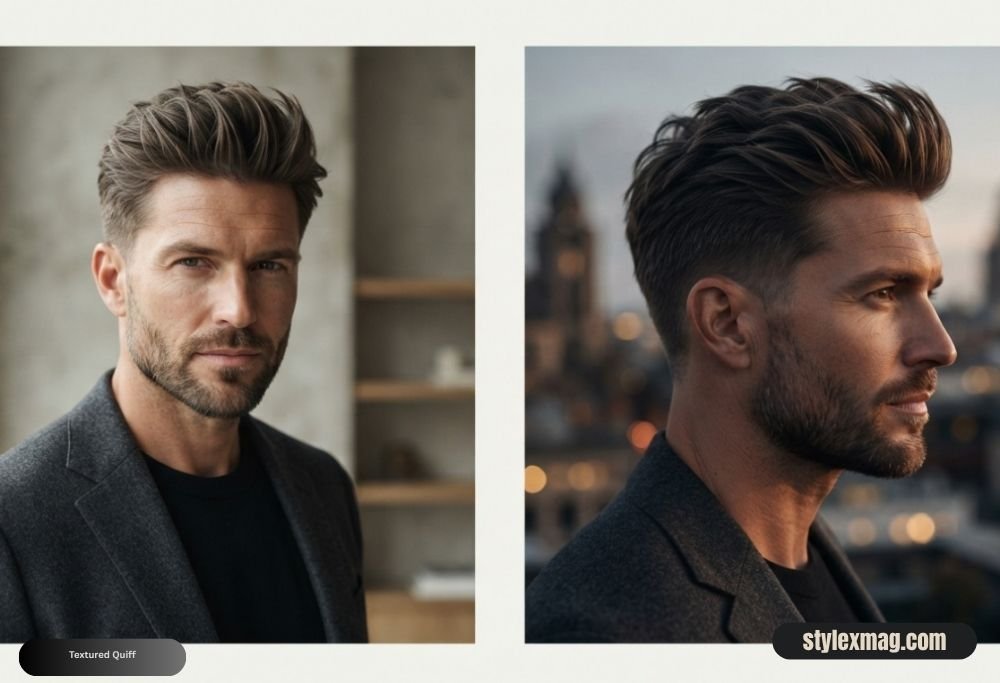
The difference between this and a messy quiff comes down to finish. Here, you’re using clay or paste to build defined, textured dimension rather than a loose, undone look. That texture itself becomes the visual interest, breaking up forehead width without relying purely on fringe coverage.
Wavy hair and thick hair develop this texture naturally. Ask for volume at the front, a matte product rather than pomade, and a mid fade on the sides. It grows out at a similar pace to the messy quiff, roughly three weeks.
Pompadour
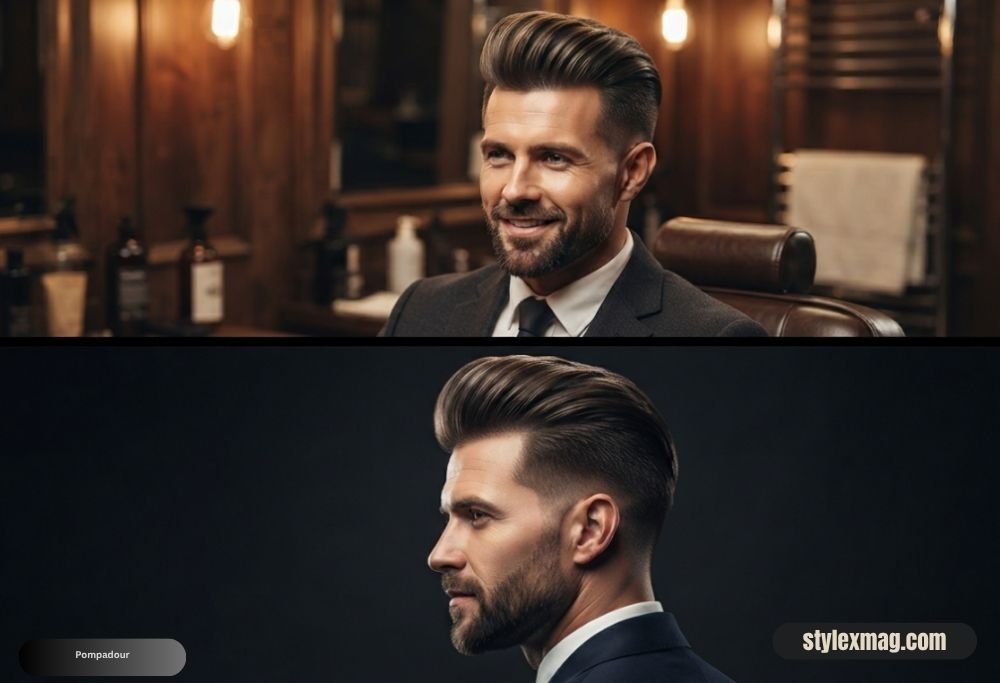
The pompadour sweeps hair back and up from the forehead, and the 2026 version keeps things understated, shorter sides, matte finish, less Elvis than you’d expect. Paired with a low to mid fade, the height adds vertical balance above the forehead without pushing extra width onto the sides.
Thick hair holds this sweep through a full day. You’ll need at least three inches on top to maintain the shape properly. Ask for a low to mid fade, never a high skin fade, with texture over shine. Trim every three weeks.
Middle Part
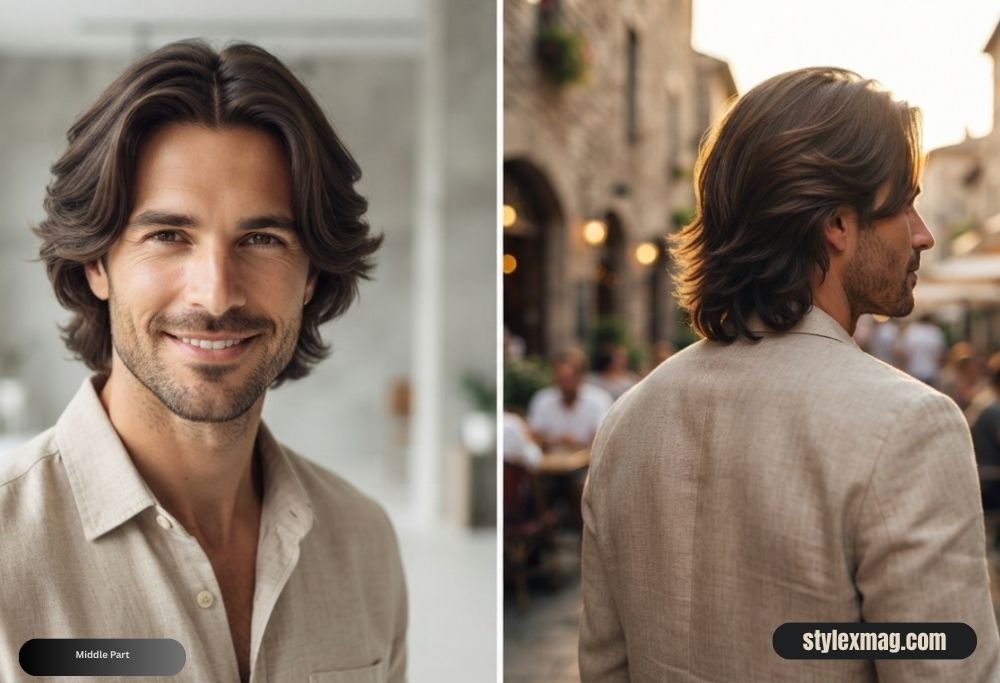
A middle part does what the curtain hairstyle does, just shorter and easier to manage. At two to three inches, hair falls forward slightly on both sides, softer than the curtain style and quicker to style each morning. It suits guys who want the balancing effect without the longer commitment.
This works well on straight hair and wavy hair. Ask for a true center part, two to three inches on top, falling forward slightly, with a low to mid fade beneath. It grows out cleanly over three to four weeks.
Medium Layered Hairstyle
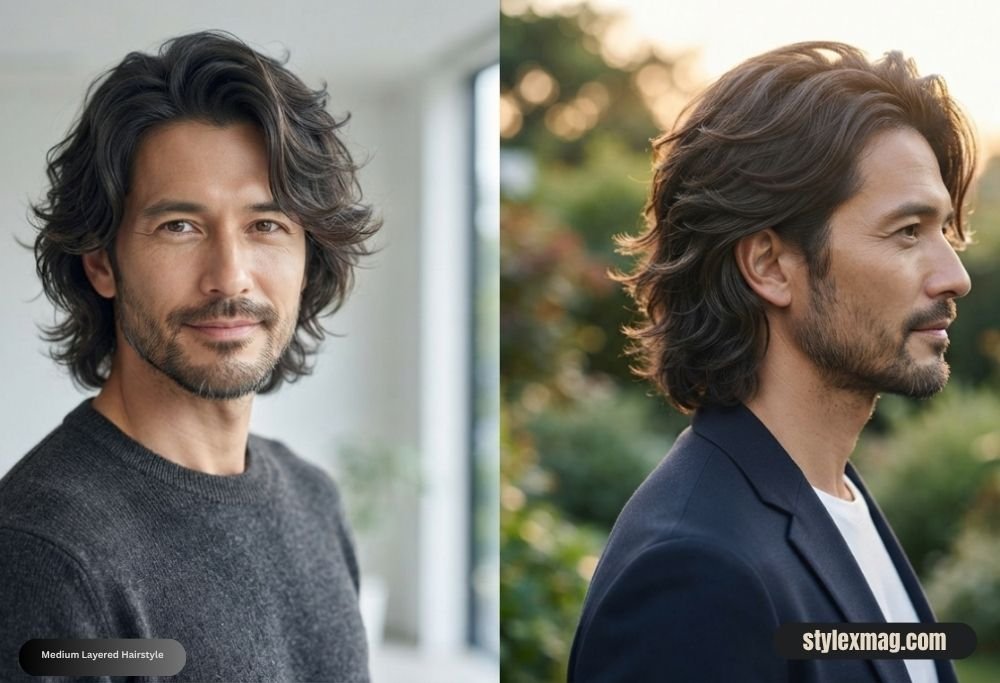
Layered hair at three to four inches creates horizontal movement across the whole head, and that movement adds real weight around the jaw and chin, exactly where a heart face needs it. Unlike shorter cuts, this style builds balance through length rather than relying on a fade alone.
Wavy hair and thick hair move naturally through these layers. Fine hair needs mousse at the roots first, or the layers won’t show properly. Ask for layers throughout, no blunt ends, and a textured finish. This is a forgiving cut, five to six weeks between trims.
Low Fade with Textured Top
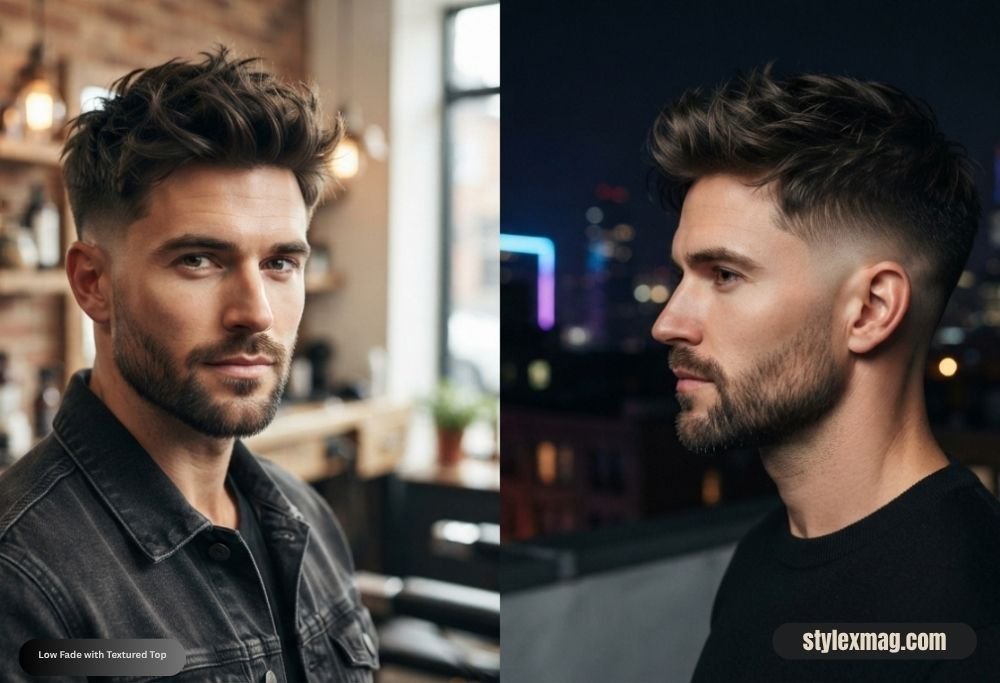
Here, the fade sits low, keeping the sides relatively full, while the top stays loose and textured rather than smooth. Full sides help the lower half of your face look more proportionate, and that low fade placement matters. Keeping the fade low avoids tightening things right where your face is already widest.
Medium-density hair works best here. Ask for a fade positioned just above the ear, paired with a loose, textured top and a matte finish. Since it’s a low fade, it grows out slowly, three to four weeks before the line softens.
Fringe with Tapered Sides
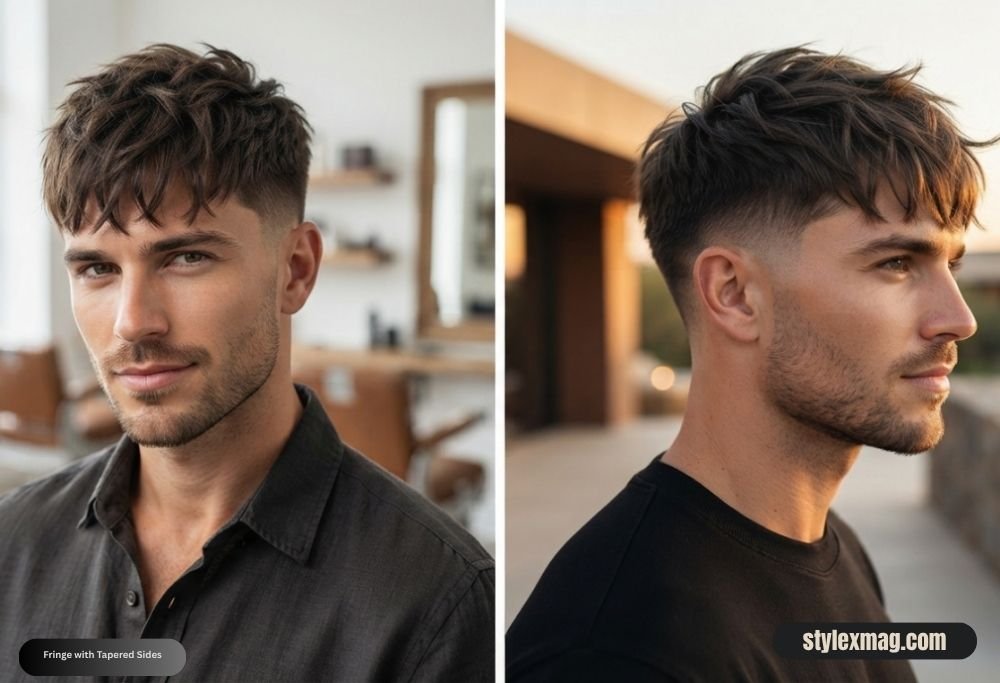
This pairs a forward-pushed fringe with tapered sides rather than a fade. The fringe shortens how much forehead you show, while the taper keeps hair fuller around the jaw. It sits between a French crop and a curtain style, longer fringe than the crop, tapered rather than faded sides.
Straight hair holds the fringe’s direction without fighting its natural fall. If you’ve got a particularly prominent forehead, the extra fringe length here helps more than most other cuts. Trim every three to four weeks.
Side-Parted Fringe
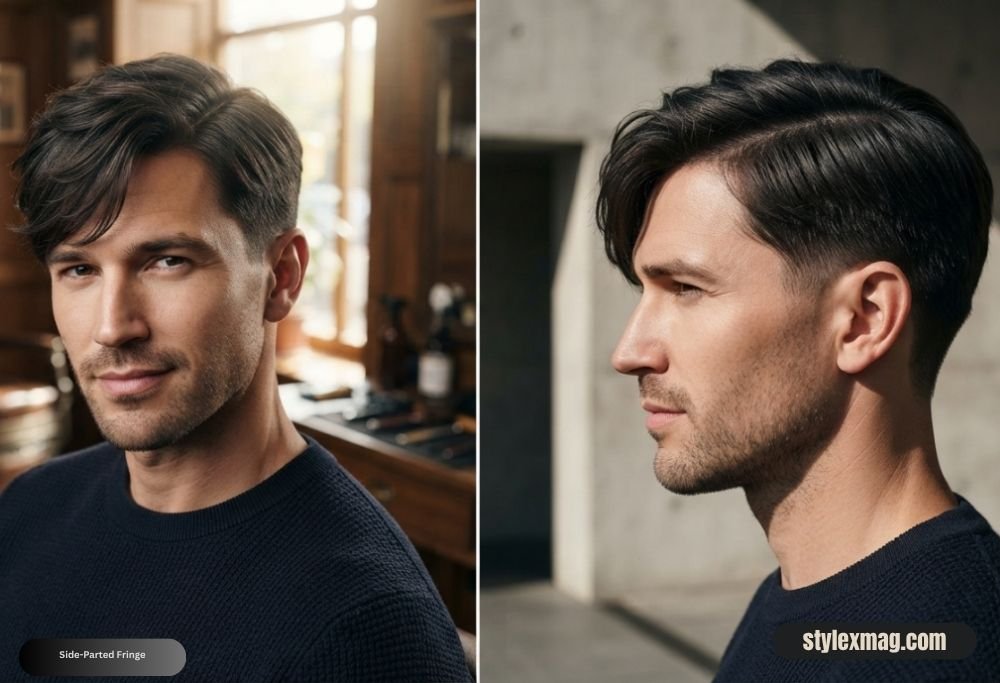
Combine a side part with a longer fringe that sweeps across to cover part of the forehead, and you get one of the strongest forehead-softening combinations on this list. The part’s asymmetry plus the fringe’s coverage interrupts a wide forehead more than almost any other style here.
If you’ve got both a wide forehead and a widow’s peak, this style lets the part follow your natural hairline while the fringe covers the peak, if you’d rather it not show. Works best on straight hair and wavy hair. Trim every three weeks to maintain the coverage angle.
Wolf Cut
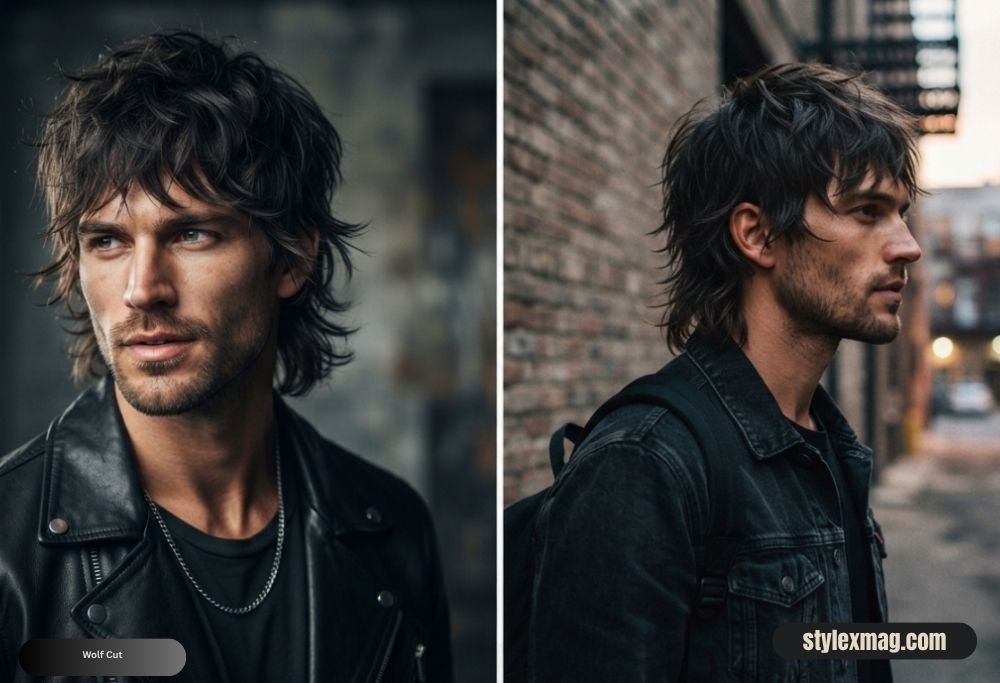
The wolf cut layers the top while keeping sides shorter, with longer layers built into the back. That combination adds width around the jaw and creates a face-framing effect from below, balancing a broad forehead from the opposite direction most cuts on this list use.
This shines on wavy hair and curly hair, where the layers move on their own. Straight hair needs a texturizing product, or the layers sit flat. Ask for a layered top, shorter sides, and longer back layers with no blunt cutting anywhere. Five to six weeks between cuts.
Modern Mullet
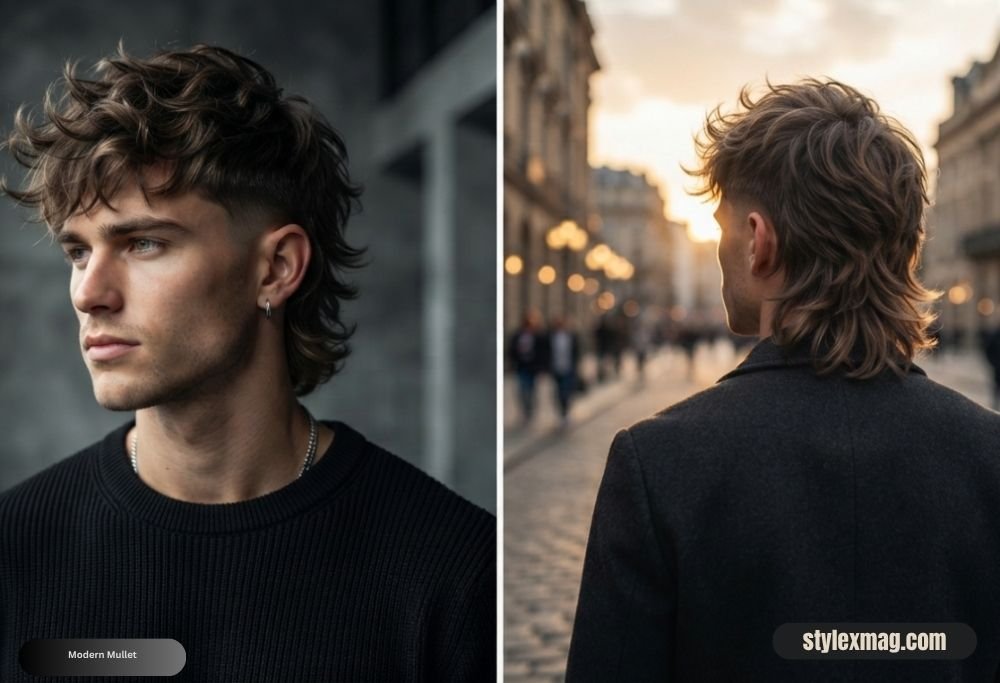
The modern mullet keeps the top and sides shorter while letting length build at the back. That extra length adds dimension below the face, and since the top stays textured rather than bulky, it avoids adding more weight where your forehead’s already wide. Tapered sides, not an aggressive fade, keep everything balanced.
Wavy hair lets the back layers flow naturally without much styling. Ask for tapered sides, a textured top, and longer layers at the back. Refresh every three to four weeks before the shape loses its definition.
Man Bun or Top Knot
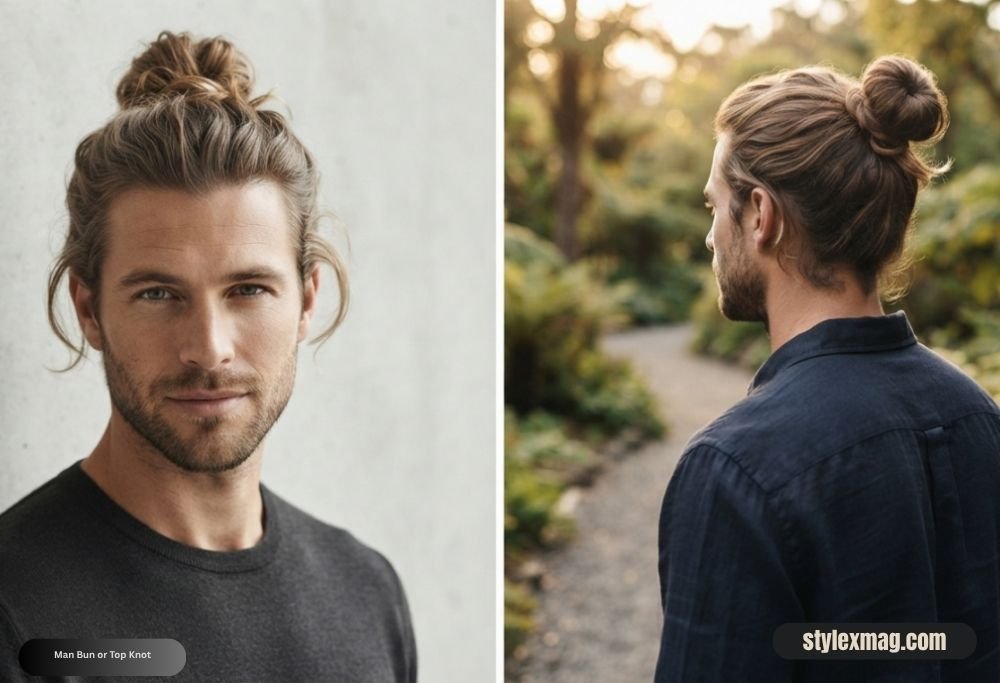
Pull your hair up and tie it at the crown, and you’ve drawn the eye upward, away from the forehead entirely. Pair it with undercut sides for a clean frame around the jaw, adding height rather than width up top. It’s a longer commitment but a genuinely effective one.
You’ll need at least six inches on top to tie it cleanly, and it works on straight hair and wavy hair. Ask for undercut sides beneath the bun. The sides need upkeep every four to five weeks, though the top itself needs no trimming at all.
Long Layers or Bro Flow
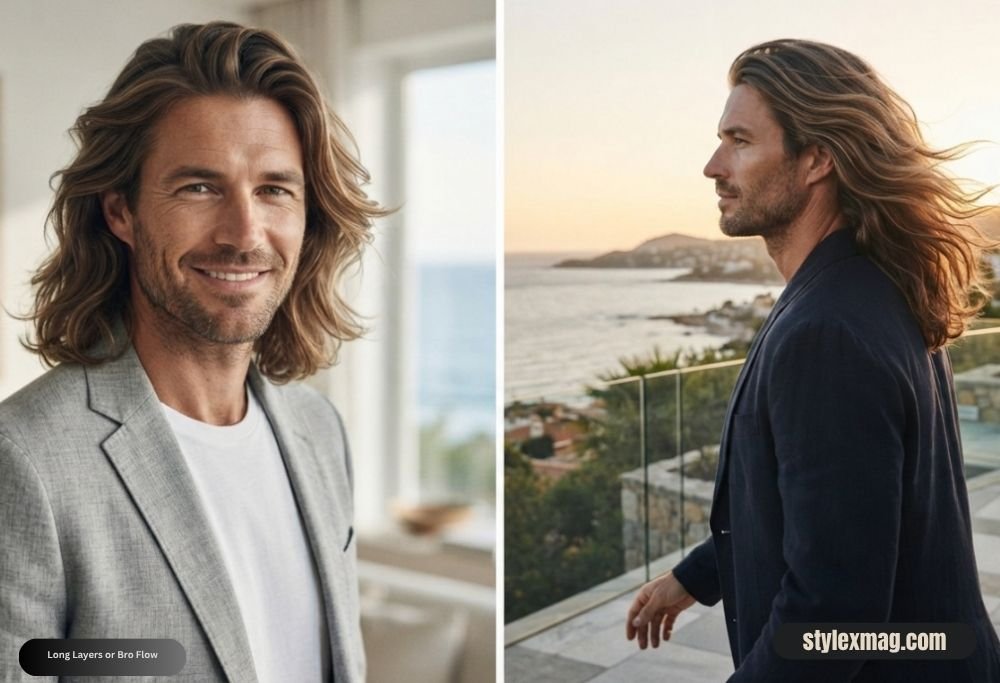
Let hair grow out with layered hair throughout, and you get horizontal movement right at jaw and chin level, directly countering a broad forehead. Without hard lines anywhere, this style avoids adding sharpness to a face that’s already got plenty of definition. A little sea salt spray is often all it needs.
Wavy hair creates natural movement here. Straight hair needs product to avoid lying flat. Ask for long layers with a low taper on the sides, no blunt cutting. Six to eight weeks between cuts, since the length absorbs regrowth well.
Textured Shag
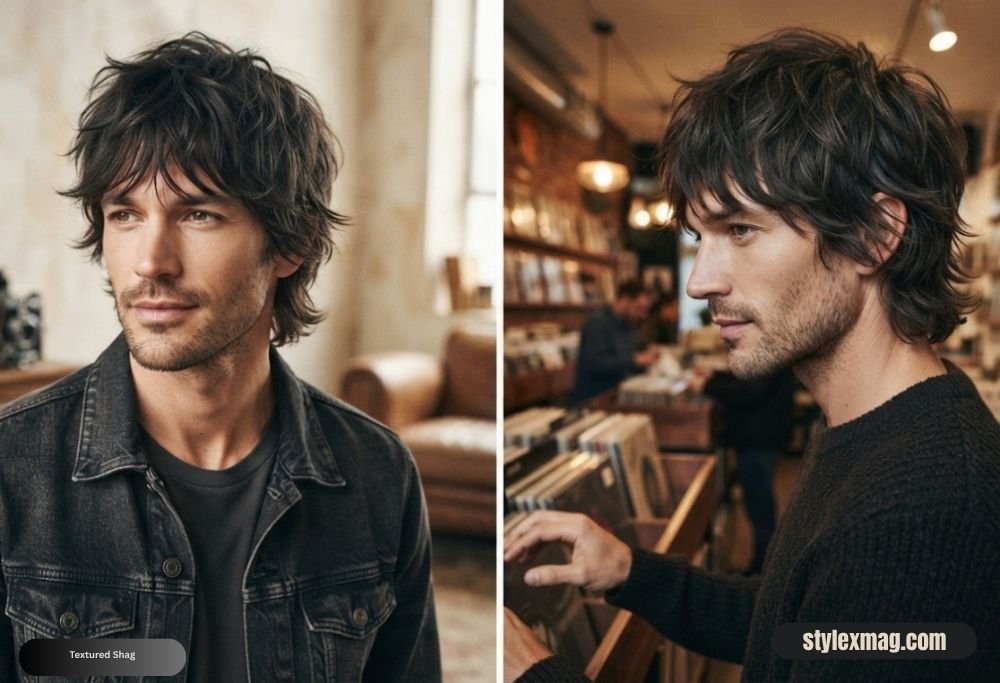
The textured shag brings choppy, heavily layered length that moves in every direction at once. It’s messier than a wolf cut and looser than long layers, built for guys who want volume without much structure. That constant movement breaks up forehead width from multiple angles simultaneously.
This cut favors wavy hair and curly hair, where the natural texture does most of the work. Straight hair needs a texturizing spray for separation. Ask for heavy layering throughout with razored ends. Five to six weeks between trims keeps the shag from growing shapeless.
Cropped Mullet
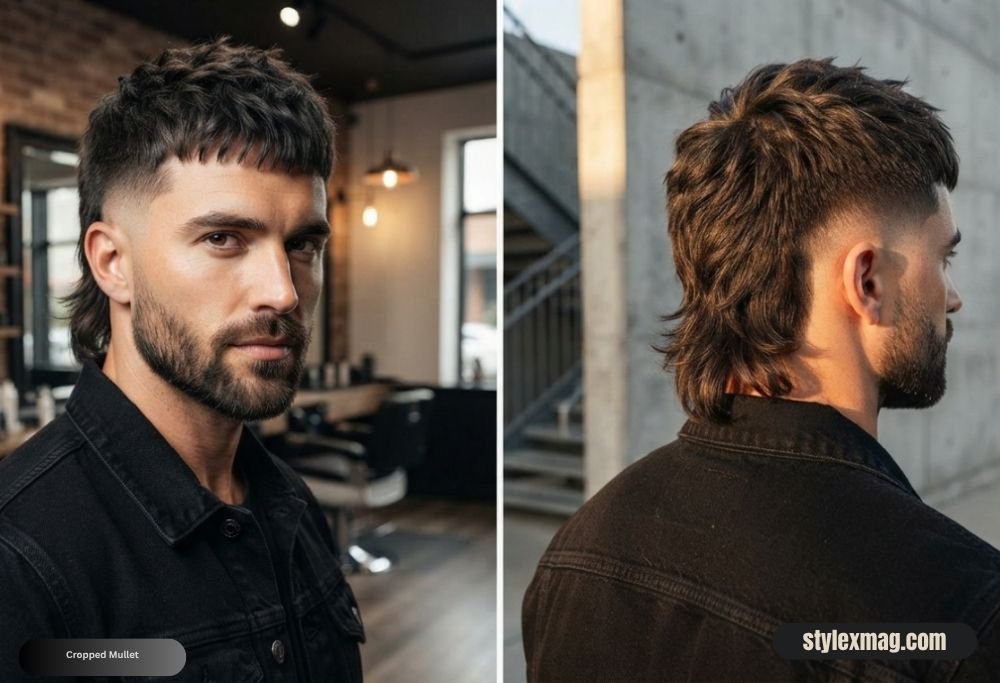
A shorter, tighter take on the modern mullet, the cropped mullet keeps the back length modest while still creating that below-the-face weight. It suits guys who want the mullet’s balancing effect without committing to serious length at the back. Tapered sides finish the look without adding harshness.
Works across most hair textures, though wavy hair gives the back section the most natural shape. Ask for a short, textured top, tapered sides, and just an inch or two of extra length at the back. Trim every four weeks.
Curly Taper Fade
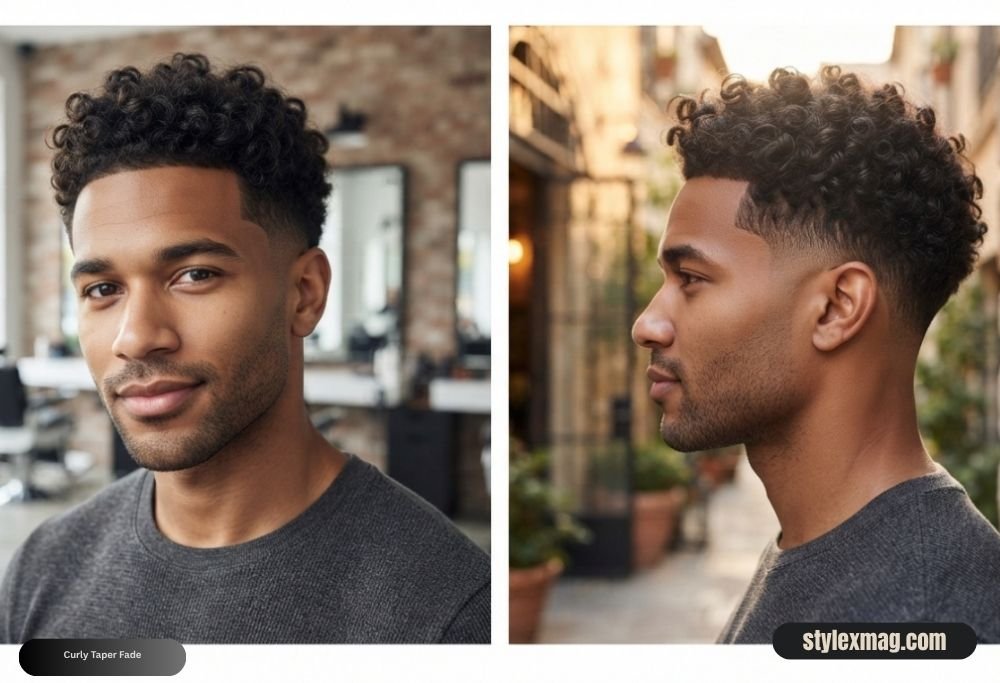
Curly hair adds natural volume in every direction, and for a heart face shape, that volume builds width right at the jaw and chin without any real styling effort. A low taper, rather than a mid or high fade, keeps the sides full enough to reinforce that width below the cheekbones.
Ask your barber for scissor-over-comb blending on the sides instead of clippers alone, letting the curls keep their natural volume on top. Leave-in conditioner keeps curl definition between washes. Refresh the taper every three to four weeks.
Razored Fringe
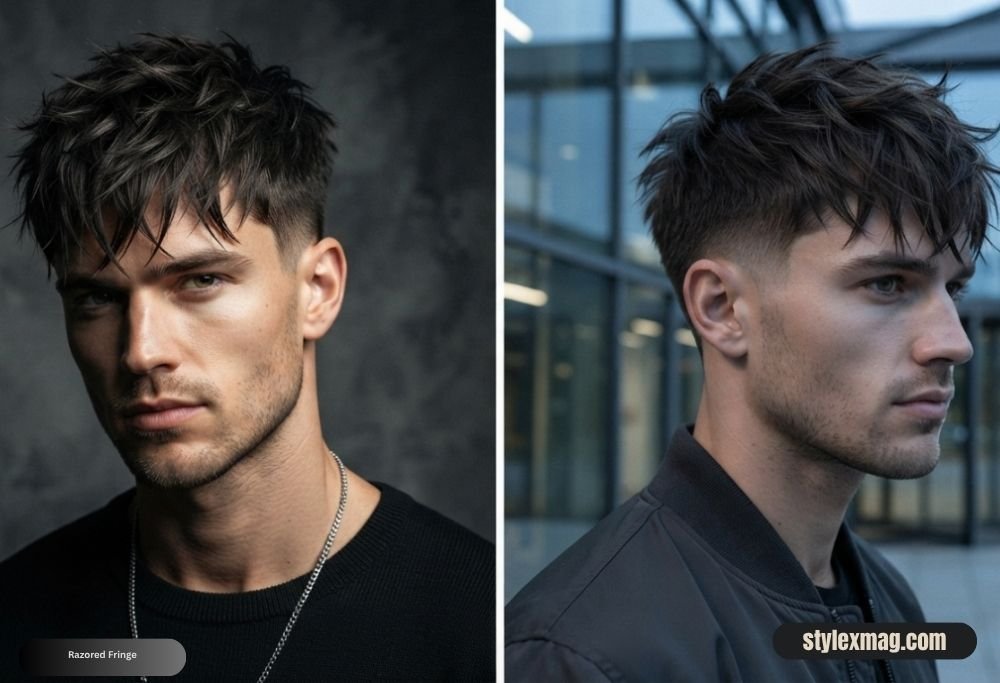
A razored fringe uses a razor rather than scissors to cut the fringe, creating soft, feathered edges instead of a blunt line. That softness works well on a heart face, since it interrupts the forehead without adding a hard, angular line across it. It’s a subtler cousin of the French crop.
This technique suits fine hair and straight hair especially well, since razoring adds texture that finer hair often lacks naturally. Ask for a razored, feathered fringe with tapered sides. Trim every three weeks to keep the feathering fresh.
Slicked-Back Hairstyle
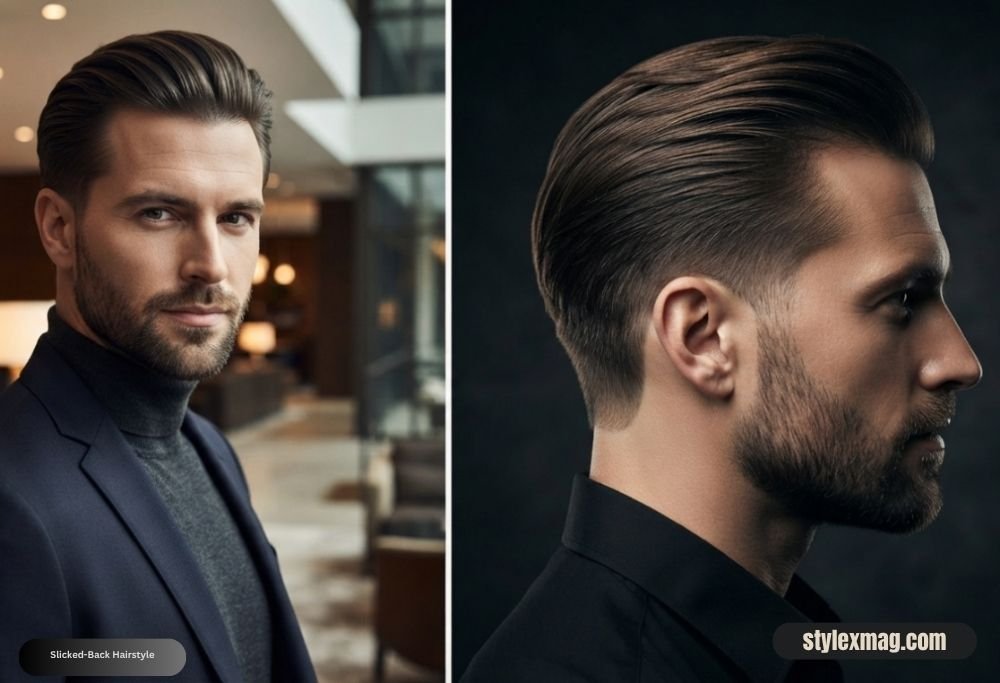
Used carefully, a slicked-back hairstyle can still work for a heart face, though it’s riskier than most cuts here. The key is length and texture underneath the slick finish, never a flat, close crop pushed straight back with nothing to interrupt the forehead. Enough length on top adds some visual softness even when swept back.
Thick hair and wavy hair hold this look with more texture underneath the sweep. Ask for at least three inches on top with a textured base before slicking back, paired with a low fade. Restyle daily, trim every three to four weeks.
Caesar Cut with Fringe
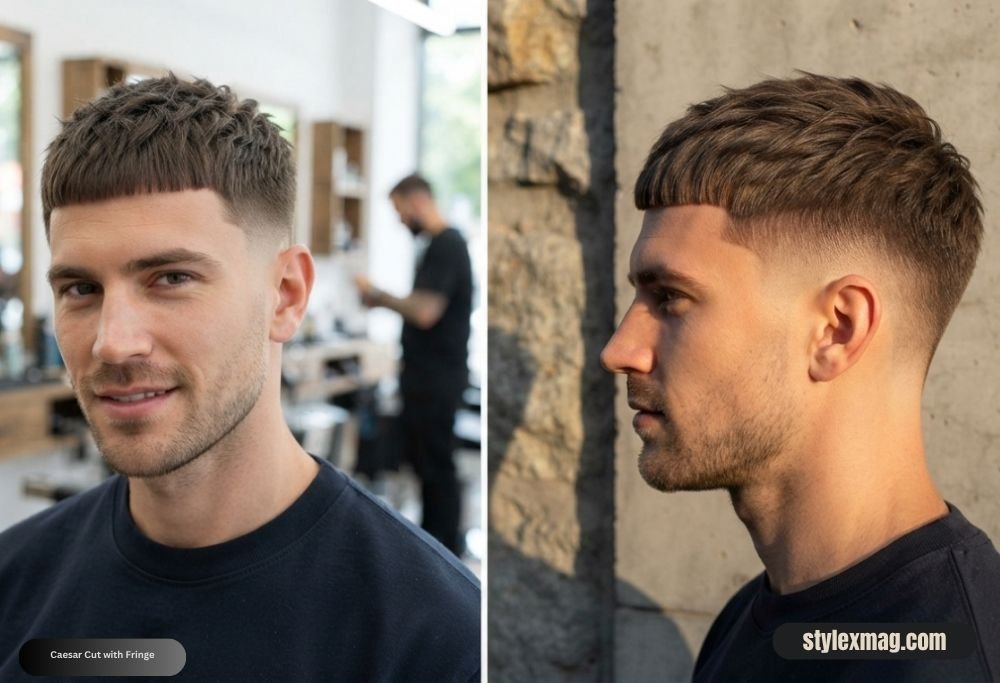
The Caesar cut brings short, horizontal fringe across the forehead with closely cropped length everywhere else. Combined with a fringe, it shortens forehead height in a clean, low-maintenance way, similar in effect to a French crop but with a more uniform length throughout.
This suits straight hair best, since the short fringe needs to hold its horizontal shape. Ask for even length all over, roughly an inch, with the front left slightly longer to form the fringe line. Trim every three weeks.
Medium Tousled Hairstyle

A medium-length hairstyle with a deliberately tousled, undone finish rounds out this list. At two to four inches, it gives enough length for movement and texture without full commitment to long hair. The tousled finish softens the forehead while adding casual volume around the jaw.
Wavy hair and curly hair create this texture with minimal effort. Straight hair needs a texturizing paste to build the same tousled look. Ask for medium length with a matte, undone finish and light layering. Five weeks between trims works well.
Heart Face Shape Hairstyles for Straight, Wavy, and Curly Hair
Your hair texture changes which of the 30 styles above will look and behave best. A cut that moves beautifully on wavy hair might lie completely flat on straight hair, and a style built for curly hair‘s natural volume might overwhelm fine, straight strands.
Below, we break down the strongest picks by texture, along with quick styling notes for each.
Straight Hair
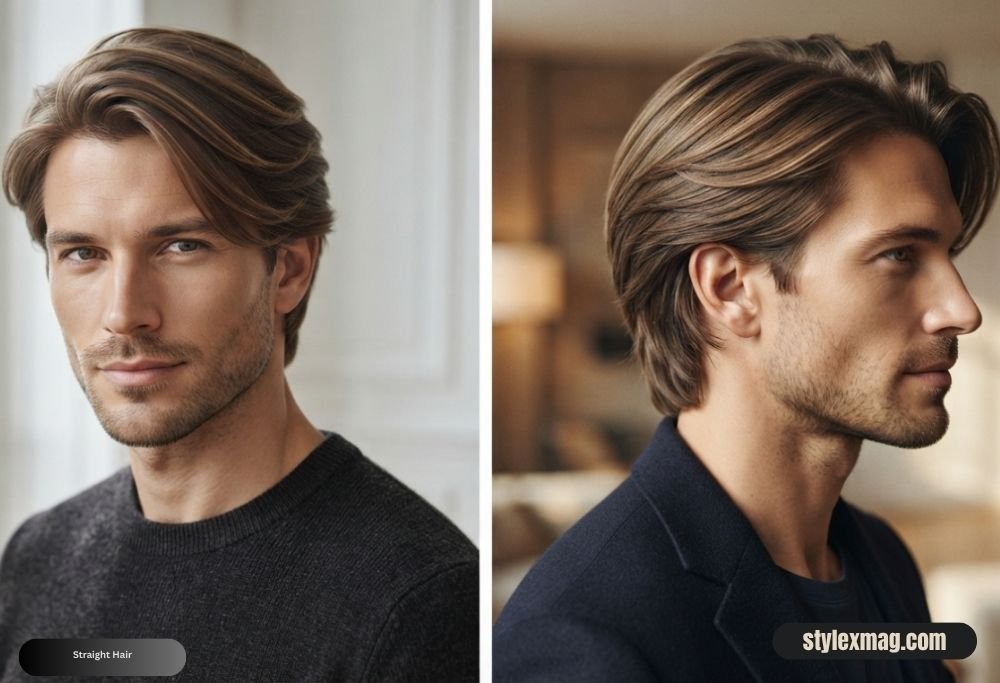
Straight hair shows the sharpest fringe lines and the cleanest fade or taper detail of any texture. Without added texture, though, it can lie flat and lose the volume a heart face needs near the jaw. The strongest choices here include the side-swept fringe, French crop, curtain hairstyle, and classic side part, all of which work with straight hair’s natural tendency to fall flat rather than fighting it.
Ask your barber for point-cut ends instead of blunt ones, since point cutting adds movement that straight hair otherwise lacks. Direction matters most here. Any style that pushes hair sideways or forward outperforms one that combs it straight back.
Wavy Hair
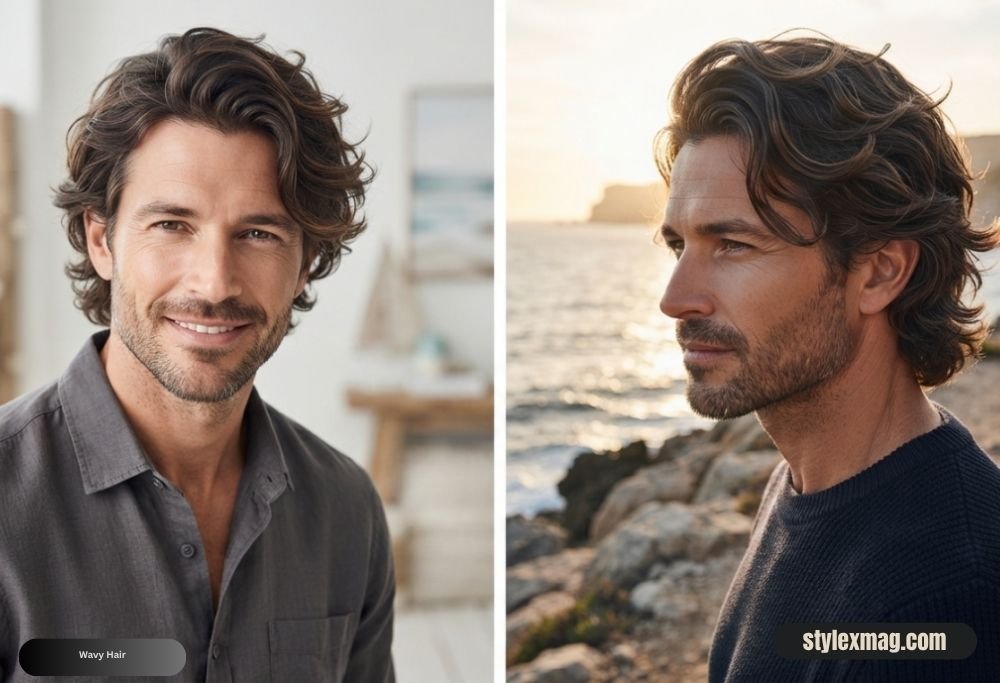
Wavy hair is the most forgiving texture for a heart face. The natural wave builds jaw-level width and general movement with zero extra effort, softening forehead width almost automatically. Guys with wavy hair have the widest range of options on this list, including the wolf cut, curtain hairstyle, medium layered hairstyle, and messy quiff.
A little sea salt spray before drying enhances the wave without weighing it down. Ask your barber to work with the wave’s natural direction rather than against it, and skip anything that flattens the texture. Wavy hair also absorbs regrowth well, so styling stays consistent between cuts.
Curly or Coily Hair
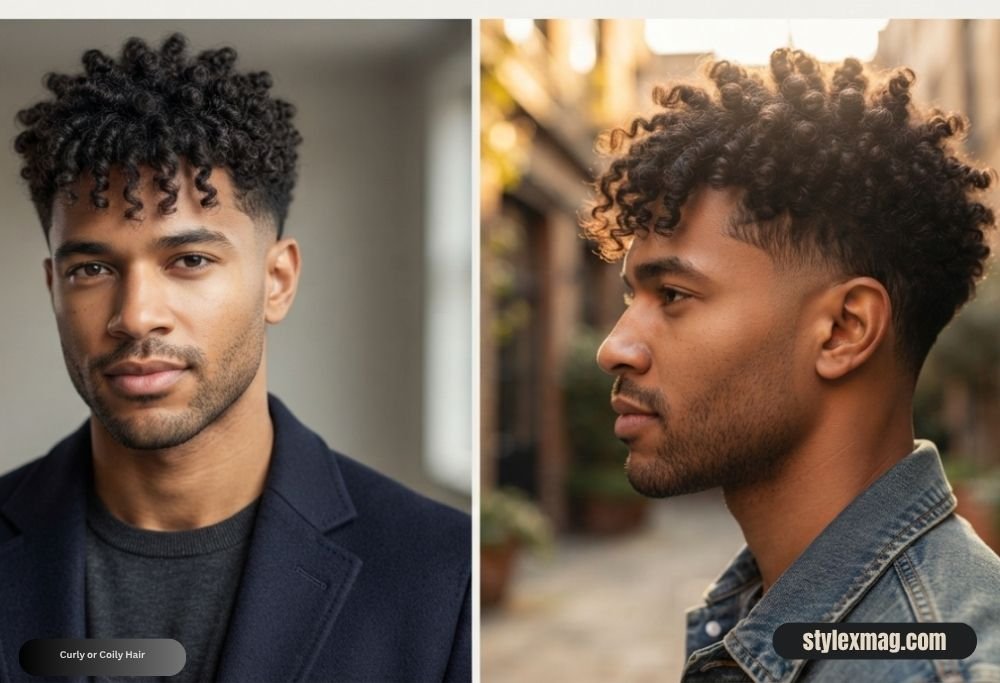
Curly hair adds volume in every direction, which naturally builds width at the jaw and chin without any intentional styling. A low fade or low taper, rather than a mid or high fade, keeps the sides full enough to reinforce that width right below the cheekbones. The curly taper fade and textured shag both suit this texture particularly well.
Ask for scissor-over-comb blending on the sides instead of relying on clippers alone, which keeps the transition from curls to shorter sides looking natural. Leave-in conditioner and curl cream both help maintain definition between wash days.
How to Choose a Hairstyle for a Heart-Shaped Face
Choosing the right cut comes down to four factors working together. Get these right, and almost any style from the list above can work for you. Ignore them, and even a trendy cut can throw off your facial proportions rather than fixing them.
Below, we break each factor down individually, with real examples pulled from the styles above.
Balance a Wider Forehead
The main goal with any heart face shape haircut is to soften a wide forehead without drawing more attention to it. A fringe, whether side-swept, French crop style, or razored, does this most directly by physically covering part of the forehead. Styles like the curtain hairstyle achieve something similar through symmetry, framing the forehead evenly on both sides rather than leaving it fully exposed.
Add Width Around the Jawline
Since a heart face tapers to a narrow chin, adding volume or length near the jaw helps create facial balance. Layered hair, medium-length hairstyles, and beards all add width around the jaw in different ways. A buzz cut with beard is the clearest example, where the beard does all the balancing work the haircut alone can’t provide.
Choose the Right Hair Length
Both short hairstyles and long hairstyles can work for a heart face, but each approaches balance differently. Short cuts lean on fades and tapers to control side volume, while long layered hairstyles use length itself to build weight near the jaw. If you’re unsure where to start, medium length usually splits the difference well, enough length for movement, without heavy daily styling.
Use Texture and Fringe Strategically
Textured hairstyles for men add dimension that softens sharper features naturally, without relying purely on cut shape. Combine texture with a well-placed fringe, and you’re tackling forehead width from two directions at once. This is why cuts like the textured crop and textured quiff consistently rank among the most recommended heart face shape styling tips from barbers.
Which Fade Works Best for a Heart-Shaped Face?
A taper fade, especially a low fade, is the most consistent choice for a heart shaped face haircut. It keeps the sides fuller around the jaw, which is exactly where this face shape needs extra width. A mid fade still works reasonably well, but anything higher starts working against you.
High skin fades strip away the side volume your jaw needs for balance. A burst fade can work in specific cases, particularly if you’re pairing it with a beard for extra chin-level width, but it’s riskier than a straightforward low fade for most face shapes.
| Fade Level | Effect on Heart Face | Best Paired With |
| Low taper | Keeps the most side volume, strongest jaw balance | Almost any style on this list |
| Low fade | Subtle contrast, sides stay mostly full | Short to medium cuts |
| Mid fade | Balanced look, some contrast without going too tight | Quiffs, pompadours, textured tops |
| Burst fade | Sharper contrast around the ear only | Pair with a beard for balance |
| High fade | Strips side volume, widens the forehead visually | Avoid unless beard compensates |
Haircuts and Styles to Avoid for Heart-Shaped Faces
Not every trendy cut suits a heart shaped facial structure. Some styles actively work against your facial proportions rather than helping them. The table below breaks down the main offenders and explains why each one causes trouble, along with a better alternative from earlier in this guide.
| Style to Avoid | Why It Doesn’t Work | Better Alternative |
| High skin fade | Exposes full forehead width, removes side volume | Low fade or low taper |
| Slicked-back with no texture | Leaves forehead fully exposed with nothing to interrupt it | Slicked-back with textured length underneath |
| Very tall pompadour, tight sides | Adds height without balancing width below | Short quiff with taper |
| Bowl cut | Adds width exactly where the face is already widest | Curtain hairstyle |
| Blunt chin-level cut | Makes a narrow chin and jaw look harsher | Medium layered hairstyle |
| Heavy, flat product finish | Removes texture that softens angular features | Matte clay or paste |
| Very angular geometric cuts | Adds sharpness to an already defined structure | Textured crop or textured shag |
How to Style and Maintain Heart Face Hairstyles
Daily styling depends heavily on hair texture. Straight hair usually needs a texturizing paste or clay to add grip and movement, since it tends to fall flat on its own. Wavy hair and curly hair, on the other hand, often need less product, sometimes just a sea salt spray or leave-in conditioner to enhance what’s already there.
Trim frequency also varies by style. Fringe-heavy cuts, like the French crop or razored fringe, need attention every three weeks to keep their line sharp. Longer, layered styles, like the wolf cut or long layers, stretch to five or six weeks comfortably. Whatever cut you choose, a good barber who understands haircut recommendations for your specific face shape will save you time and guesswork at every appointment.
| Style Category | Trim Frequency | Key Product |
| Fringe-based cuts | Every 3 weeks | Matte clay or paste |
| Fades and tapers | Every 3 to 4 weeks | Light pomade or texture spray |
| Medium layered styles | Every 5 to 6 weeks | Mousse or texturizing spray |
| Long layers and mullets | Every 6 to 8 weeks | Sea salt spray or leave-in conditioner |
Frequently Asked Questions
What hairstyle is best for a heart-shaped face?
A side-swept fringe, curtain hairstyle, or low fade with a textured top all rank among the best hairstyles for heart shaped faces. Each one softens forehead width while keeping the sides full enough to balance a narrow chin.
Is a heart-shaped face attractive for men?
Yes. A heart face shape creates a naturally striking structure, with a wide forehead and a well-defined chin. The right heart shaped face haircut sharpens that structure rather than working against it.
Is short or long hair better for a heart-shaped face?
Both work well. Short hairstyles rely on fades and tapers for balance, while long hairstyles use length and layering to add weight near the jaw. Medium length often offers the easiest middle ground.
Does a fringe suit a heart-shaped face?
Yes, very much so. A fringe is one of the most effective tools for hairstyles for men with heart shaped faces, since it physically shortens how much forehead shows without needing a full restyle.
Does a beard suit a heart-shaped face?
Yes. A beard adds visual width right at the chin and jaw, directly countering forehead width. Even light stubble makes a noticeable difference, and a beard shaped fuller near the chin than the cheeks works best for this face shape.
StyleXMag Editorial Team shares the latest haircut and hairstyle ideas, from modern fades and comb overs to curly, long, slick-back, and face-shape styles. Our goal is to make finding your next look simple, useful, and inspiring.