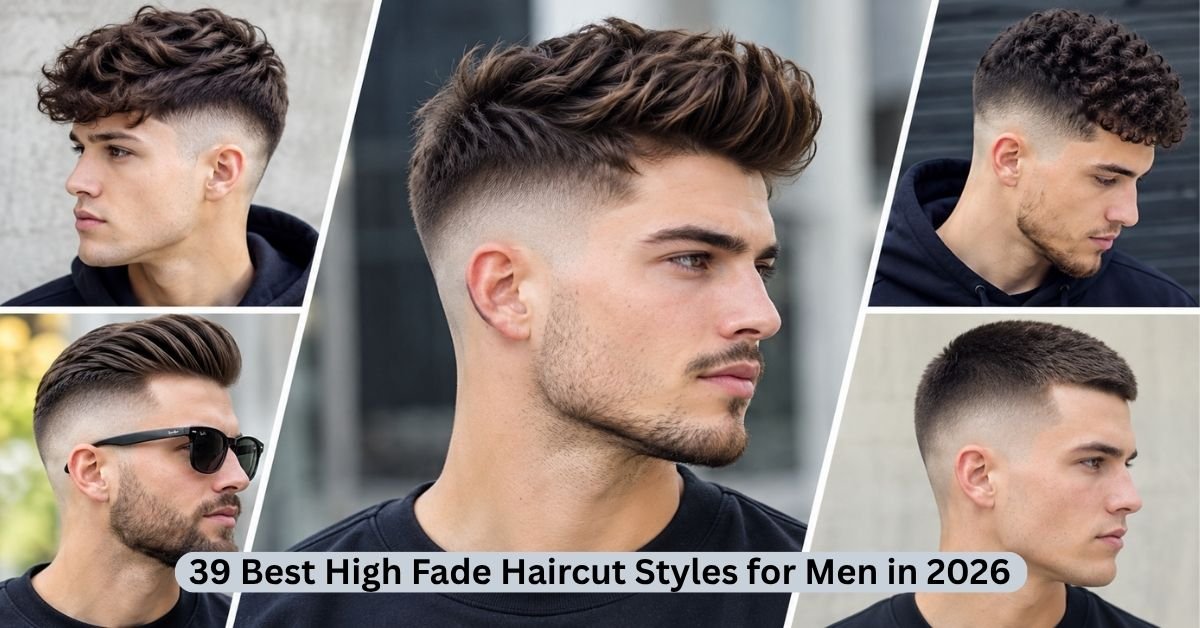
39 Best High Fade Haircut Styles for Men in 2026
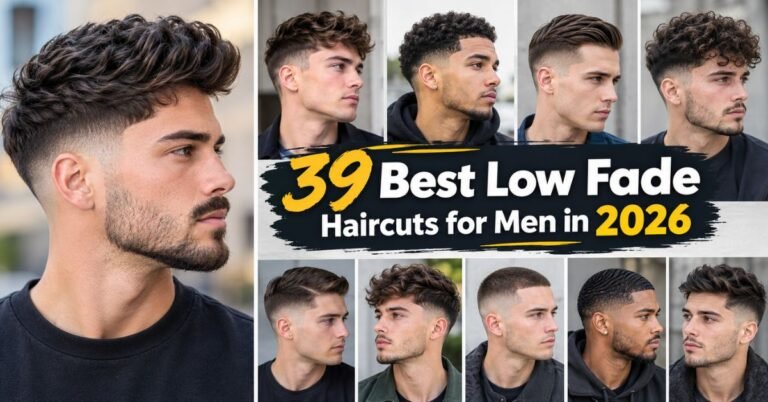
Looking for a fresh, sharp haircut that stands out? The high fade haircut is one of the most versatile men’s hairstyles, featuring closely trimmed sides that gradually blend into longer hair on top. Whether you prefer a clean, professional look or a bold, modern style, there’s a high fade to match your personality.
From high skin fades and textured crops to curly tops, buzz cuts, modern mullets, and slicked-back styles, these 39 high fade haircut ideas offer plenty of inspiration for your next barber visit. You’ll also discover how to choose the right fade for your face shape and hair type, style it at home, and keep your cut looking clean and fresh.
What Is a High Fade Haircut?
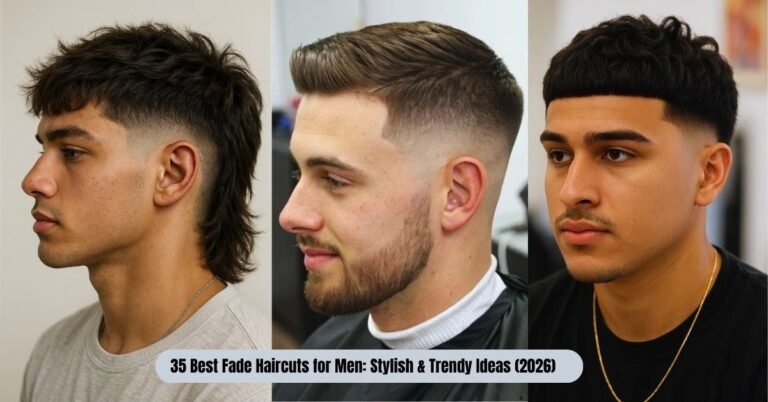
A high fade is a men’s barber haircut with faded sides and back. The fade begins high, just above the temples. From there, the hair gets shorter as it moves down toward the ears and neckline. The fade transition can end at bare skin, light stubble, or a short guard length. Because the start point sits so high, you see lots of short hair on the sides. The longer hair on top then stands out even more.
Why do men love it? The cut looks sharp and modern. It also gives you plenty of room to play with the top. Keep in mind that it needs upkeep. Growth shows fast, so you’ll visit the barber often. If you want a softer option, a mid fade haircut or a low taper grows out more gently. We’ll compare them below.
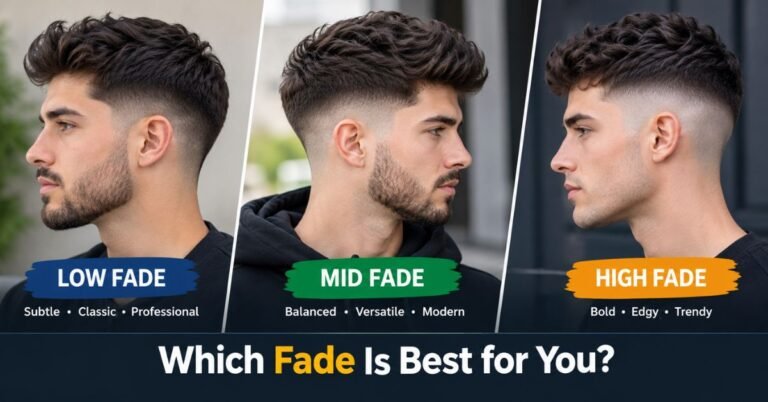
Read More: Low Fade vs Mid Fade vs High Fade: Which Fade Is Best for You?
39 Best High Fade Haircut Styles for Men
Here’s a roundup of the best high fade haircut styles for 2026. We grouped them in four ways. First come the fade types. Next come the top styles. Then you’ll see hair-type cuts. Finally, you’ll find special cases like beards and high fade for thinning hair. Pick one that fits your hair, your face, and your schedule.
The table below gives you a fast preview. Use it to spot a few favorites. Then read the full entries.
| Style | Base closeness | Best for | Upkeep |
| Classic high fade | #1 or #2 guard | Most hair types | Every 2 weeks |
| High skin fade | Bare skin | Thick, dense hair | Every 1 to 2 weeks |
| High shadow fade | Stubble | Tight curls, fine hair | Every 2 to 3 weeks |
| High drop fade | Skin or stubble | Curly and wavy hair | Every 2 weeks |
| High burst fade | Skin or stubble | Curls, mohawks | Every 2 weeks |
| High temple fade | Skin | Lineups, short textured cuts | Every 1 to 2 weeks |
| High taper fade | Neckline and sideburns | Office settings | Every 2 to 3 weeks |
| Disconnected high fade | Skin, hard line | Thick hair | Every 2 weeks |
| High top fade | Skin | Coily hair | Every 1 to 2 weeks |
| High fade buzz cut | Skin to #1 | All-in-one simplicity | Every 1 to 2 weeks |
| High fade pompadour | Skin or #1 | Thick hair on top | Every 2 weeks |
| High fade with beard | Blended into beard | Full or boxed beards | Every 2 weeks |
Classic High Fade
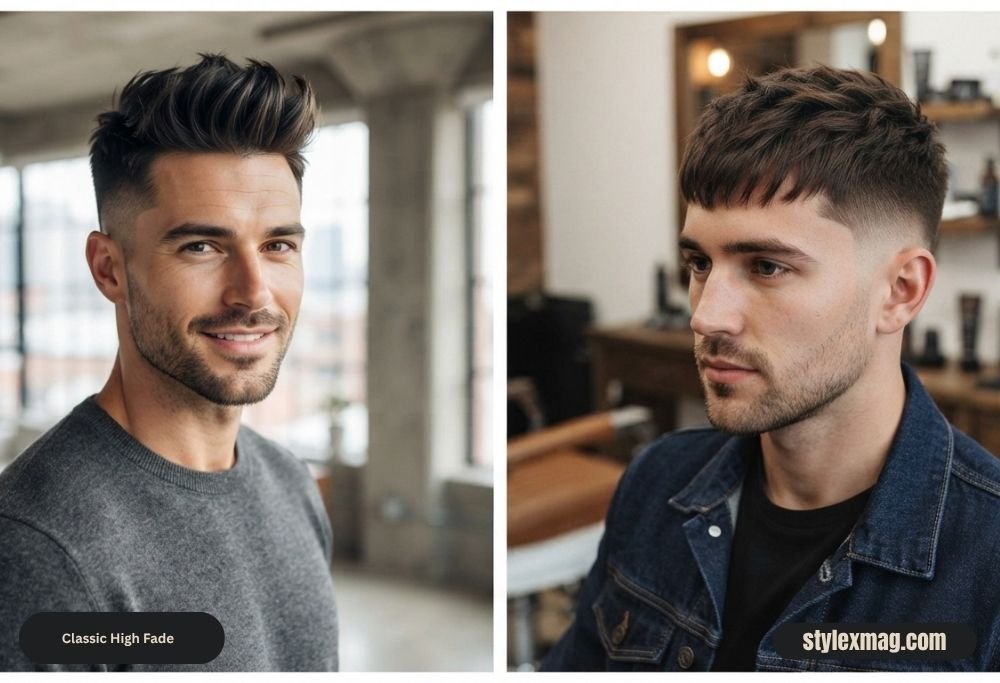
This is the baseline. The barber starts above the temples and finishes at a #1 or #2 clipper guard number. The blend looks clean. It works on nearly every hair type, though very fine hair may need a softer finish. If you’re new to fades, start here. Ask for a smooth blend with no harsh lines. It looks sharp at work and on weekends.
High Skin Fade
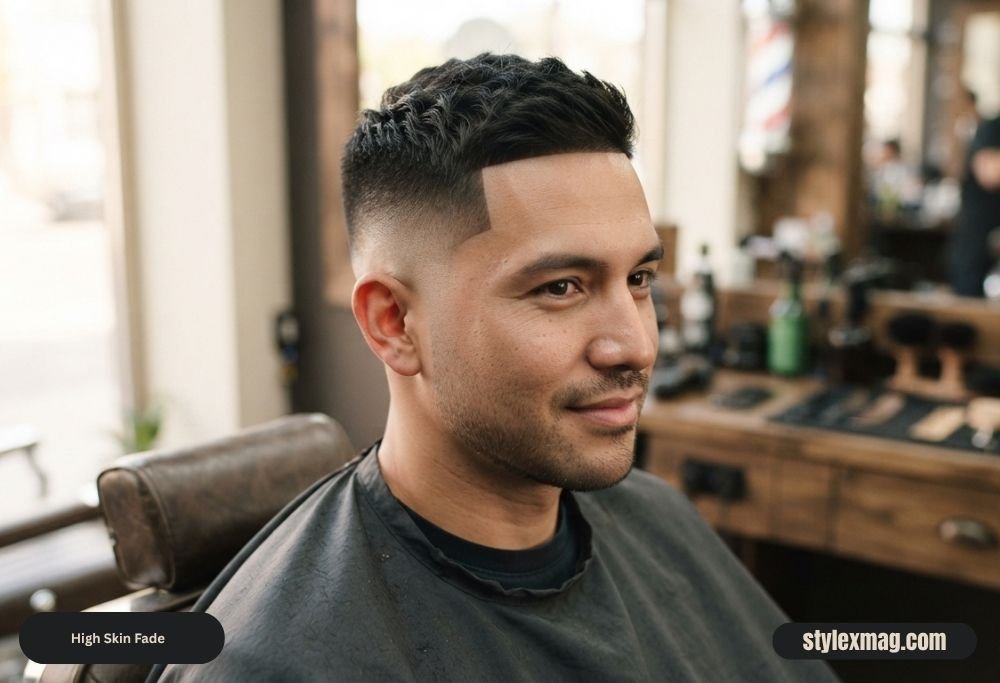
The high skin fade goes all the way to bare skin. A skin-level fade gives the strongest contrast of any cut. Barbers often finish it with a straight razor. Thick, dense hair handles it best. Fine hair can look sparse, since so much scalp shows. Growth appears within days at the base. Plan on a visit every one to two weeks.
High Shadow Fade
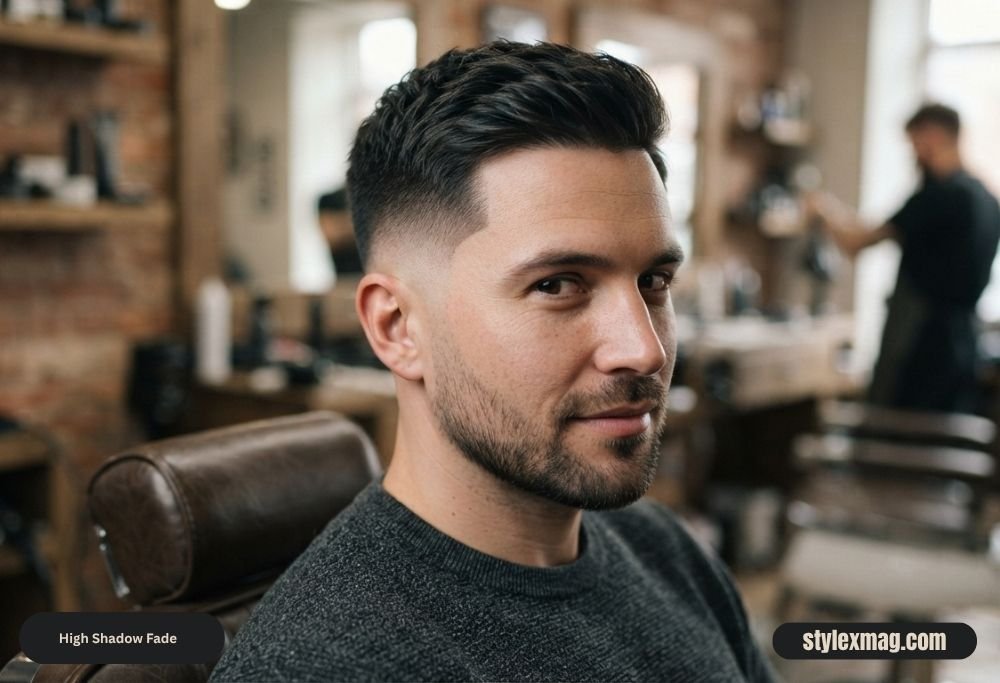
A high shadow fade stops at stubble. It looks softer than a skin fade. You still get the high start point and crisp shape. Tight curls and coily hair suit this blend well. It also lasts longer between cuts. Many men who want a high fade without a weekly appointment choose this one.
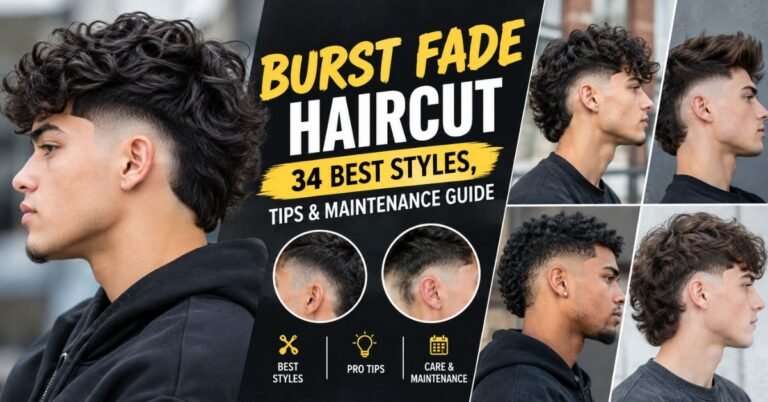
Read More: Burst Fade Haircut: 34 Best Styles, Tips & Maintenance Guide
High Drop Fade
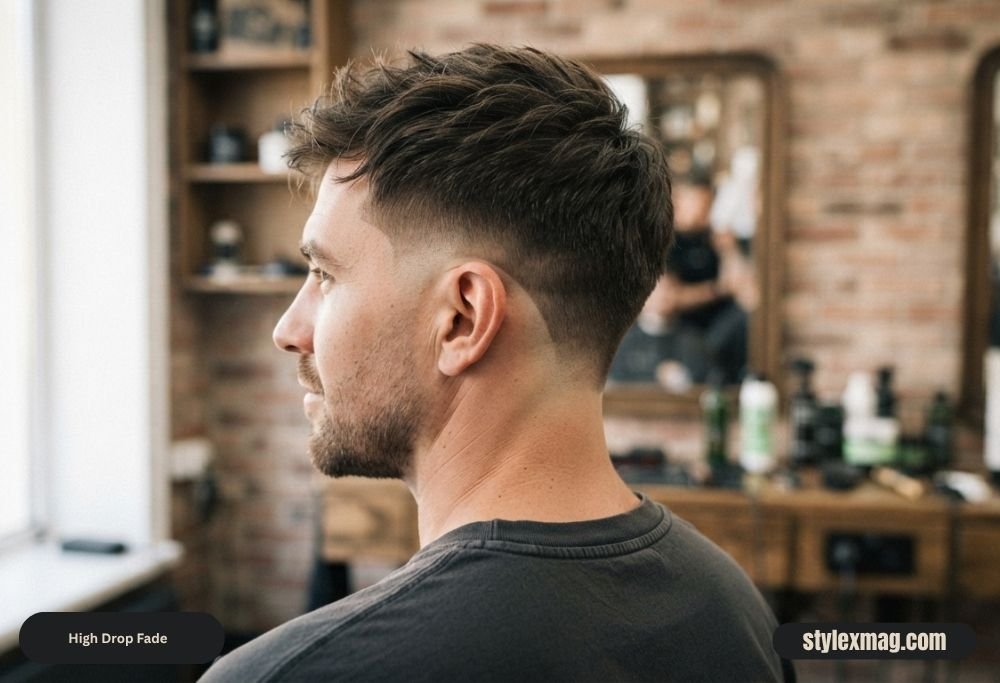
The high drop fade starts above the temples. Then the line curves down behind the ear. From the front, it looks like a normal high fade. From the back, it looks sculpted. It follows the natural curve of your head. Curly and wavy hair look great with it. Ask your barber to let the line “drop” behind the ear.
High Burst Fade
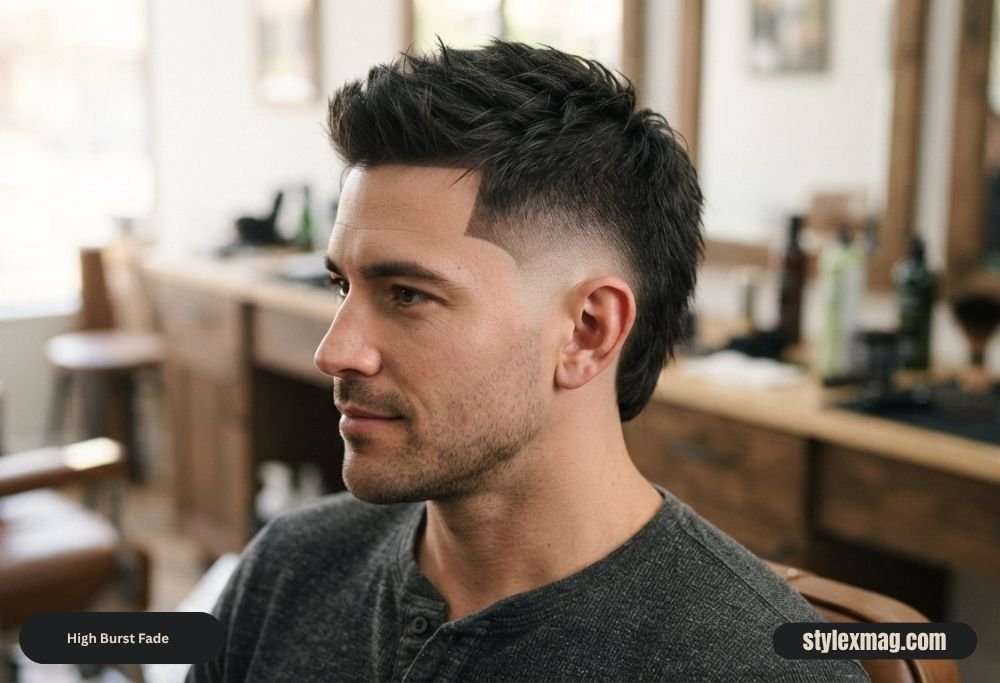
In a high burst fade, the fade arcs around the ear like a half circle. The back keeps more length. This shape frames a mohawk or a curly top beautifully. A burst fade haircut feels playful and modern. It’s a great pick for curly and coily hair. Expect a trim every two weeks to keep the arc crisp.
High Temple Fade
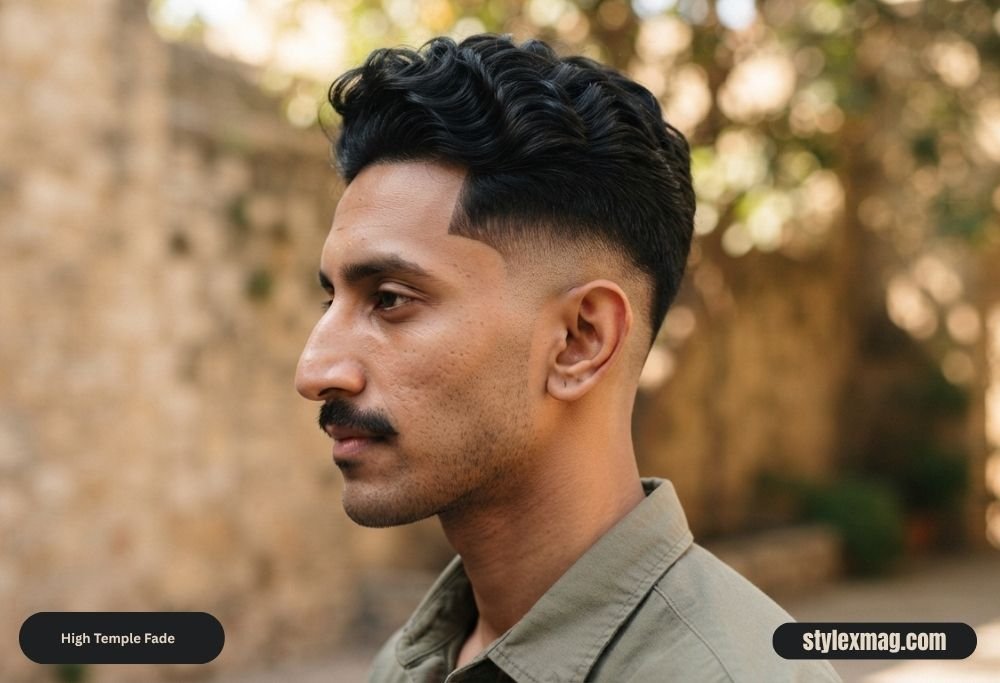
You’ll also hear barbers call this a “temp fade.” It focuses on the temples and hairline. The front looks razor sharp. The back stays longer. Men with short textured cuts love it with a crisp line-up. It frames the face well. Ask for a clean hairline and tight edges at the temples. Touch-ups are needed every one to two weeks.
High Taper Fade
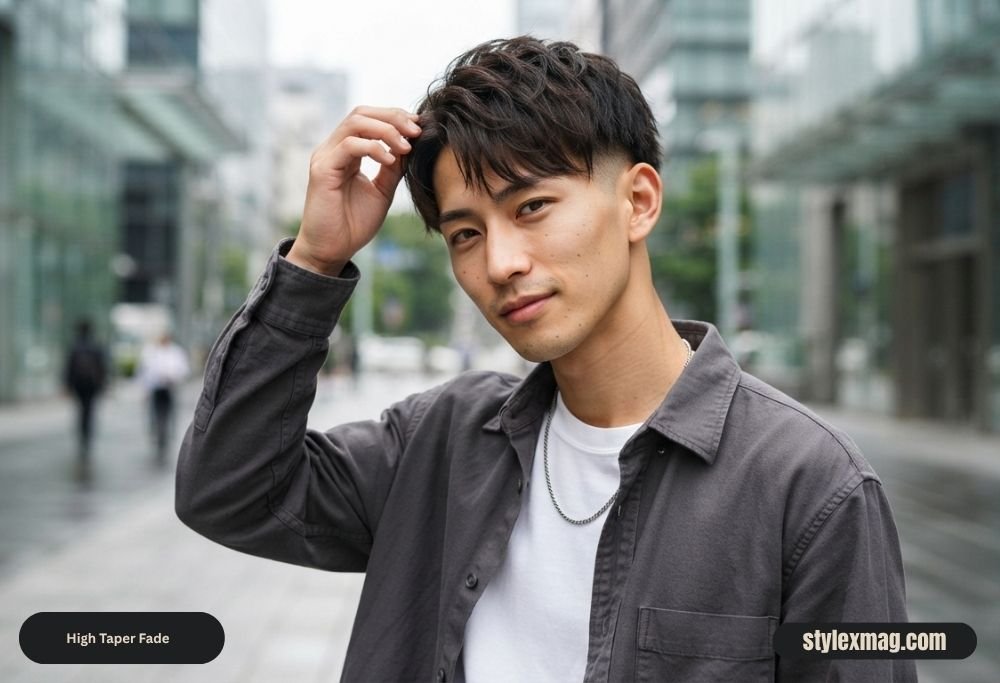
A high taper fade is not the same as a full fade. A taper shortens the hair only at the sideburns and tapered neckline. The rest of the sides keep some length. That makes it gentler and more office-friendly. Choose it when you want polish without maximum contrast. It also grows out more gracefully.
Disconnected High Fade
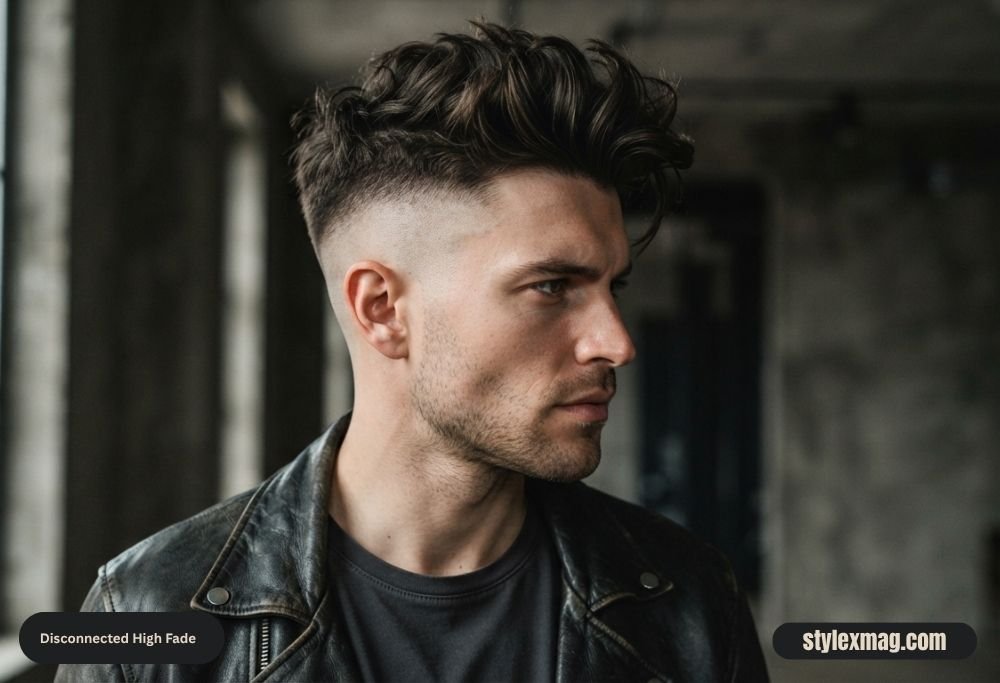
Here, a hard line separates the long top from the faded sides. There’s no soft blend. The contrast looks dramatic and intentional. Thick hair shows the line best. Because the edge is so sharp, it loses definition quickly. Book a visit every two weeks. Say it clearly: “I want a hard line, no blending.”
High Top Fade
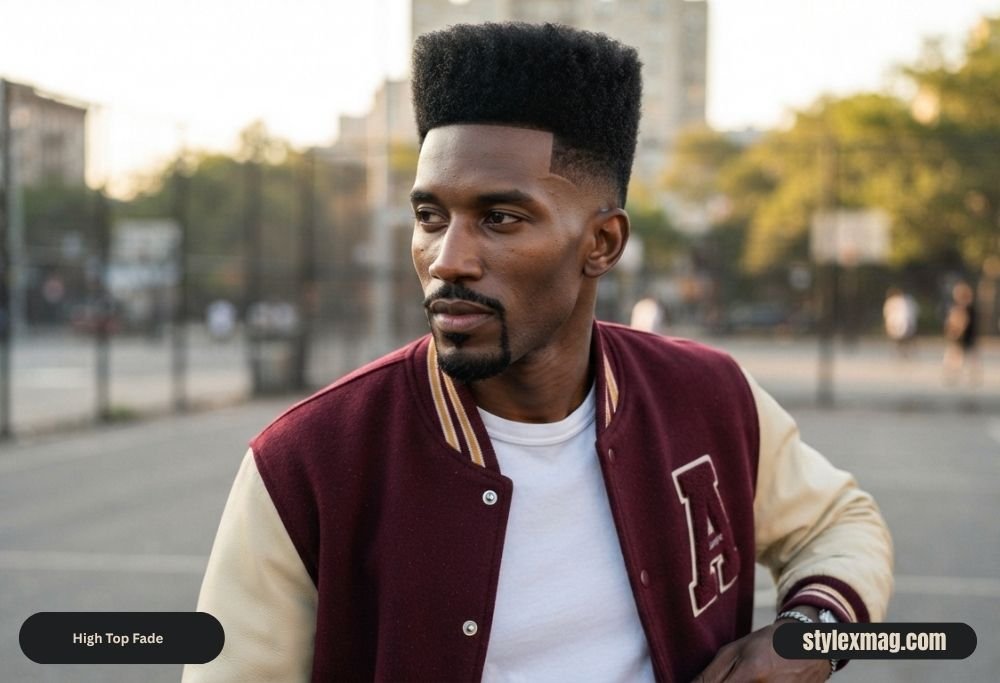
The high top fade pairs skin-faded sides with a tall, boxy top. It comes from the 1980s and 90s barbershop scene. Today it’s making a strong comeback. Coily hair holds this shape well. The top can be flat, rounded, or angular. Ask your barber to leave enough length to shape it.
High Fade with a Hard Part
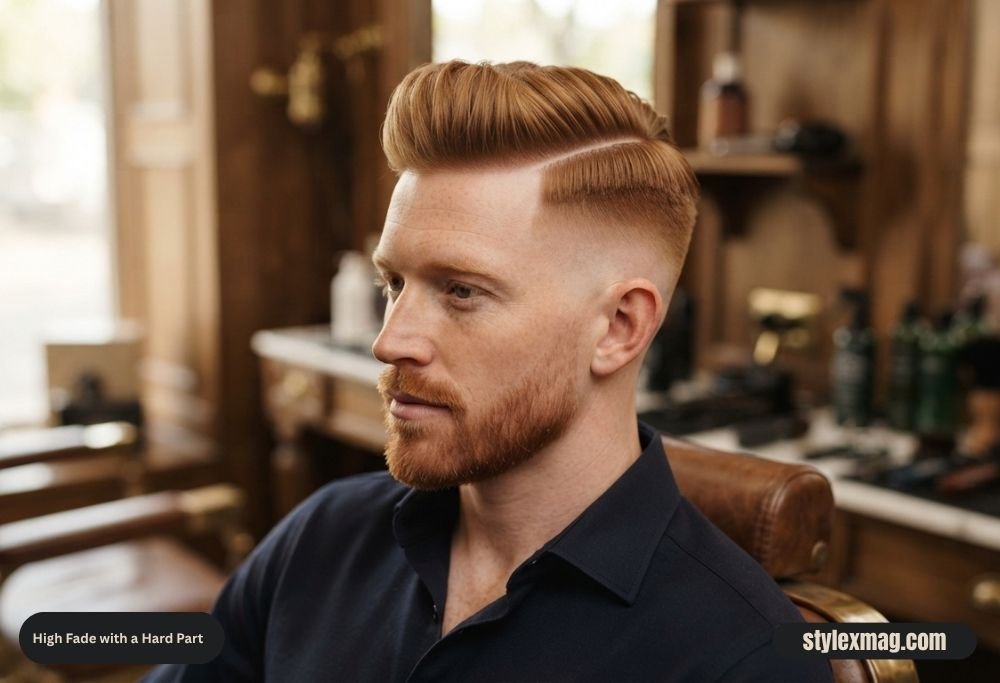
A shaved part line adds sharp detail to a high fade. The barber cuts a thin line into the hair with a razor or trimmer. Then you comb the hair away from it. The result looks neat and precise. It works with side parts and high fade comb over styles. Expect the line to blur after a week.
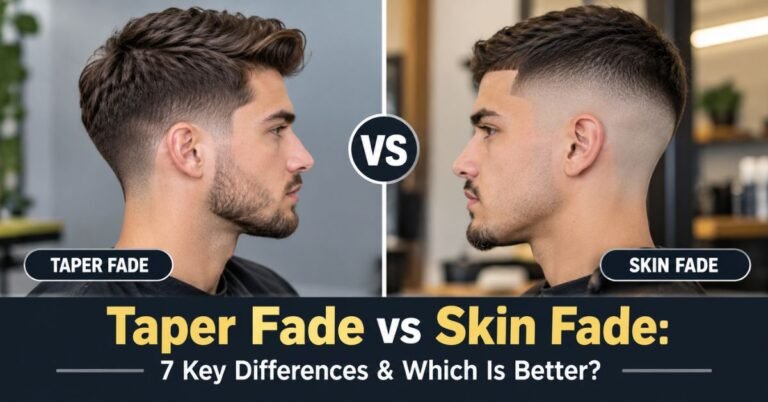
Read More: Taper Fade vs Skin Fade: 7 Key Differences & Which Is Better?
High Fade Undercut
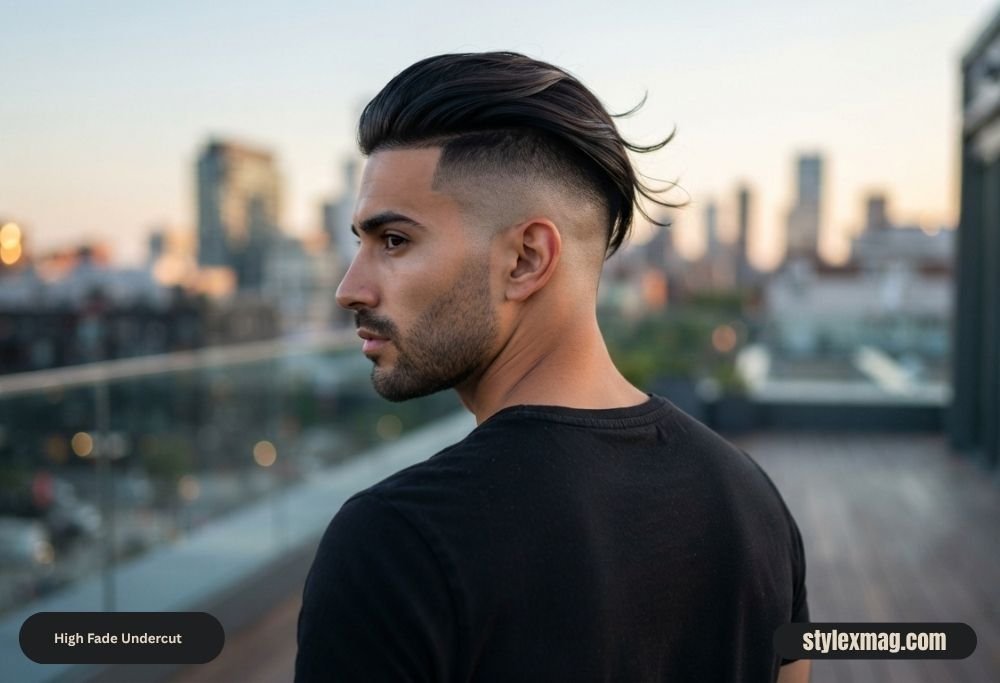
A high fade undercut keeps the top long and cuts the sides very short. It’s close to a disconnected fade. However, an undercut usually has a clear separation, while a fade blends in some gradient. Many men choose this look for bold, modern men’s hairstyles. Style the top slicked back or tousled.
High Fade Pompadour
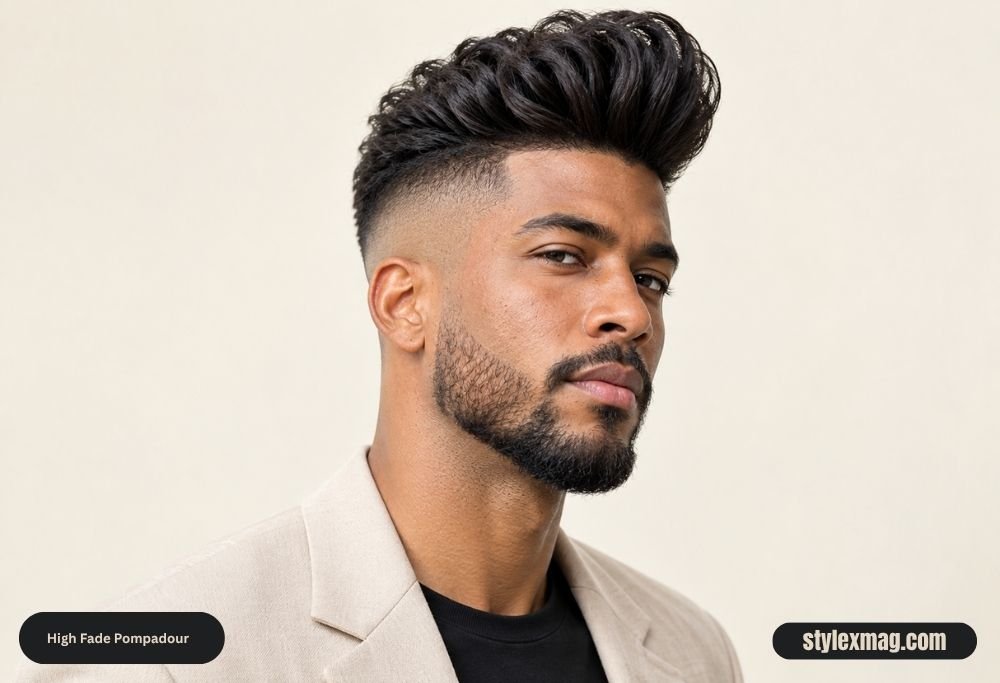
The high fade pompadour sweeps volume up and back. The tight sides make the top look taller. Leave about three to four inches (8 to 10 cm) up top. Use a strong hair pomade for hold. Round and square faces benefit from the extra height. However, long faces should go easy on the lift.
High Fade Quiff
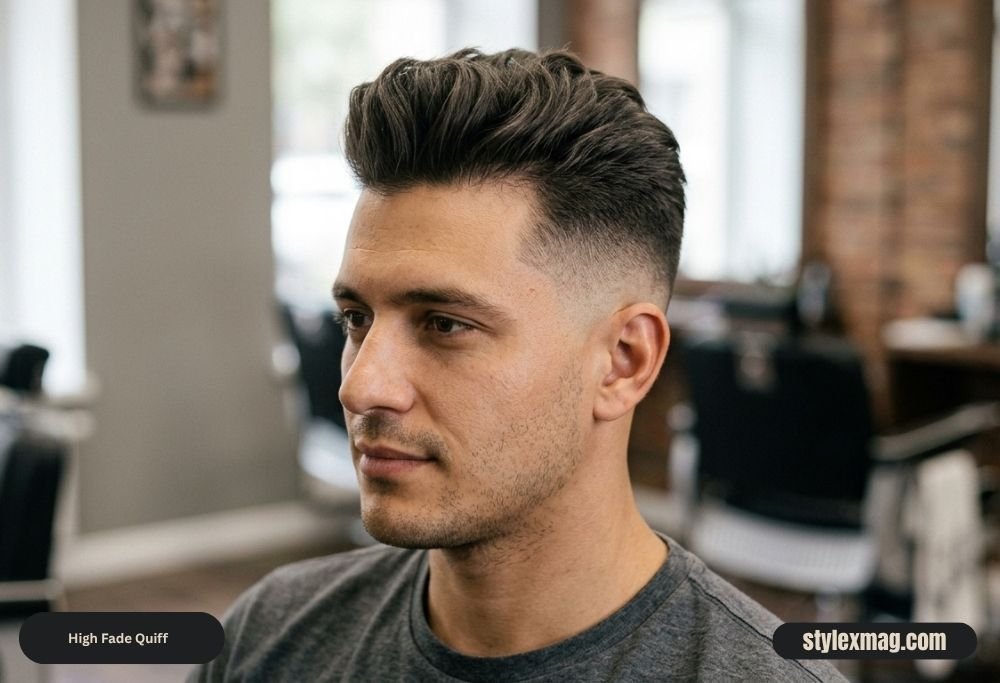
A quiff pushes hair forward and up at the front. With a high fade, the height pops. A shorter quiff of two to two and a half inches (5 to 6 cm) suits work settings. A taller version suits nights out. Use a blow dryer and matte clay for a natural finish.
High Fade Textured Crop
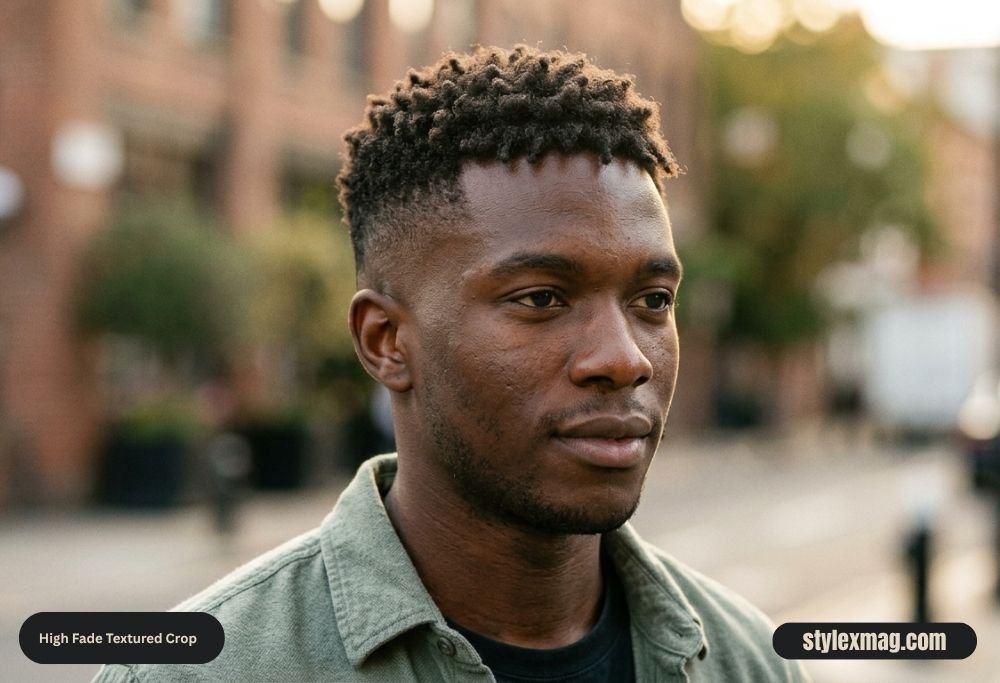
The high fade textured crop has choppy layers and a short fringe. It looks effortless. The tight sides keep it sharp. Ask your barber to point-cut the top for a textured top rather than a blunt edge. It suits thick and medium hair. Trim the fade every two weeks and the top every five to six.
High Fade French Crop
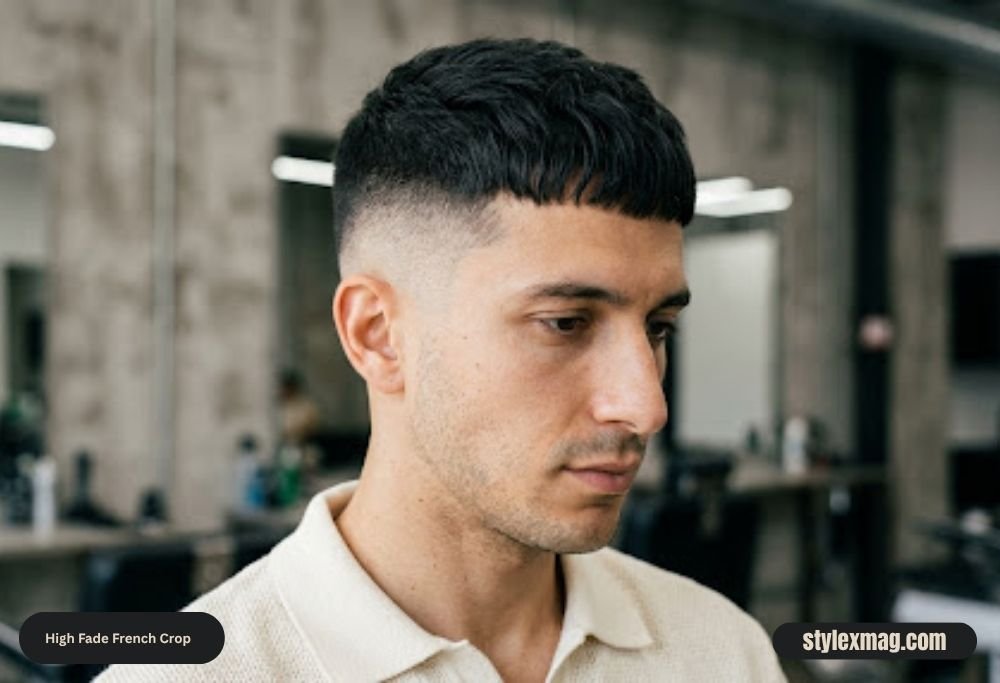
A high fade French crop has a short, blunt fringe just above the eyebrows. The sides are tight. Round and square faces wear it best. It’s a close cousin of the Edgar cut, which uses a similar straight fringe over a fade. Both look bold and clean. Ask for the fringe to sit straight.
High Fade Crew Cut
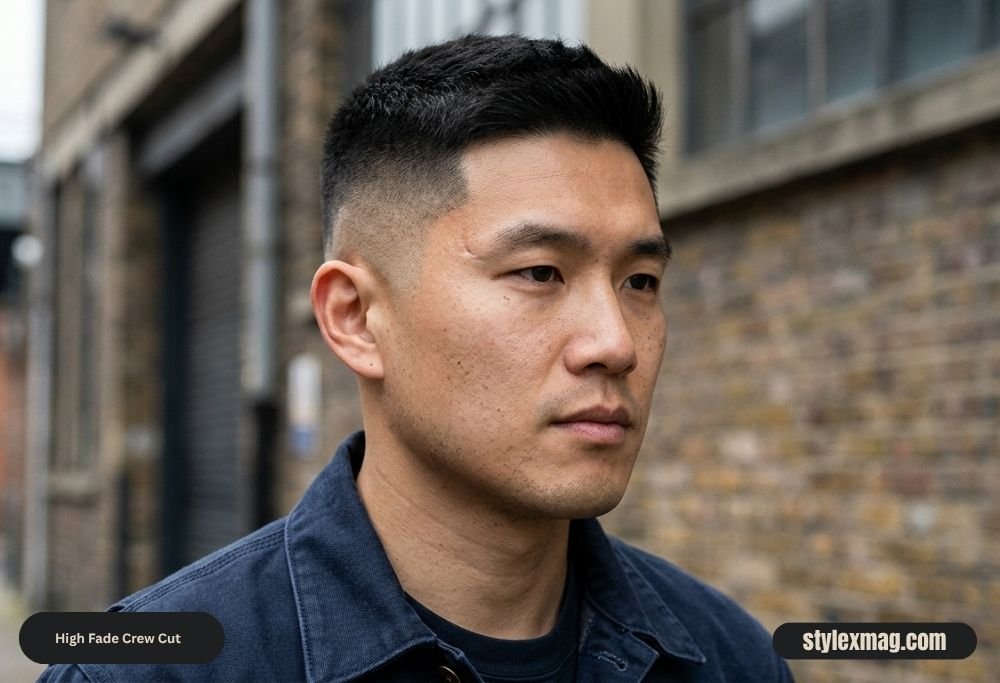
The high fade crew cut keeps the top short and a bit longer in front. It tapers toward the crown. The look is tidy and athletic. It needs almost no styling. Square and oval faces suit it well. Many men wear it at the office and the gym alike.
High Fade Buzz Cut
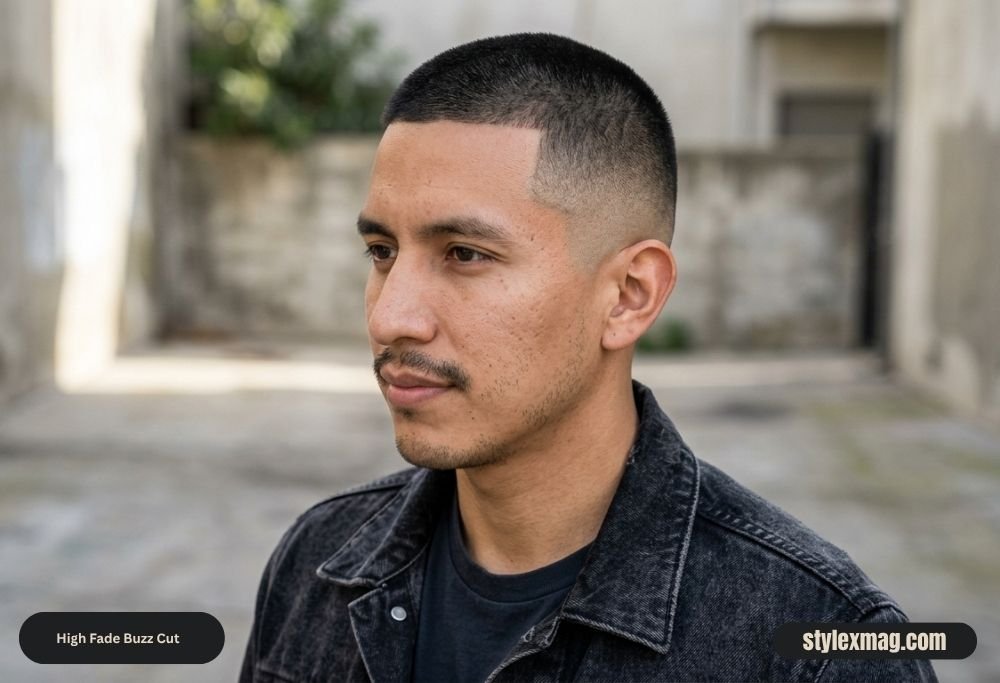
The high fade buzz cut is the ultimate low-effort look. The top is short and even, often a #2 or #3. The sides fade to skin. You skip daily styling. Face shape matters here, since nothing hides the head. Oval and square faces look best. Visit the barber every one to two weeks.
High and Tight Fade
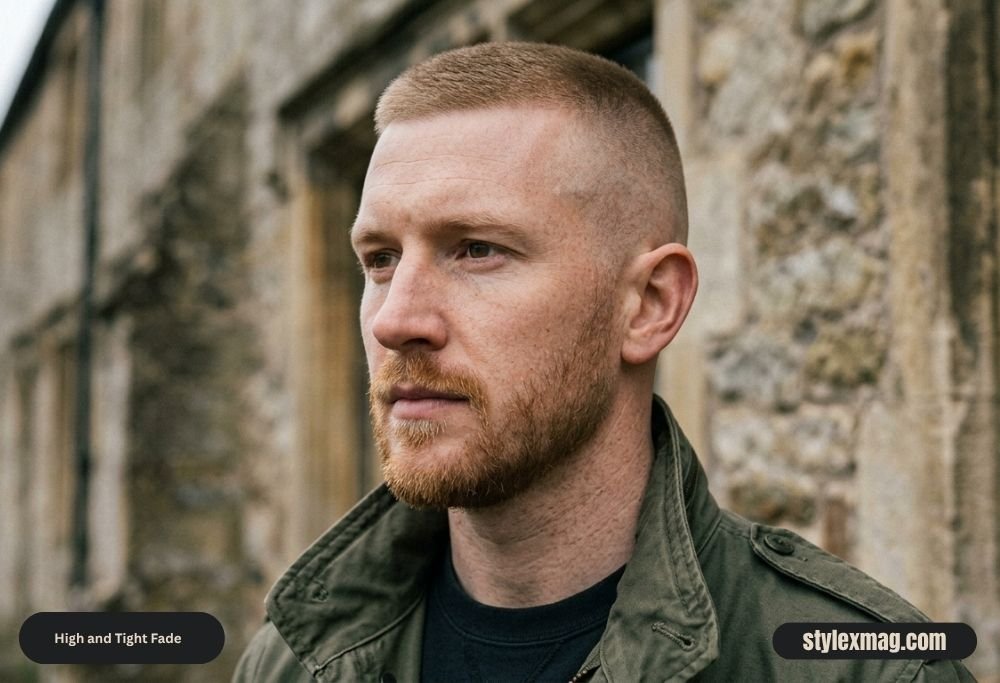
This military-born cut has very short sides and a short, flat top. A modern high and tight fade replaces the hard line with a smooth blend. It stays neat and strict. It also works well in conservative jobs. Ask for a flat, short top. Keep the haircut proportions balanced so the head doesn’t look boxy.
High Fade Slick Back
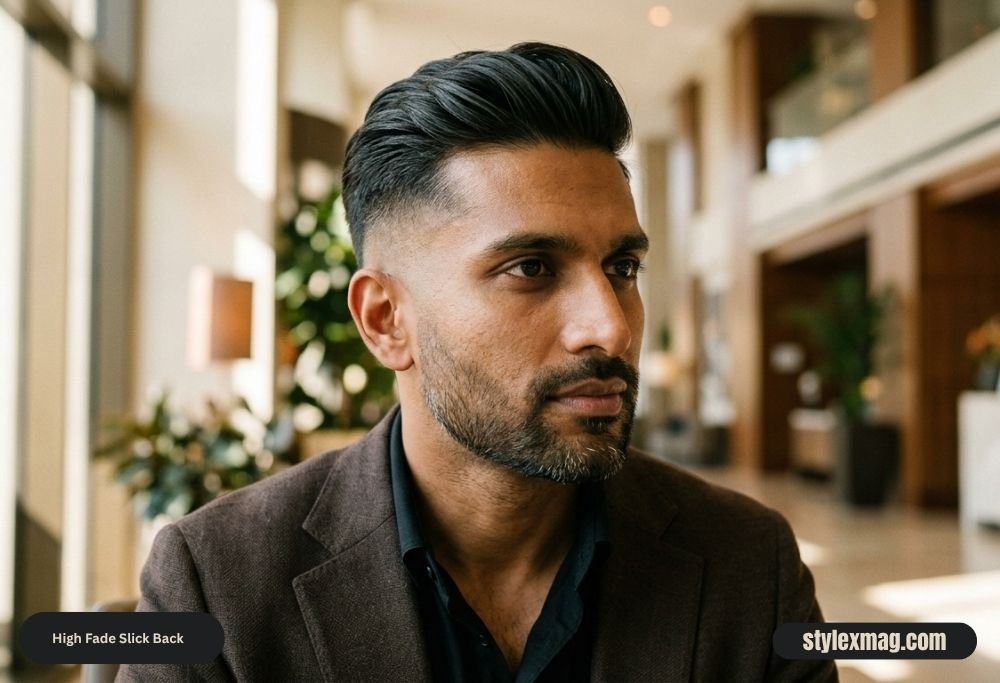
The high fade slick back combs the top straight back. Against tight sides, it looks polished. Straight and slightly wavy hair work best. Use a hair pomade or light gel. Leave three to four inches (8 to 10 cm) on top. Comb it back while the hair is damp for a clean finish.
High Fade Comb Over
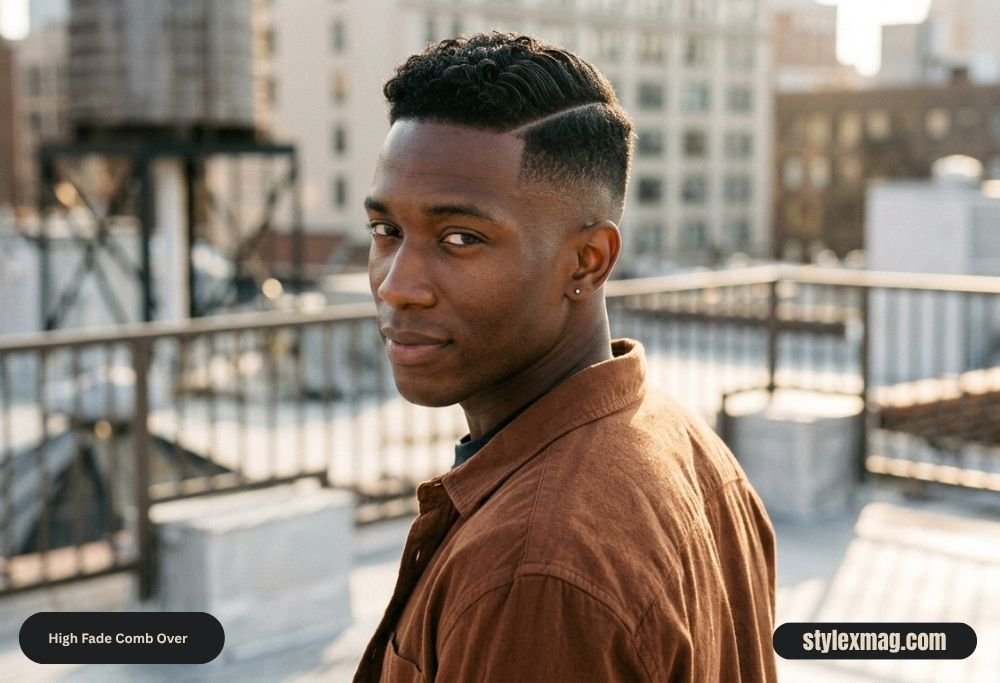
A high fade comb over sweeps the top to one side. Often a hard part adds definition. The high fade gives the style a bolder edge than a low fade does. It’s a smart pick for office life. Oval, square, and heart-shaped faces suit it. Ask for a clear part on the left or right.
High Fade Side Part
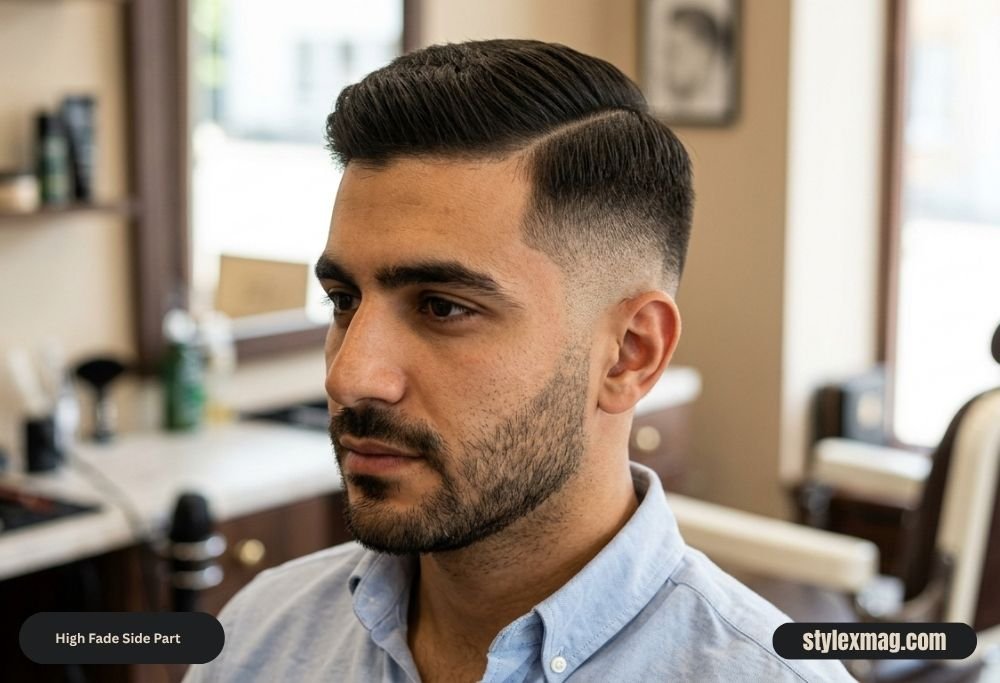
The high fade side part uses a natural part with no shaved line. It looks softer than a comb over. The fade adds a modern twist to a classic men’s haircut. Follow your hair’s growth direction. The middle part haircut is a popular alternative if your hair falls evenly on both sides.
High Fade Mohawk
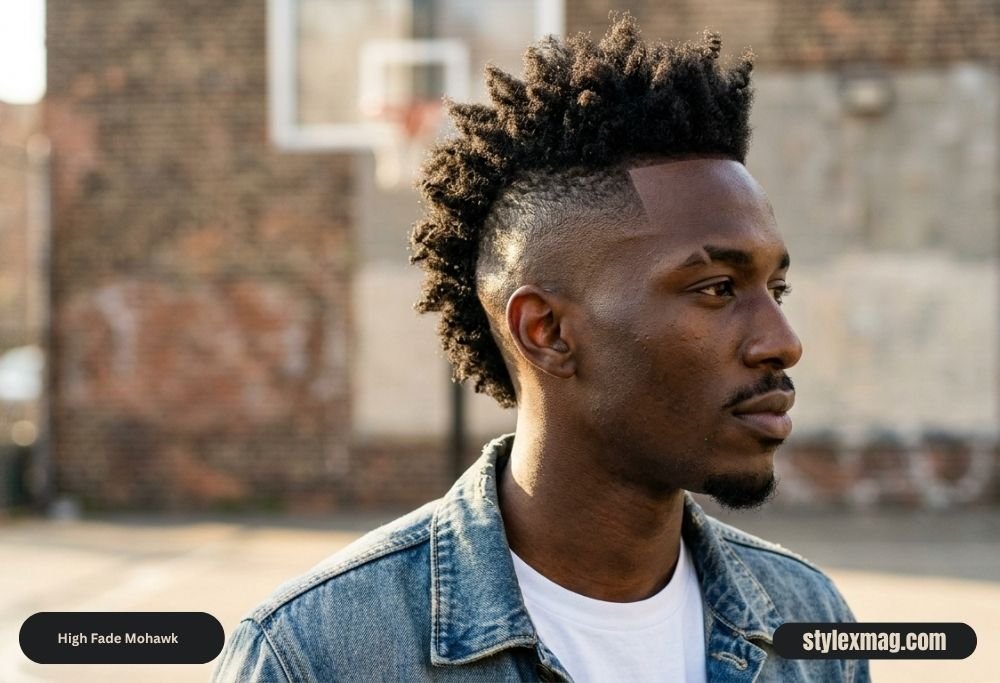
A high fade mohawk leaves a strip of long hair down the center. Both sides are faded high. It’s the most dramatic look on this list. Thick hair on top gives the best shape. Oval faces wear it well. Ask your barber to blend the edges so the strip looks intentional.
High Fade Faux Hawk
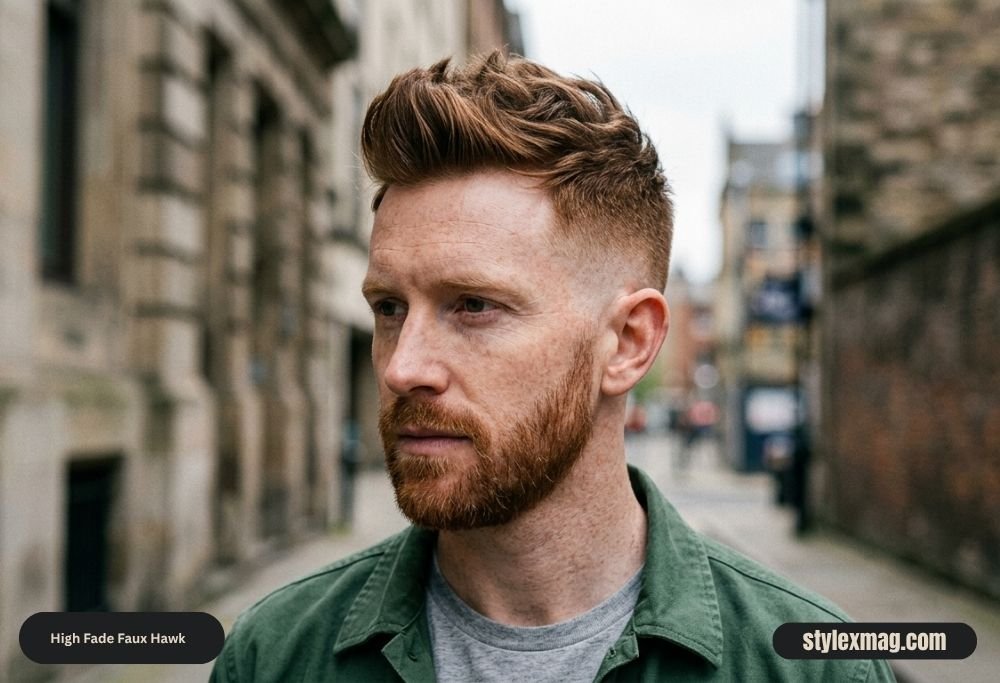
A high fade faux hawk gives the mohawk feel without full commitment. You push the center hair upward. The sides stay tidy but not shaved bare. It’s easier to wear in many workplaces. Use texturizing powder or clay to lift the strip. Oval and square faces suit it.
High Fade Modern Mullet
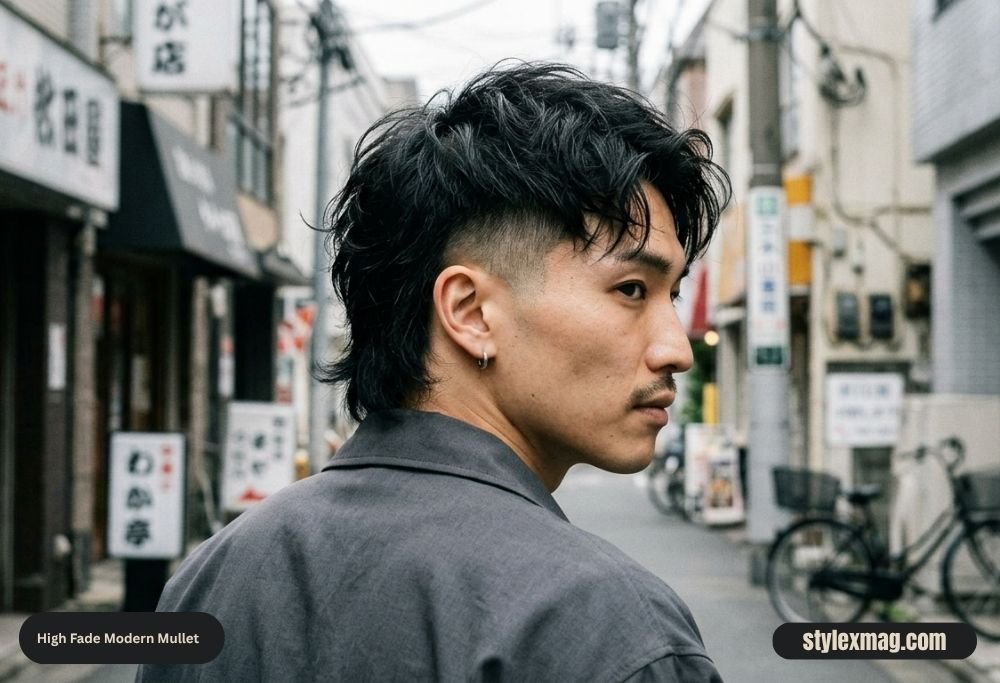
The high fade modern mullet has a short top and longer hair at the back. The sides are tight. A modern mullet fade looks clean and deliberate, unlike old-school mullets. Oval faces carry it best. Ask your barber to blend the fade into the longer back section. It’s a confident, trend-focused choice.
High Fade Brush Up
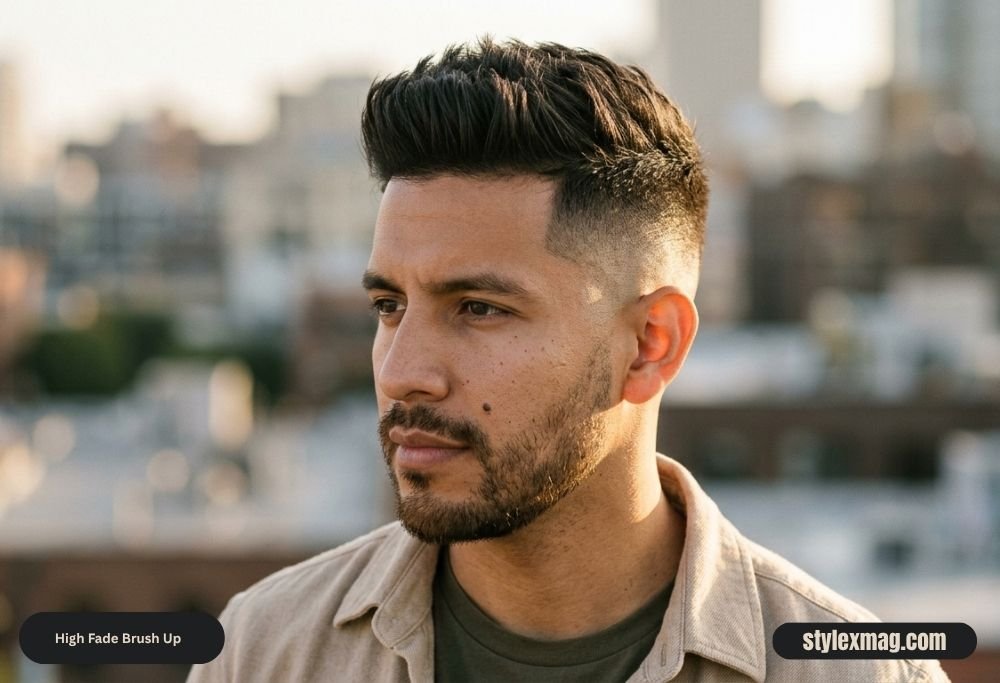
The high fade brush up lifts the hair upward and back. You blow-dry it for height. The tight sides make the volume stand out. It suits thick and medium hair. Practice your blow-drying techniques at home. Start with damp hair and a small amount of product.
High Fade Ivy League

The Ivy League cut is also called the Executive Cut. It’s a polished style with a short top, a natural part, and a slightly longer front. Add a high fade, and it looks modern. It’s longer than a crew cut. Oval faces and professional settings suit it best.
High Fade with Fringe
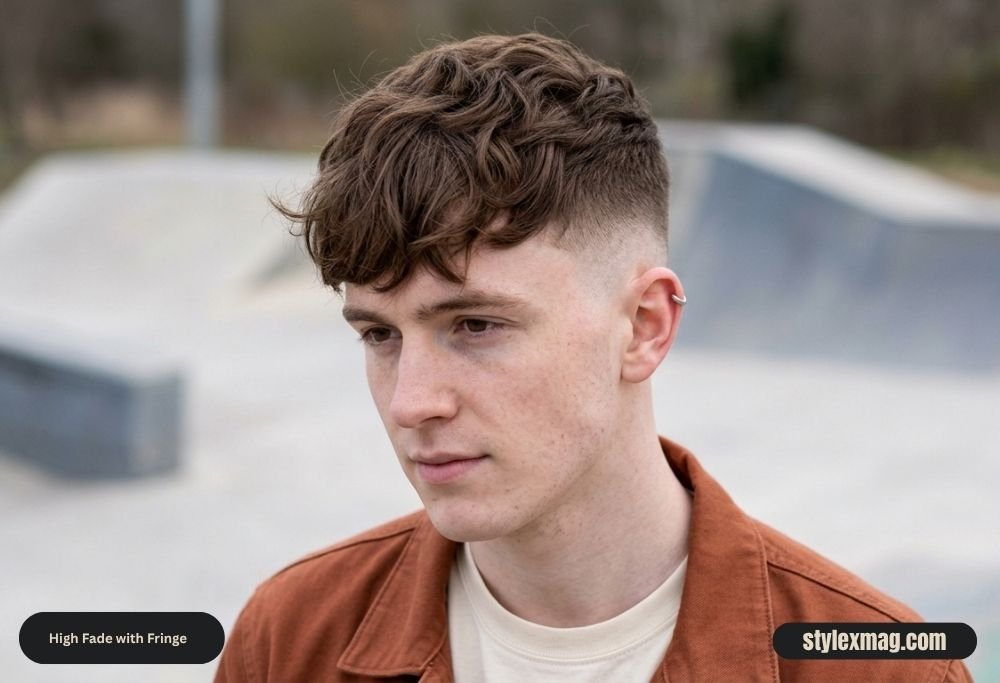
A fringe falls forward over the forehead. It softens the front of the face. That helps men with a high forehead. The high fade keeps the rest sharp. You can wear the fringe straight or swept. Ask for a texturized fringe so it doesn’t look heavy.
High Fade with Long Hair on Top
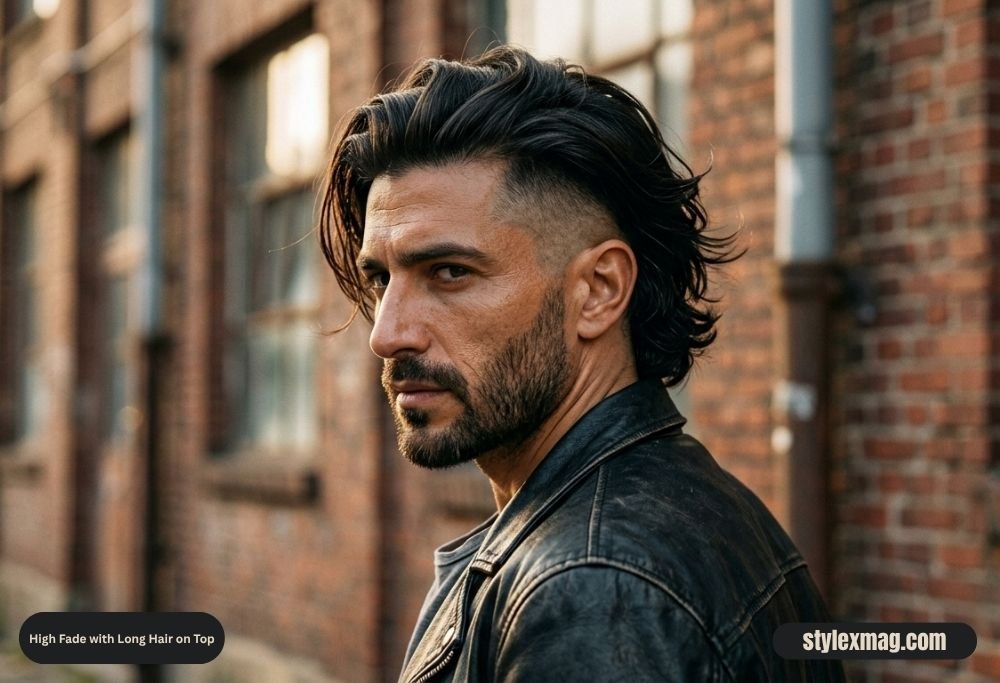
A high fade haircut with long hair on top mixes flow with sharp sides. You can slick it back, tie it up, or let it fall. A high fade for long hair needs a smooth transition. Ask your barber to blend the length into the fade. The warrior cut trend follows the same idea with a rugged feel.
High Fade with Short Hair on Top
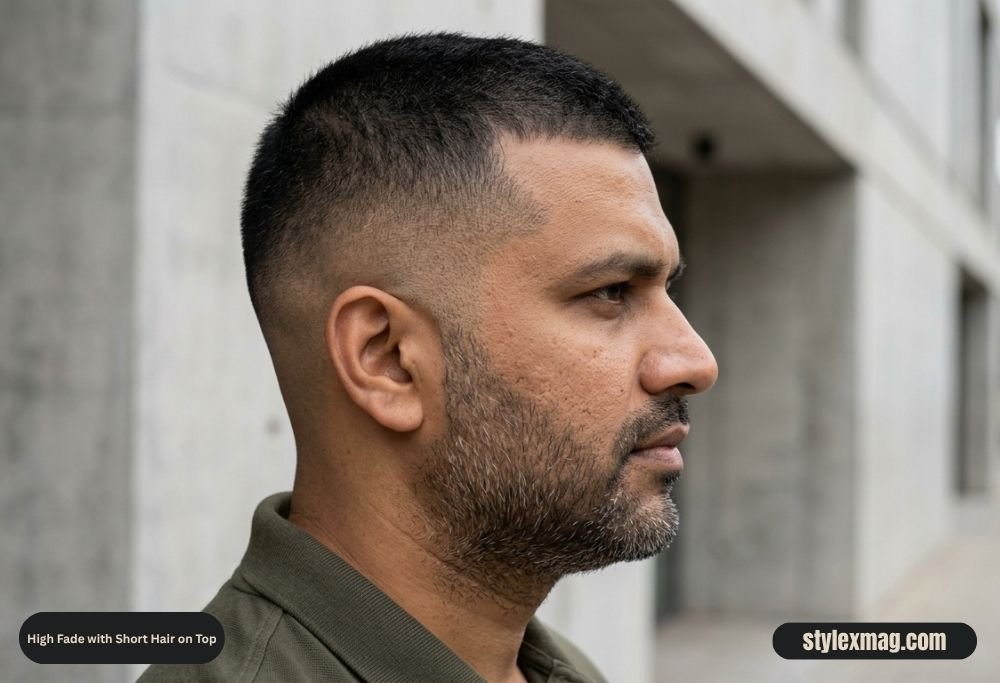
A high fade for short hair keeps the top easy. You can leave two inches (5 cm) or less. Style it with a little paste. The look stays sharp and work-friendly. It’s perfect when you don’t want a long routine. Short hair also shows the fade shape clearly.
High Fade with Braids
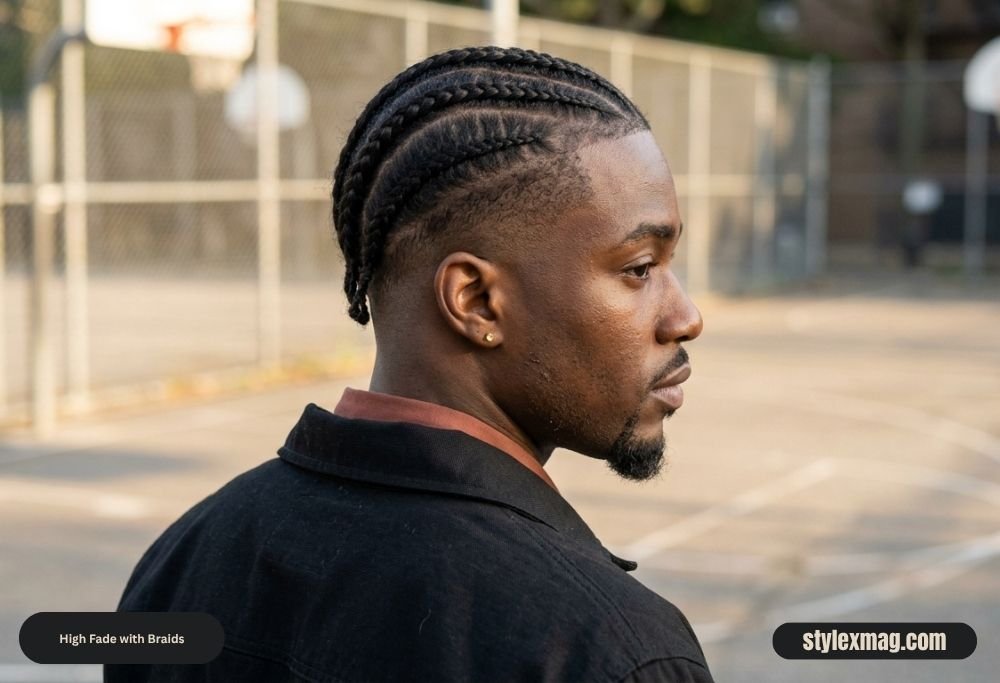
Braids and cornrows look striking above a high fade. A skin or shadow fade makes the pattern pop. The braids stay neat while the sides stay crisp. Schedule both services together. Fades need a refresh every one to two weeks. Braids often last longer. Talk to your barber about the design.
High Fade Afro
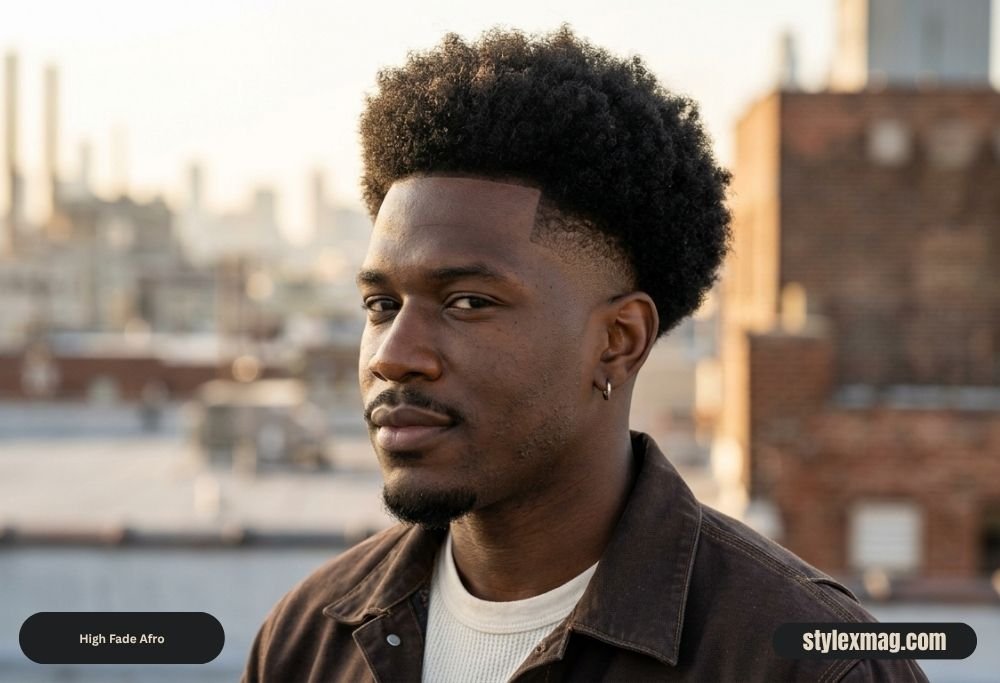
A high fade afro keeps a rounded shape on top. The sides are tight and clean. A sharp shape-up outlines the hairline. This style highlights natural hair texture and volume. A shadow fade often looks smoother on dense coils. Shape the top with a pick for an even outline.
High Fade for Curly Hair
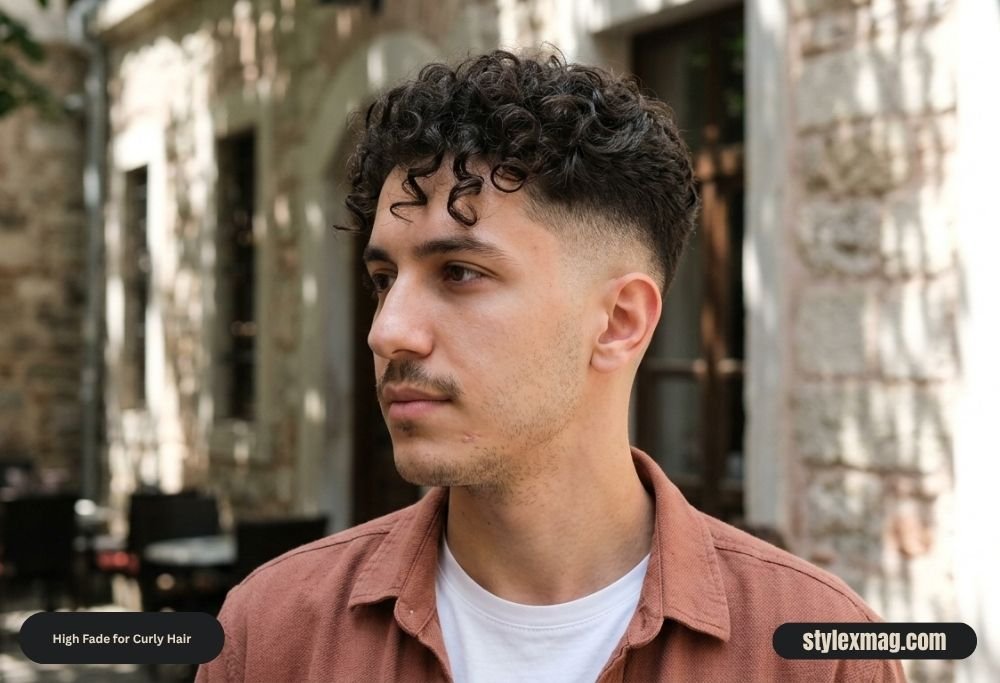
A high fade for curly hair works well, but curls shrink when dry. A fade that looks perfect wet can sit higher once it dries. Tell your barber to set the height on dry hair. Scissor-over-comb gives control near the curl line. The drop and burst fades follow natural curl flow.
High Fade for Wavy Hair
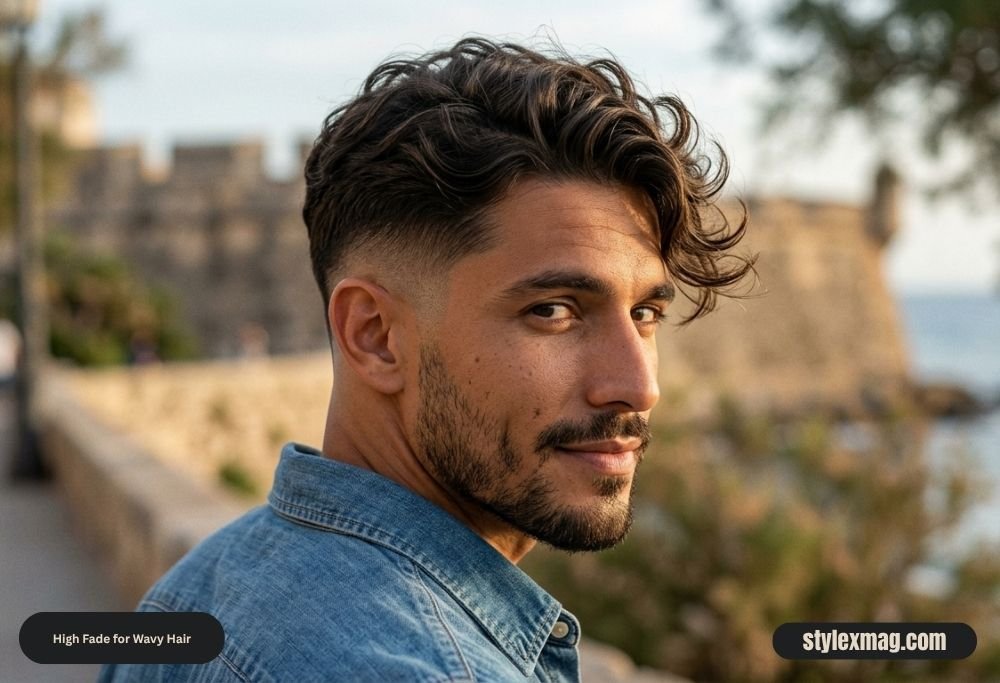
A high fade for wavy hair lets your waves stand out against tight sides. Leave at least two and a half to three inches (6 to 8 cm) on top. That’s enough for the waves to show. A drop fade follows the wave pattern. Use a light cream to define the texture without weight.
High Fade for Straight Hair
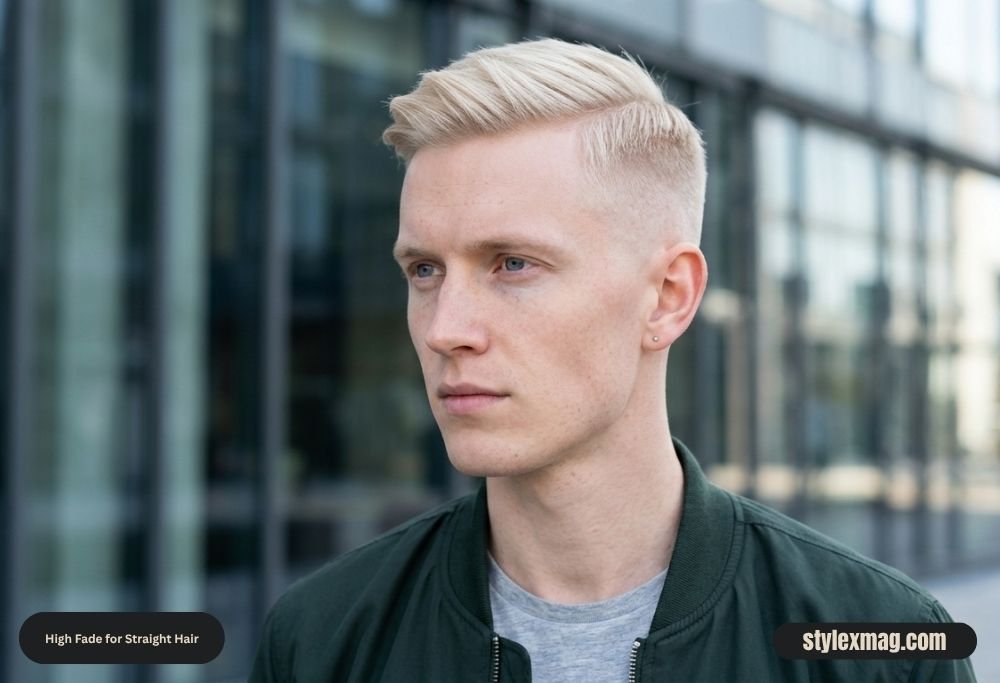
A high fade for straight hair gives the sharpest lines. The blend from skin to flat hair looks precise. However, growth shows fast because straight hair has no texture to hide it. Ask for point cutting on top so the cut doesn’t look flat. A little texturizing powder adds grip.
High Fade for Thick Hair
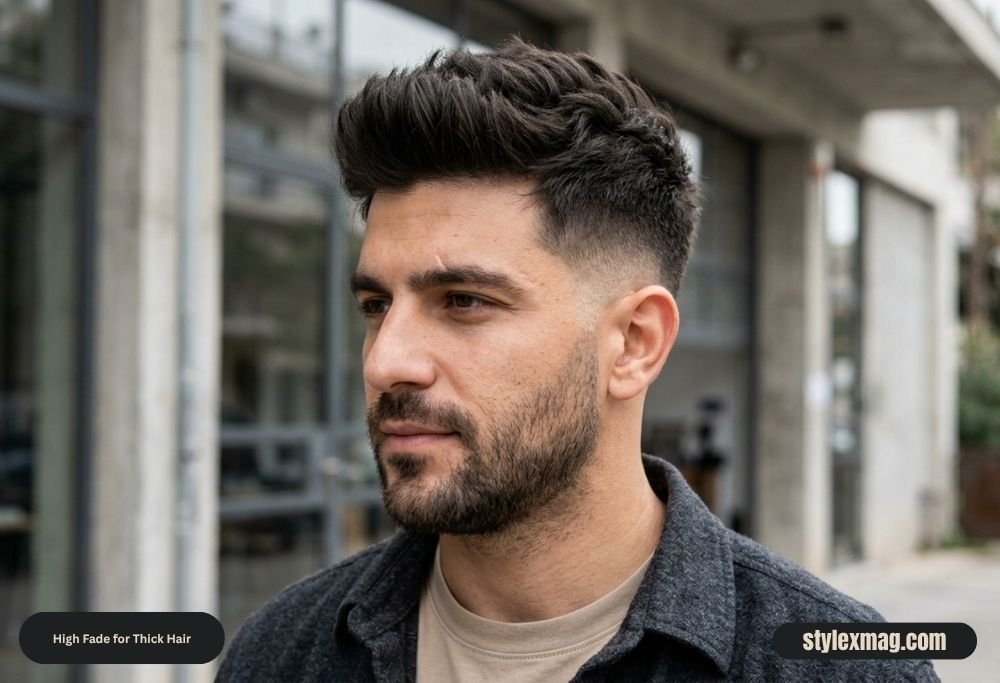
A high fade for thick hair is easy to blend and holds shape. Thick, dense hair also handles a skin fade well. However, bulk on top can feel heavy. Ask your barber to thin it with texturizing shears. Then your style sits lighter. High fade textured crops and pompadours work great here.
High Fade for Black Men
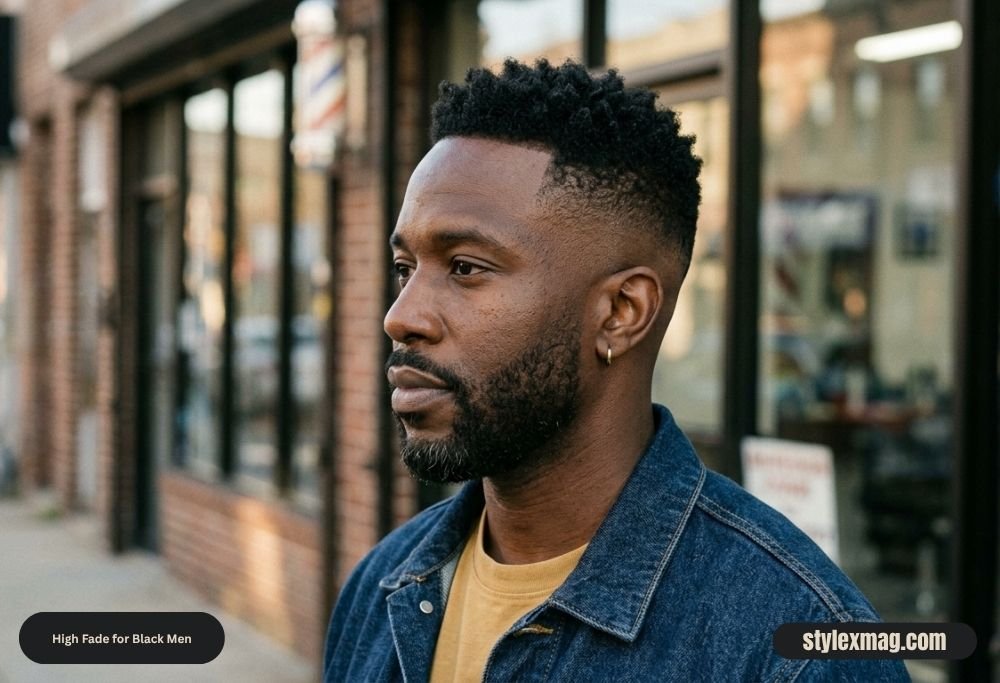
A high fade for Black men can take many forms, depending on hair texture and style. Popular options include the temple fade, the high top fade, the afro, and braids. Tight coils often look smoother with a gradual blend like a shadow fade. A crisp line-up adds extra polish. Talk to a barber who knows your hair type.
High Fade with a Beard
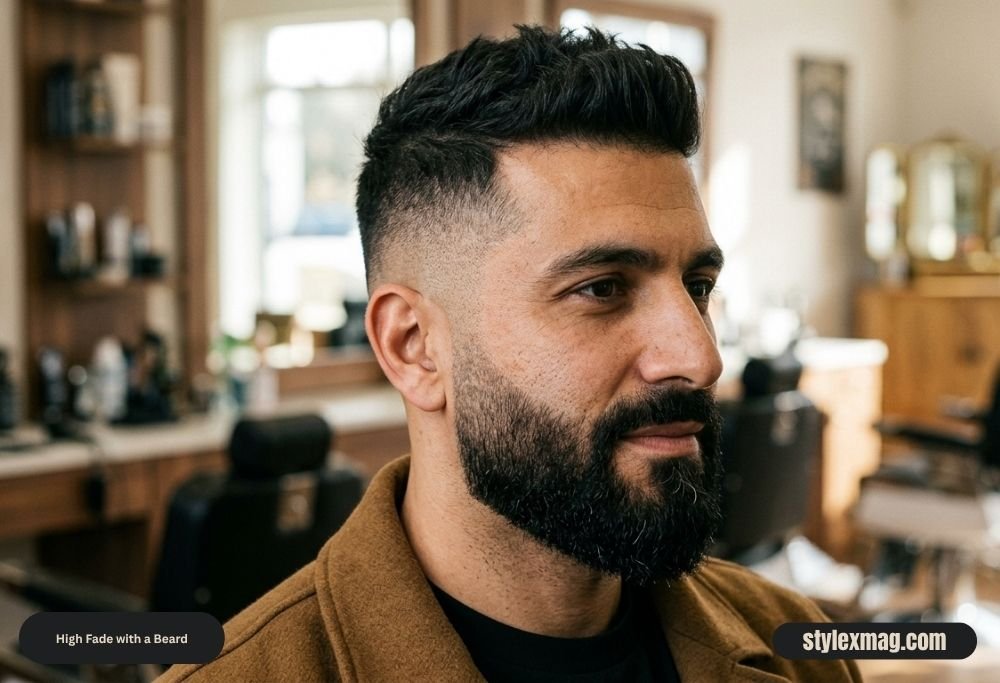
A high fade with beard needs careful blending. The high fade starts far above the beard, so a big gap appears at the sideburn. Without a plan, the barber may leave a hard stop. Ask them to bridge the gap with a smooth gradient. Full and boxed beards work best.
High Fade with a Line-Up
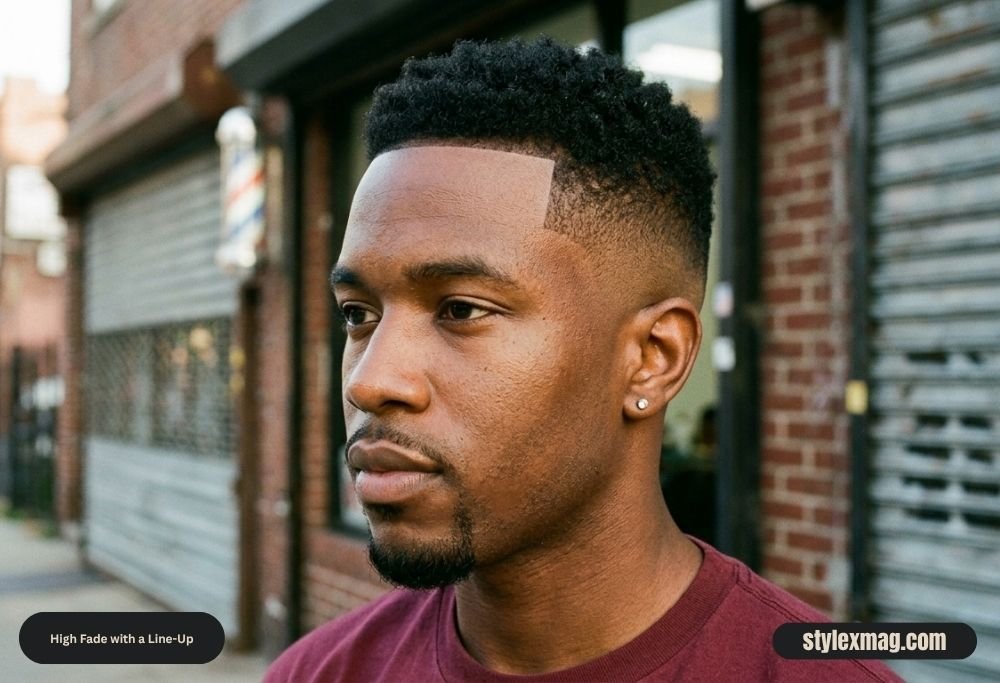
A line-up sharpens the clean hairline and edges. The barber uses a trimmer or razor for razor-straight borders. Paired with a high fade, it looks fresh and defined. It also fades fast. Book a quick edge-up between full cuts. That keeps your hairline looking tidy.
High Fade for Thinning Hair
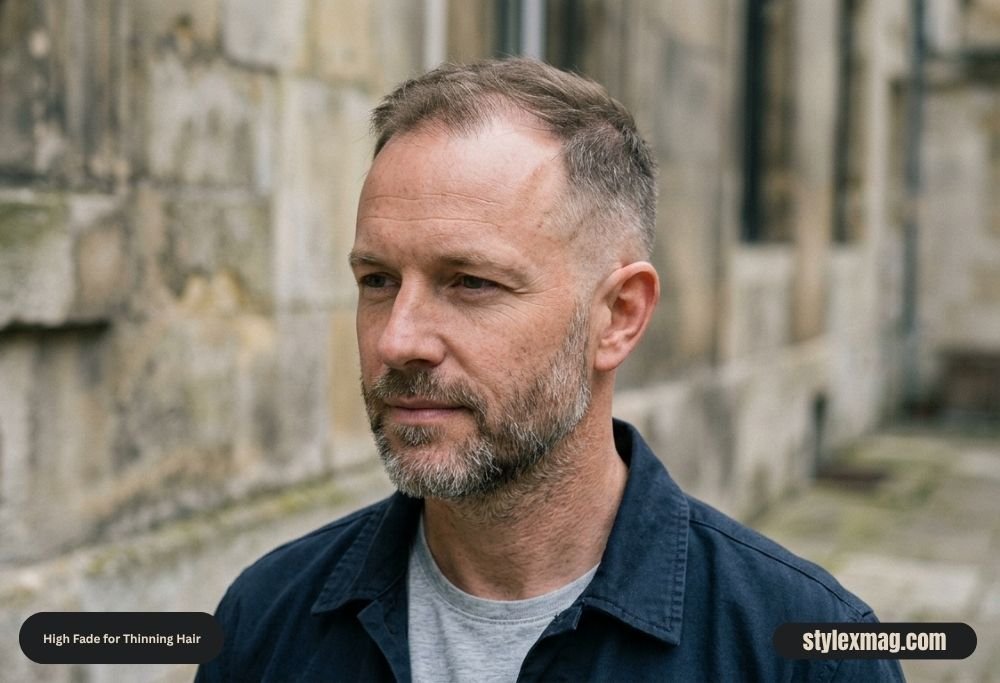
A high fade for thinning hair can look intentional rather than sparse. Keep the top very short, at a #2 or #3. Take the sides to skin. Now the contrast between top and sides shrinks. Fine hair that isn’t yet thinning often looks better with a shadow fade. Protect your scalp from the sun.
High Fade vs. Low Fade vs. Mid Fade
The main difference is where the fade begins. A high fade starts above the temples. A mid fade starts around the temples. A low fade starts near the ears. The higher the start, the stronger the contrast. Higher fades also grow out faster. That means more barber visits.
So, which should you pick? Think about your job, your schedule, and your face. A high fade vs mid fade choice often comes down to boldness. A high fade vs low fade choice comes down to upkeep. The table below makes it easy.
| Fade type | Starts at | Contrast | Upkeep | Best for |
| High fade | Above the temples | Very high | Every 1 to 2 weeks | Bold, modern looks |
| Mid fade | Around the temples | Medium | Every 2 to 3 weeks | Balanced, versatile looks |
| Low fade | Near the ears | Low | Every 3 to 4 weeks | Conservative settings |
High Fade vs. Low Fade
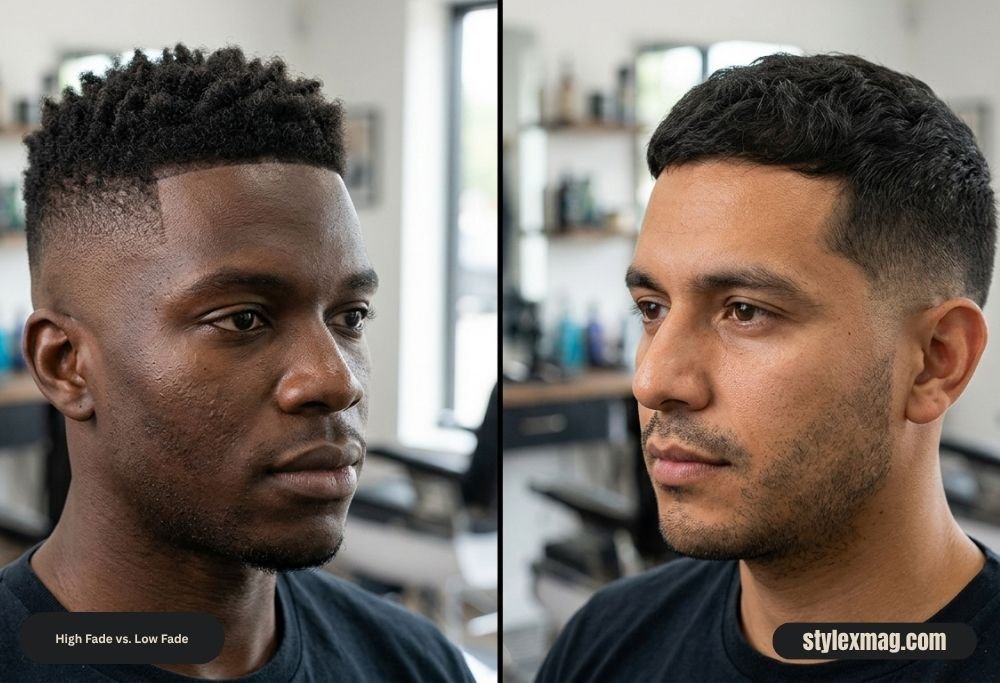
A low fade stays near the ears and neckline. A high fade climbs far above them. The low fade looks subtle and lasts longer. The high fade looks bold and needs frequent care. Choose the low fade for strict offices. Choose the high fade when you want attitude.
High Fade vs. Mid Fade
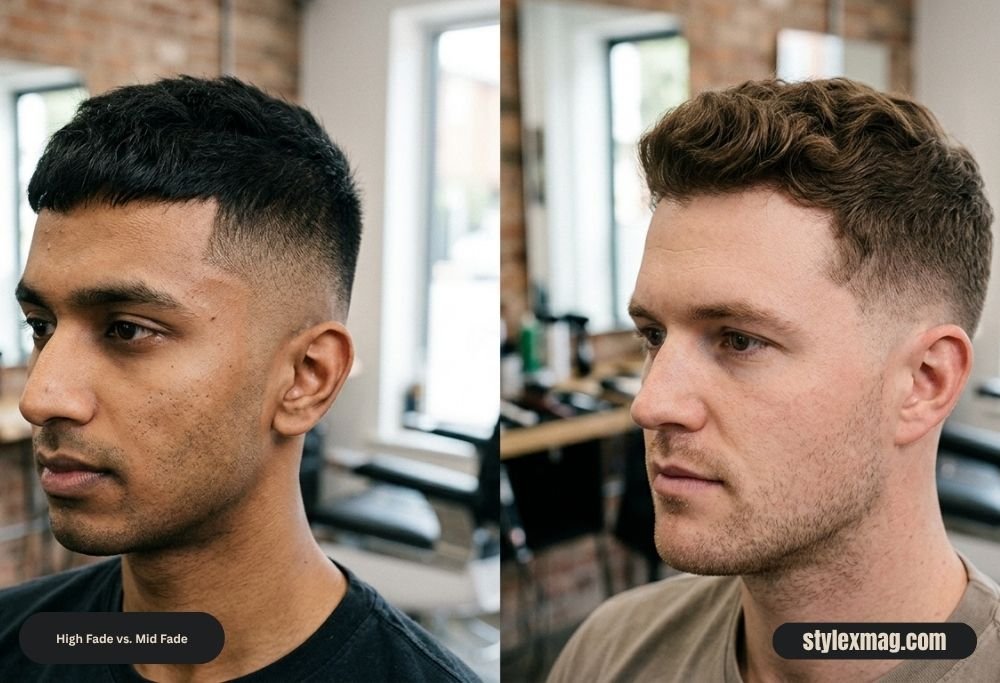
A mid fade haircut sits in the middle. It gives clear contrast without the extreme height. If a high fade feels like too much, step down to a mid fade. You’ll still get a sharp look. The upkeep drops a little too. This is the best “in between” choice.
High Fade vs. High Taper Fade
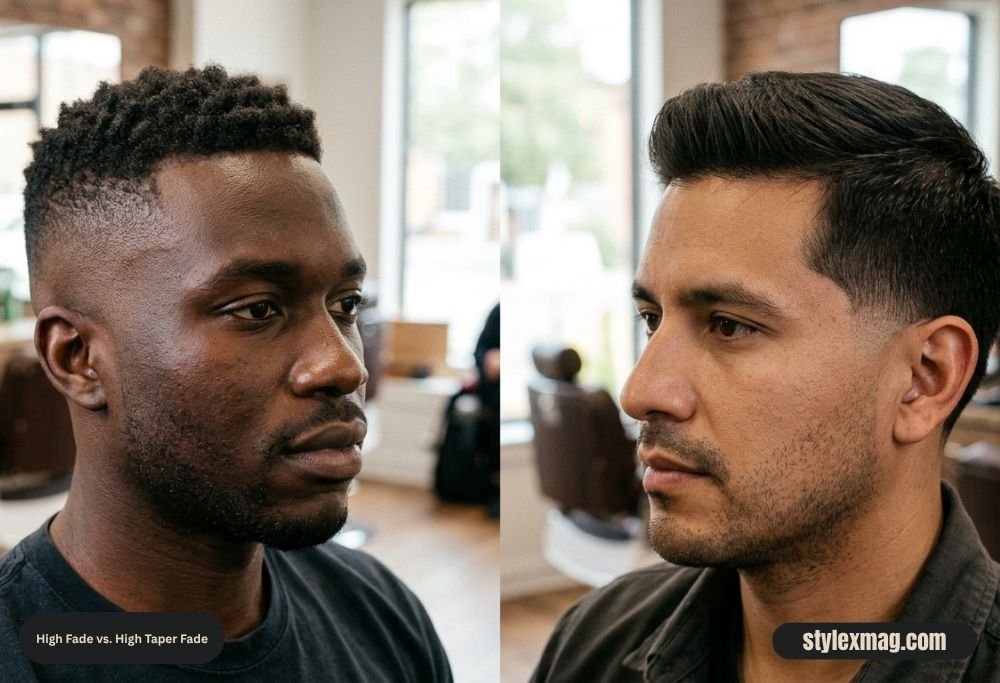
A high fade vs taper comparison is simple. A fade removes much of the length on the sides. A taper trims only the edges around the ears and neck. The taper keeps more hair and looks gentler. The fade shows more skin. Pick a taper for subtlety and a fade for impact.
High Skin Fade vs. High Shadow Fade
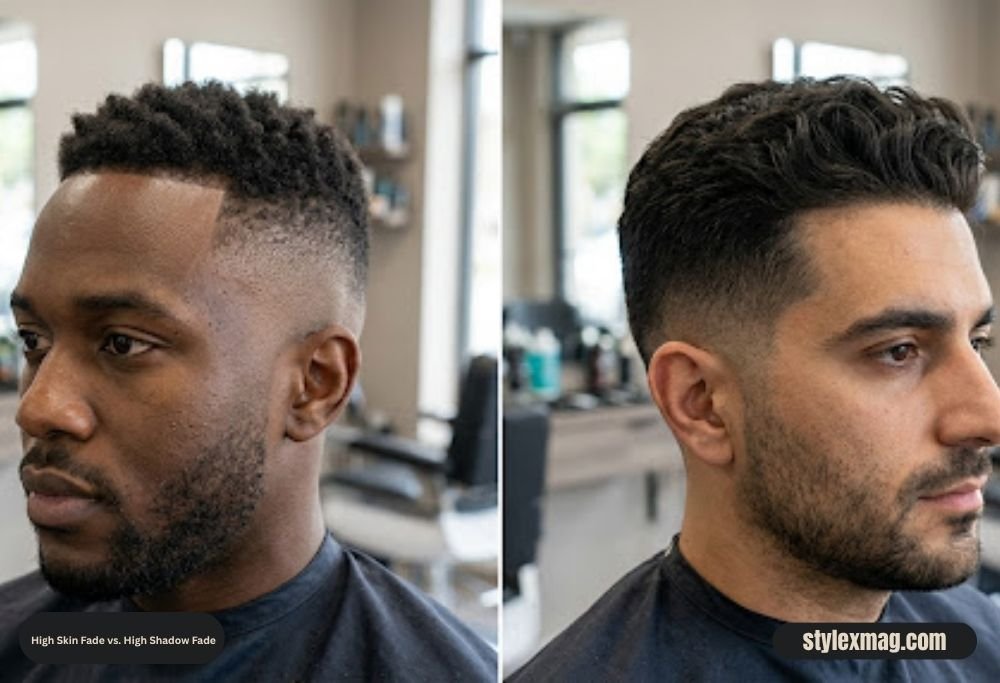
In a high skin fade vs shadow fade match, skin goes to zero. A shadow fade stops at stubble. The skin fade looks sharper but exposes more scalp. The shadow fade hides growth better. Thick hair suits the skin fade. Fine hair and tight curls suit the shadow fade.
How to Choose the Right High Fade Haircut
Three things matter most when choosing. First comes your hair density and hair texture. Second comes your face shape. Third comes your lifestyle. Think about how much time you’ll spend styling. Think about how often you can see a barber. Then pick a style that fits your real life.
Contrast is the big balancing act. A strong skin fade looks powerful but demands upkeep. A softer shadow fade is easier to wear. Use the quick-match table below as a starting point. Then talk to your barber for a final decision.
| Your situation | Good choice |
| Thick, straight hair | High skin fade or crew cut |
| Fine hair | High shadow fade |
| Curly hair | Drop fade or burst fade |
| Coily hair | Shadow fade, temple fade, high top |
| Thinning hair | Skin fade with a #2 to #3 top |
| Strict office | High taper fade or side part |
Choosing a High Fade Based on Hair Type
Straight hair shows the cleanest lines but reveals growth fast. Wavy hair pairs well with a drop fade and about three inches on top. Curly hair needs the height set on dry hair. Coily hair often looks best with a shadow fade or temple fade. Fine hair does better with a softer blend. Thick hair handles almost anything.
Choosing a High Fade Based on Face Shape
An oval face shape suits nearly any high fade. A round face shape gains length from a high fade with volume on top. A square face shape looks strong with a skin fade or crop. For a triangle face shape, a fuller top balances a wider jaw, so a triangle shape face hairstyle male often means a quiff or textured crop. Oblong faces should keep the top short.
Choosing the Right Fade Height and Contrast
Height sets where the fade starts. Contrast sets how close the base gets. Skin gives maximum contrast. Stubble gives medium contrast. A taper gives the softest result. Combine them to match your style. For example, a high start with a stubble base feels bold but easier to maintain than a full skin fade.
Choosing a High Fade for Your Hair Length
Short tops of one to two inches (2.5 to 5 cm) suit buzz cuts and crops. Medium tops of two to four inches (5 to 10 cm) suit quiffs, pompadours, and side parts. Long tops over four inches (10 cm) suit slick backs, mullets, and tied-back looks. Check that the length matches your chosen style before the barber starts.
Choosing Between a High Fade and an Undercut
A high fade blends the sides smoothly. An undercut leaves a clear break between the long top and the short sides. The fade looks polished. The undercut looks edgy. Both need regular trims. Choose a fade for a refined feel and an undercut for a striking contrast.
How to Style a High Fade Haircut
Even a simple cut looks better with a bit of styling. A high fade shows the shape of the top clearly. If the top looks messy, the whole cut looks off. Spend a few minutes each morning. You’ll notice a huge difference in how sharp you look.
Your routine can stay short. Towel-dry your hair. Add a small amount of product. Shape the top with a comb or dryer. The whole process takes about five minutes. After a week of practice, it will feel automatic.
Preparing Your Hair for Styling
Start with clean, towel-dried hair that’s slightly damp. Too wet means products won’t hold. Too dry makes shaping harder. Apply a light prep spray or sea salt spray if you want volume. Then work from the roots outward. Good prep gives your styling products something to grip.
Using a Blow Dryer, Comb, or Brush
Use a dryer on medium heat and point it where you want lift. For a quiff or brush up, dry the front upward. For a slick back, dry the hair backward while combing. A round brush adds curl control, while a wide comb creates clean lines. Solid blow-drying techniques take a style from flat to full.
Choosing the Right Styling Product
Pick a product by the finish you want. Matte clay gives a strong, flat-finish hold. Texturizing powder adds lift and grip to fine hair. Hair pomade gives shine and control for slick styles. Cream gives soft definition for curls. Use a pea-size amount first. You can always add more.
| Product | Finish | Best for |
| Matte clay | Flat, strong hold | Crops, quiffs, textured tops |
| Texturizing powder | Dry, lifted | Fine hair, volume |
| Hair pomade | Shiny, flexible | Pompadours, slick backs |
| Cream | Soft, natural | Curls, waves |
| Sea salt spray | Beachy texture | Messy, loose styles |
How to Ask Your Barber for a High Fade
Saying “high fade” alone isn’t enough. Barbers differ on height and closeness. One may take it to skin while another stops at stubble. A good barber consultation clears this up. Tell them exactly what you want before the clippers turn on.
Use a simple formula. State the height, the closeness, and the shape. For example: “High fade, starting above the temples, skin at the base, straight line all around.” Add details for your beard, curls, or thinning hair. The table below gives scripts for common cases. Learn how to ask a barber for a high fade once, and you’ll get it right every time.
| Situation | What to say |
| Standard high skin fade | “High skin fade above the temples, straight razor finish.” |
| Curly hair | “Set the height based on how my hair looks dry.” |
| With a beard | “Blend the fade into my beard at the sideburn. No hard stop.” |
| Thinning hair | “High skin fade, top at a two or three. I want it to look intentional.” |
Explaining Your Preferred Fade Height
Use landmarks. Say “above the temples” for a high fade. Point to the spot with your finger. Then name the closeness: skin, stubble, or taper. Clipper sizes vary by brand, but a #1 is about 3 mm (1/8 inch), a #2 about 6 mm (1/4 inch), and a #3 about 10 mm (3/8 inch). Barbers work upward from the base.
Choosing the Top Length and Haircut Shape
Tell the barber how long you want the top in inches or centimeters. Two inches is about 5 cm. Three inches is about 8 cm. Then name the shape, such as crop, quiff, or slick back. Keep your haircut proportions in mind. A very tall top on a long face can look out of balance.
Using Reference Photos to Get the Desired Cut
Bring two or three photos. Use front, side, and back angles if you can. Choose photos with a similar hair type and texture. Show the part you love most, such as the fade shape or the top. Then ask what will work for your hair. A photo plus a clear phrase beats words alone.
How to Maintain a High Fade Haircut
A high fade grows out faster than a low fade. The contrast is so strong that even small growth shows. That’s why regular fade maintenance matters. You can’t skip visits and expect a crisp look. Most men go every one to two weeks for skin fades. Softer styles last longer.
Plan your time and budget. Weekly cuts cost more over a year. If that feels like too much, choose a shadow fade or a mid fade. Also expect a normal haircut grow-out phase. It won’t look terrible. It just loses its sharp edge. The table below shows typical timing.
| Style | Trim every |
| High skin fade | 1 to 2 weeks |
| High temple fade | 1 to 2 weeks |
| High fade buzz cut | 1 to 2 weeks |
| High and tight fade | 1 to 2 weeks |
| High top fade | 1 to 2 weeks |
| Classic high fade | 2 weeks |
| High drop fade | 2 weeks |
| High burst fade | 2 weeks |
| Disconnected high fade | 2 weeks |
| High shadow fade | 2 to 3 weeks |
How Often Should You Get a High Fade Trimmed?
Plan a trim every one to two weeks for skin-level styles. Classic, drop, burst, and disconnected cuts need about two weeks. Shadow fades can stretch to three. Your hair speed matters too. Some men grow hair fast and need more visits. Book your next appointment before you leave the chair.
Daily Care for a Clean, Sharp Fade
Moisturize your scalp so the skin around the fade stays healthy. Clean the neckline with a trimmer between visits if you’re careful. Also protect the scalp from the sun. The Skin Cancer Foundation explains that hair gives only partial protection, so you should use sunscreen or a hat with UPF 50+ (source). This matters most when your sides are skin-short.
Common High Fade Haircut Mistakes to Avoid
Many men pick the wrong face shape match. A very high fade on an oblong face adds length. Others give vague instructions and get a surprise. Curly-haired men forget to set height on dry hair. Bearded men skip the blend. Finally, some men stretch trims too long. Avoid these, and your fade will look better.
Case study: Daniel, a 29-year-old office worker (a composite example), asked for a “high fade.” His barber took it to skin, which felt too harsh at work. On his next visit, he asked for a high shadow fade with a side part. The shape stayed modern, but the stubble base looked softer. He also moved from weekly trims to every two and a half weeks.
Frequently Asked Questions
What Is the Difference Between a High Fade and a Taper?
A high fade removes lots of length from the sides, starting above the temples. A taper trims only the edges at the sideburns and neckline. The fade shows much more skin. The taper looks gentler and keeps more hair.
Is a High Fade Good for Every Face Shape?
No. It suits oval, round, and square faces best. Triangle faces can work with a fuller top. Oblong faces should keep the top short, since a high fade adds vertical length. The strong contrast shows both strengths and flaws.
Is fade haram in Islam?
Some scholars consider certain fades impermissible if they involve qazaʿ (shaving parts of the head while leaving others). Opinions vary, so consult a trusted scholar.
Is a high fade attractive?
Yes, a high fade can look sharp and modern, especially when it complements your face shape, hair texture, and overall style.
What’s better, high or mid fade?
A high fade creates a bold, high-contrast look, while a mid fade offers a balanced, versatile style that suits many hairstyles.
What does a 3:2:1 fade look like?
A 3:2:1 fade gradually transitions from a No. 3 guard at the top to No. 2 and then No. 1 toward the bottom, creating shorter, blended sides.
Final Thoughts
The best high fade haircut for men fits your hair, your face, and your routine. Start with the basics: choose a height, pick a closeness, and match a top style. If you want bold contrast, go with a high skin fade. If you prefer something softer, try a high shadow fade or a high taper fade. Whatever you pick, describe it clearly to your barber.
Next, save a few photos and the scripts from this guide. Book regular trims and protect your scalp. With a little care, your fade will look sharp for weeks. Ready for a fresh look? Pick a style from this list and book your next appointment.
StyleXMag Editorial Team shares the latest haircut and hairstyle ideas, from modern fades and comb overs to curly, long, slick-back, and face-shape styles. Our goal is to make finding your next look simple, useful, and inspiring.