Low Fade vs Mid Fade vs High Fade: Which Fade Is Best for You?
Most guys walk into a barbershop and say, “Give me a fade.” The barber then has to guess. Will it be subtle or dramatic? Will it sit near the ear or up near the crown?
That guess is why so many people leave unhappy. The low fade vs mid fade vs high fade choice is the first and biggest decision. Height comes first. Closeness and shape come after. By the end of this guide, you’ll know exactly what to ask for.
What Is a Fade Haircut and How Does It Work?
A hair fade is a gradual transition from longer hair to shorter hair. Think of a sunset. The sky doesn’t jump from bright to dark. It shifts slowly. A good fade does the same thing on your faded sides. The result is a seamless blend with no hard line. The top stays longer, and the short sides melt down toward the neckline and sideburns.
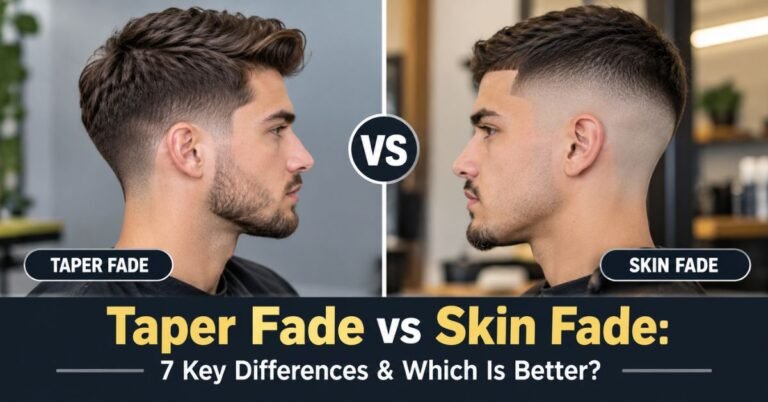
Three terms cause most of the confusion. Fade level is the height where the fade begins. Closeness is how short the hair gets at the bottom. A skin fade goes down to bare skin. Barbers use zero-gapped clippers or a foil shaver for that finish. A taper fade is gentler.
It always leaves some hair, and it mostly works around the sideburns and neckline. Each clipper guard leaves a set hair length. A #1 guard in the US leaves about 3 mm (1/8 inch). The UK uses the same number for the same length. You can read more in our guide to fade haircut types.
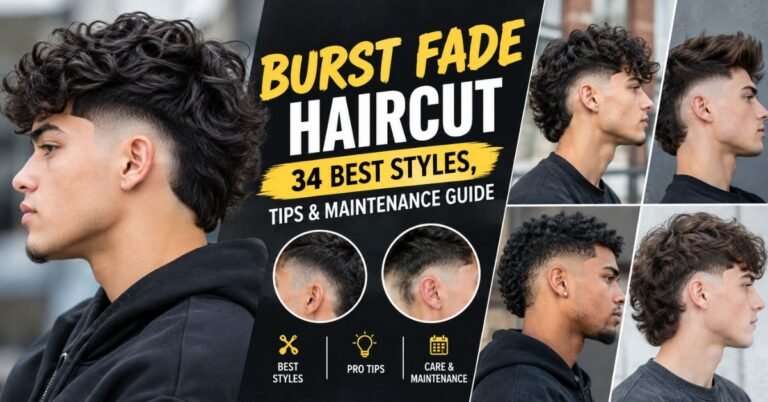
Read More: Burst Fade Haircut: 34 Best Styles, Tips & Maintenance Guide
Low Fade vs Mid Fade vs High Fade: Key Differences
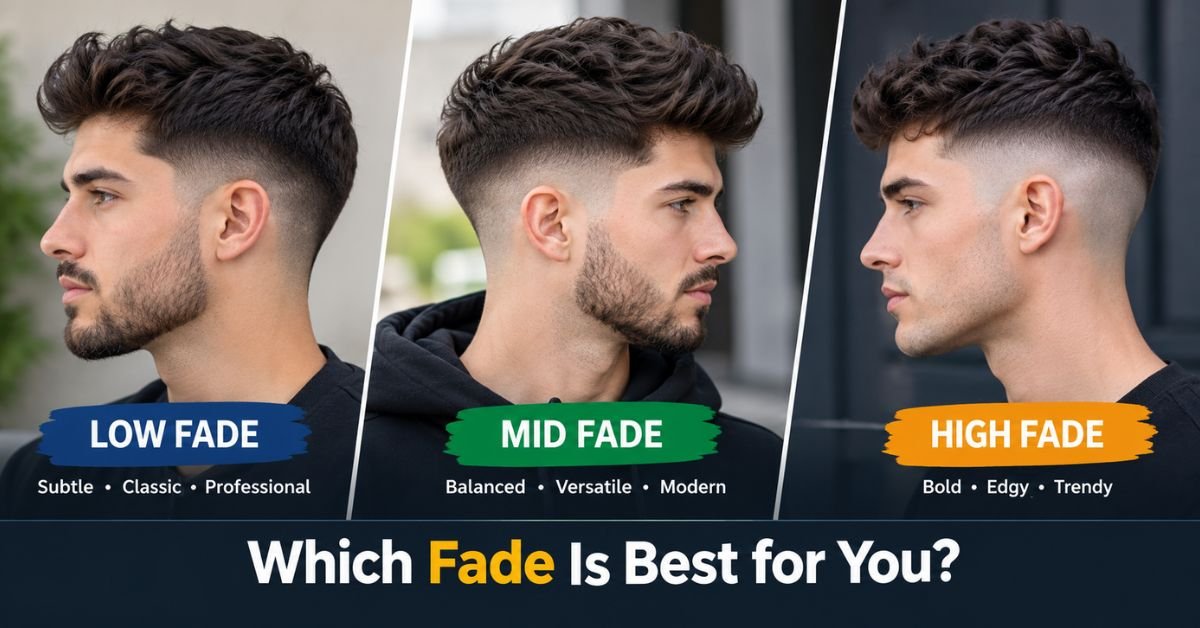
The biggest of the fade haircut differences is how high the fade goes. Everything else follows from that. Higher means more skin, bolder contrast, and faster grow-out. Lower means softer blended sides, a more natural-looking fade, and longer time between visits. It’s a simple trade-off between subtle fade vs bold fade.
Here’s a quick view of the three fade haircut styles by height.
| Fade level | Where it starts | Contrast type |
| Low fade | Just above the ear | Low contrast haircut |
| Mid fade | At the temple | Medium contrast haircut |
| High fade | Above the temples | High contrast haircut |
Low Fade: Subtle and Versatile
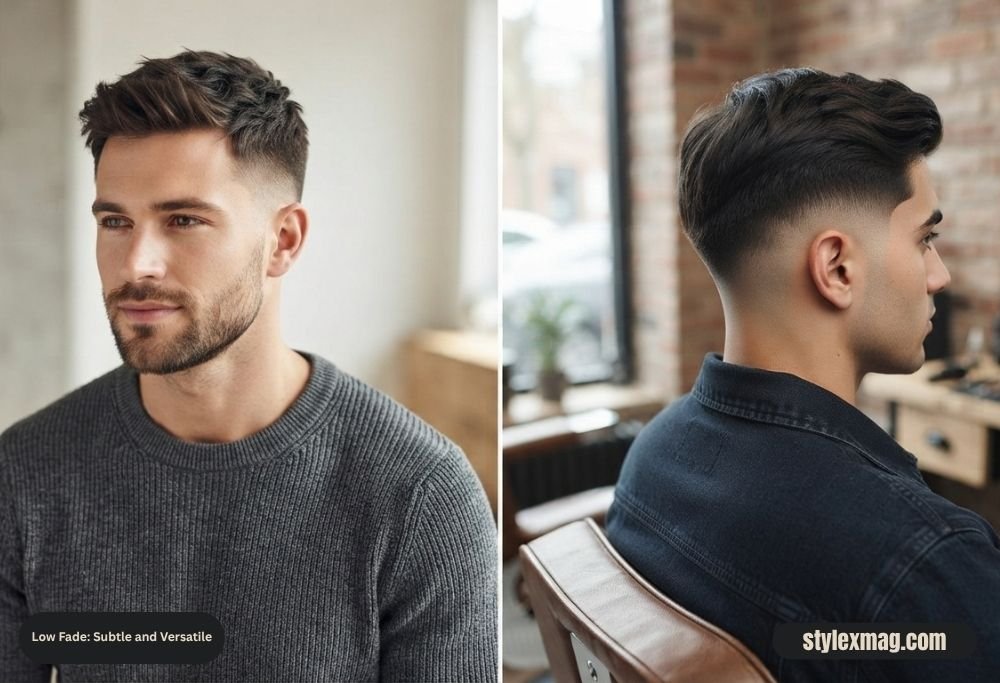
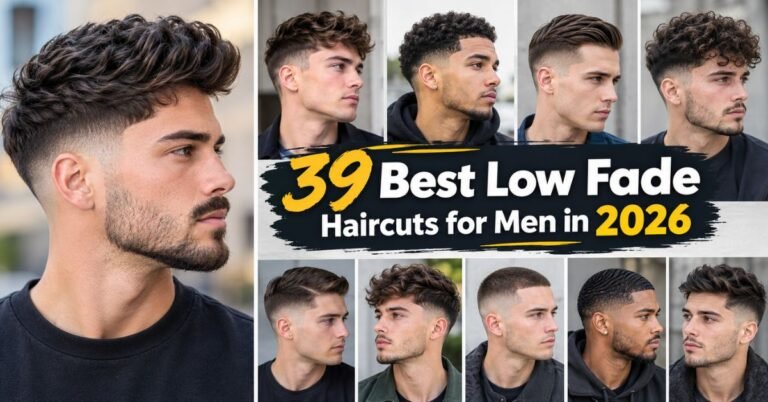
Where a low fade starts is just above the ear. The low fade line follows the natural hairline and curves down toward the neckline. A low fade haircut keeps most of the side hair, so it looks tidy and quiet. It grows out the cleanest, which makes it a versatile fade haircut for work, school, and weekends. If you want a natural-looking fade with little fuss, start here.
Mid Fade: Balanced and Modern
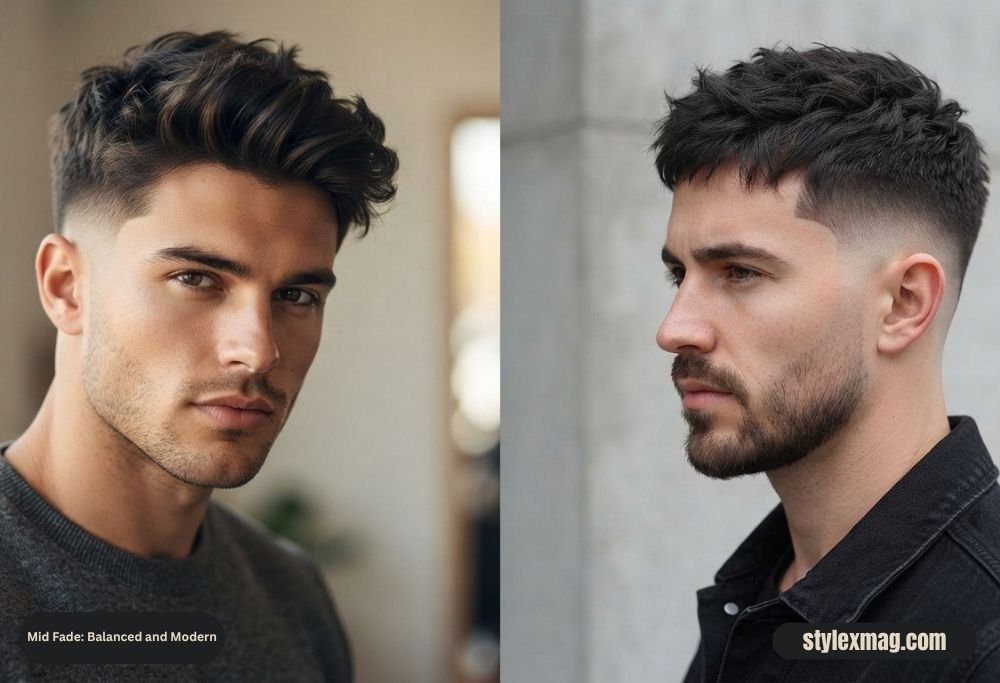
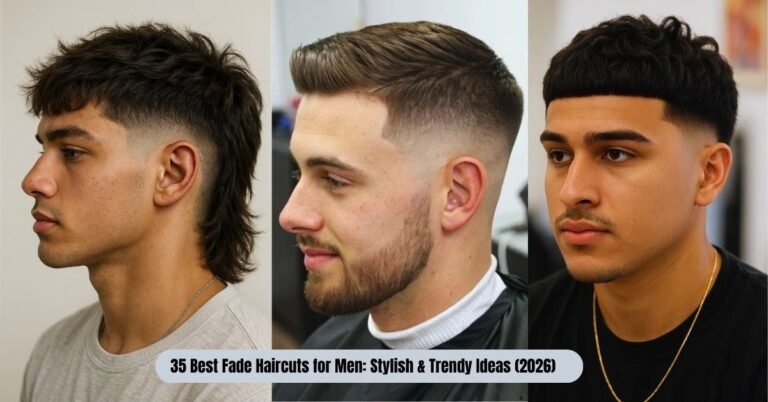
Where a mid fade starts is at temple level. The mid fade line sits halfway up the head. A mid fade haircut shows more skin than a low one but less than a high one. It fits many face shapes and many hair textures. Barbers cut it often, so it’s one of the most requested options. It’s a true modern fade haircut for anyone who wants edge without extremes.
High Fade: Bold and High-Contrast
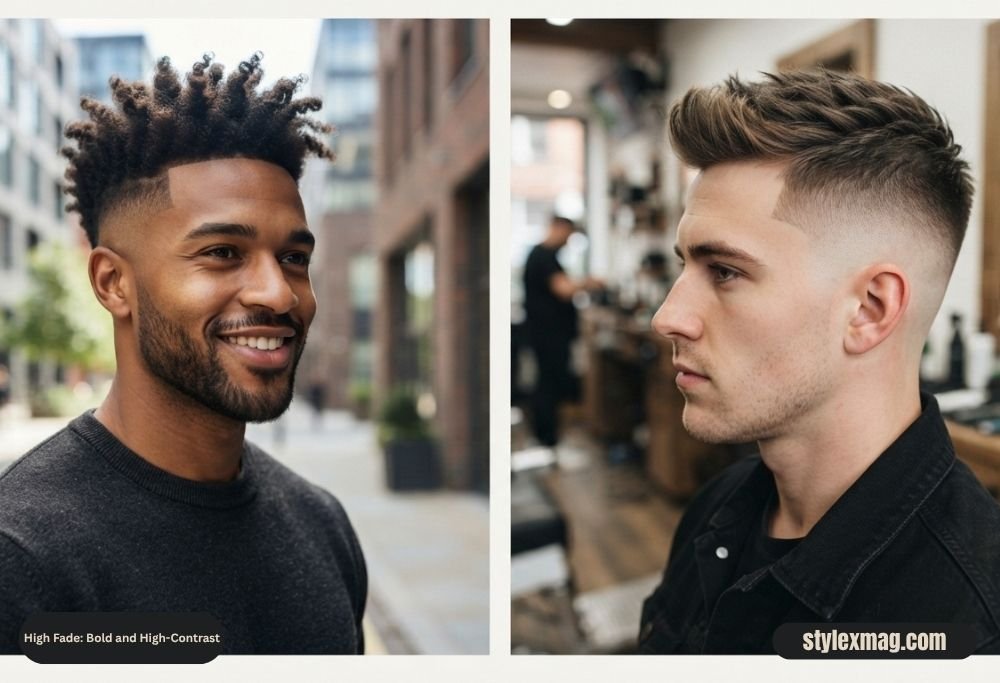
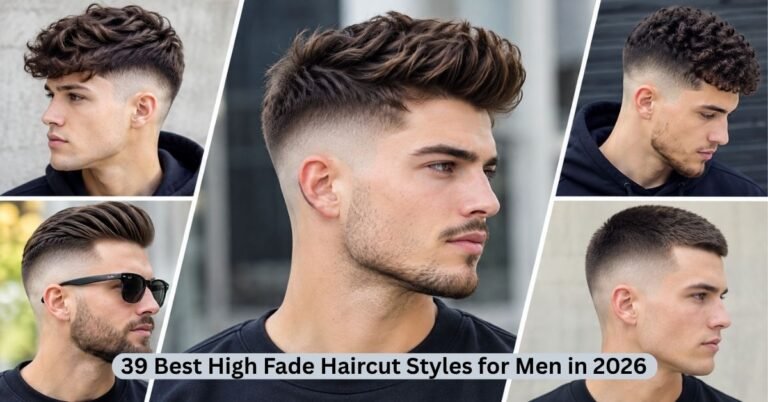
Where a high fade starts is above the temples. The high fade line leaves the sides almost bare. A high fade haircut is a dramatic fade with maximum skin exposure. All eyes go to the longer top. It looks sharpest on day one. After about a week, the haircut shape starts to soften.
Low Fade vs Mid Fade: What’s the Difference?
The gap in low fade vs mid fade is only about a finger’s width of height. Yet the look changes a lot. A low fade feels calm and classic fade haircut friendly. A mid fade feels sharper and more noticeable fade in nature. The haircut proportions shift too. A mid fade makes the top look bigger because the sides are shorter.
So when should you pick low fade haircut vs mid fade haircut? Choose low if you want low contrast and fewer trips to the barbershop. Choose mid if you want a clean, modern shape with moderate upkeep. People also search mid fade vs low fade to compare them, and the answer is the same. Low is quiet. Mid is balanced.
Low Fade vs High Fade: What’s the Difference?
Low fade vs high fade is the widest gap you can pick. Think restraint versus commitment. A low fade keeps most of the hair length on the sides. A high fade removes almost all of it. At three weeks, the low fade still looks planned. The high fade often looks overdue.
Face shape and job matter here too. Long faces do better with a low fade. Round faces often gain from a high one. A professional haircut at a strict office usually points to low. A creative job or sports life gives you more room to go high.
Mid Fade vs High Fade: What’s the Difference?
In mid fade vs high fade, the mid is the practical pick. It gives modern contrast without constant upkeep. The high fade is the statement pick. Many people search high fade vs mid fade or high fade compared to mid fade for this reason. They want edge but fear the upkeep. You may also see the phrases mid high fade or high medium fade. Those are loose names for a fade that lands between the two.
Read More: Taper Fade vs Skin Fade: 7 Key Differences & Which Is Better?
Hair density plays a big part here. Thick hair carries a high fade well. The heavy top balances the bare sides. Thin hair can look sparse with so much exposed skin. In that case, a mid fade or a mid taper fade is safer. Compare mid fade haircut vs high fade haircut by asking one question: how often will you visit?
Low Fade vs Mid Fade vs High Fade Comparison Table
This table sums up low vs mid vs high fade in one view. Use it as a cheat sheet before your next appointment. The visit times are typical figures. They shift with your hair texture and finish.
| Feature | Low fade | Mid fade | High fade |
| Starts at | Just above the ear | Temple level | Above the temples |
| Contrast | Subtle | Moderate | Bold |
| Skin exposure | Minimal | Moderate | Maximum |
| Best face shapes | Oval, oblong, rectangular, heart | Oval, round, square, heart | Oval, round, square |
| Best hair | Any | Any | Thick hair |
| Workplace fit | Strict or formal | Most places | Creative or athletic |
| Grow-out | Cleanest | Moderate | Loses shape fastest |
| Typical visit gap | 3 to 4 weeks | 2 to 3 weeks | 1 to 2 weeks |
How to Choose the Right Fade for Your Face Shape
The rule is simple: height adds visual length. That’s the core of face shape and fade selection. Round and square faces gain from a mid or high fade. Long faces do better with a low fade. The best fade for face shape also depends on the top. A tall top adds length, and a flat top cuts it. Our face shape haircut guide covers the wider picture.
Best Fade for Oval Face
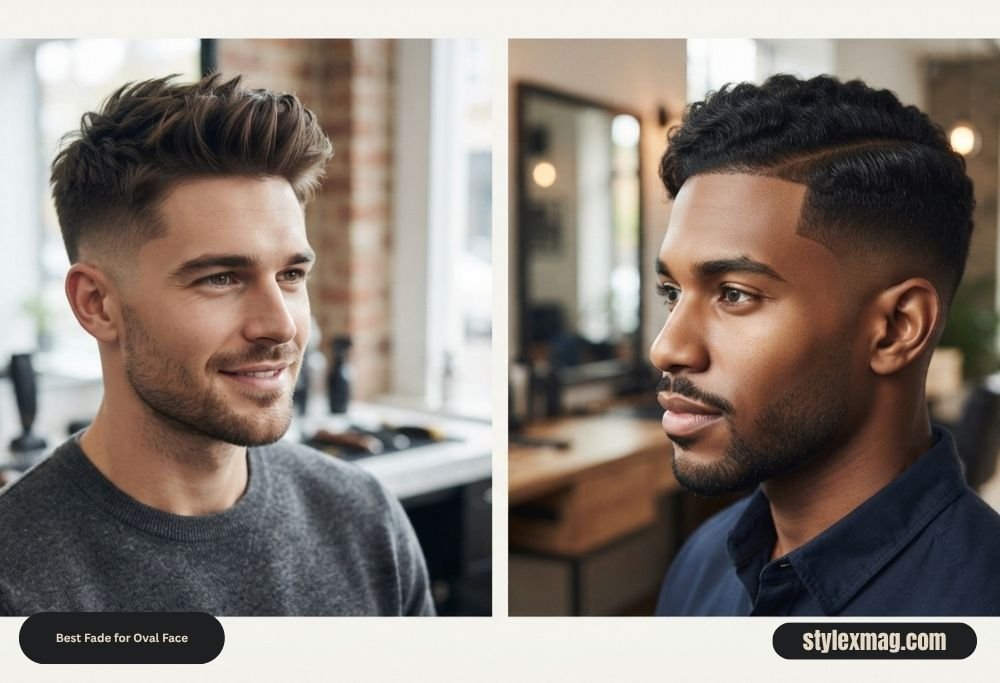
An oval face has balanced face shape proportions. That’s why a fade for oval face can sit at any height. Low, mid, and high all work well. Pick by lifestyle instead. Choose low for a quiet look and high for a bold one.
Best Fade for Round Face
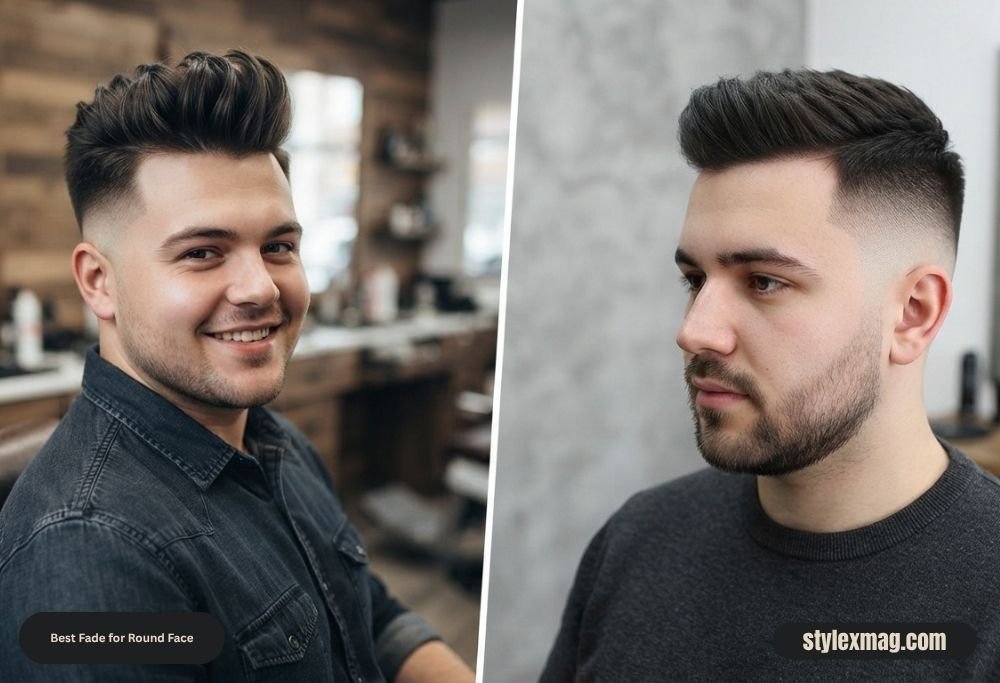
A fade for round face works best at mid or high height. The bare sides make the face look longer and slimmer. Add some volume on the longer top to boost that effect. Keep the sideburns clean and short for a sharper frame.
Best Fade for Square Face
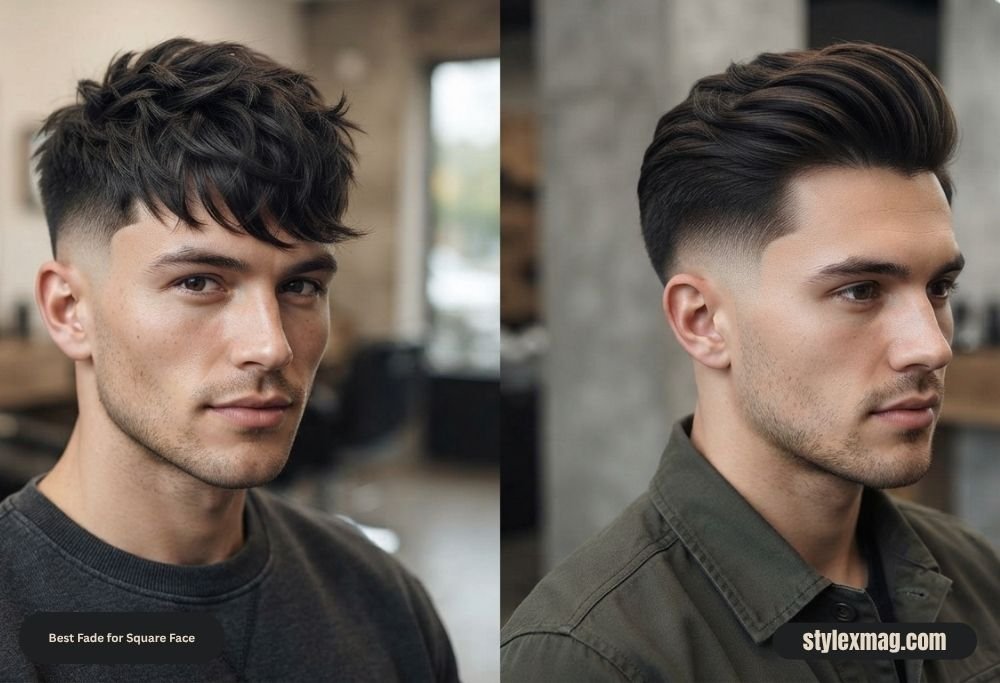
A fade for square face looks great with a mid or high fade. The shorter sides show off the strong jaw. If you want a softer look, a low fade still works. Just keep the neckline crisp so the jawline stays clear.
Best Fade for Oblong or Rectangular Face
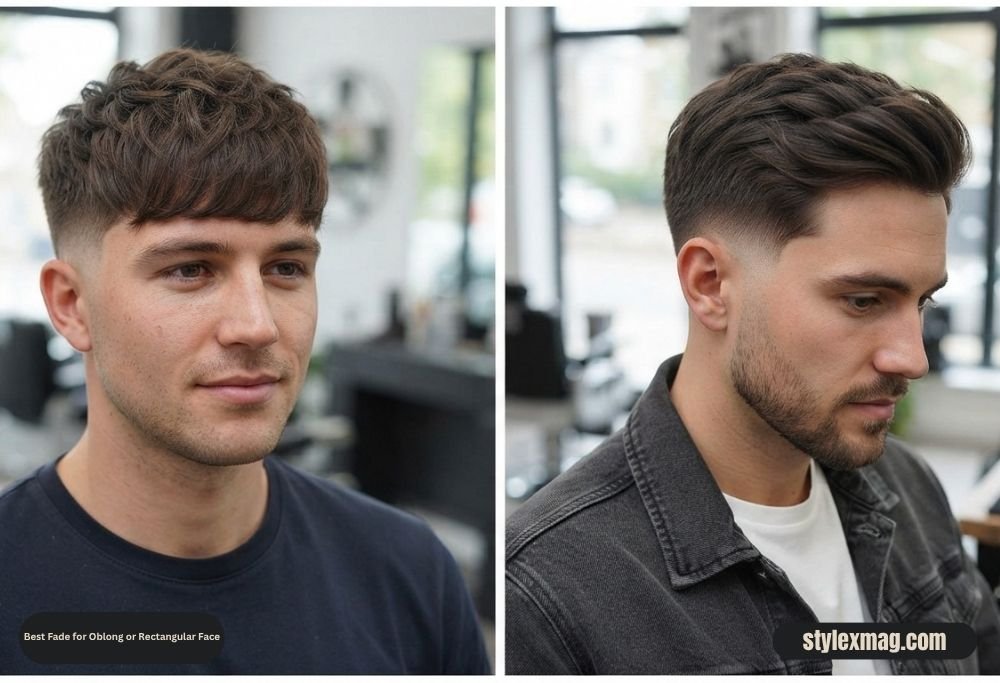
Oblong and rectangular faces share one rule: don’t add height. A low fade is the safest choice. A mid fade works only if the top stays short. Otherwise, the cut stretches the face even more. Keep the haircut shape wide rather than tall.
Best Fade for Heart or Triangle Face
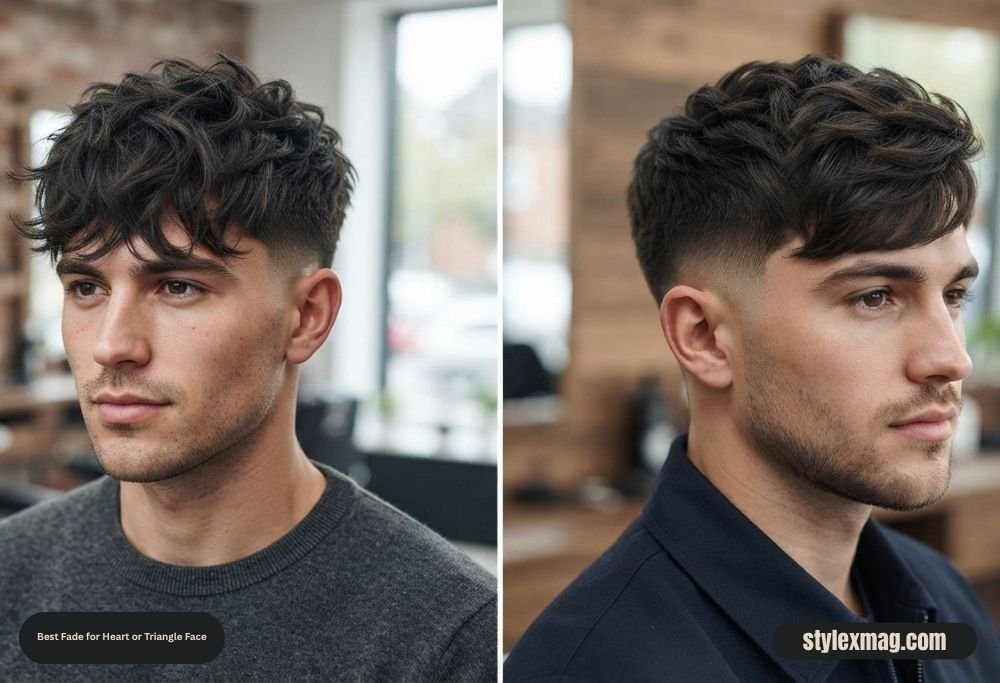
Heart and triangle face shapes do well with low or mid fades. These keep the sides softer and balance the chin or jaw. A fuller fringe helps a heart shape by adding width near the forehead. Triangle faces, which have wider jaws, gain from extra volume on top. Searches like triangle shape face hairstyle male show how common this question is.
Which Fade Works Best for Your Hair Type?
Hair texture changes how a fade looks and grows out. That’s the heart of hair type and fade selection. The best fade for hair type is the one that matches your curl, density, and growth. Straight hair shows lines quickly. Curls hide them. Fine hair needs a gentler blend.
Always show your barber photos on hair like yours. A picture of a fade on straight hair won’t look the same on curls. Photos close the gap between what you imagine and what you get. They also help with styling options later.
Low, Mid, or High Fade for Straight Hair
A fade for straight hair works at any height. The catch is grow-out. Straight hair has no texture to hide new growth, so the fade line shows sooner. Ask your barber to point cut the top for movement. A mid taper fade gives a clean finish with less upkeep.
Low, Mid, or High Fade for Wavy Hair
A fade for wavy hair hides grow-out well. Waves break up hard lines. A mid fade often gives the best balance of shape and ease. Ask your barber to cut it dry. That way the wave pattern shows up properly. A fade with textured hair looks natural and relaxed.
Low, Mid, or High Fade for Curly Hair
A fade for curly hair needs one special step. Curls shrink when they dry. A fade that looks mid when wet can look high once dry. Tell your barber to set the height on dry hair. Low is the most forgiving. A burst fade haircut also suits curls well because it follows the natural growth pattern.
Low, Mid, or High Fade for Thick or Fine Hair
A fade for thick hair can go high with no worry. Thick hair has the weight to carry bold contrast. Thin hair needs more care. A low taper fade or mid taper fade hides scalp better than a high skin fade. A shadow fade is a soft fade that stops short of bare skin. It suits fine hair well. Avoid a high taper fade if you see thinning at the temples.
Which Fade Fits Your Style and Lifestyle?
Match the cut to your calendar and your patience. A fade you can’t maintain will look bad fast. Ask yourself how often you’ll really visit the barber. Be honest. Your answer should guide your pick more than any trend.
Your dress code matters too. Some jobs welcome edge. Others prefer neat and quiet. Use the table below to see how each fade lines up with daily life.
| Lifestyle | Best pick | Why |
| Office or formal | Low fade or low taper | Quiet and neat |
| Casual or creative | Mid fade | Balanced and flexible |
| Athletic or bold | High fade | Clean and sharp |
| Low effort | Low taper fade | Longest hold |
Best Fade for a Professional Look
For a professional haircut, go with a low fade or low taper. A mid fade with a side part also works well. A fade with middle part is another smart option. The fade with middle part haircut blends tidy sides with a soft, parted top. A high skin fade rarely suits strict dress codes. Even a middle part haircut on top won’t fix that.
Best Fade for a Low-Maintenance Style
The low taper fade wins here. It stays neat for three to four weeks. Good fade maintenance starts with a smart choice. A low fade also needs less haircut maintenance at home. A quick brush and light product are enough. That makes it the easiest of all the men’s fade haircut options.
Best Fade for a Bold, Edgy Look
A high skin fade gives the boldest men’s fade haircut look. A mid skin fade with a sharp line is a strong second. Both need steady fade haircut upkeep. Expect a visit every one to two weeks. If that sounds like too much, go mid taper instead. You still get edge with less work.
How to Tell Your Barber Which Fade You Want
Saying “fade” alone tells your barber very little. You need three details: height, closeness, and shape. This is what to ask your barber for. A clear request saves time and stops mistakes. Bring a photo if you can. Photos beat words every time.
Try this script: “Mid fade, starting at the temple, skin at the base, straight line all the way around.” That one sentence covers everything. The table below shows how to phrase each part.
| Detail | What to say |
| Height | “Low fade, just above the ear” or “high fade, above the temples” |
| Closeness | “Skin at the base” or “keep some hair at the base” |
| Shape | “Straight all around” or “drop it behind the ear” |
| Top | “Leave it long” or “point cut it for texture” |
How Often Should You Get a Low, Mid, or High Fade?
How often to get a fade depends on both height and finish. A skin finish shows growth fast. A taper finish stays neat longer. A fade haircut maintenance schedule helps you plan. Higher fades need more frequent visits. That’s the cost of bold contrast.
| Fade level | Skin fade | Classic fade | Taper finish |
| Low fade | Every 2 weeks | Every 3 weeks | Every 3 to 4 weeks |
| Mid fade | Every 1 to 2 weeks | Every 2 to 3 weeks | Every 3 weeks |
| High fade | Every 1 to 2 weeks | Every 2 weeks | Every 2 to 3 weeks |
Here’s a handy rule. A fresh low fade beats a stale high fade every time. If your schedule is tight, go lower. A touch-up between full cuts can also stretch your time. Ask your barber about a quick neckline clean-up.
Common Fade Mistakes to Avoid
The first mistake is picking height by trend. A cut that looks great on a celebrity may not suit your face shape. The second is skipping the dry-hair check on curls. The third is ignoring upkeep. A high fade you can’t maintain looks messy within days.
Two more mistakes show up often. Many people mix up a skin fade and a high fade. One is about closeness, and the other is about height. People also forget the neckline. A sharp fade with a ragged neck looks unfinished. Use this table to spot and fix each error.
| Mistake | Why it hurts | Fix |
| Choosing by trend | Clashes with your face | Check your face shape first |
| Not cutting curls dry | Fade lands too high | Set height on dry hair |
| Ignoring upkeep | Cut looks messy fast | Match fade to your schedule |
| Mixing up skin and high fade | Wrong result | Ask for height and closeness separately |
| Skipping the neckline | Looks unfinished | Ask for a clean neck line |
Low Fade vs Mid Fade vs High Fade: Which One Should You Get?
Choosing the right fade takes four quick questions. How often can you visit? What’s your face shape? What does your workplace allow? How dense is your hair? The table below turns those answers into a pick. It’s the fastest way to find the best fade for men in your situation.
| Question | Low fade | Mid fade | High fade |
| Visit gap | 3 to 4 weeks | 2 to 3 weeks | 1 to 2 weeks |
| Face shape | Oblong, rectangular | Round, square, oval | Round, square |
| Workplace | Strict | Most settings | Creative or athletic |
| Hair density | Any | Any | Thick |
Still stuck? Pick the mid fade. It’s the most flexible choice across faces, textures, and jobs. If your workplace is strict or you visit rarely, drop down to low. That one default keeps things simple.
Frequently Asked
Which fade is better, low, mid, or high?
No fade wins in every case. The best one depends on your face, hair, and schedule. Low suits quiet looks and long gaps between visits. Mid suits most people. High suits bold styles and thick hair.
Is a low fade or mid fade more attractive?
It depends on your features. A mid fade flatters more face shapes, so it’s the safer pick. A low fade looks cleaner at week three. Choose the one that fits your face and your routine.
Which is better, mid-fade or low fade?
A low fade is more subtle and versatile, while a mid-fade creates more contrast and a bolder, modern look.
Are fades haram in Islam?
Some Islamic scholars consider certain fades, especially extreme versions, impermissible due to qaza. Views differ, so follow the guidance of a trusted local scholar.
What is a Gen Z haircut?
A Gen Z haircut usually refers to modern styles like textured crops, low tapers, mullets, wolf cuts, curtain or middle-part hairstyles.
Which fade is most attractive?
A mid fade is often considered attractive because it offers a balanced blend of subtlety and contrast, but the best fade depends on your face shape and hair type.
Final Verdict
Here’s the whole story in one line. Low is subtle, mid is balanced, and high is bold. Your face shape, hair texture, and calendar decide the winner. When in doubt, start with a mid fade and adjust from there. You can always go higher next time.
Now it’s your move. Save the barber script from this guide. Book your next visit and ask for height, closeness, and shape by name. Your barber will thank you, and your haircut will thank you even more. Explore more fade haircut for men ideas in our full guide to fade types.
StyleXMag Editorial Team shares the latest haircut and hairstyle ideas, from modern fades and comb overs to curly, long, slick-back, and face-shape styles. Our goal is to make finding your next look simple, useful, and inspiring.