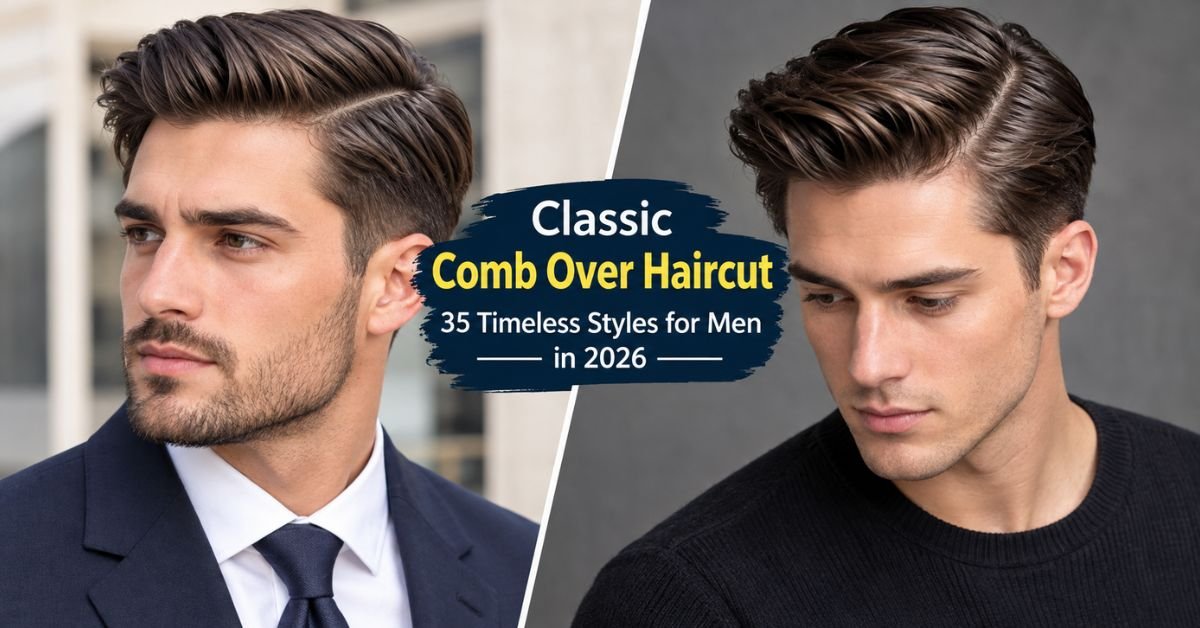
Classic Comb Over Haircut: 35 Timeless Styles for Men in 2026
A classic comb over haircut looks sharp in a boardroom. It looks just as good at a weekend barbecue. That range explains why this cut keeps coming back. In this guide, you’ll find 35 timeless comb over haircut styles. You’ll also get barber phrases, styling steps, and product tips. Pick one and walk into the barbershop with confidence.
What Is a Classic Comb Over Haircut?
A classic comb over haircut is a comb over haircut for men with one clear idea. You part the hair on one side. Then you sweep the longer top across the head in one direction. The sides stay neat with tapered sides or faded sides. The result is a clean-cut hairstyle with a strong shape. Think of it as a classic side part haircut with extra sweep and structure.
This traditional comb over has lasted for generations. Barbers keep offering it because it adapts so well. A timeless comb over haircut can look formal or relaxed. It all depends on your hair texture, your product, and your fade.
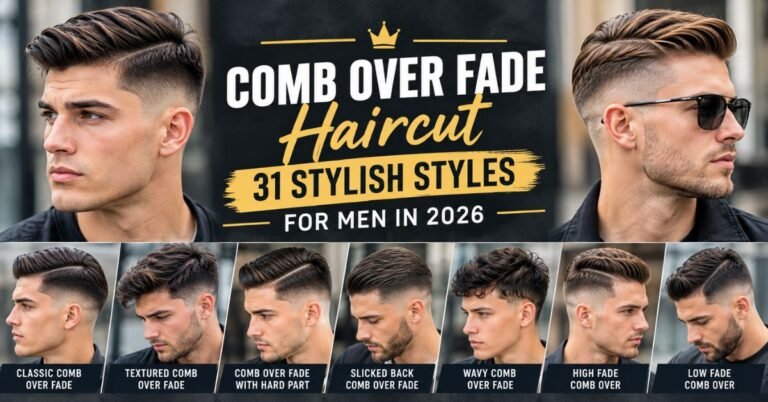
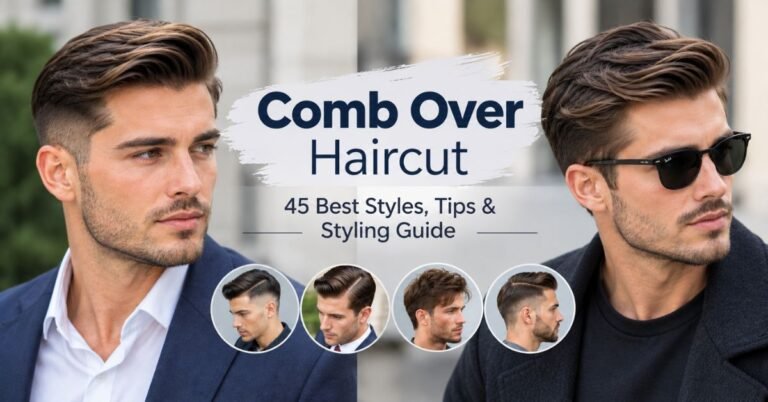
Read More: Comb Over Fade Haircut: 31 Stylish Styles for Men in 2026
Today’s men’s comb over looks cleaner than the old versions. Barbers now blend the sides carefully and style the top with intention. For most men, it’s a timeless men’s hairstyle that never feels dated.
Classic Comb Over vs. Side Part
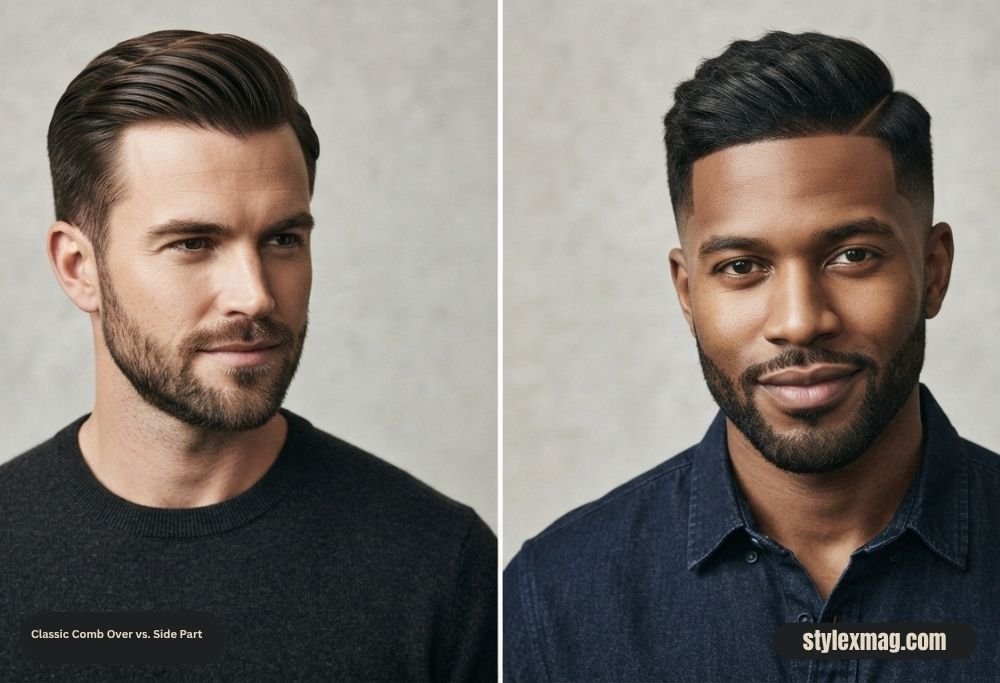
The comb over vs side part question comes up a lot. A basic side part simply divides the hair into two sections. A classic comb over side part goes further. The top sweeps across the head in one long, smooth line.
The sides are also cut shorter to frame the shape. If you want a gentle, everyday look, a plain side part works well. If you want more structure, choose the comb over.
Classic Comb Over vs. Slick Back
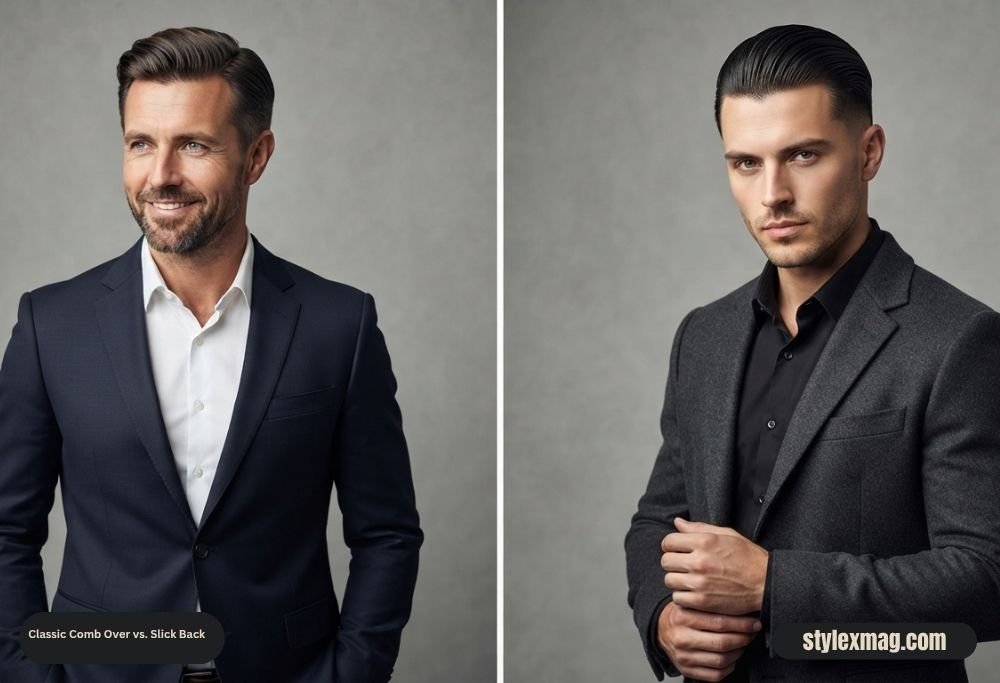
The comb over vs slick back difference is all about direction. A slick back pushes the hair straight back from the forehead. A comb over sends it sideways from a hair part. The slick back shows your whole forehead. The comb over keeps a little hair near the front. Both can use hair pomade and both can look polished. However, the comb over feels more tailored and a bit less bold.
Classic Comb Over vs. Modern Comb Over
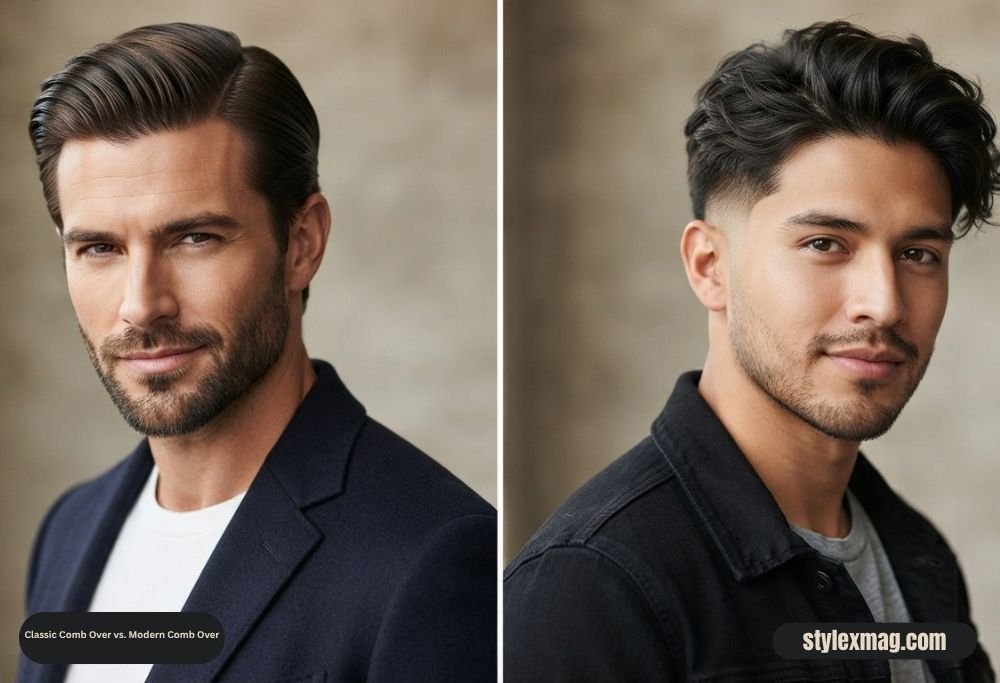
The modern vs classic comb over debate comes down to finish. A classic version has a defined hair part and a neat, smooth sweep. A modern version has a softer part and more movement. The classic leans toward a sleek finish with some shine. The modern leans toward a matte finish with a touch of texture. The direction stays the same. Only the execution changes.
Classic Comb Over Haircut Styles
Here are 35 classic comb over styles in five groups. First come the length and finish styles. Next come the fade and cut styles. Then you’ll see sweep and volume styles. After that come beard styles. Finally, you’ll find styles matched to hair type and face shape. Each style lists what it looks like and who it suits. Most also include a phrase to tell your barber.
Use the table below as a quick guide. Then scroll to the styles that match your needs. Bold terms mark the key ideas. Keep your own hair texture in mind as you read. A cut that looks great on thick hair may flop on fine hair. This list helps you find the best comb over for men with your exact features.
| Style group | Best for | Upkeep | Difficulty |
| Length styles (short, medium, long) | All hair types | Every 3 to 4 weeks | Easy to medium |
| Finish styles (slick, textured, natural) | Depends on hair texture | Every 3 to 4 weeks | Easy to medium |
| Fade and taper styles | Thick to medium hair | Every 2 to 4 weeks | Medium |
| Sweep and volume styles | Thick or wavy hair | Every 2 to 3 weeks | Medium to hard |
| Hair type and face shape styles | Specific needs | Every 3 to 4 weeks | Easy |
Classic Short Comb Over
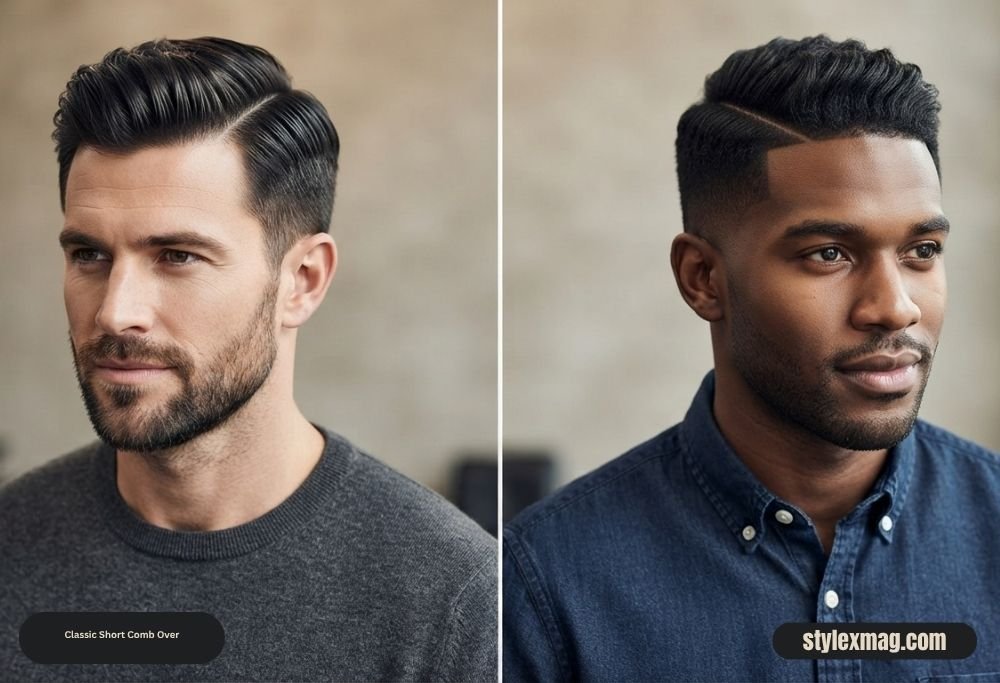
A short comb over keeps about 1 inch (2.5 cm) on top. That’s enough to hold a sweep. It gives a neat men’s hairstyle with almost no fuss. You only need a dab of hair pomade or styling clay. It suits busy men and every face shape. Tell your barber: “Short comb over, side part, tapered sides.”
Classic Medium-Length Comb Over
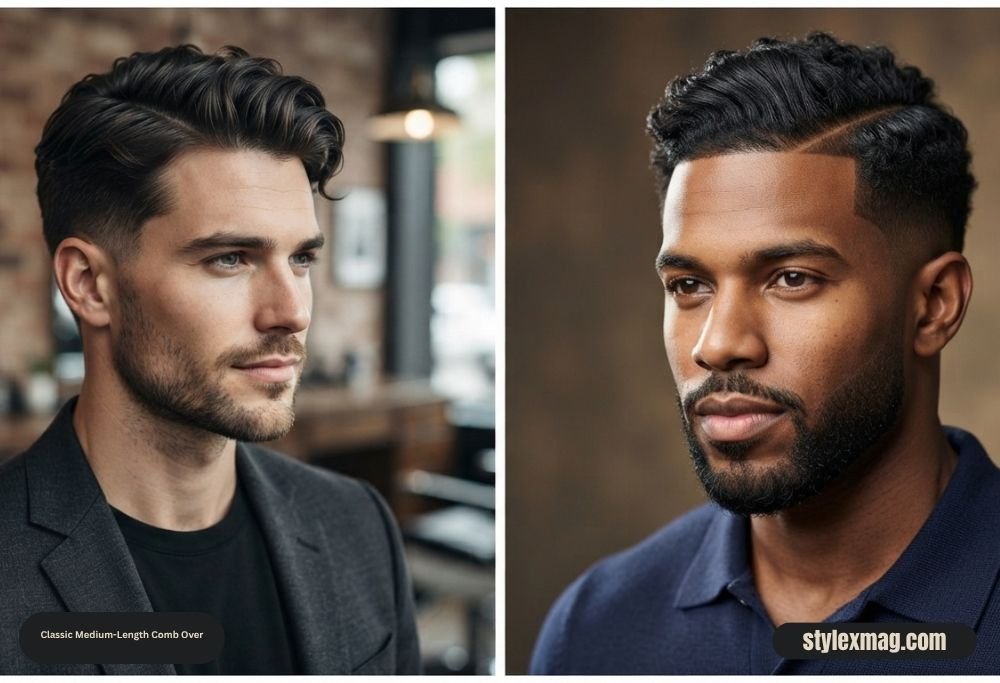
A medium length comb over keeps 2 to 3 inches (5 to 7.5 cm) on top. It’s the all-rounder. You get room for hair volume and a clean sweep. You can go matte or glossy depending on your styling product. Most men start here. Say: “Medium length on top, side part, fade or taper on the sides.”
Classic Long Comb Over
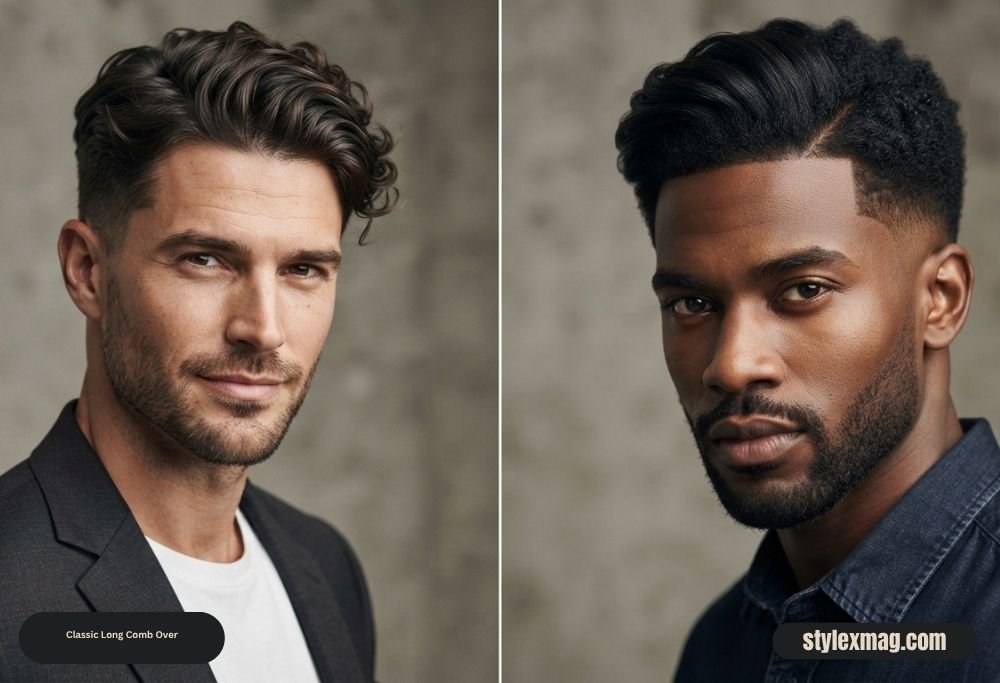
A long comb over leaves 4 inches (10 cm) or more on top. The sweep looks dramatic and full of flow. You need a strong styling product to hold it all day. Keep the short sides tight so the shape stays balanced. A mid fade often works well. Ask for: “Long on top, mid fade on the sides.”
Slick Classic Comb Over
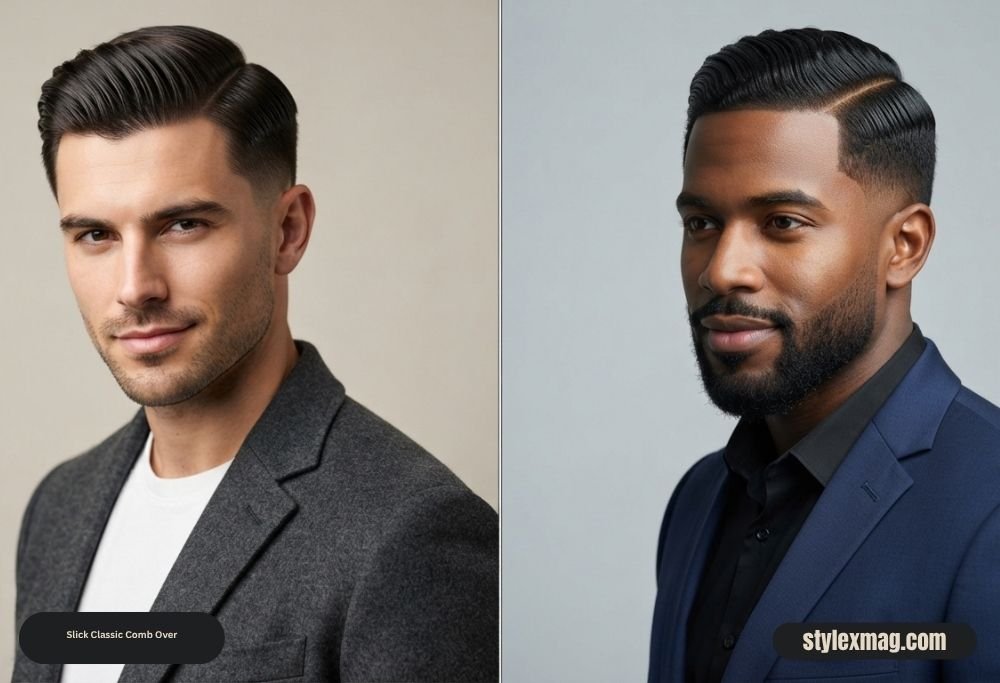
A slick comb over lies flat against the head with high shine. Comb lines stay visible. It’s the most formal version. Use a water-based hair pomade on damp hair. Straight hair suits it best. Wavy hair fights the flat finish. Tell your barber: “Keep the top flat. I’ll slick it myself.”
Textured Classic Comb Over
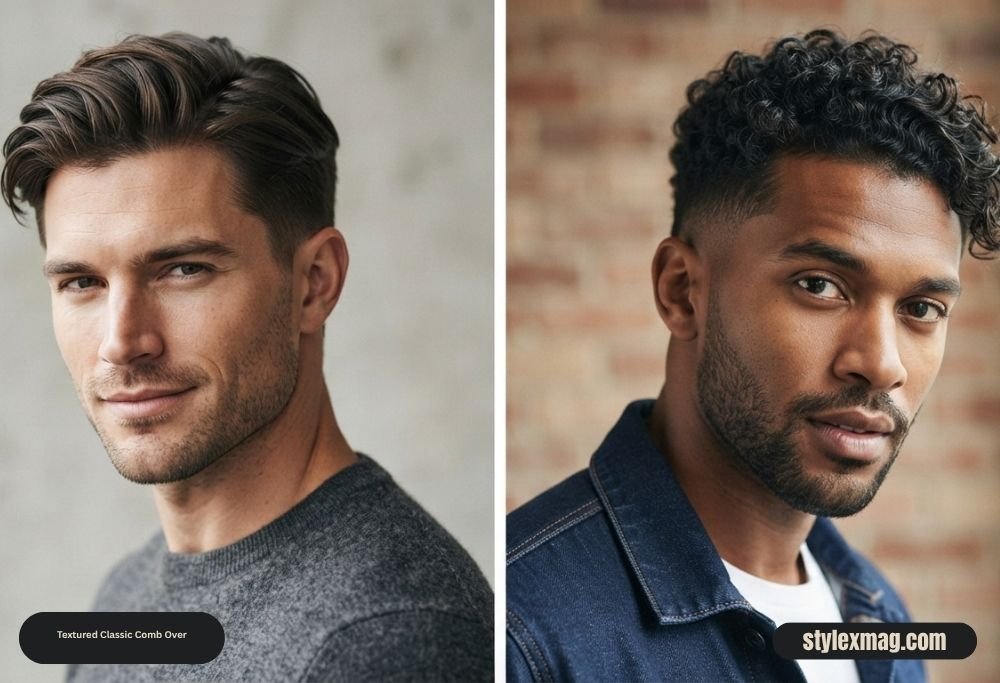
A textured comb over swaps the shine for grit. The ends look choppy and the textured finish shows movement. Your barber point-cuts the top to create that effect. Apply styling clay for a matte finish. This textured men’s haircut suits wavy and thick hair. Ask: “Point-cut the top, matte look, side part.”
Natural Comb Over
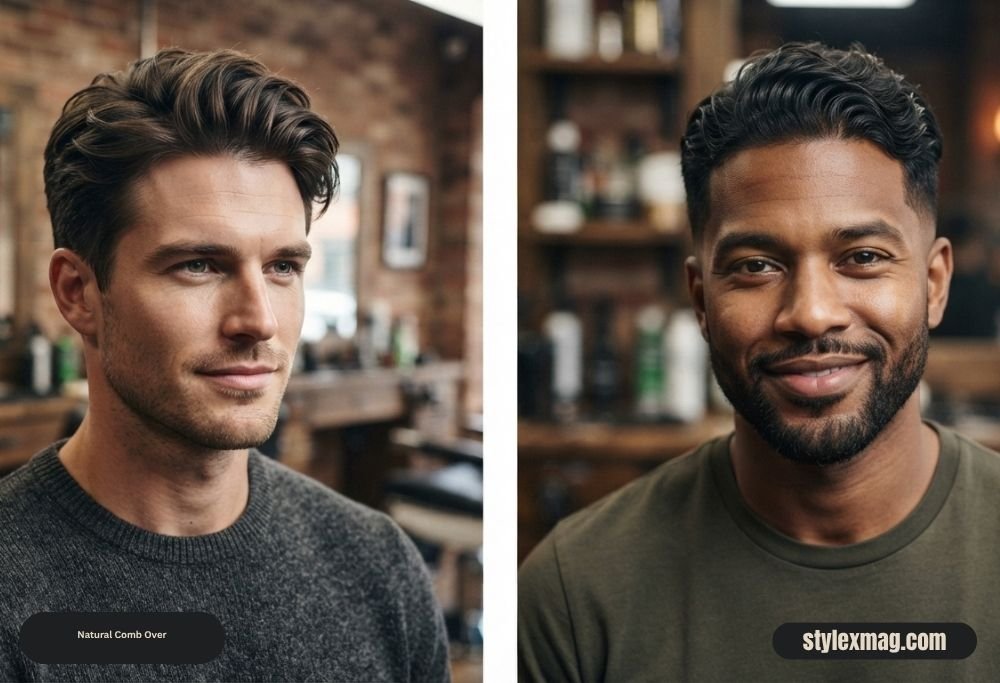
A natural comb over follows the way your hair already grows. You skip a forced part. Use almost no product. This low-maintenance comb over works when you have a clear natural direction. Fine hair benefits from a light styling cream. For a natural finish, say: “Follow my natural part, no hard lines.”
Vintage Comb Over
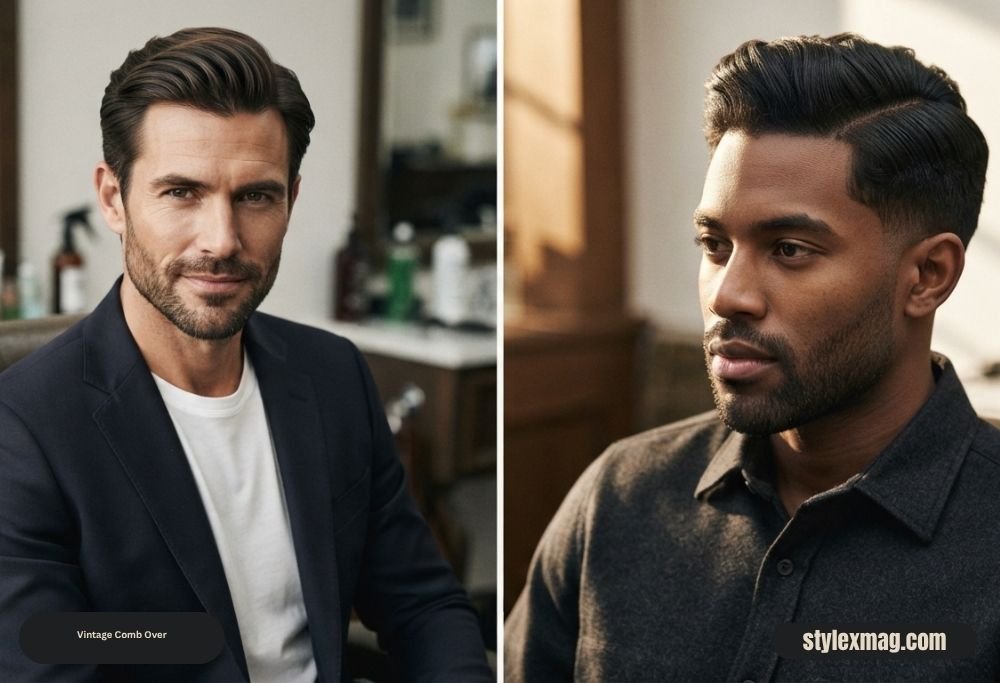
A vintage comb over brings back the old barbershop mood. The part sits deeper and the comb lines stay visible. The finish shines. It looks best on straight hair. Choose a firm hair pomade and a fine-tooth comb. Tell your barber: “Vintage side part, high shine, visible comb lines.”
Ivy League Comb Over
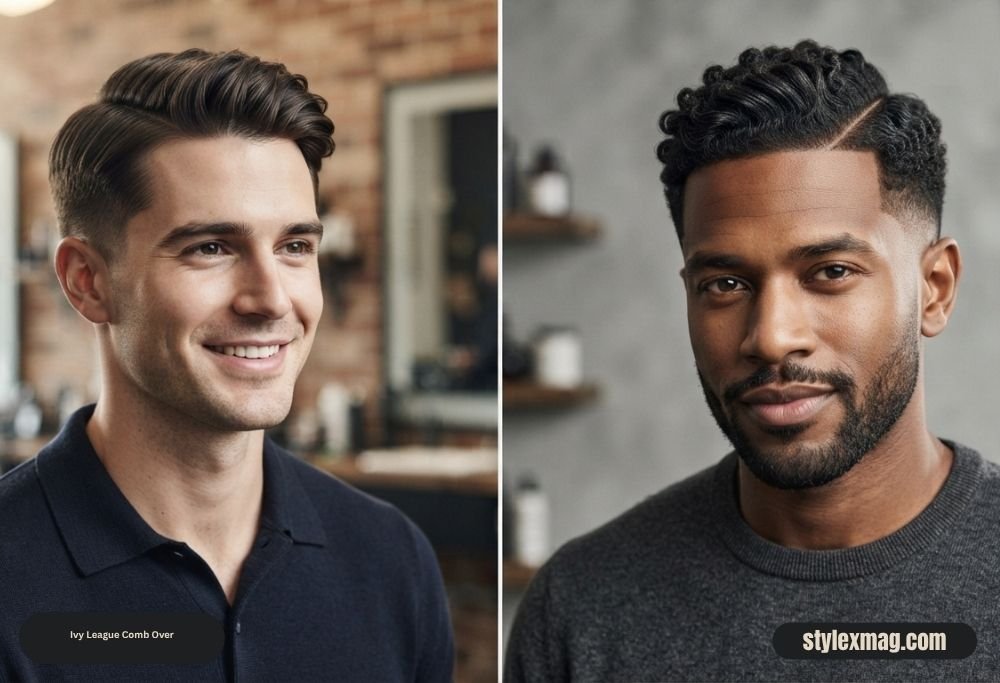
The Ivy League comb over is a short, tidy cousin of the crew cut. Keep about 1.5 to 2 inches (4 to 5 cm) on top. Add a soft side part and tapered sides. It looks like a professional comb over hairstyle with zero drama. It suits most hair types. Ask for: “Ivy League cut with a soft side part.”
Deep Side-Part Comb Over
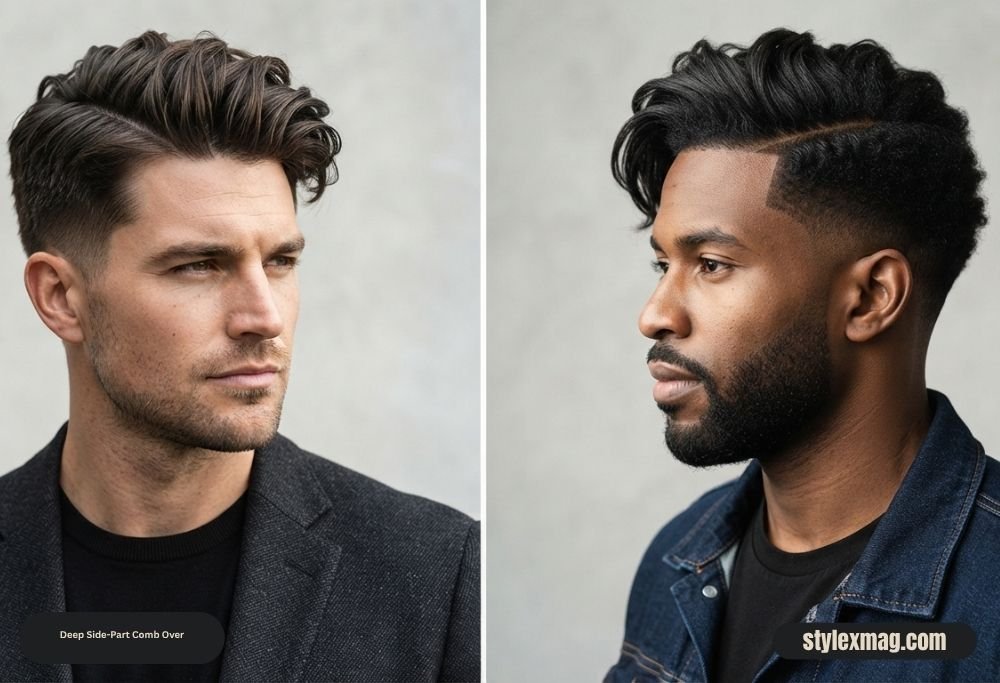
A deep part sits farther from the center. More hair crosses the head. This adds width on one side. Men with longer faces often like that effect. It looks bold yet still classic. Use a medium-hold styling product to control the sweep. Say: “Deep side part, wide sweep, taper on the sides.”
Classic Comb Over with Low Fade
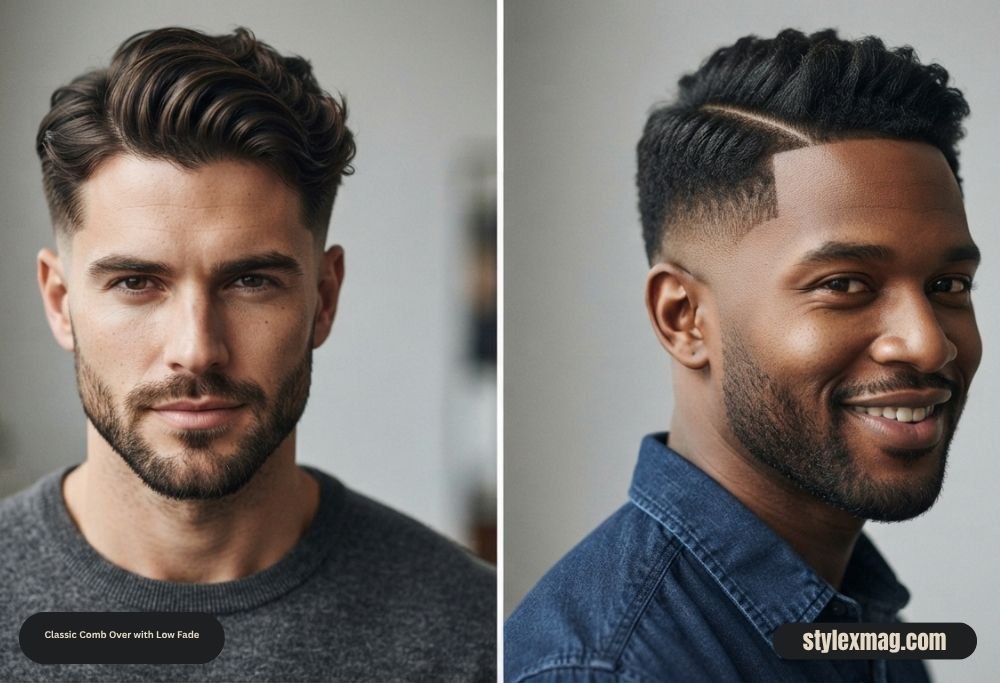
A low fade starts just above the ear. It’s a gentle blend. The sides stay full. This classic comb over with fade suits office life. First-time fade fans love it. It’s a classic men’s haircut with fade that rarely goes wrong. Ask: “Low fade above the ear, comb over on top.”
Classic Comb Over with Mid Fade
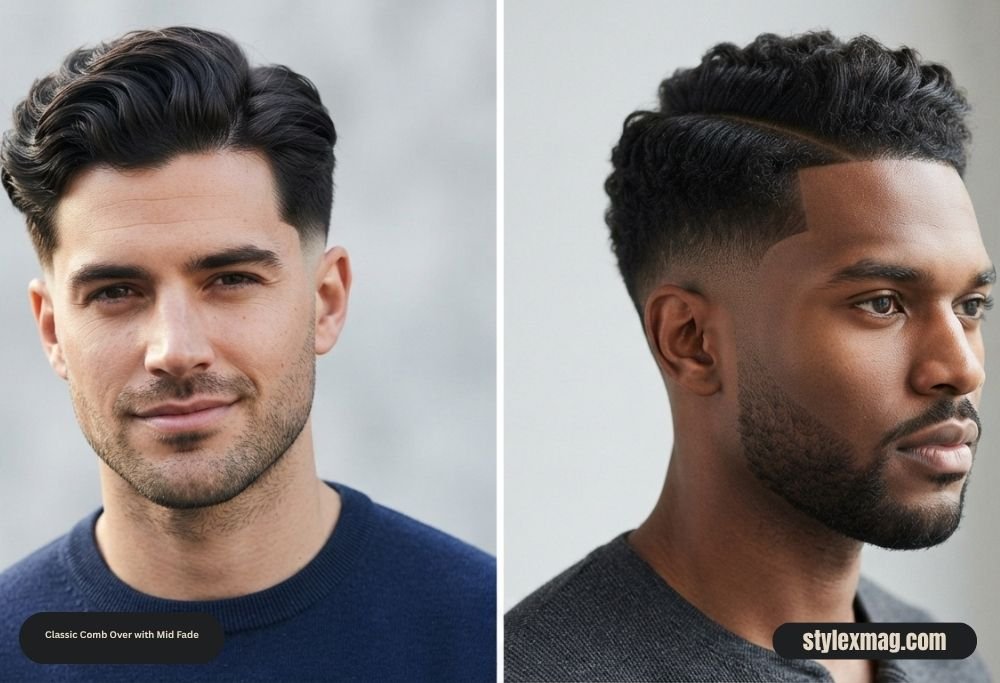
A mid fade begins around the temples. It adds more contrast than a low fade. Even so, it stays controlled. This comb over with fade suits almost any face. It balances boldness and polish. Expect a regular trim every 2 to 3 weeks. Tell your barber: “Mid fade at the temple, blended clean.”
Classic Comb Over with High Fade
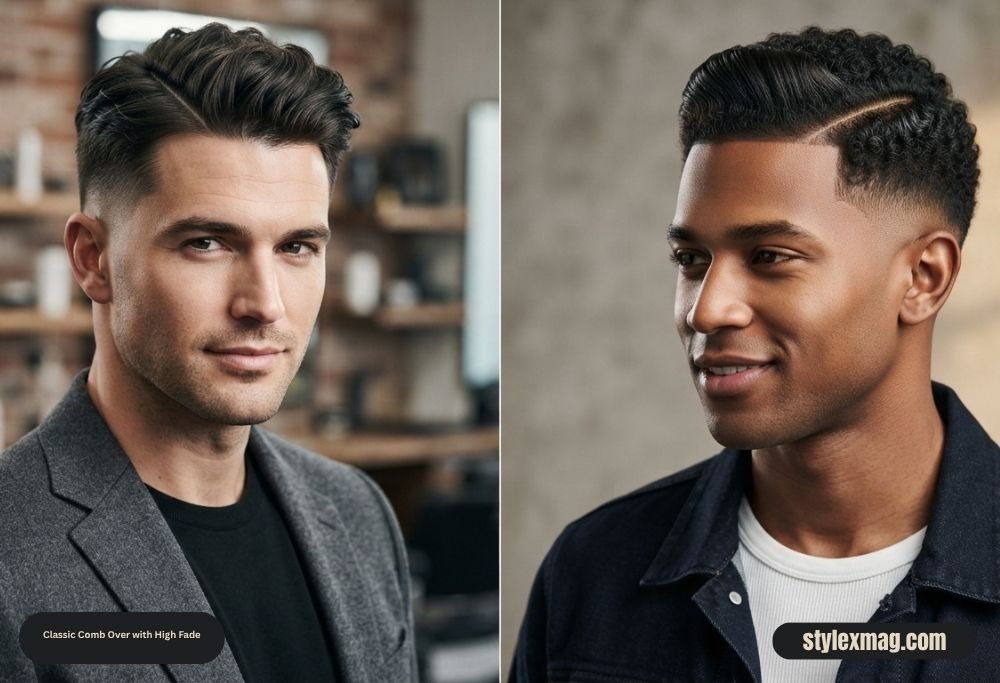
A high fade starts above the temples. The contrast is strong. Thick hair carries it best. The top looks fuller next to those tight sides. This style feels sharper and younger. Conservative workplaces may prefer something softer. Say: “High fade, comb over on top, keep the top full.”
Classic Comb Over with Skin Fade
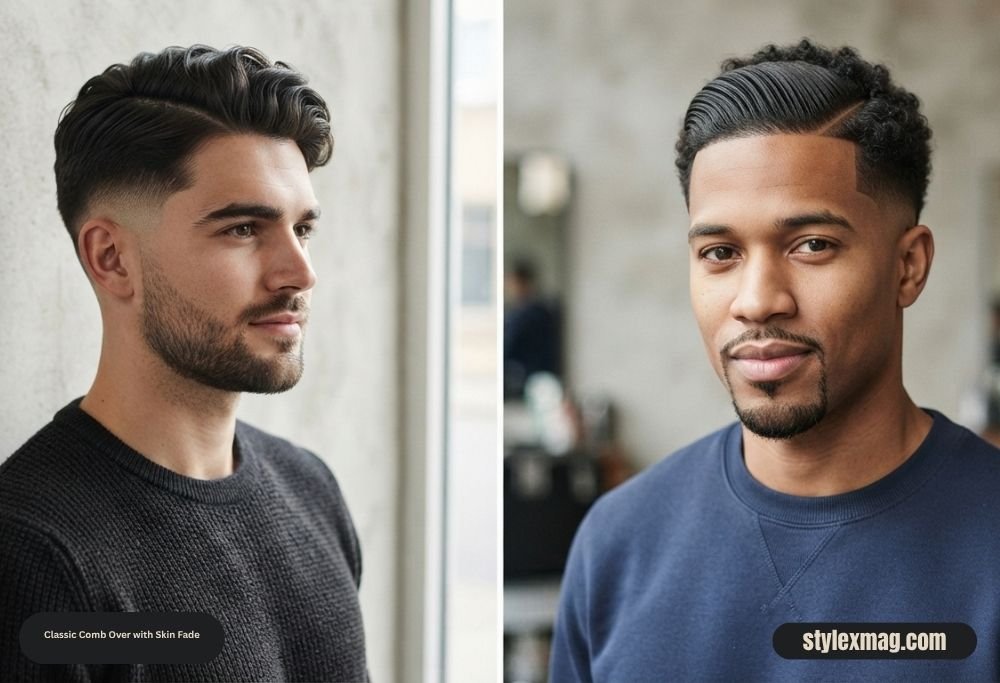
A skin fade drops to bare skin at the base. Your barber uses a zero blade and often a razor. The contrast is the sharpest of any option. Skill matters here. Pick a barber with a strong fade portfolio. Say: “Skin fade, low or mid, razor finish.”
Classic Comb Over with Taper Fade
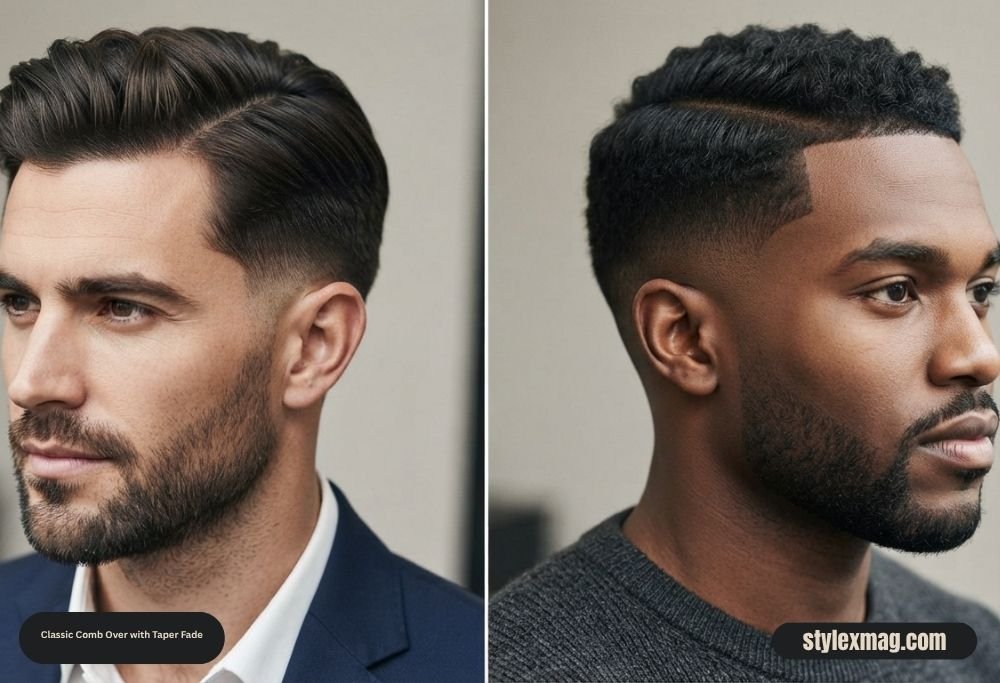
A taper fade shortens the hair toward the neckline. It never reaches bare skin. This comb over taper is the most conservative choice. It grows out well and needs less maintenance. That makes it a business comb over haircut favorite. Ask: “Taper fade, keep some hair at the base.”
Classic Comb Over with Drop Fade
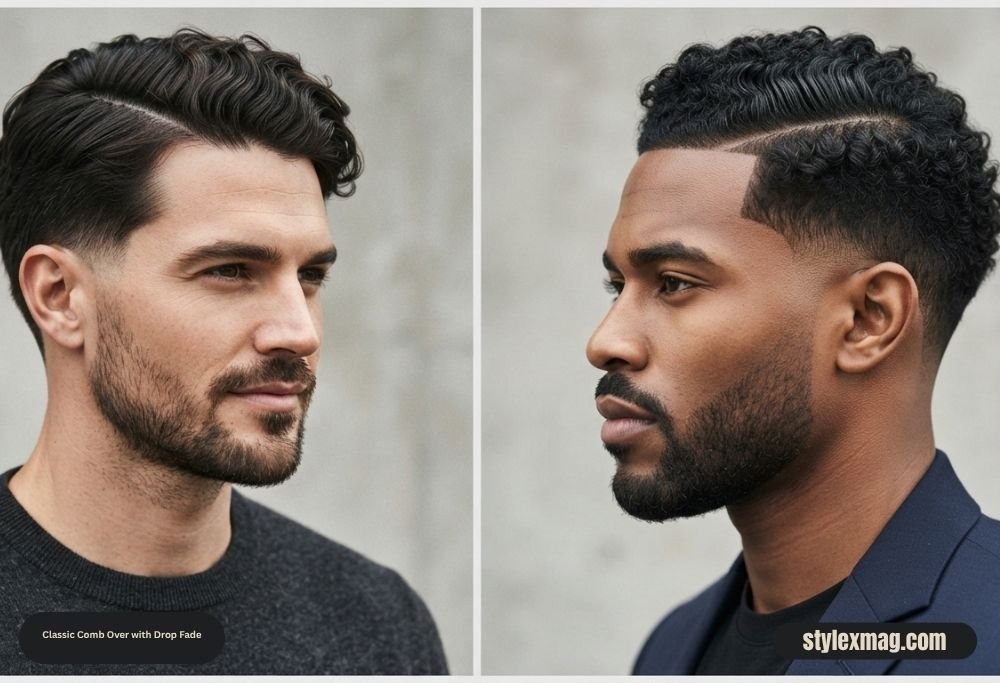
A drop fade curves down behind the ear. The line follows the skull. From the back, the cut looks sculpted. From the front, it stays simple. It works with any top length. Tell your barber: “Drop fade, let the line curve behind the ear.”
Classic Comb Over with Burst Fade
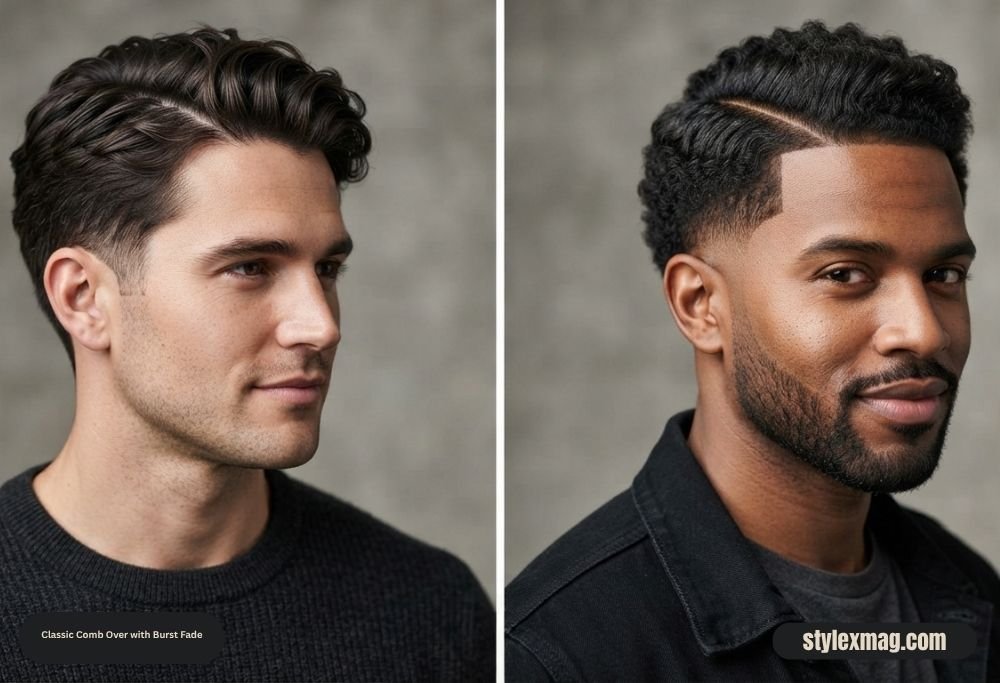
A burst fade forms a half-circle around the ear. The back keeps more length. Curly and wavy hair look great with it. It adds a modern twist to the classic shape. Not every barber offers it. So bring a photo. Ask for: “Burst fade, arc around the ear, leave length at the back.”
Classic Comb Over Undercut
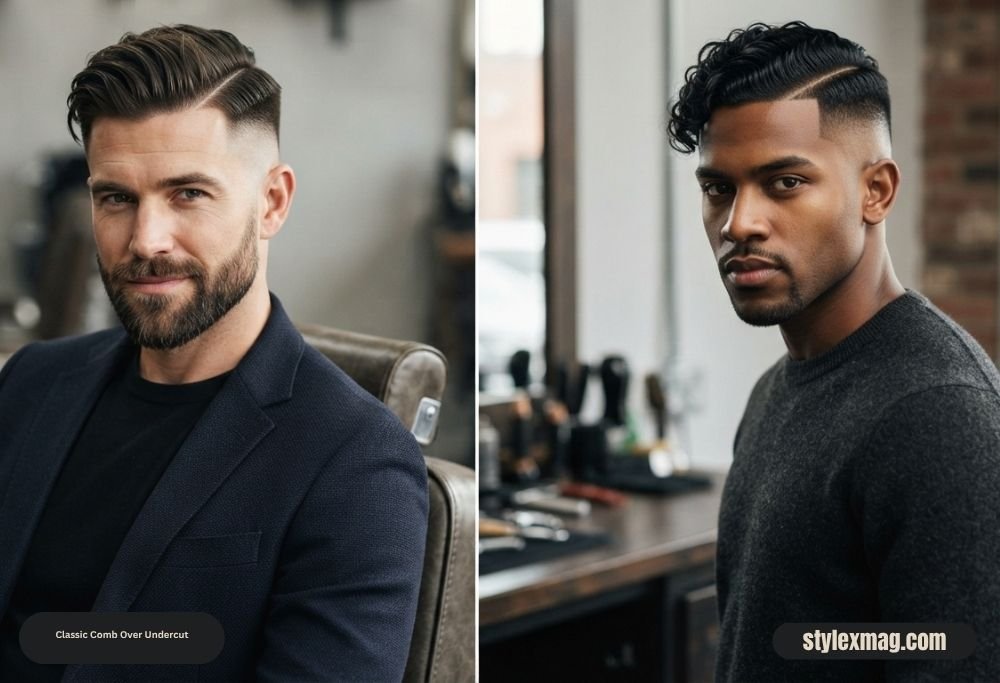
A comb over undercut keeps the sides short with a soft transition. The top stays long. You need at least 3 inches (7.5 cm) up top. Otherwise the contrast gets lost. Thick hair suits it well. Say: “Undercut the sides, comb over on top, soft transition.”
Disconnected Comb Over
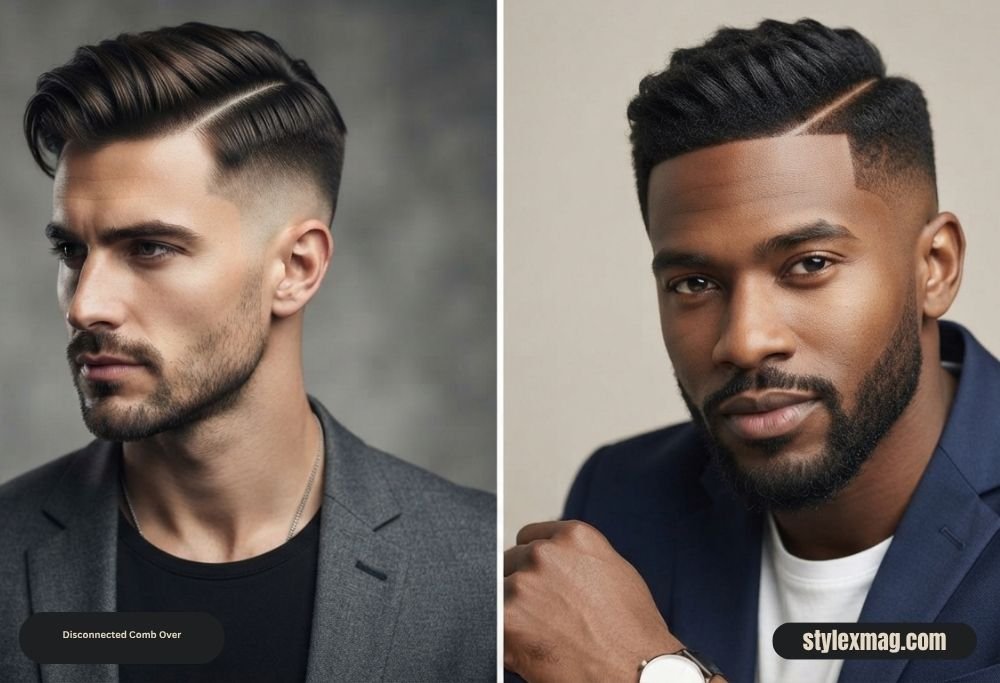
A disconnected undercut has no blend at all. A clear line separates the top from the sides. That line becomes the style detail. Keep at least 3 to 4 inches (7.5 to 10 cm) on top. Straight hair shows the line best. Ask: “Disconnected comb over, hard line, no blending.”
Hard-Part Comb Over
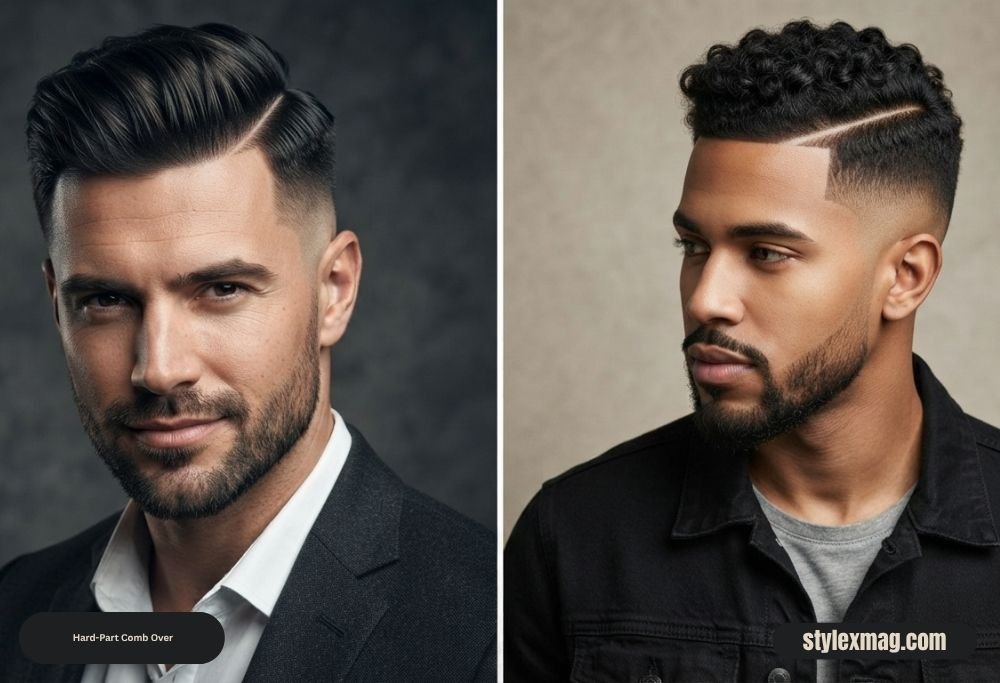
A hard part comb over uses a razor-cut line at the part. The line looks crisp and clean. It adds edge. However, it grows out fast. Plan a quick touch-up every two weeks. Avoid putting it right at a receding area. Tell your barber: “Hard part on the left, about one inch in.”
Comb Over with Side Sweep
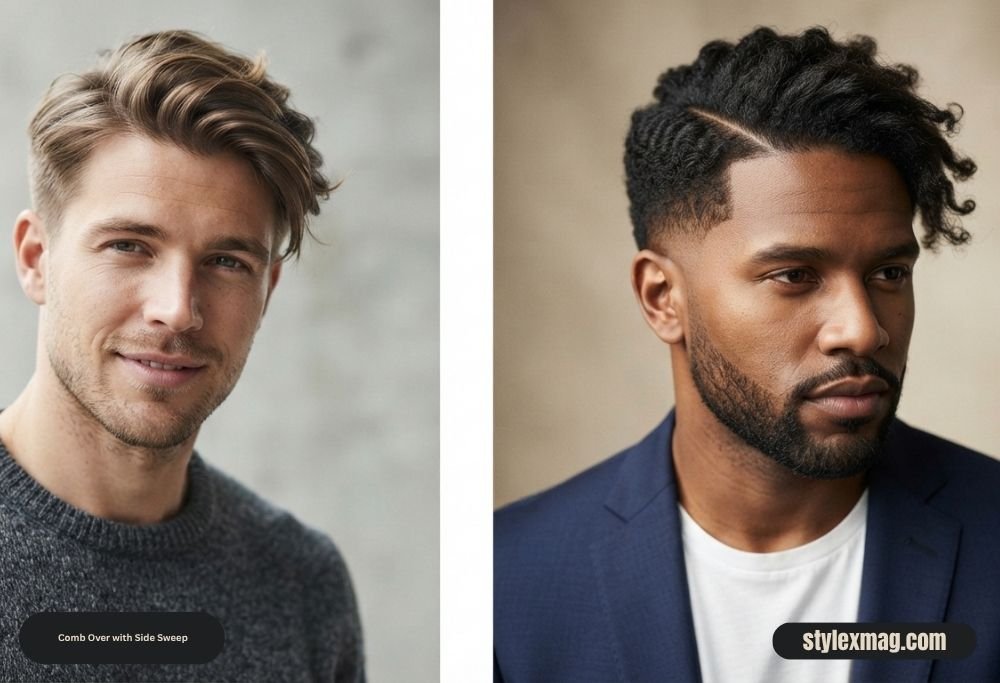
This style drops the defined part. The hair simply moves to one side. It looks loose and wind-touched. Wavy hair does this well on its own. Use your fingers and a bit of hair paste. Ask for: “Side sweep, no hard part, natural finish.”
Comb Over Pompadour
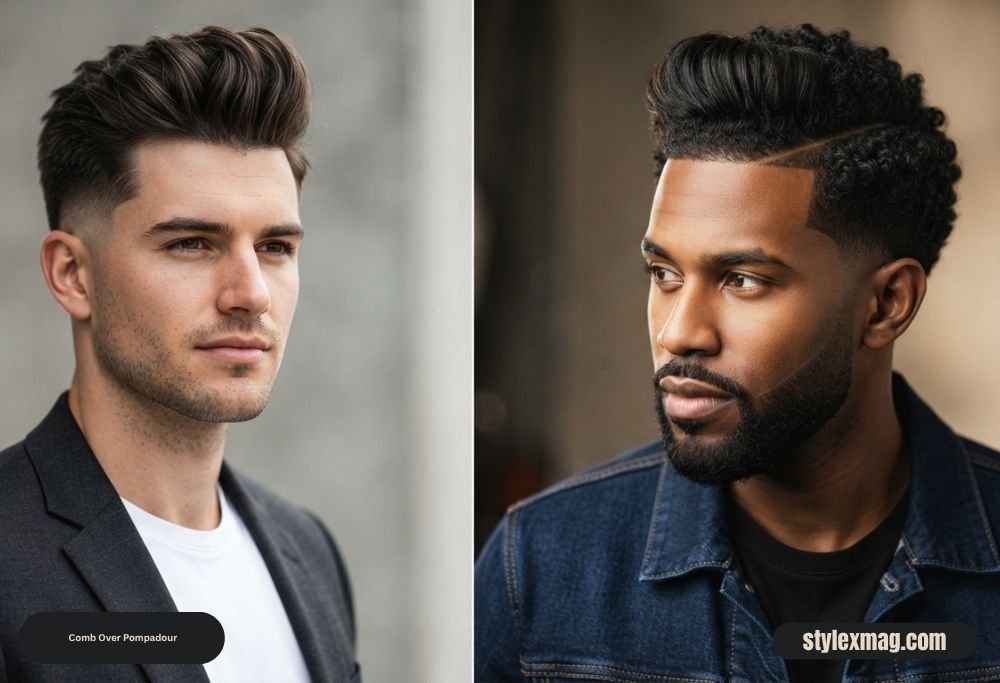
A comb over pompadour lifts the front first. Then it sweeps sideways. You get height and direction in one look. Keep at least 3 inches (7.5 cm) on top. Use a blow dryer and a strong-hold product. Say: “Pompadour volume, swept to the side, faded sides.”
Comb Over Quiff
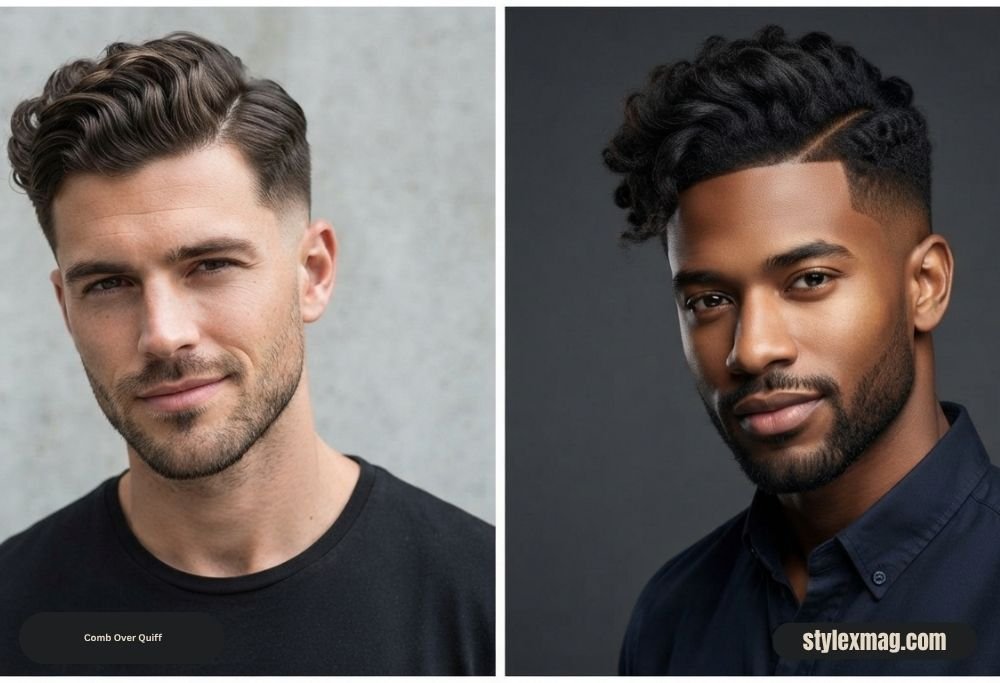
A comb over quiff pushes volume forward and up at the front. Then it sweeps to one side. It’s more front-heavy than the pompadour. Round and oval faces like that structure. Use styling clay for a firm hold. Ask: “Quiff on top, swept sideways, fade on the sides.”
Brushed-Up Comb Over
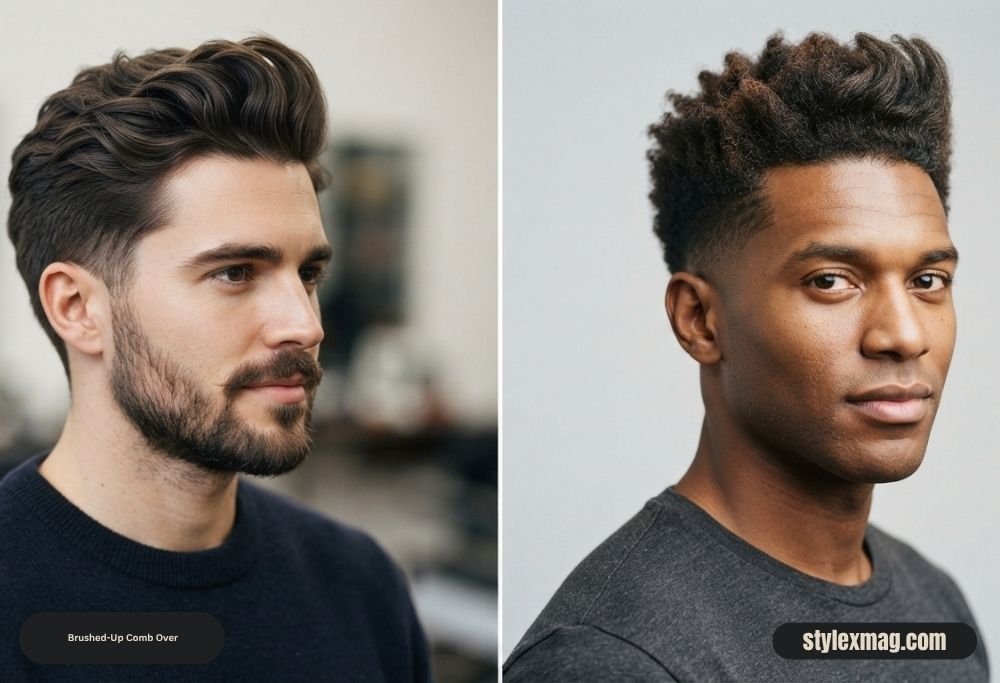
Here, you blow-dry the hair up and slightly sideways first. Then you set the direction. The result is more hair volume than a flat classic. It looks full and modern. Straight and wavy hair respond best. Say: “Leave enough length to blow-dry up and sweep sideways.”
Messy Comb Over
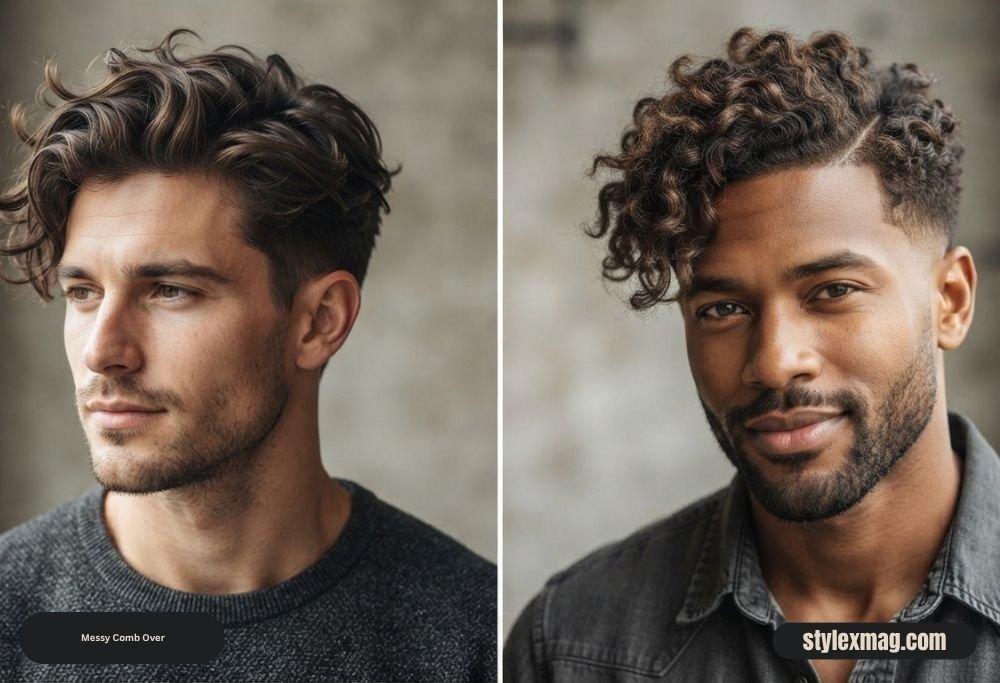
A messy version loosens everything. The part blurs and the ends tousle. Use a texture powder or sea salt spray. Rough it up with your fingers. It’s casual and quick. It’s also great for weekends. Tell your barber: “Relaxed comb over, messy finish, soft part.”
Classic Comb Over with Beard
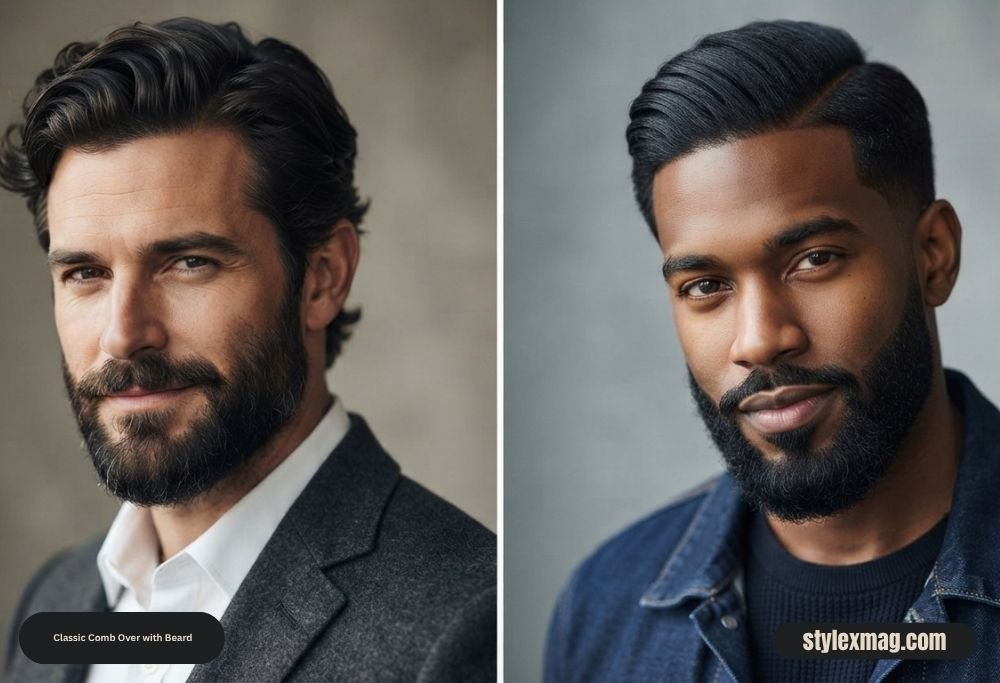
A comb over with beard works best when the fade meets the sideburn. A gap looks awkward. Ask your barber to blend the sides into the beard smoothly. A mid fade usually does this well. Keep the beard trimmed too. Say: “Fade that connects into my beard, no gap.”
Classic Comb Over with Stubble
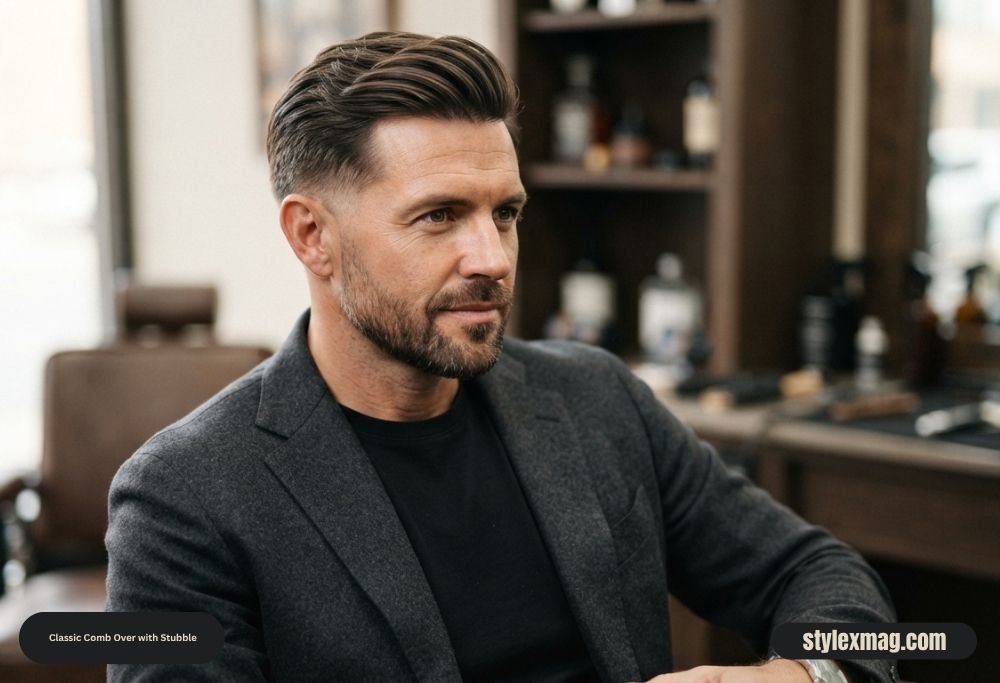
Stubble adds jaw definition without a full beard. A low or mid fade melts into it nicely. It’s a versatile mix for work and weekends. Keep the edges clean. That tidy line makes stubble look intentional. Ask: “Low fade that transitions into my stubble.”
Classic Comb Over for Straight Hair
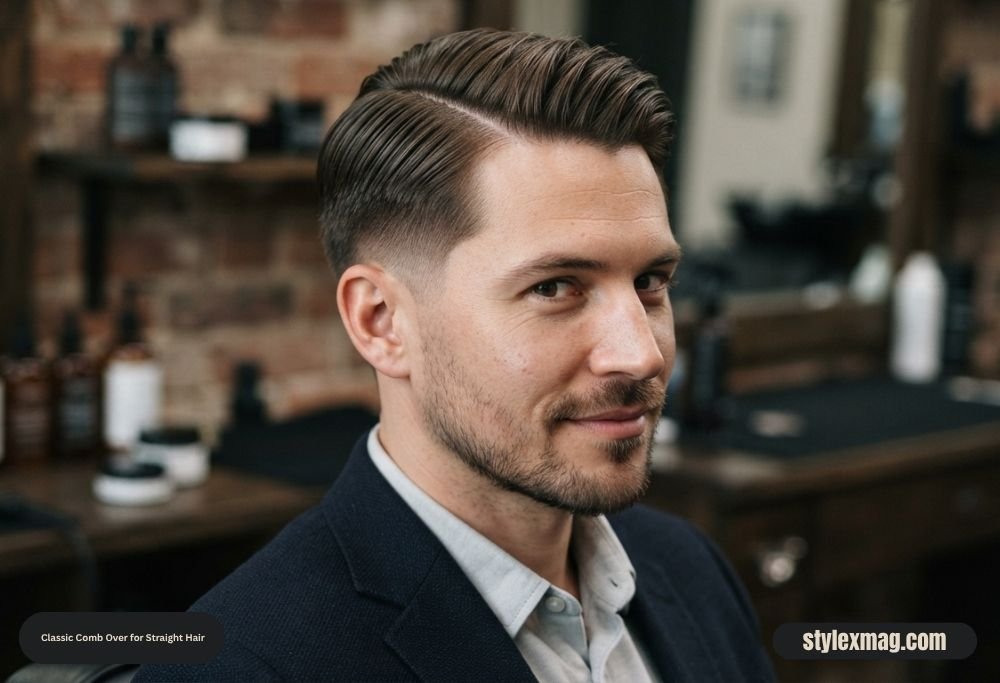
A classic comb over for straight hair gives the sharpest lines. The hair lies flat. A hard part also shows clearly. However, straight hair can look limp. Ask your barber to point-cut the top. That adds movement. Say: “Point-cut the top, straight hair, classic comb over.”
Classic Comb Over for Wavy Hair
A classic comb over for wavy hair gets free volume. The waves add movement. Slick styles fight those waves. So choose a textured or modern finish. A little sea salt spray helps. Ask: “Textured comb over to work with my natural wave.”
Classic Comb Over for Curly Hair
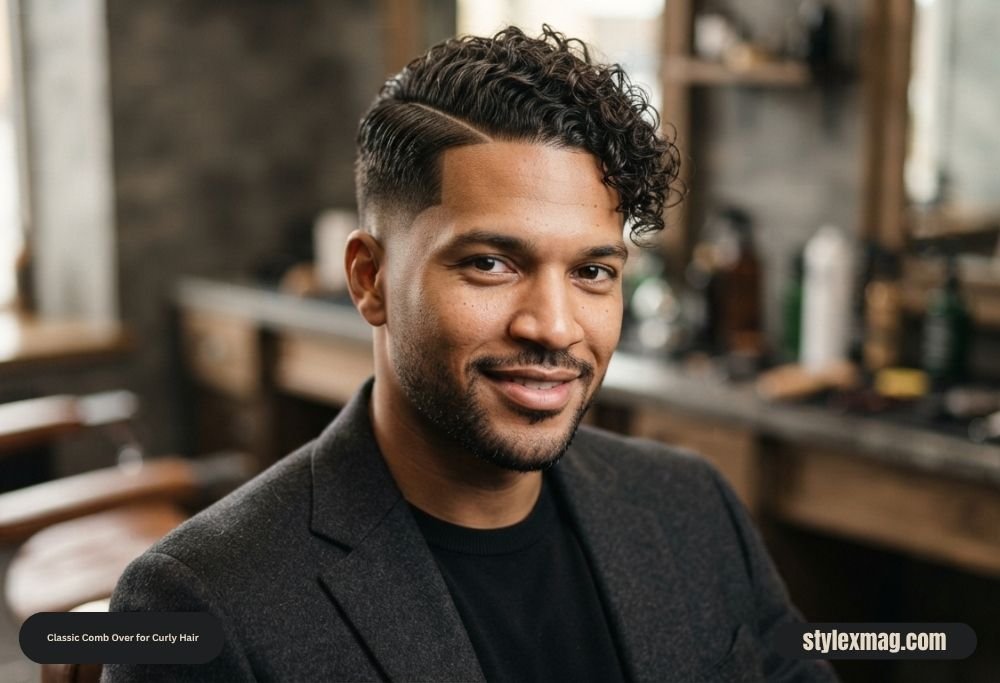
A classic comb over for curly hair needs a loose approach. Keep the curls visible. Direct them gently to one side. Use a leave-in conditioner for definition. Your barber can blend the sides with scissor-over-comb. Say: “Loose comb over, keep my curl definition.”
Classic Comb Over for Thick Hair
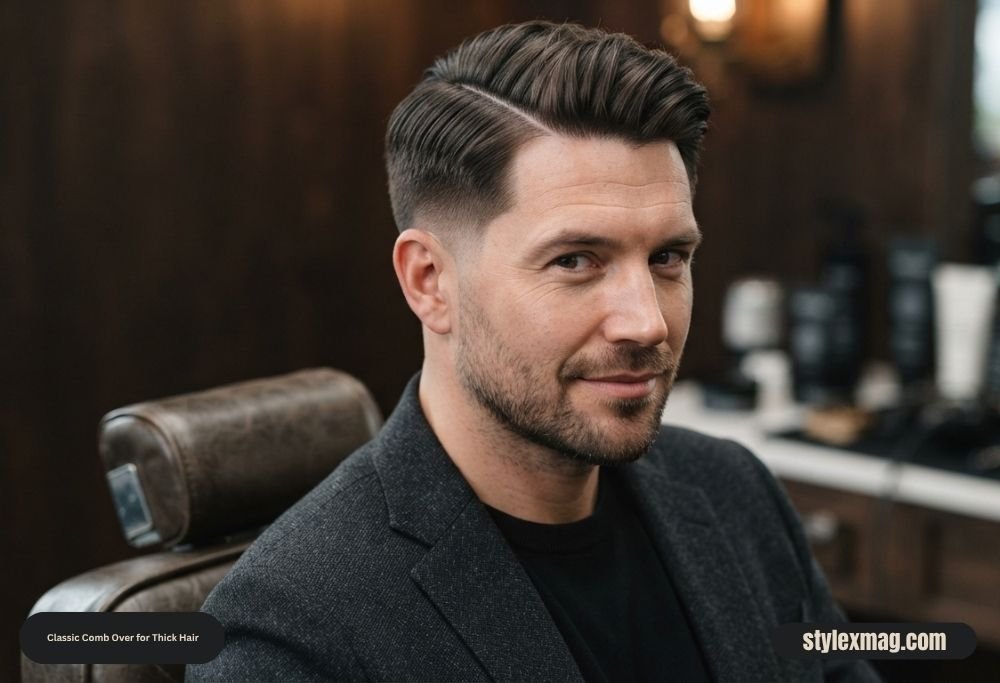
A classic comb over for thick hair needs bulk control. A mid or high fade removes side weight. Point-cutting the top lightens it. Styling clay holds thick hair better than a soft cream. Tell your barber: “Texturize the top, mid fade on the sides.”
Classic Comb Over for Thin Hair
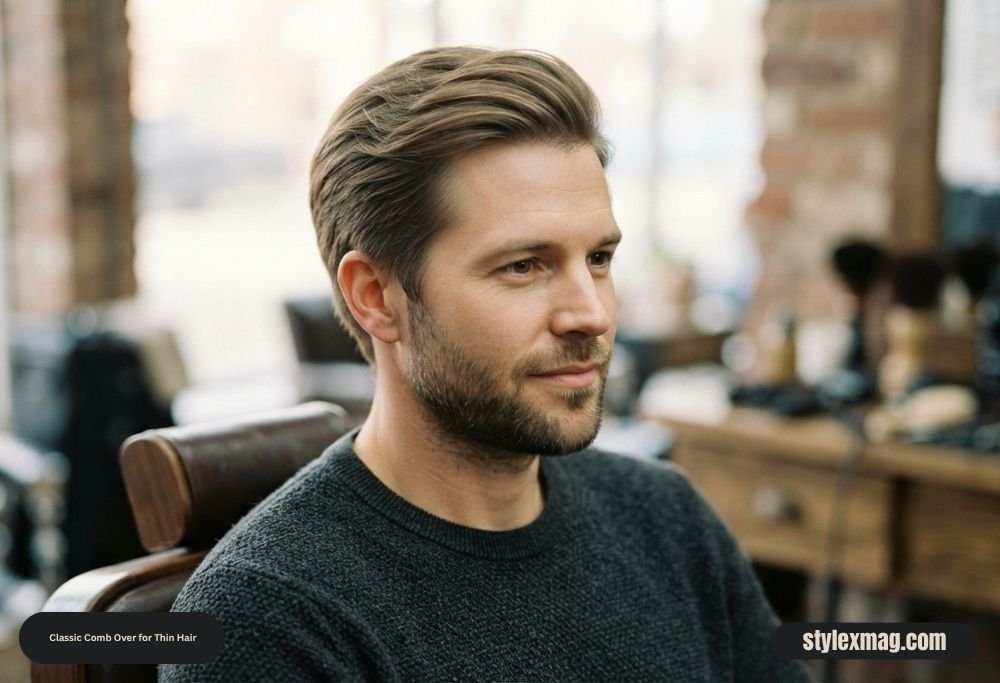
A classic comb over for thin hair needs a low taper. Skip high fades. They expose too much scalp. Keep the top around 2 to 3 inches (5 to 7.5 cm). Add light mousse or texture powder for lift. Say: “Low taper, fine hair, keep the sides full.”
Classic Comb Over for Receding Hairline
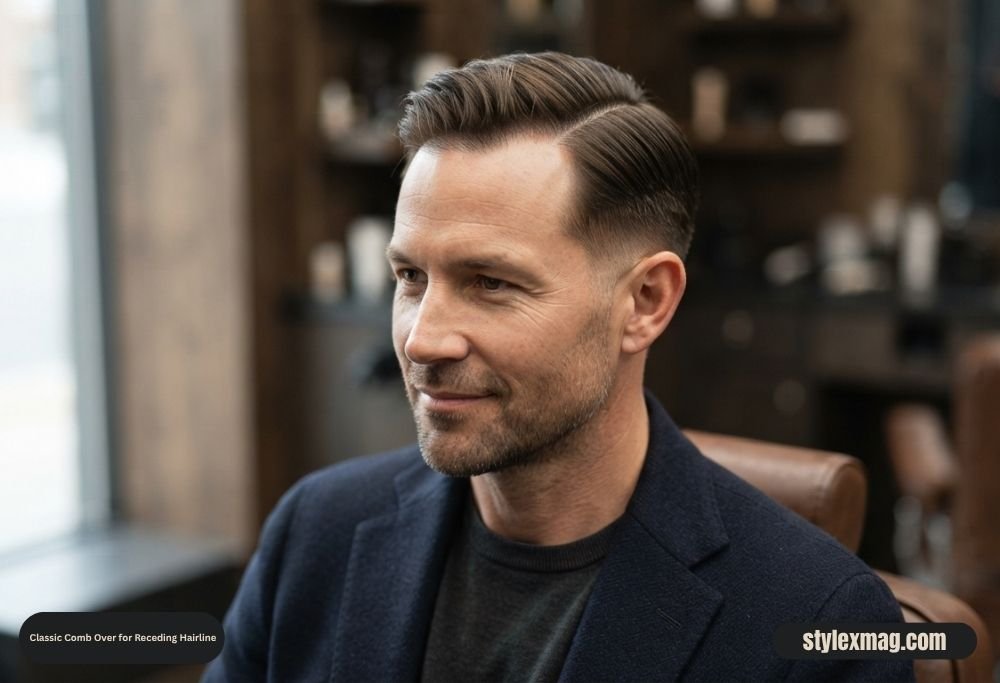
A classic comb over for receding hairline should follow your natural hairline. Don’t force a straight part. Avoid a hard part at the thinnest area. A low taper keeps the proportions even. This is a smart comb over for receding hairline plan. Ask: “Follow my hairline, soft part, low taper.”
Classic Comb Over for Round Face
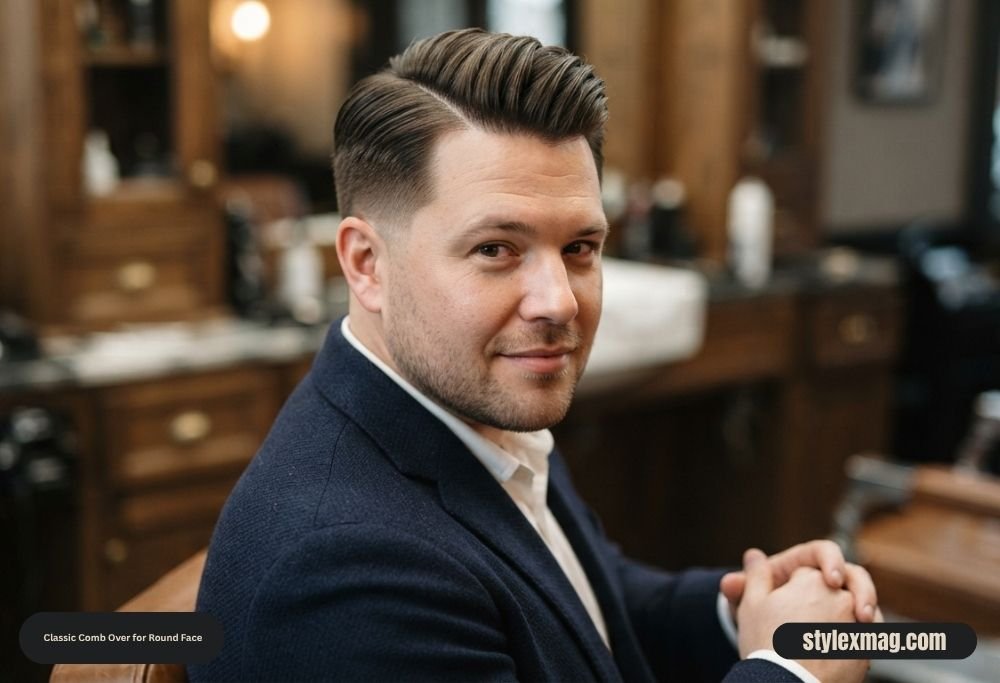
A classic comb over for round face shapes needs height. A mid or high fade tightens the sides. Volume on top adds length. Skip the flat, wide finish. The sideways sweep also adds helpful asymmetry. Say: “Mid fade, volume on top, sweep to the side.”
Classic Comb Over for Square Face
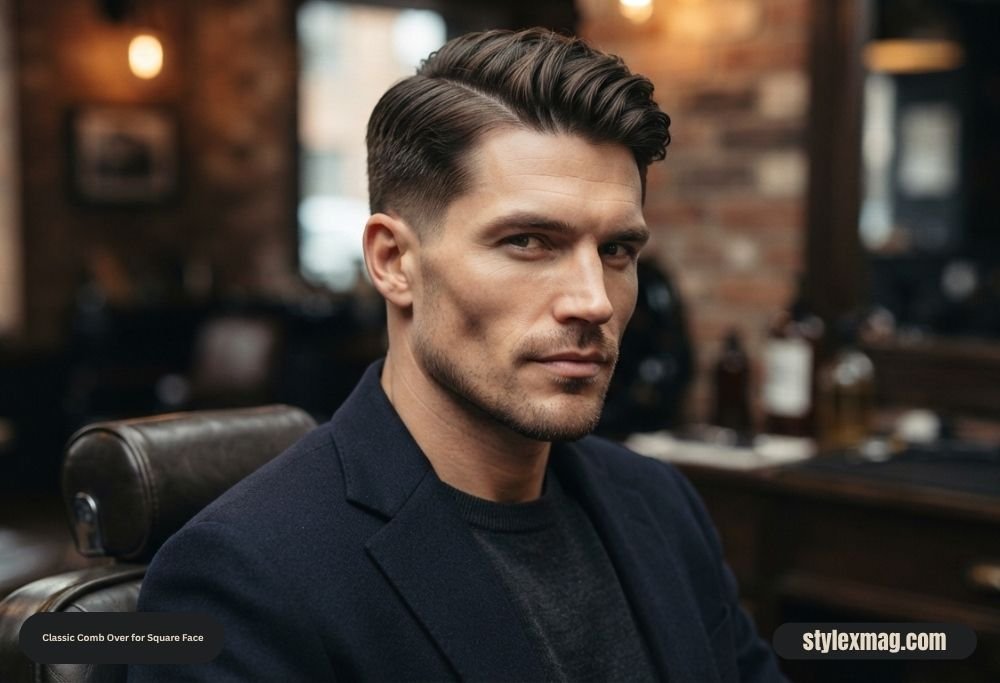
A classic comb over for square face shapes should soften the jaw. Choose a soft part and a low or mid fade. Skip a razor-sharp hard part. That would add more angles. A natural finish helps too. Ask: “Soft natural part, low fade, soften my jawline.”
Classic Comb Over for Oblong Face
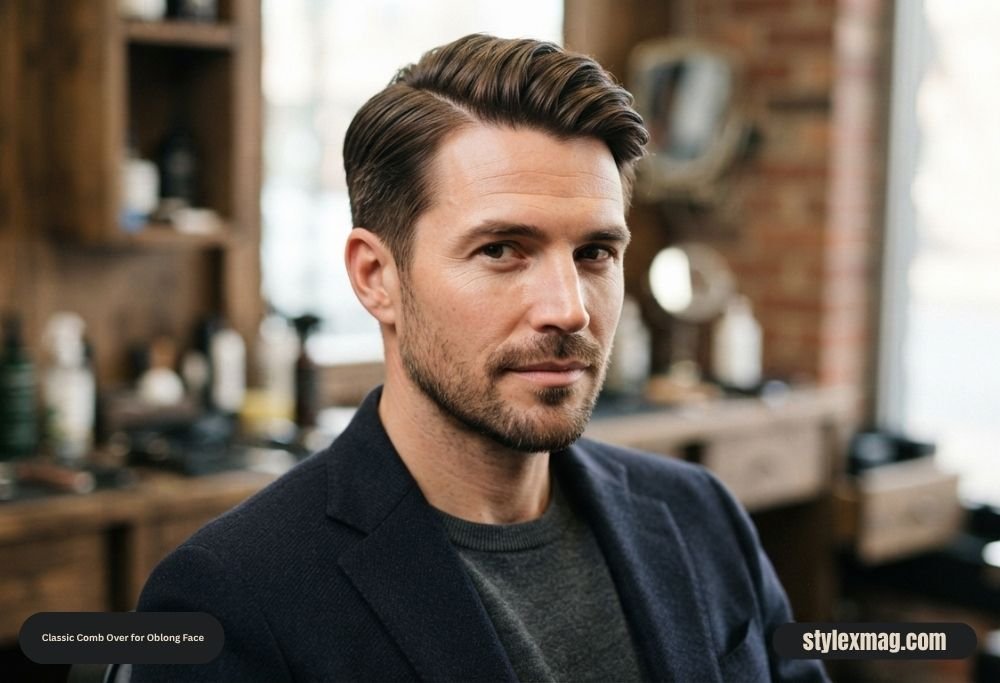
A classic comb over for oblong face shapes should avoid extra height. Keep the top flat. Let the sweep add width. A deep side part helps here. A low taper keeps the sides full. Tell your barber: “Flat top, low taper, I have a long face.”
How to Choose the Right Classic Comb Over
Four things decide your best cut. They are your face shape, your hair type, your hair length, and your upkeep time. Start with the face. Then check your hair texture. After that, think about how much time you’ll spend on styling. This is how you find the best comb over for men in your situation.
Don’t worry if you feel unsure. Almost any head can wear a comb over with small changes. Barbers adjust the part, the fade, and the finish. That’s why comb over for different face shapes works so well. The tables below make the choice simple.
Choose by Face Shape
Face shape affects balance. Use this table as a starting point.
| Face shape | Best approach | Why it works |
| Oval | Almost any style | Balanced proportions suit everything |
| Round | Mid or high fade with volume | Adds visual length |
| Square | Soft part with low or mid fade | Softens the jaw |
| Oblong | Flat top with low taper | Avoids extra height |
| Heart | Soft part with low fade | Balances a wider forehead |
| Diamond | Mid fade with medium top | Keeps the sides even |
Choose by Hair Type and Texture
Your hair type matters as much as your face. Straight hair gives crisp lines. Wavy hair adds natural hair volume. Curly hair prefers a loose sweep. Thick hair needs a fade to cut bulk. Fine hair needs a low taper and a light product. The table shows quick matches.
| Hair type | Best comb over | Key tip |
| Straight | Classic, slick, or hard part | Point-cut the top |
| Wavy | Textured or natural | Use sea salt spray |
| Curly | Loose side sweep | Keep curls defined |
| Thick | Mid or high fade version | Texturize the top |
| Fine or thin | Low taper with light volume | Use mousse or powder |
Choose the Right Hair Length
The big question is how long should hair be for a comb over. You need about 1 to 2 inches (2.5 to 5 cm) at the minimum. Three to four inches (7.5 to 10 cm) gives you more control. Beyond that, you get a bold, flowing look.
| Length on top | What it allows |
| 1 to 2 inches (2.5 to 5 cm) | Short, neat sweep |
| 2 to 3 inches (5 to 7.5 cm) | Volume and texture |
| 4 inches or more (10 cm+) | Dramatic, flowing sweep |
Choose Between a Fade and Taper
A fade shows more contrast. A taper looks softer. Pick based on your workplace and your schedule. A comb over with fade needs more frequent visits. A comb over taper lasts longer.
| Feature | Fade | Taper |
| Contrast | Higher | Lower |
| Upkeep | Every 2 to 3 weeks | Every 4 to 5 weeks |
| Workplace fit | Modern offices | Formal settings |
How to Ask Your Barber for a Classic Comb Over
Clear words win at the chair. Vague requests cause surprises. So learn how to ask a barber for a comb over before you sit down. Name the length. Name the part. Name the fade. A few precise words save you weeks of regret.
Here’s a script you can copy. “I’d like a classic comb over. Leave about three inches on top. Part it on the left. Give me a mid fade on the sides. Keep the finish natural.” Short, calm, and specific. Most barbers love that kind of clarity.
Explain Your Desired Length and Part
Start with length. Say how many inches you want on top. Then name the side for your hair part. Left or right usually follows your natural growth. Finally, say whether you want a soft part or a hard part. Those three details shape the whole cut.
Choose the Right Fade or Taper
Use exact words. Say low fade, mid fade, high fade, or skin fade. For a gentler look, ask for a taper fade. You can also mention a drop fade or burst fade if you want something special. Point to where the fade should start.
Show a Reference Photo
A photo ends the guessing. Pick one that matches your hair texture and hair color. Show the front and the side if you can. A good photo saves time at the barbershop. It also helps your barber judge what will work for you.
Avoid Common Comb Over Mistakes
Four mistakes cause most problems. First, men go too long on top. Second, they place a harsh part on a receding hairline. Third, they use the wrong styling product. Fourth, they skip the regular trim. Avoid these and your cut will look fresh for weeks.
How to Style a Classic Comb Over
Learning how to style a classic comb over takes about five minutes. You need a comb, a blow dryer, and one product. First, pick your finish. Do you want high shine, a natural finish, or a textured finish? That choice decides your product and your steps.
Follow the table below. Each step builds on the last. With practice, the routine becomes automatic. Soon you’ll style your classic comb over hairstyle without thinking.
| Step | Action | Tool | Time |
| 1 | Wash and towel-dry | Shampoo, towel | 3 minutes |
| 2 | Apply pre-styling product | Mousse or spray | 30 seconds |
| 3 | Create the part | Comb tip | 30 seconds |
| 4 | Comb into place | Fine-tooth comb | 1 minute |
| 5 | Blow-dry | Blow dryer | 2 minutes |
| 6 | Finish | Styling product | 1 minute |
Wash and Prep Your Hair
Clean hair holds product better. Wash with a mild shampoo. Then towel-dry until the hair feels damp. Don’t rub too hard. Rough drying makes the hair frizzy. Damp hair is easier to comb and shape.
Apply a Pre-Styling Product
A pre-styling product adds base control. Mousse suits fine hair. Sea salt spray suits wavy hair. Apply a small amount to damp hair. Work it through with your fingers. This step builds hair volume before any heat touches your hair.
Create the Side Part
Find your natural hair part first. Push the hair back and see where it falls. Then draw a line with the comb tip. Keep it straight but soft. For a hard part, your barber can add a razor line. That makes the side part easy to repeat each day.
Comb the Hair Into Place
Use steady strokes. Start at the part. Move the comb from root to tip. Sweep the hair across the top in one smooth path. Don’t rush. A calm hand makes a polished hairstyle.
Blow-Dry for Volume and Shape
Set your blow dryer on medium heat. Dry the roots upward first. Then direct the hair to the side. This gives lift and shape. Finish with a short blast of cool air. The cool air locks the form in place.
Finish With the Right Styling Product
Match your product to your finish. Use hair pomade for high shine and a sleek finish. Use styling clay for a matte finish. Use hair paste or styling cream for a softer hold. Apply a small amount. You can always add more.
How to Maintain a Classic Comb Over
Good habits keep the cut crisp. Knowing how to maintain a comb over saves money and stress. A neat shape needs a regular trim. It also needs healthy hair and a clean scalp. Without those basics, even the best style looks tired.
Use this schedule as a guide. Fades need visits more often than tapers. A hard part needs the fastest touch-ups. Scalp care matters too. A clean scalp helps hair grow thick and strong.
| Cut type | Trim schedule |
| Taper fade | Every 4 to 5 weeks |
| Low fade | Every 3 weeks |
| Mid or high fade | Every 2 to 3 weeks |
| Skin fade | Every 1 to 2 weeks |
| Hard part | Every 2 weeks |
Keep the Sides and Back Trimmed
The sides and back lose shape first. Book a tidy-up every two to four weeks. Short sides grow out quickly. Fresh edges make the whole clean-cut hairstyle look sharper. Stay consistent with this maintenance habit.
Refresh the Part Regularly
A natural part needs a daily reset. A hard part needs a quick visit to the barber. Don’t wait for it to fade completely. A crisp part is the heart of the style. Small touch-ups keep it that way.
Maintain Hair Health and Texture
Healthy hair styles better. Use shampoo and conditioner that match your hair texture. Apply a heat protectant before the blow dryer. Wash out product buildup at least a few times each week. Your hair will look fuller and shine more.
Best Products for a Classic Comb Over
Finish and hold drive product choice. Shine needs one product. A matte look needs another. Start with the finish you want. Then pick the styling product that delivers it. The right choice makes the best products for a comb over list much shorter.
The table below compares six options. Test one at a time. Hair reacts differently to each product. Ask your barber for a recommendation too. They see your hair up close every few weeks.
| Product | Hold | Shine | Best for | Best style |
| Pomade | Strong | High | Straight hair | Slick, vintage |
| Styling clay | Medium to strong | Matte | Thick hair | Textured |
| Hair paste | Medium | Low | Wavy hair | Natural, messy |
| Styling cream | Light | Low | Fine hair | Modern |
| Sea salt spray | Light | None | Wavy hair | Messy, side sweep |
| Texture powder | Light | None | Thin hair | Volume looks |
Pomade
Hair pomade gives strong hold and high shine. It’s perfect for slick and vintage looks. Apply it to damp hair. Comb it through evenly. Water-based versions wash out easily. Oil-based versions hold longer but need more shampoo.
Styling Clay
Styling clay gives a matte finish and firm hold. It suits thick hair and textured cuts. Warm a small amount in your palms. Then work it through dry hair. It adds grip without shine.
Hair Paste
Hair paste is flexible. It gives medium control and a soft look. It works well for natural and messy styles. You can restyle the hair during the day. That makes it ideal for busy schedules.
Styling Cream
Styling cream adds light control. It leaves a natural finish. It suits fine hair and modern comb overs. It won’t weigh the hair down. Use it when you want a soft, healthy look.
Sea Salt Spray
Sea salt spray adds grit and wave. Spray it on damp hair. Scrunch lightly with your fingers. Let the hair dry or use a blow dryer. It’s perfect for a relaxed, wind-touched style.
Texture Powder
Texture powder gives instant lift. Sprinkle a little at the roots. Then rub it in. It adds hair volume and a dry, matte finish. It’s especially helpful on thin hair.
FAQ’s
Is a classic comb over still in style?
Yes. The classic comb over haircut remains popular. Modern versions with textured tops and faded sides feel current. Barbers still offer it every day.
What face shape suits a classic comb over?
Most face shapes work. The part and fade change the effect. Round faces like height. Square faces like soft parts. Oblong faces like flat tops.
Is a classic comb over good for thinning hair?
Yes. A comb over for thinning hair works with a natural part and a low taper. Keep the length modest. Don’t try to hide thin spots. Style the hair you have.
What is the best product for a classic comb over?
It depends on the finish. Pomade gives shine. Clay gives a matte look. Cream gives a natural feel.
How long should your hair be for a comb over?
You need about 1 to 2 inches (2.5 to 5 cm). Two to four inches (5 to 10 cm) is easier to style.
How often should you get a classic comb over trimmed?
Every two to four weeks. Fades need visits sooner. Tapers last longer.
Final Thoughts
The classic comb over haircut is flexible. It fits every hair type, face shape, and mood. You can keep it short and neat. You can go long and bold. You can add a fade, a taper, or a beard. A sophisticated men’s haircut like this rarely goes out of fashion.
Now it’s your turn. Pick one style from the list. Save a photo on your phone. Then book your appointment at the barbershop. Bring your reference and your clear phrase. Your next cut could be your best yet.
StyleXMag Editorial Team shares the latest haircut and hairstyle ideas, from modern fades and comb overs to curly, long, slick-back, and face-shape styles. Our goal is to make finding your next look simple, useful, and inspiring.