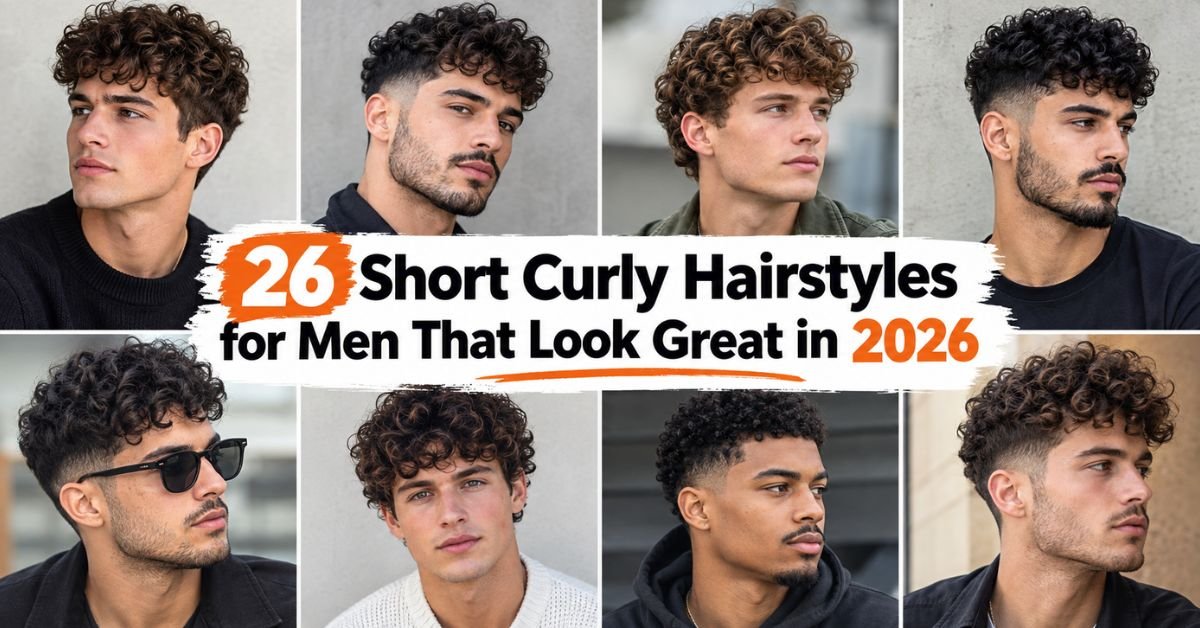
26 Short Curly Hairstyles for Men That Look Great in 2026
If you’ve got natural curls, you already know the struggle. You scroll through photo after photo of short curly hairstyles for men, and half of them look nothing like your hair type. A cut that looks sharp on tight coils falls flat on loose waves. A style built for thick, dense curls looks thin and patchy on fine hair. That mismatch is why so many men end up disappointed in the barber’s chair.
This guide fixes that problem. Below, you’ll find 25 of the best short curly haircuts for men in 2026, sorted by curl type and face shape, so you can find a cut that actually works on your hair instead of hair that isn’t yours. We’ll also cover what to say to your barber, how to style curls once you’re home, and the small mistakes that quietly wreck a great haircut. By the end, you’ll know exactly which of these curly hairstyles for men fits your texture, your face, and your daily routine.
Best Short Curly Hairstyles for Men by Curl Type
Curl type changes everything about a haircut. Loose waves move differently than tight coils, so the same scissor work won’t flatter both. Below, you’ll find 24 standout cuts, grouped loosely from looser textures to tighter ones, so you can jump straight to what suits your hair texture.
Each entry covers who it works for, what to tell your barber, and how often you’ll need a trim. Use this section as a menu, not a checklist. Pick one, screenshot it, and bring it to your next appointment.
Short Messy Curls
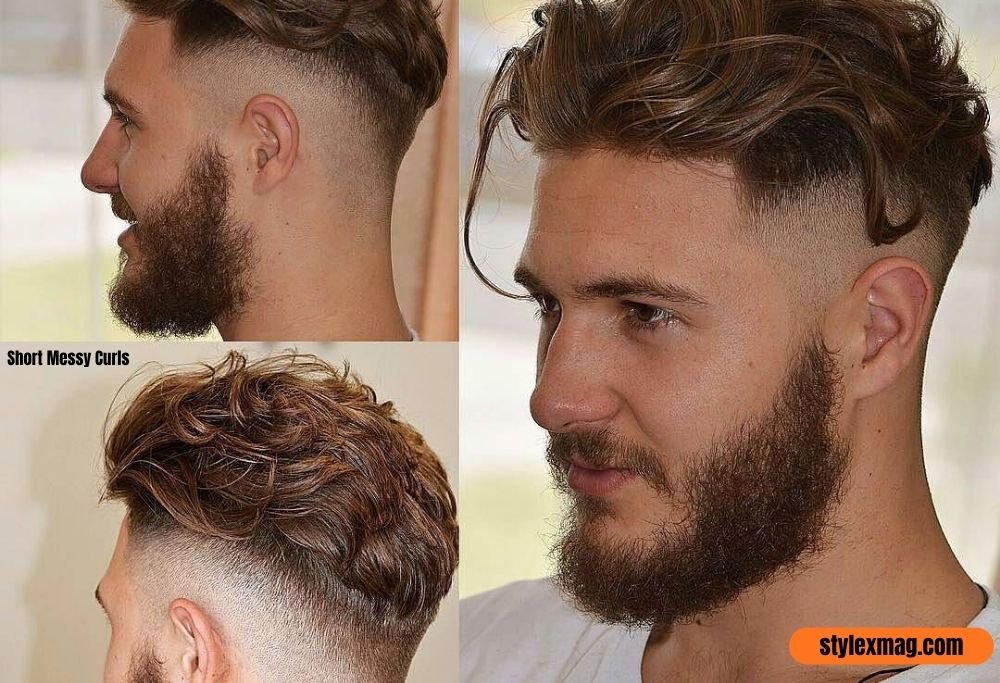
This is the low-effort, high-reward cut. Curls sit loose on top, tapered lightly at the sides, with zero rigid styling. It suits loose curls and wavy curly hair best, because the texture already has natural movement to work with. Ask your barber for a scissor cut on top that keeps the natural texture, paired with a light taper and no hard lines. Trim every five to six weeks. It flatters oval, round, and heart face shapes equally well.
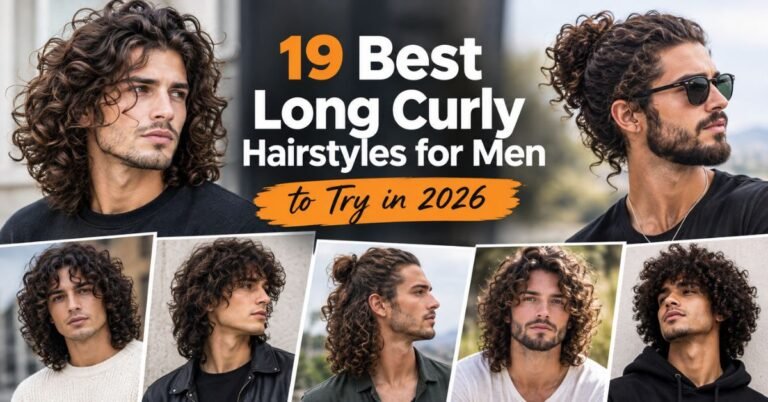
Read More: 19 Best Long Curly Hairstyles for Men to Try in 2026
Curly Fringe
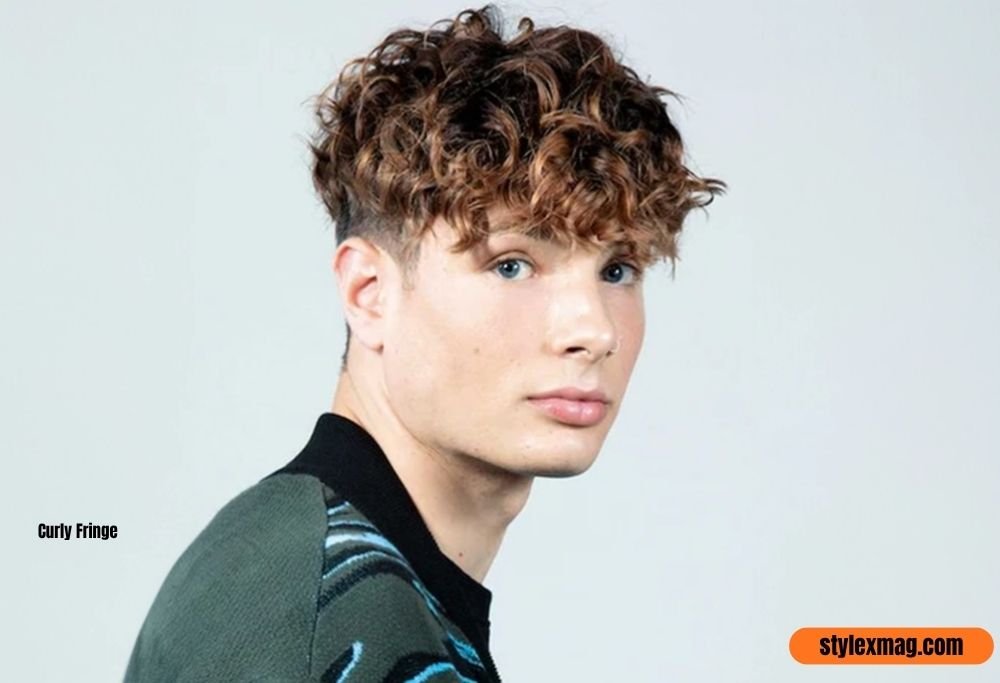
The curly fringe brings curls forward onto the forehead instead of pushing them back. It works because it frames the eyes and softens a wider forehead. This is one of the most searched short curly haircuts for men worldwide right now, thanks to its appearance across film and red-carpet looks. Tell your barber to leave two to three inches on top and taper the sides, then finish with a light curl cream for hold without stiffness. Best suited to oval and heart face shapes, with a trim every five to six weeks.
Curly Quiff
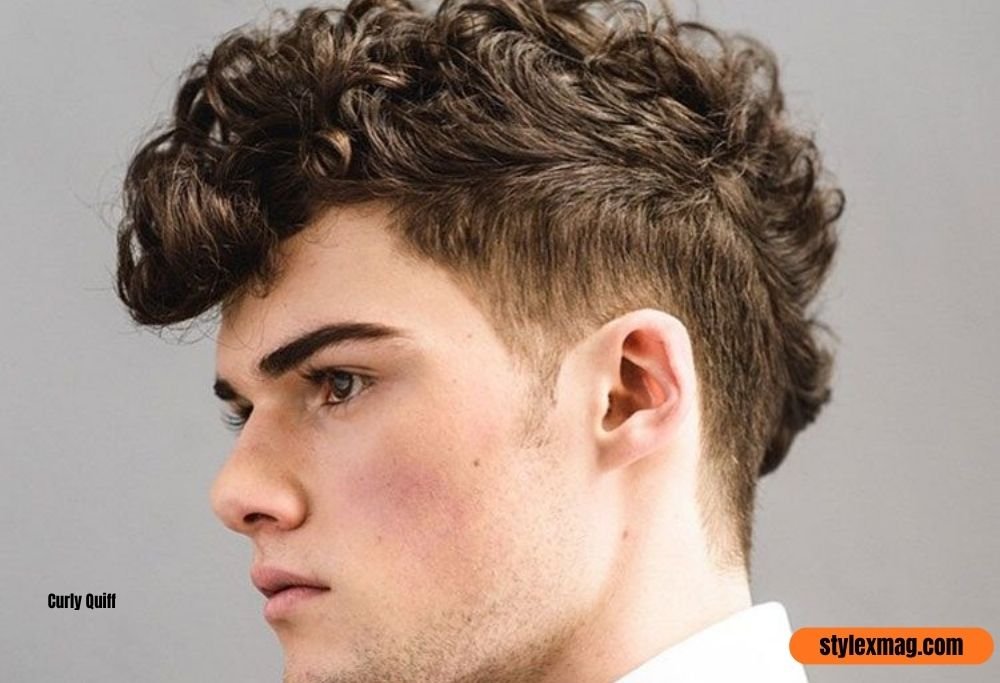
Height, structure, and volume define the curly quiff. Longer curls on top get lifted and styled backward, while the sides stay short and tapered. A medium-hold curl mousse, applied to damp hair and diffused upward, gives it real staying power. This cut elongates square and oval faces especially well, since the height balances out width. Trim every four to five weeks to keep the shape clean.
Curly Crop
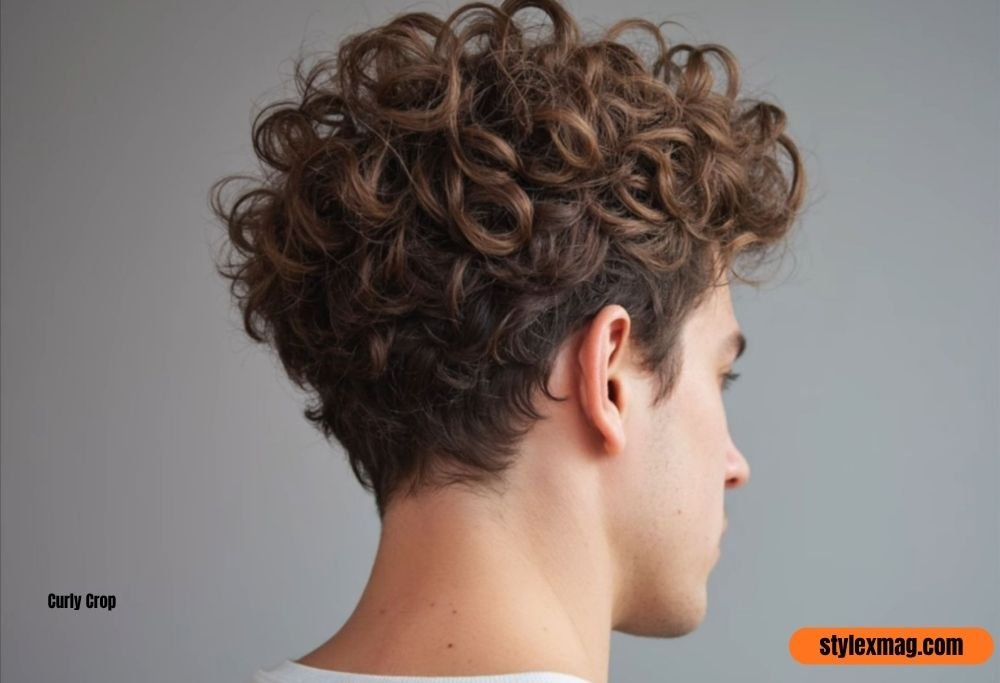
A no-fuss, all-purpose cut, the curly crop haircut keeps length even across the top with little to no fade. It’s forgiving between visits, which makes it one of the best low-maintenance curly hairstyles on this list. Ask for an even crop of about one and a half to two inches, with the curls left to fall naturally rather than styled into shape. It suits nearly every face shape and can stretch to a six to eight week trim schedule.
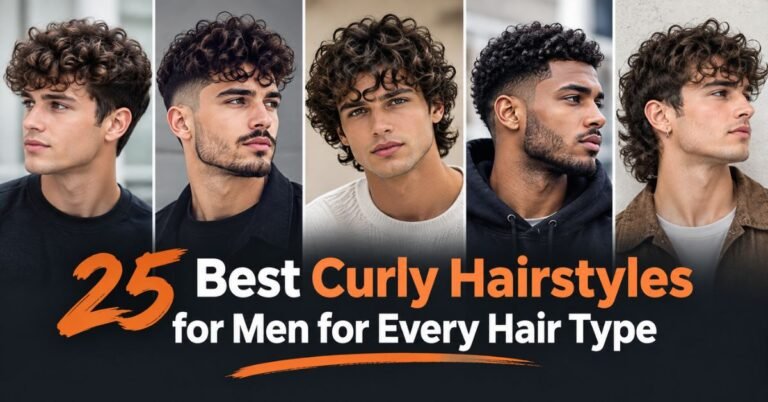
Read More: 25 Best Curly Hairstyles for Men for Every Hair Type
Curly Side Part
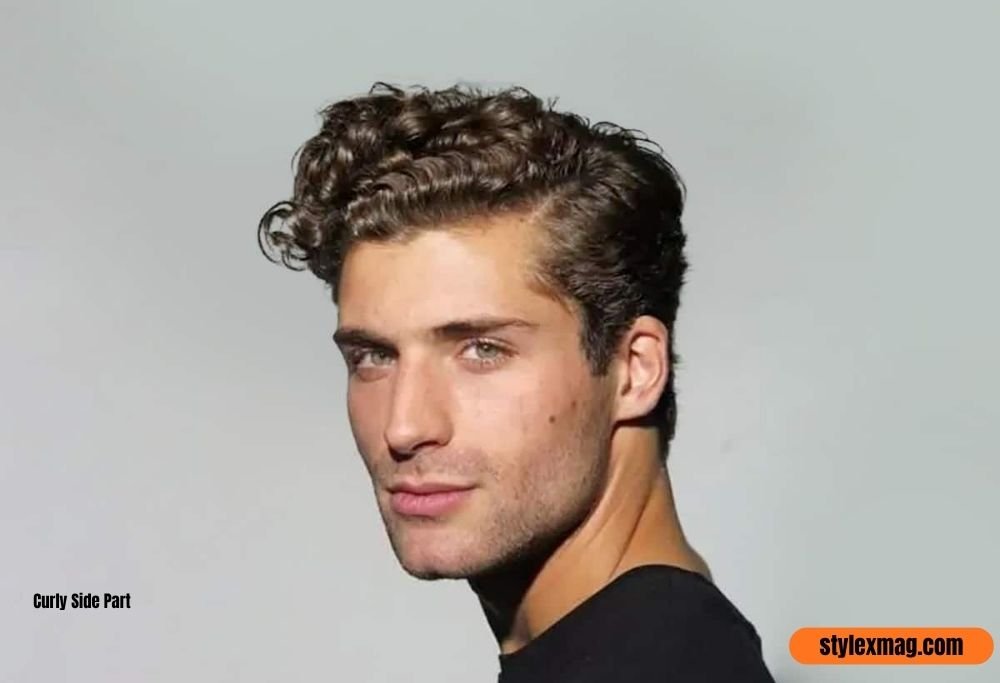
Adding a defined part to loose curls gives the whole look more structure. The curly side part works particularly well on oblong faces, since the diagonal line breaks up length and adds visual width. Have your barber part the hair on one side, keep enough length on top to hold the curl, and taper the sides without exposing skin. Trim every four to five weeks.
Textured Curly Crop
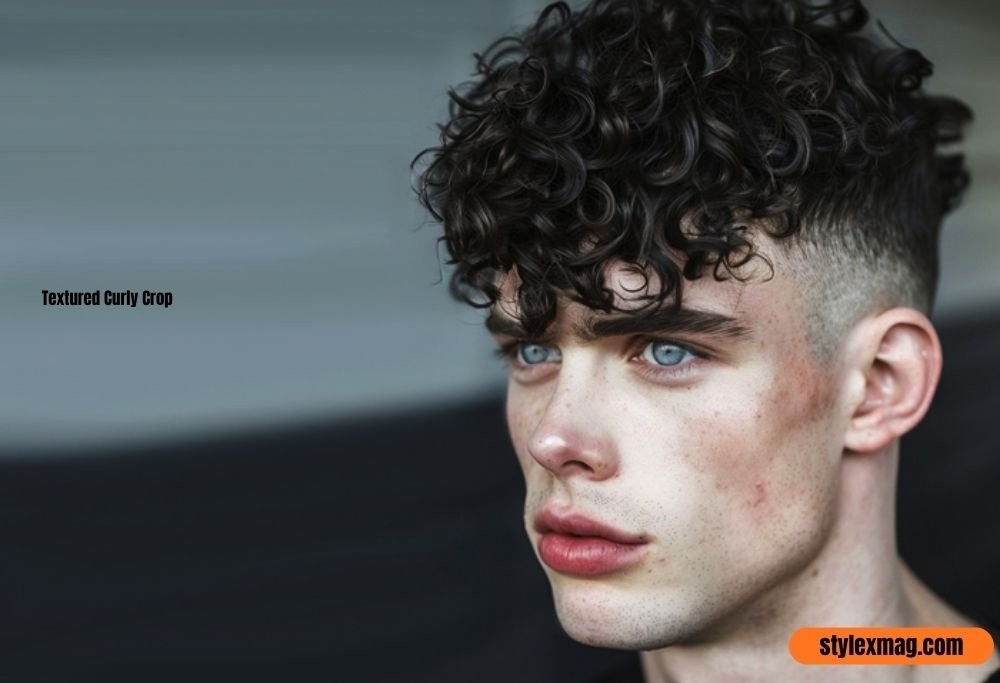
This is the most requested cut on the list. The curly textured crop keeps the sides short while layering the top just enough to show off natural curl definition. It suits medium curls especially well, avoiding the shapeless triangle effect that uneven growth can cause. Ask for a scissor-cut top around two inches, paired with a low fade, and request a dry cut so the barber can see exactly where each curl falls. Trim every four to five weeks.
Taper Fade with Curls
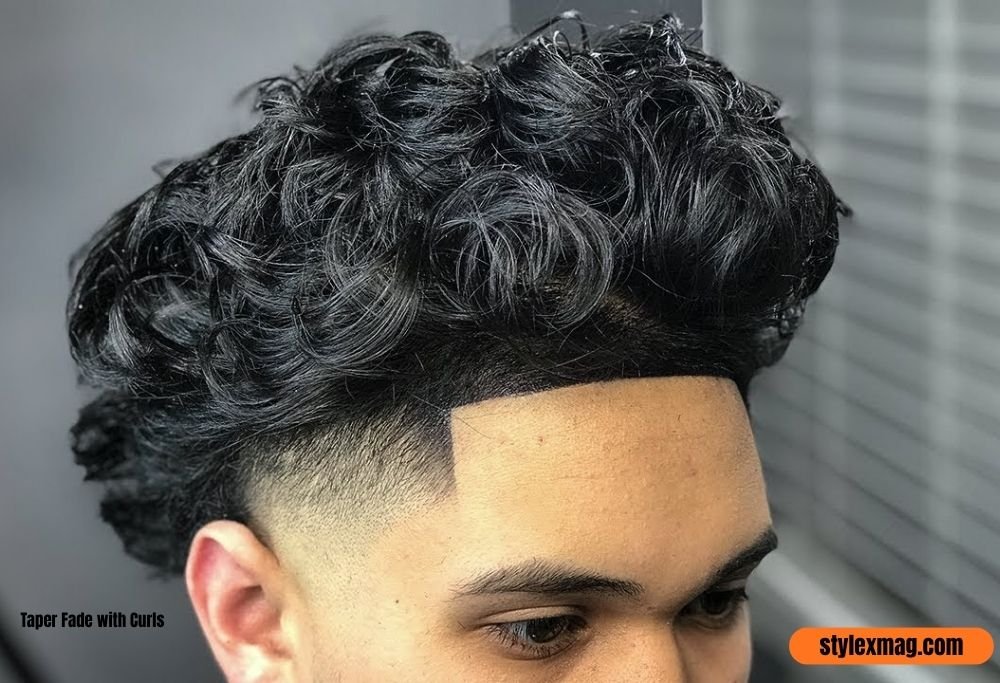
A gentler alternative to a hard fade, the curly taper fade blends gradually into the sides instead of creating sharp contrast. It suits softer curl patterns well, since the gradual blend doesn’t fight against looser texture. Ask for a taper starting just above the ear, with the top scissor-cut to follow the curl rather than thin it out. Pairs nicely with a trimmed beard. Trim every four to five weeks.
Low Fade with Curly Top
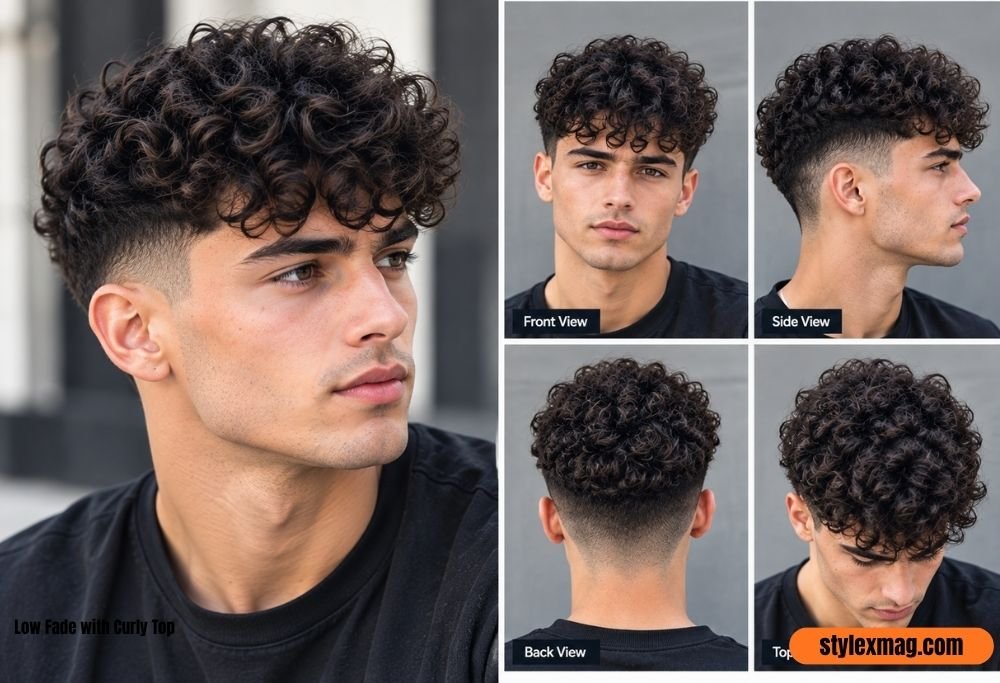
For men easing into fades for the first time, the low fade is the safest starting point. It begins just above the ear and blends into fuller curls up top, growing out cleanly without an awkward line. This is a strong pick for anyone who wants a short curly fade without too much contrast. Trim every three to four weeks to keep the blend sharp.
Mid Fade with Curly Top
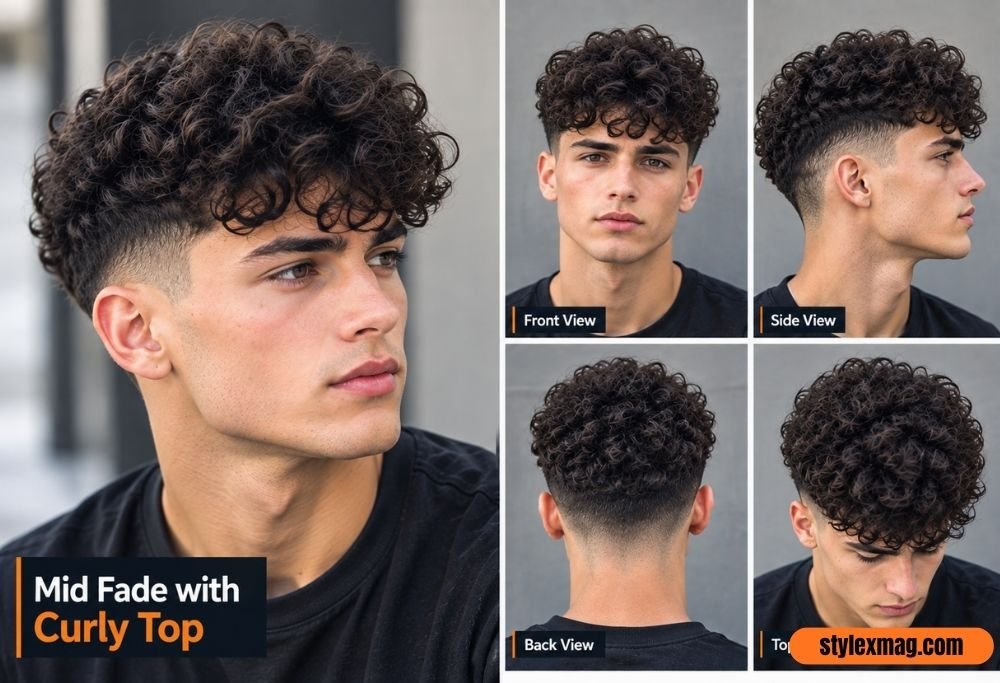
Starting at the temple, the mid fade removes more side weight than a low fade, which slims round faces nicely. Curls on top stay full for added height. It’s frequently the first recommendation barbers give round-faced men looking for a curly hair fade with real contrast. Trim every three to four weeks.
Drop Fade with Curls
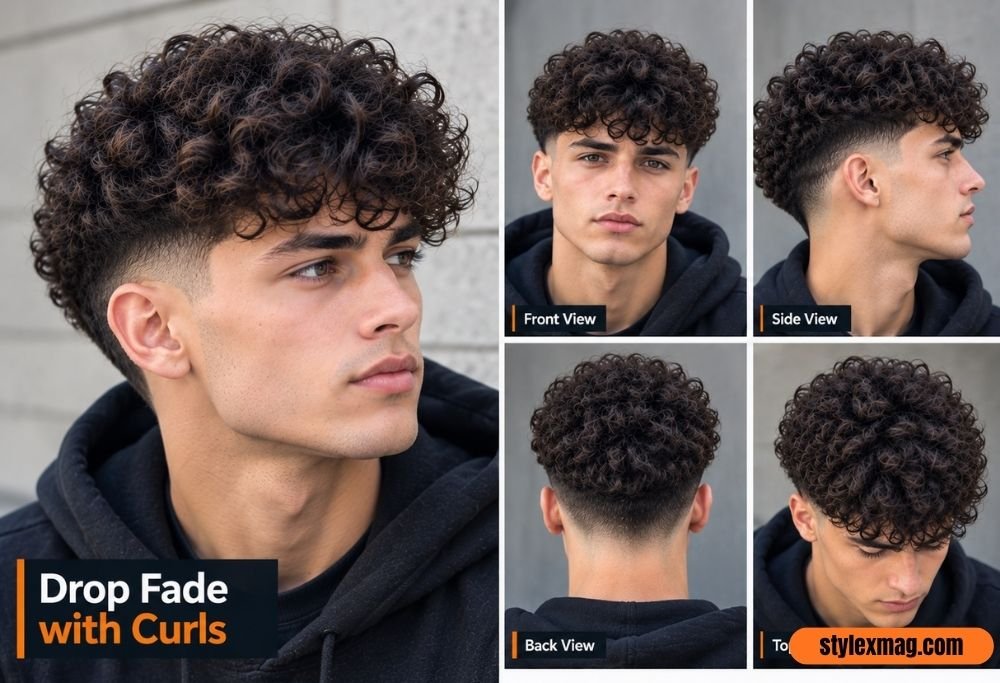
Instead of running in a straight line, the drop fade curves downward behind the ear, following the natural shape of the head. That curve softens the transition from skin to curl, which flatters square and oval faces alike. Ask your barber to follow the head’s shape closely, keeping curls full on top at around an inch and a half to two inches. Trim every three to four weeks.
Curly Undercut
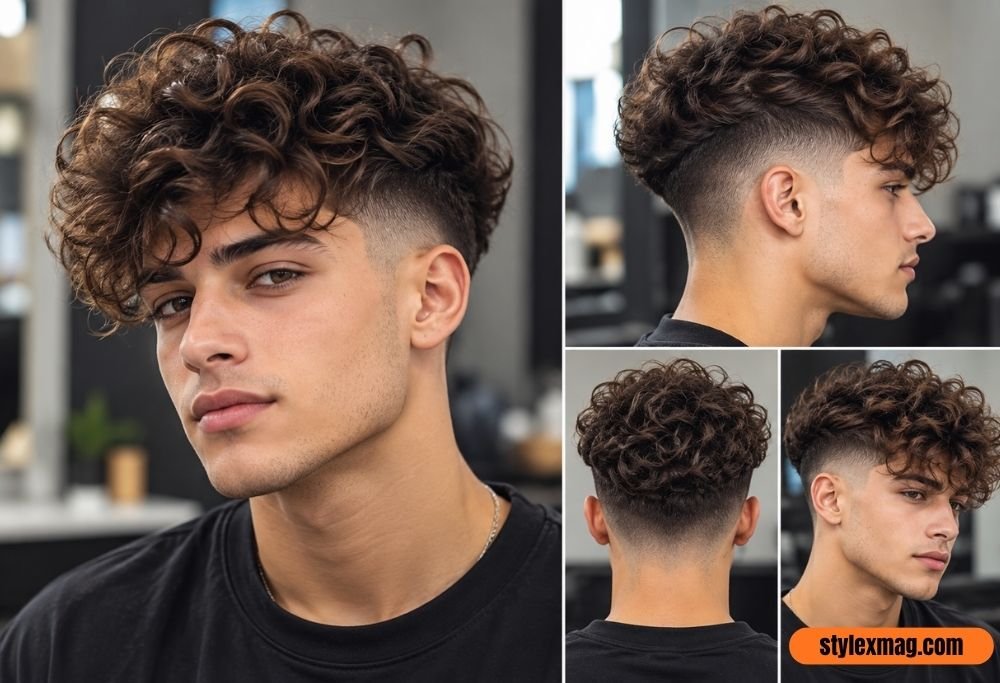
Sharp contrast defines the curly undercut. Sides get buzzed down with a clipper guard, while the top stays completely untouched and full. It’s the boldest non-fade option here, and it adds real width to oblong and square faces thanks to the crisp disconnection line. Regrowth shows fast, so plan on a trim every three to four weeks.
Textured Curly Faux Hawk
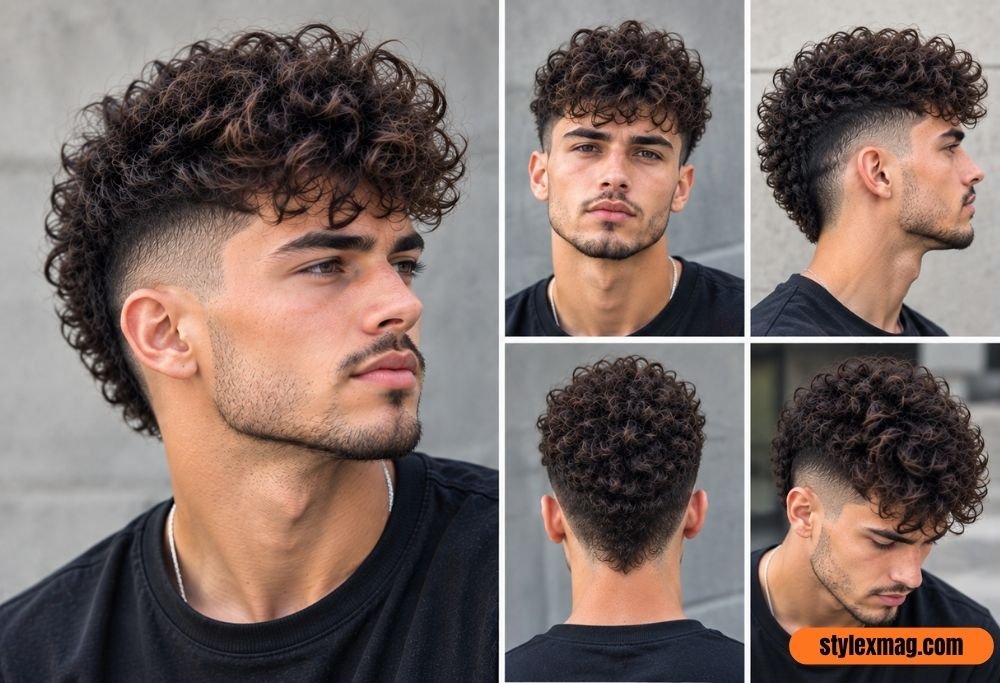
Volume runs down the center of the head in this cut, tapering narrower toward the back rather than shaving into a full mohawk. It suits diamond and oval faces, adding height without adding width. Ask for a mid to high fade on the sides with a center strip around three inches wide. Trim every three to four weeks.
Curly Caesar Cut
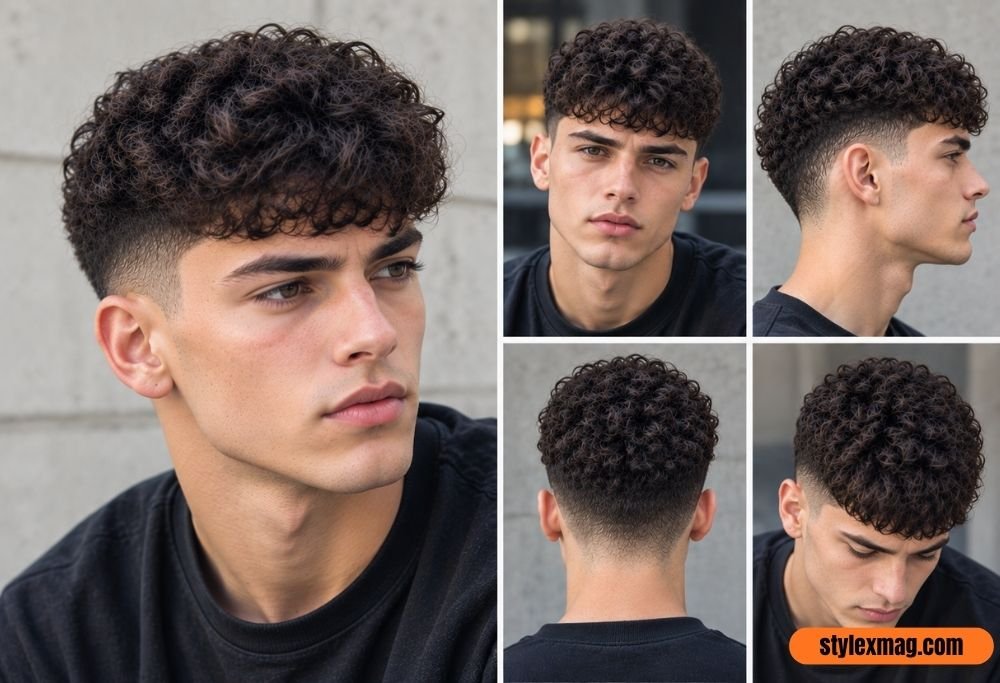
Short, even, and easy to maintain, the curly Caesar cut keeps length consistent across the top with a straight fringe line at the front. It’s one of the lowest-maintenance options besides a buzz cut, and it pairs well with an optional low fade for a more modern finish. Trim every three to four weeks.
Broccoli Cut
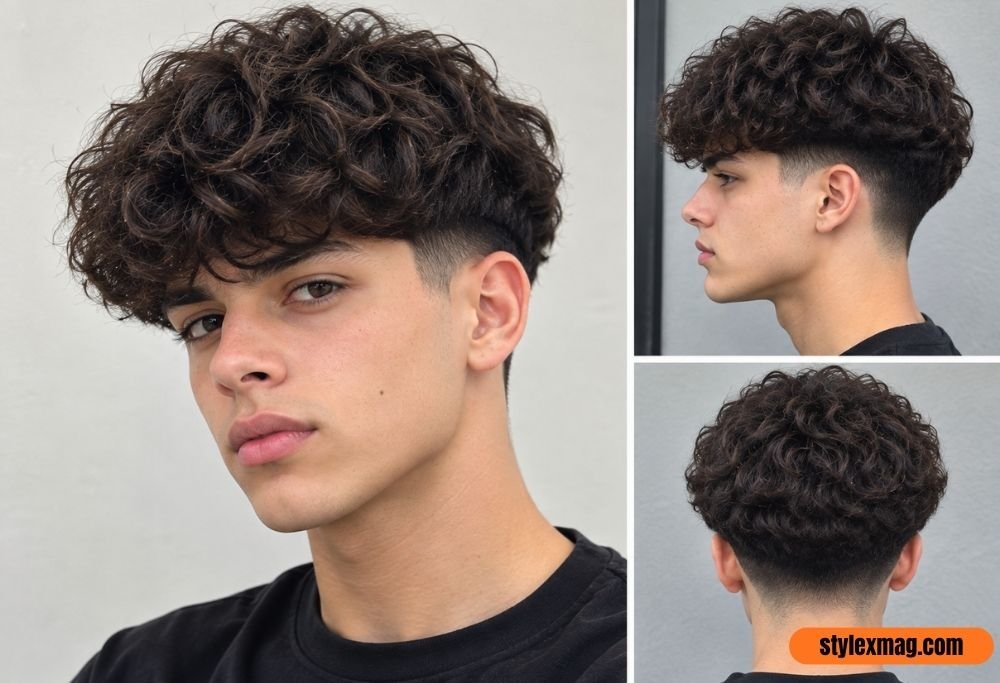
Named for its rounded, lifted shape, the broccoli cut needs dense, springy curls to hold its silhouette properly. It became a major trend a few seasons back and has stuck around. Ask for high volume on top using scissors rather than clippers, paired with a mid to high fade on the sides. Trim every three to four weeks.
Curly Mullet Fade
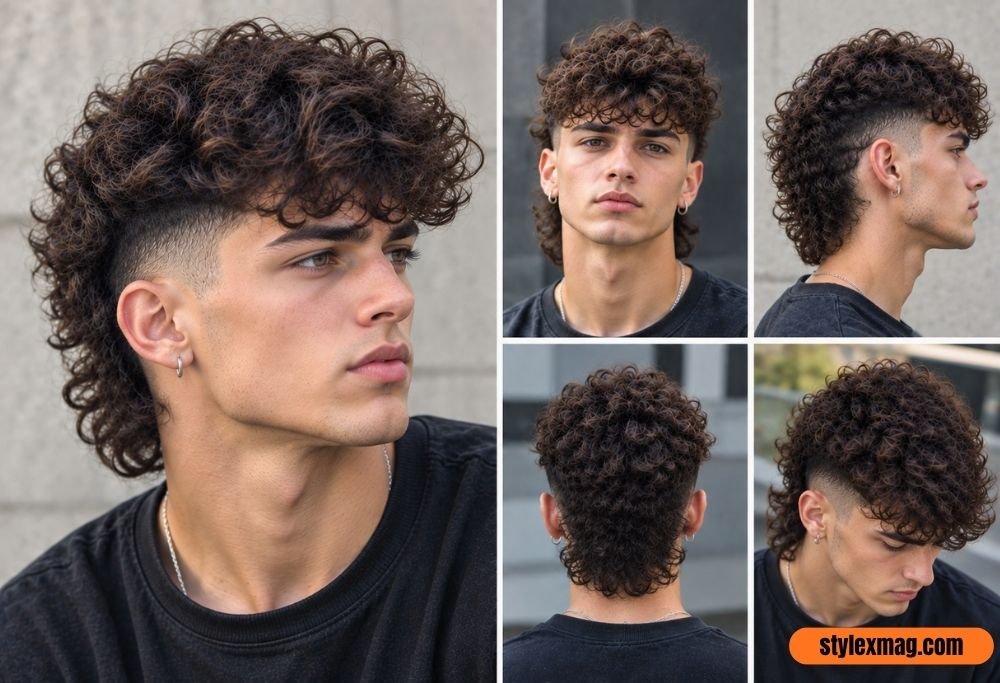
The curly mullet fade blends a playful, slightly longer back with a clean, faded side. It’s one of the more requested modern takes on curly haircuts for men, since it keeps the mullet’s personality without looking dated. Ask for a taper or mid fade on the sides, two inches on top, and roughly an inch of extra length at the back. This is easily the best pick if you want a curly mullet haircut for short hair that still reads as current rather than retro. Trim every five to six weeks, since the longer back buys extra time between visits.
High Fade with Defined Curls
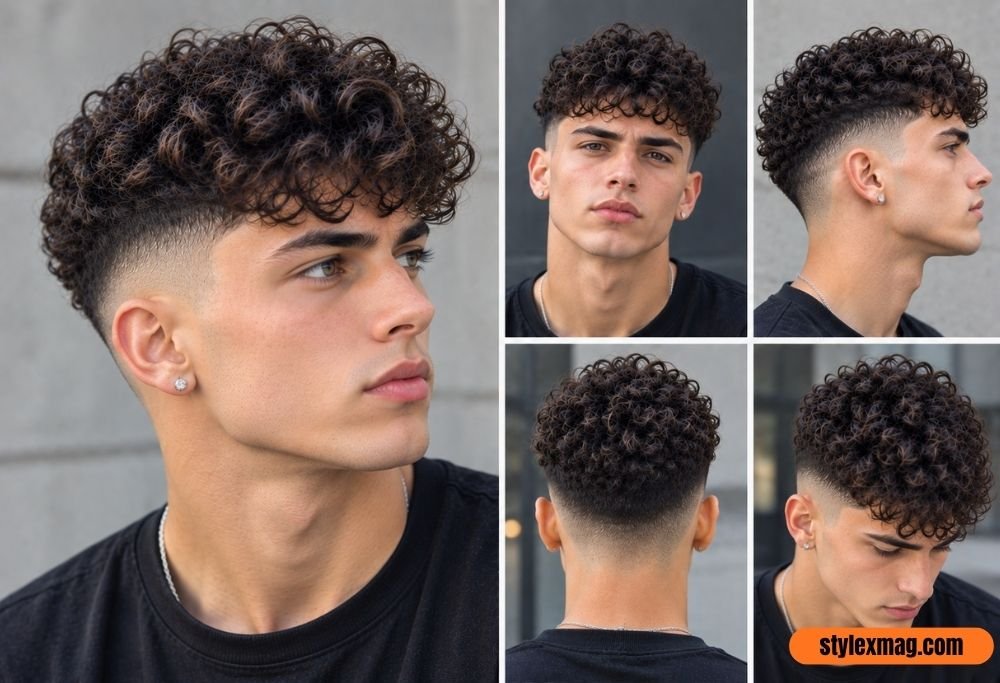
Skin-level fading starts above the temples here, drawing the eye upward toward curls left full on top. It suits round and oval faces particularly well. A curl sponge helps maximize definition on tighter patterns. Ask for skin at the temples, blended to around two inches of curl on top, with a sharp hairline. Trim every two to three weeks, since high fades show regrowth fastest.
Burst Fade with Curls
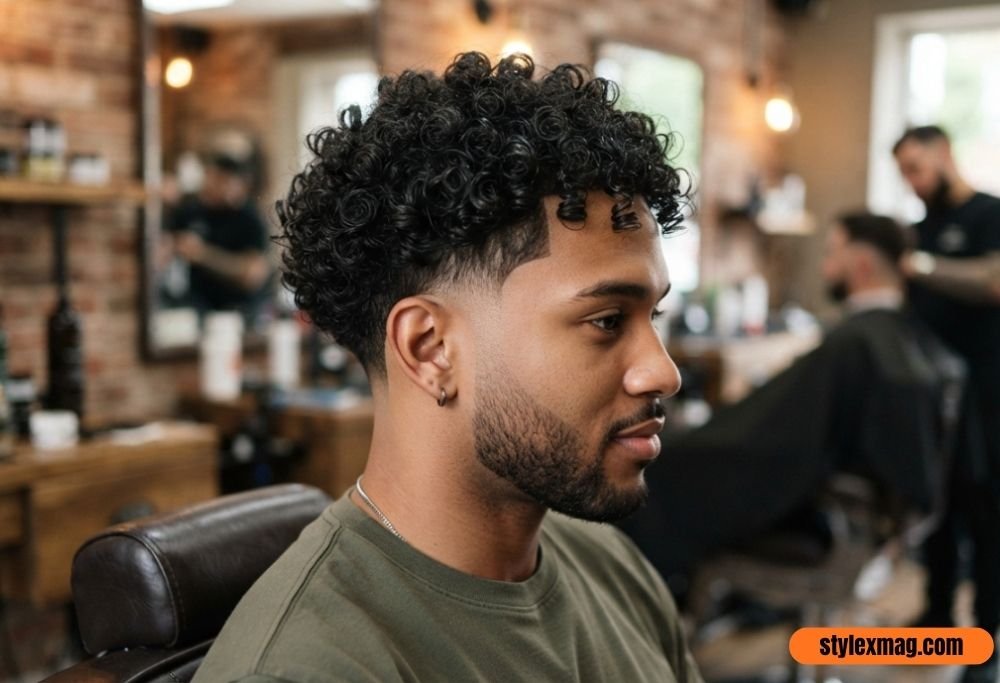
Curving around the ear in a semicircle, the burst fade leaves more length at the back than a standard straight fade. On curly hair, that curve follows the natural growth pattern instead of cutting against it. Ask for fullness kept at the top and back, with the fade curving rather than dropping straight down. Trim every three to four weeks.
Temple Fade with Line-Up
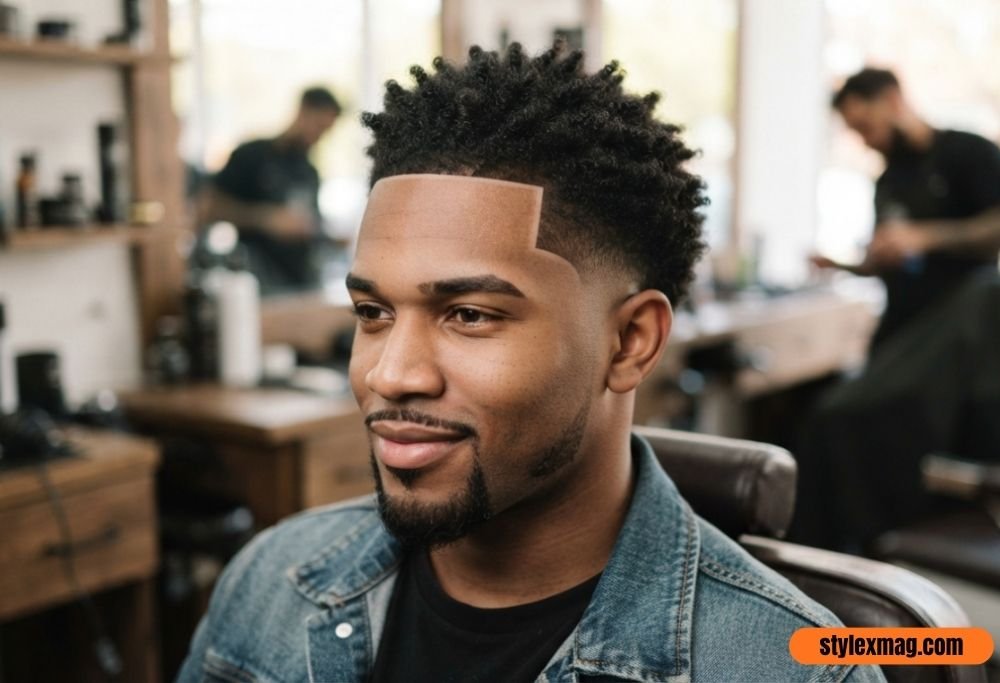
This cut fades the temples to skin while keeping the rest of the hair at a consistent short length, framed by a crisp line-up across the forehead. On tighter curl patterns, the line-up often does more visual work than the fade itself. Trim every two to three weeks to keep the edges sharp.
Skin Fade with Curly Top
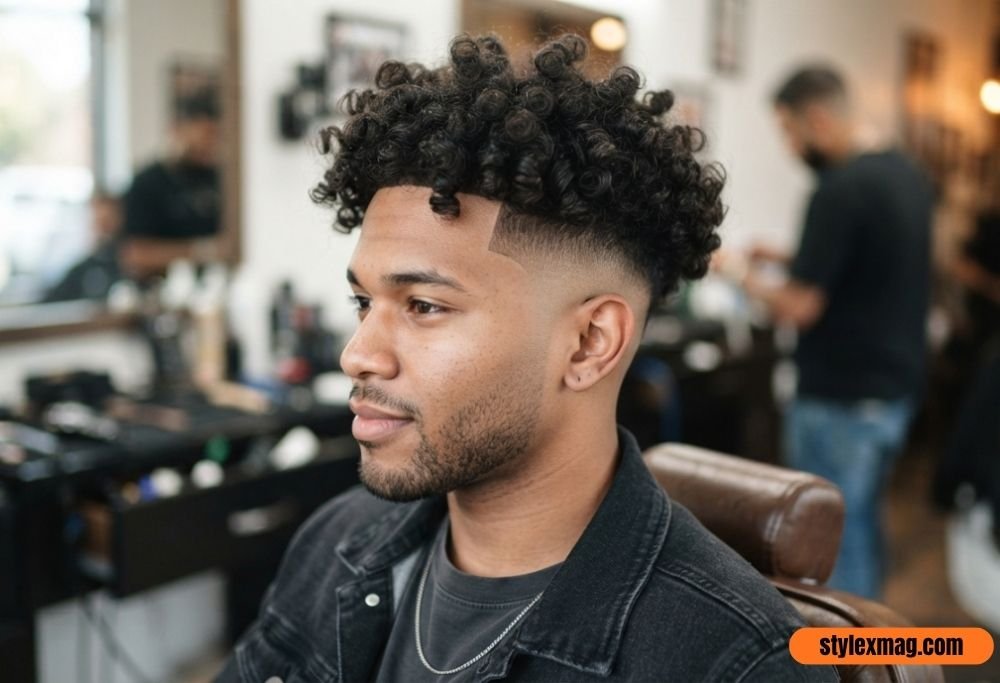
Maximum contrast comes from this pairing. Sides fade all the way to skin, putting full visual weight on the curls up top, so curl definition needs to hold up under scrutiny. Ask for a zero guard at the bottom and request the top be cut dry, so your barber can see the true curl pattern. Trim every two weeks, since skin fades grow out the fastest of any style here.
Curly Mohawk Fade
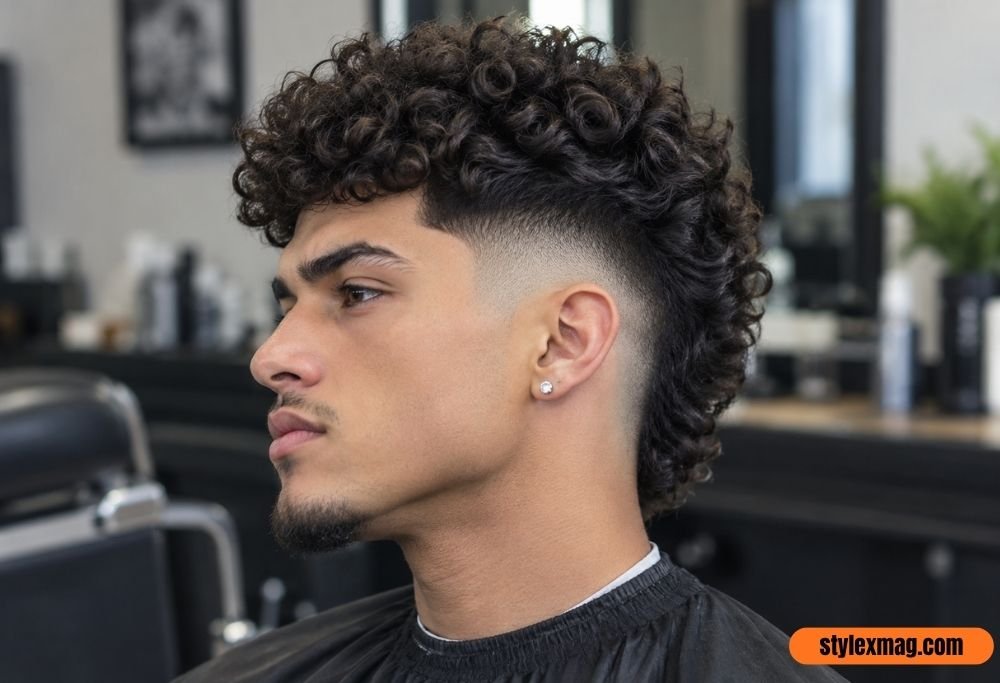
Bolder than a faux hawk and narrower at the sides, this cut keeps a strip of tight curls running down the center with high-faded sides. It holds its vertical shape best on tighter curl patterns, since looser curls tend to flop sideways instead of standing up. Trim every two to three weeks.
Short Curly Afro
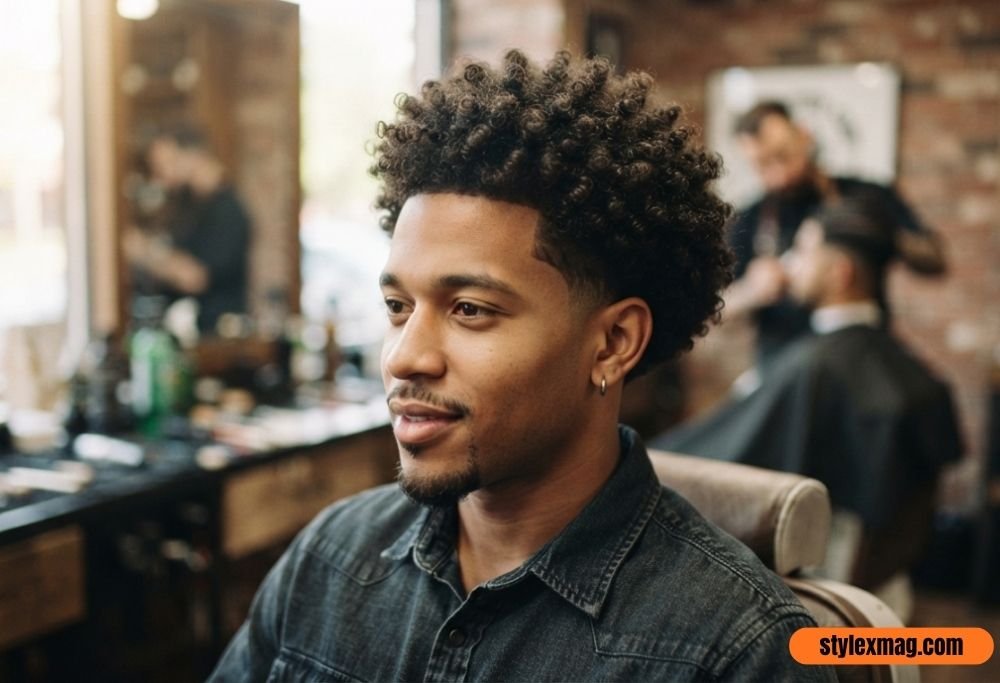
The short curly afro remains the defining cut for tightly coiled hair, and it’s also one of the most frequently misjudged, since it depends heavily on consistent moisture to hold shape. Ask for an even shape all around with a clean edge-up at the hairline, picked out for volume rather than pressed flat. A daily leave-in conditioner is essential here, even on non-wash days. Trim every three to four weeks.
Curly High-Top Fade
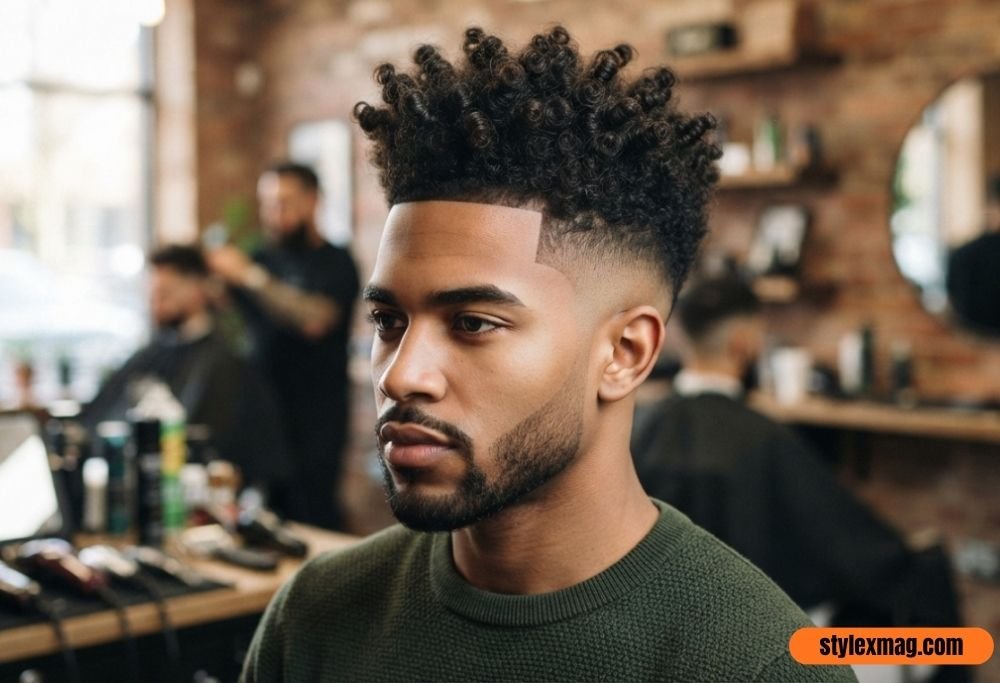
Delivering serious vertical height, this cut faces sides down to skin while shaping the top into a flat or rounded high-top. It’s the strongest face-elongating option on this list, making it ideal for round faces. A twist cream plus a curl sponge helps define coils before shaping. Trim every two to three weeks.
Curly Top with Hair Design
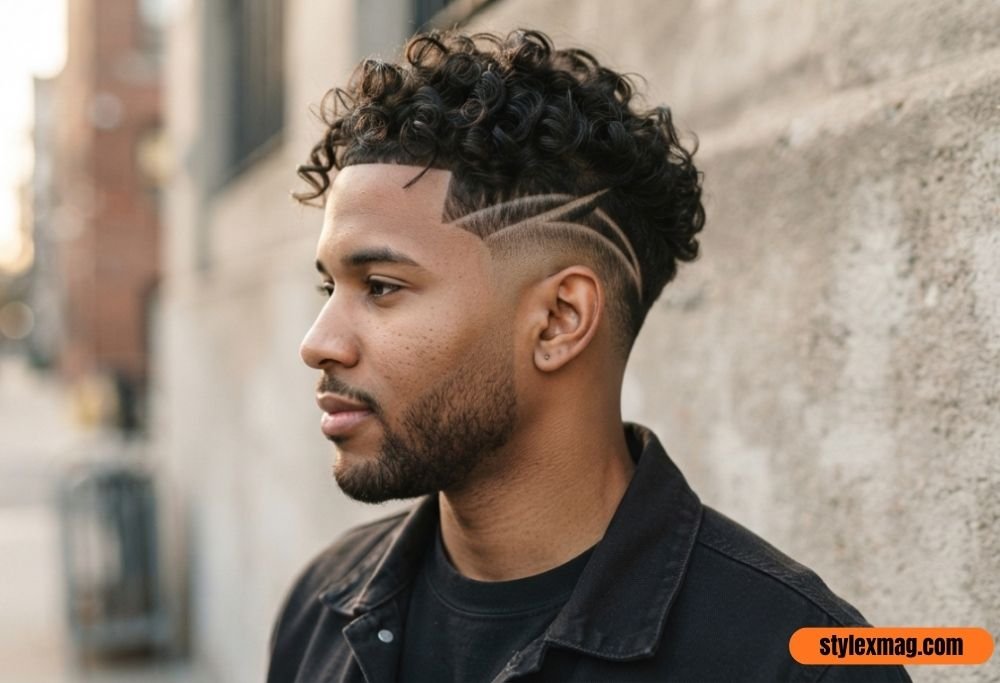
A mid or high fade gets a personalized upgrade here, with a shaved design added along the fade line or temples. Geometric lines and curved patterns are the most common choices. Designs grow out within one to two weeks, so plan on a full trim every two to three weeks to keep the detail sharp.
Curly Buzz Cut
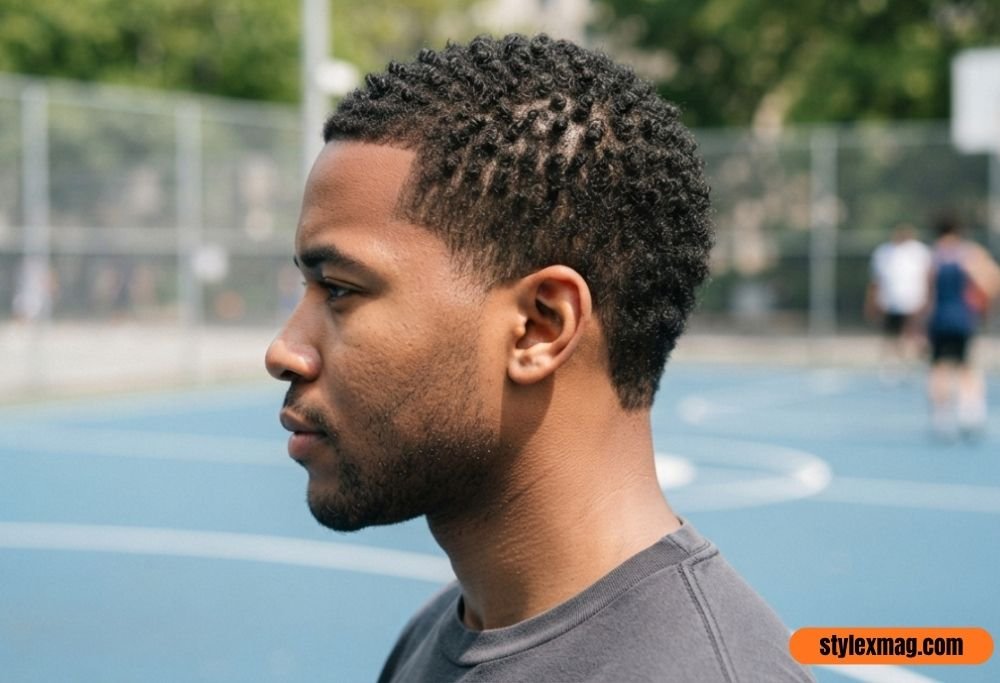
The lowest-maintenance option on the entire list, the curly buzz cut clips hair down to a uniform short length while still showing off curl texture underneath, even at a quarter inch. Add a skin fade or line-up for extra polish. A light moisturizing oil keeps the scalp from drying out. Trim every two weeks to keep the length consistent.
How to Choose Short Curly Hairstyles for Your Curl Type
Not all curls behave the same way, which is why “curly hair” isn’t really one category. Your curl pattern determines how a cut holds shape, how fast it grows out looking messy, and which products actually work. Hair typing systems generally run from 2A (barely wavy) through 4C (tightly coiled), and knowing roughly where you sit changes which of the cuts above will flatter you most.
Below, we break the whole spectrum into four practical groups, so you can match your hair type to a cut without guessing.
Short Curly Hairstyles for Wavy Hair
Wavy hair, typically type 2A to 2C, has bend without much true coil. This is where short hairstyles for natural curls lean softest, since the texture holds shape naturally without needing heavy fades. Short messy curls, the curly side part, and the curly crop all work well here. Skip aggressive high-contrast fades, since they tend to fight against gentle wave patterns instead of complementing them. A light sea salt spray on damp hair, followed by air drying, is usually all the styling this texture needs.
Short Curly Hairstyles for Loose Curls
Type 3A hair sits between waves and fully defined curls, with enough spring to hold shape but still enough looseness to fall softly. The curly quiff, curly fringe, and taper fade with curls all flatter this texture. A curl cream works better here than heavier gel, since it defines curls without weighing them down. This group has some of the widest cut flexibility on the whole list.
Short Curly Hairstyles for Medium Curls
Medium curls, roughly 3B to 3C, hold volume on their own and pair especially well with fades. This is where short curly hairstyles with fade really shine, since the density creates enough contrast against a low, mid, or high fade to look sharp rather than flat. The textured curly crop, curly undercut, and curly mullet fade all suit this texture range. Curl definition tends to last longer between cuts here than with looser textures.
Short Curly Hairstyles for Tight Curls and Coils
Tight coils, type 4A through 4C, carry the most shrinkage of any texture, and understanding that changes what “short” actually means once the hair dries. A cut that looks two inches long wet can settle much shorter once fully dry, sometimes losing more than half its stretched length.
That shrinkage happens because coiled hair curls back toward the scalp as moisture leaves it, and tighter follicle shapes produce a more dramatic pullback than looser ones. Research published by Cloete, Khumalo, and Ngoepe in the Proceedings of the Royal Society A explored how follicle geometry shapes curl formation, helping explain why coily hair behaves so differently from looser waves. The short curly afro, curly buzz cut, and curly high-top fade all suit this texture best, and all three depend heavily on daily hair hydration to hold their shape.
How to Choose the Right Short Curly Haircut for Your Face Shape
Curl type gets you halfway to the right cut. Face shape finishes the job. The same style can look completely different depending on whether your face is round, oval, square, or long, since each shape needs a slightly different balance of height and width to look proportional.
Oval faces have the easiest time here, since nearly every cut on this list works without much adjustment. The other three shapes need a bit more thought, which is where the sections below come in.
Best Short Curly Cuts for Round Faces
A round face benefits from height and reduced width at the sides. The curly quiff, mid fade with curly top, and curly high-top fade all pull the eye upward, which makes the face read as longer and more defined. Avoid flat, one-length cuts, since they widen a round face rather than balancing it.
Best Short Curly Cuts for Oval Faces
An oval face is the most balanced shape, so almost any cut on this list will work well. The curly textured crop and short messy curls are strong starting points if you want a low-risk, high-reward choice.
Best Short Curly Cuts for Square Faces
Strong jawlines pair best with softer curl texture on top rather than harsh, competing lines. The curly quiff, low fade with curly top, and drop fade with curls all add enough interest without fighting the natural angles of a square face.
Best Short Curly Cuts for Long Faces
A longer face benefits from added width rather than added height. The curly side part and curly undercut both introduce horizontal lines that shorten the face’s overall proportions, making them the strongest picks in this group.
What to Tell Your Barber When Getting a Short Curly Haircut
Most barbers default to cutting hair wet, which works fine on straight hair but hides the real shape of curls until they dry. Asking for a dry cut, or at least a dry check before you leave the chair, is the single most useful request you can make.
The table below covers the key phrases worth bringing into your next appointment.
| What to Say | Why It Matters |
| “Cut with my curl pattern, not against it.” | Keeps layers working with the curl instead of creating frizz |
| “I want shape, not just shorter.” | Curly hair needs sculpting in specific spots, not even trimming |
| “No thinning shears, please.” | Thinning shears create uneven, frizzy sections on curly hair |
| “Leave it longer than you think I need.” | Builds in room for shrinkage once the hair dries |
| “Show me the shape dry before I leave.” | Confirms the final result before you walk out the door |
Bringing a reference photo that matches your actual curl type, not just a style you like the look of, also helps enormously. A photo of a 3A quiff won’t translate the same way onto 4B coils, even if the barber is skilled.
Why Short Curly Haircuts Look Different After Leaving the Barber
Curly hair shrinks as it dries, and the tighter the curl, the bigger that change is. A cut that looked perfectly wet in the mirror can look noticeably shorter, and sometimes shaped differently, once it fully dries at home the next morning.
The table below gives a rough idea of how much shrinkage to expect, based on common curly hair type classifications.
| Curl Type | Approximate Shrinkage |
| Type 2B–2C (waves) | 10–15% |
| Type 3A–3B (medium curls) | 20–30% |
| Type 3C (tight curls) | 30–45% |
| Type 4A–4C (coils) | 50–70% |
If your barber measures and cuts your hair while it’s stretched wet, you can lose half an inch or more of visible length once it dries. Asking for a dry check before you leave solves this problem before it becomes a surprise.
Common Short Curly Haircut Mistakes to Avoid
A few small missteps quietly ruin otherwise great short curly hair fade results. The most common one is letting a barber use thinning shears on curly hair, which creates wispy, uneven sections that frizz out within days. Overwashing is another frequent problem, since curly hair relies on natural oils to stay defined, and stripping them too often leads to dryness and frizz.
Choosing a style based on a photo of a different curl pattern than your own causes disappointment more often than any other mistake on this list. What looks sharp on tight coils can look shapeless on loose waves, and the reverse is just as true.
Skipping regular line-up maintenance on fade styles is another common slip, since even a great fade looks unfinished with a blurry hairline. Finally, going into an appointment without any curl-specific vocabulary, like curl type or curl pattern, often leads to a generic cut that ignores your hair’s actual behavior.
How to Style and Maintain Short Curly Hair
A strong curly hair styling routine doesn’t need to be complicated. Wash with a sulfate-free shampoo two to three times a week, apply a leave-in conditioner after every wash, and match your product choice to your specific cut rather than just your hair type in general.
Daily upkeep matters just as much as the products themselves. Dampen curls each morning with water or a curl refresher spray, then work product through using fingers or a wide-tooth comb rather than a brush, which can break up curl definition.
Air dry whenever you have the time, and diffuse on low heat when you’re in a hurry. A satin or silk pillowcase also helps, since it reduces the overnight friction that causes frizz control to fail by morning.
Best Products for Short Curly Hair
Different curly hair products suit different styles, and picking the wrong one often undoes a good haircut. The table below breaks down which product fits which type of cut.
| Product | Best For | Effect |
| Curl cream | Textured crop, curly fringe, low fade | Holds moisture and curl shape without stiffness |
| Matte clay | Faux hawk, undercut, curly quiff | Strong hold and texture with no shine |
| Sea salt spray | Messy curls, lived-in crop, mullet fade | Adds grit and natural separation |
| Curl mousse | Fine curly hair, quiff, high-top fade | Lifts hair for hair volume without weight |
| Hair gel | Short afro, buzz cut, temple fade | Strong hold for tight coils, even in humidity |
How Often Should You Trim Short Curly Hair?
Trim frequency depends heavily on fade height. Skin fades and high fades need attention every two weeks, since regrowth shows fastest right at the hairline. Low fades and taper fades can usually stretch to three or four weeks. Fade-free cuts like the curly crop or Caesar cut are the most forgiving, often lasting five to eight weeks between visits without looking unkempt.
How to Keep Short Curls Defined Between Cuts
On day two, skip the shampoo entirely. A light mist of water mixed with a small amount of leave-in conditioner, scrunched upward through the curls, refreshes definition without stripping the previous day’s natural oils.
Letting curls air dry for five to ten minutes after this refresh usually gives the cleanest result. Co-washing, meaning conditioning without shampooing, also helps on non-wash days, particularly for 3B curls and tighter, since it adds moisture without disturbing natural oil balance.
FAQ’s
What is the best haircut for short curly hair men?
A curly taper fade, textured crop, or low fade works well for short curly hair.
Choose the cut based on your curl pattern, hair density, and face shape.
What is the Gen Z boy haircut called?
The Gen Z haircut is often called a textured crop, fringe, or modern mullet.
Popular versions feature textured layers, faded sides, and a natural, messy finish.
What is type 3 curly hair for men?
Type 3 curly hair forms visible, springy curls ranging from loose ringlets to tighter coils.
It includes Type 3A, 3B, and 3C, with each pattern varying in curl size and definition.
Is curly hair on a man attractive?
Yes, curly hair can look very attractive on men when it is well-shaped and suits the face.
A good haircut that enhances natural curl definition can create a stylish, confident look.
Final Thoughts
Short curly hairstyles for men offer the perfect balance of style, texture, and easy maintenance. From curly crops and quiffs to taper fades, textured fringes, and modern mullets, there is a look for every curl type and face shape.
The key is choosing a haircut that works with your natural curl pattern rather than fighting it. Keep your curls moisturized, use the right styling products, and get regular trims to maintain definition and shape. With the right cut and routine, short curly hair can look sharp, modern, and effortlessly stylish.
StyleXMag Editorial Team shares the latest haircut and hairstyle ideas, from modern fades and comb overs to curly, long, slick-back, and face-shape styles. Our goal is to make finding your next look simple, useful, and inspiring.