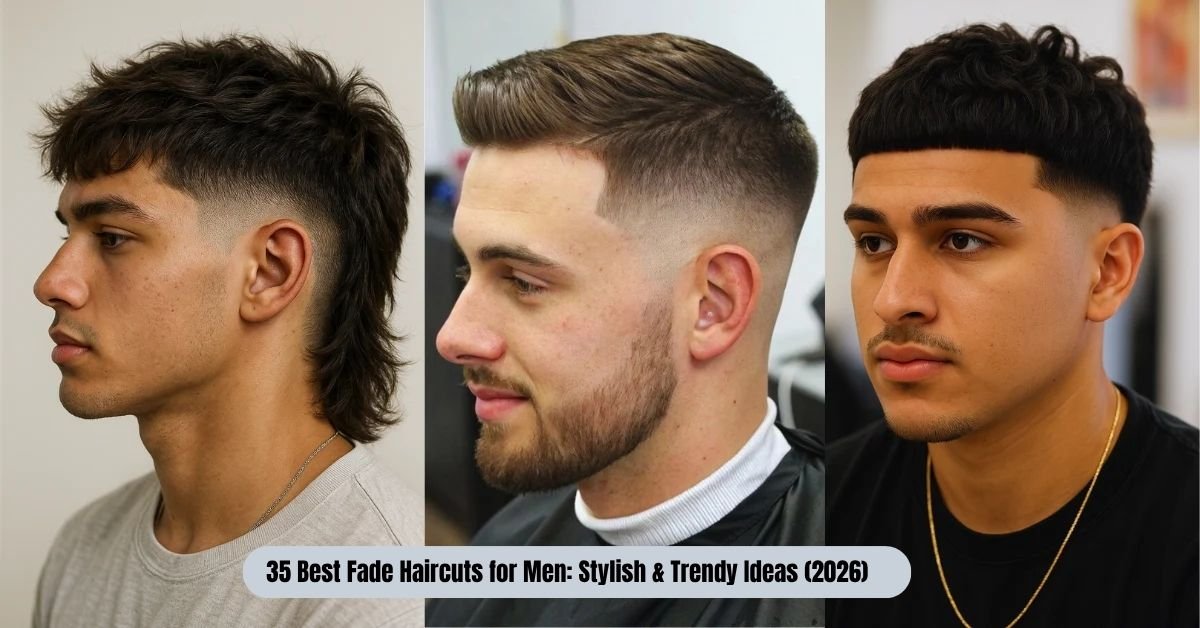
35 Best Fade Haircuts for Men: Stylish & Trendy Ideas (2026)
Walk into any barbershop and ask for “a fade.” Watch the barber pause. That pause happens because a fade haircut for men isn’t one style. It’s a whole family of cuts, and each one looks different in the mirror.
This guide breaks down every version of the fade hairstyle, so you know exactly what to ask for next time. Fade Haircuts for Men You’ll learn the different types of fades, how to pick the right one for your face and lifestyle, and how to talk to your barber without confusion. No guesswork. Just a clear map of the modern fade haircut and everything that falls under it.
What Is a Fade Haircut?
A fade is a cutting technique. The hair on the sides and back gradually shortens, moving from long hair near the top down to almost nothing near the base. There’s no hard line anywhere. Instead, you get a gradual transition that barbers call a seamless blend. Clippers do most of the work, moving through shorter and shorter guard sizes as the barber works down the head.
Every fade haircut styles guide will tell you the same thing: height, closeness, and shape define the cut. Fade Haircuts for Men Height decides where the fade starts. Closeness decides how short it finishes, whether that’s bare skin or just a whisper of stubble. Shape decides the path the line follows around your ear and neckline. Mix these three variables, and you get any of the popular fade haircuts barbers cut today. It’s less a single style and more a system, which is why the options can feel endless at first glance.
What Are the Main Types of Fade Haircuts?
People search for men’s fade haircuts expecting one simple answer, but the truth is more interesting. Some fades get their name from where they start on the head. Others get their name from how close they cut, or from the shape the line traces near your ear. All of them count as fades. Fade Haircuts for Men All of them show up on any solid list of best fade haircuts for men.
Think of these seven as building blocks rather than seven totally separate haircuts. Fade Haircuts for Men A barber can combine a low starting point with a bald finish and a curved shape, and that single cut has three names layered into it. Once you understand each piece, choosing (and asking for) the right combination gets a lot easier.
Low Fade
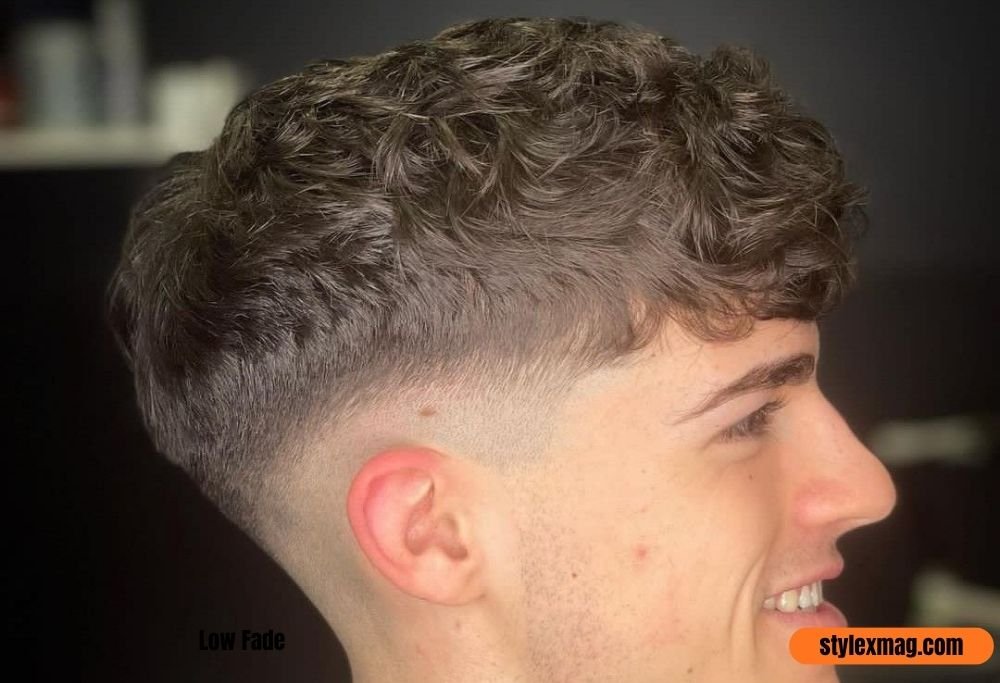
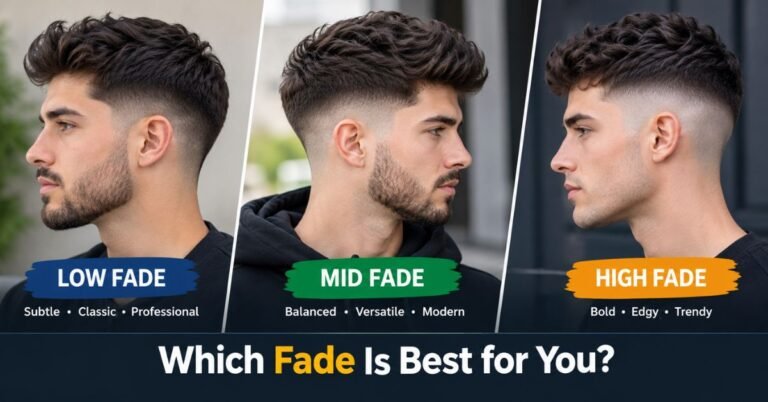
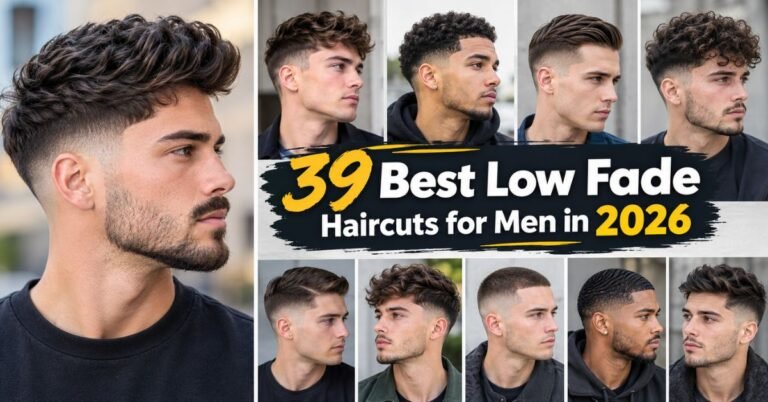
The low fade haircut starts just above your ear, which makes it the most subtle option on this list. Fade Haircuts for Men Because so little skin shows, growth blends into the existing length instead of creating an obvious line. That’s good news if you don’t love frequent barbershop haircut visits. Most guys who want a clean-cut look without much upkeep land here first, and it works with nearly any face shape or hair texture you’ve got.
Read More: 40+ Best Korean Hairstyles for Men to Try in 2026
Mid Fade
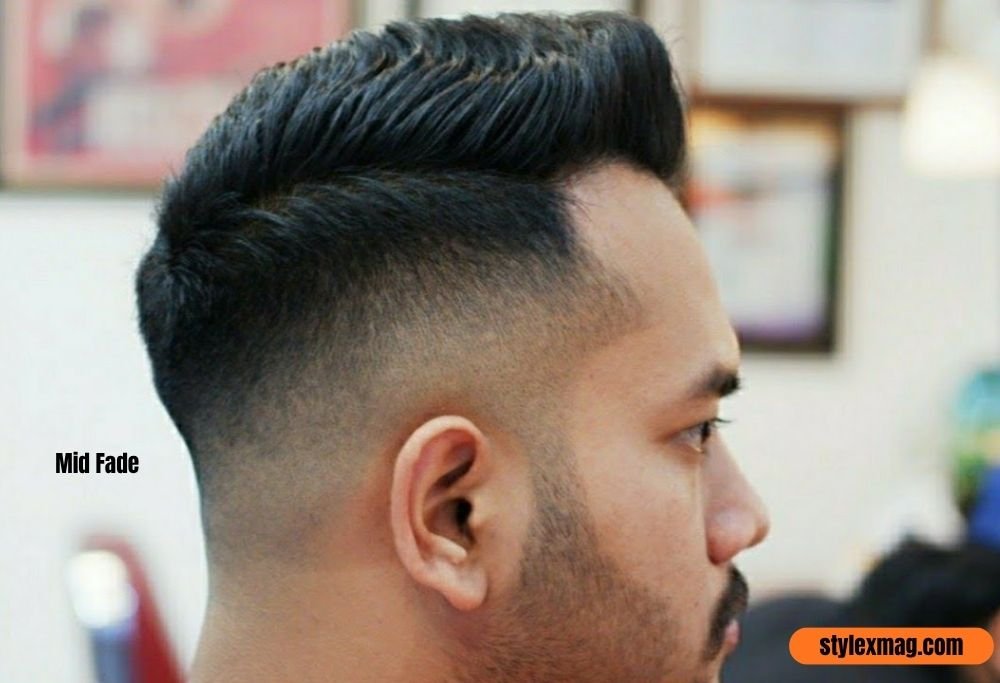
Start at the temple, and you’ve got a mid fade haircut. It sits right between subtle and bold, which explains why it’s the most requested fade in most shops. You get noticeable contrast on the sides, but it never tips into flashy territory. Fade Haircuts for Men Barbers often recommend it as the safe middle ground for guys who want a modern hairstyle without committing to something dramatic.
High Fade
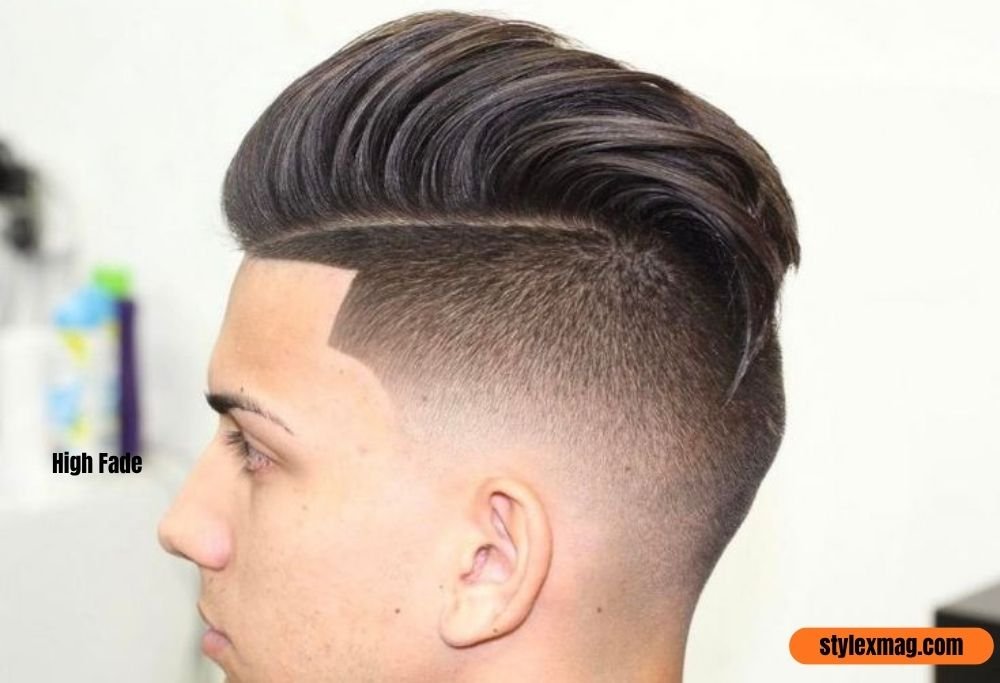
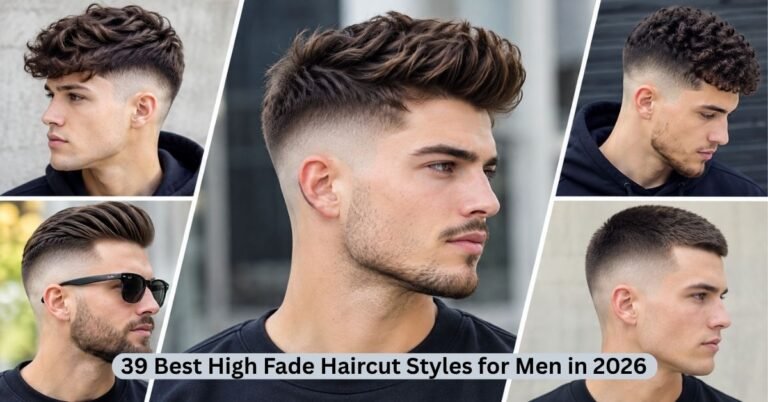
The high fade haircut begins above the temple, sometimes climbing all the way to the crown. Fade Haircuts for Men Skin shows more here than in any other height option, which pushes the top of your hair into the spotlight. It pairs beautifully with a textured top or a cropped top, since the sharp sides create real drama against the length up top. Just know it needs more frequent trims to stay sharp.
Skin Fade (Bald Fade)
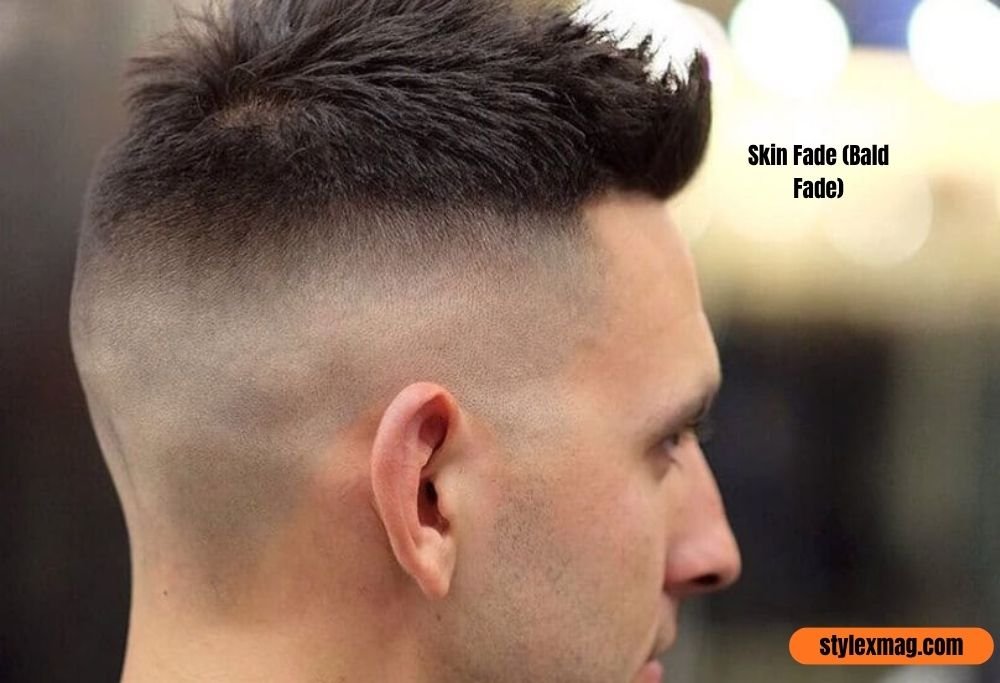
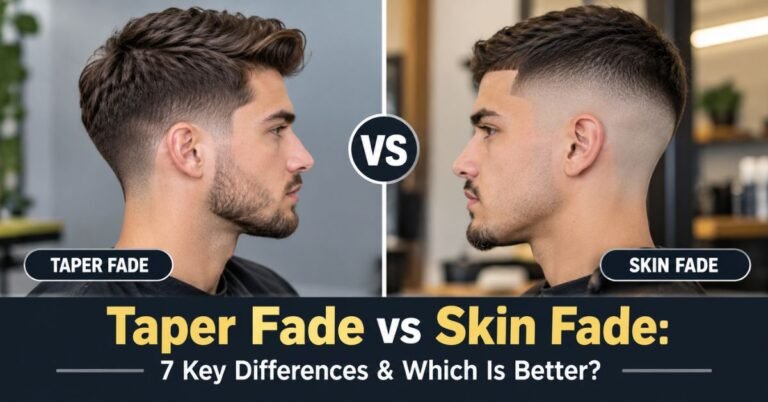
A skin fade, also called a bald fade, describes closeness rather than height. You can have a low skin fade haircut, a mid one, or a high one; the defining trait is that the base goes all the way to bare skin. Some barbers call this a zero fade since there’s zero length left at the shortest point. Fade Haircuts for Men It’s the sharpest finish you can get, but growth shows up within days, so plan on regular visits if you go this route.
Read More: Caesar Haircut For Men: 25 Best Styles & Complete Guide
Taper Fade
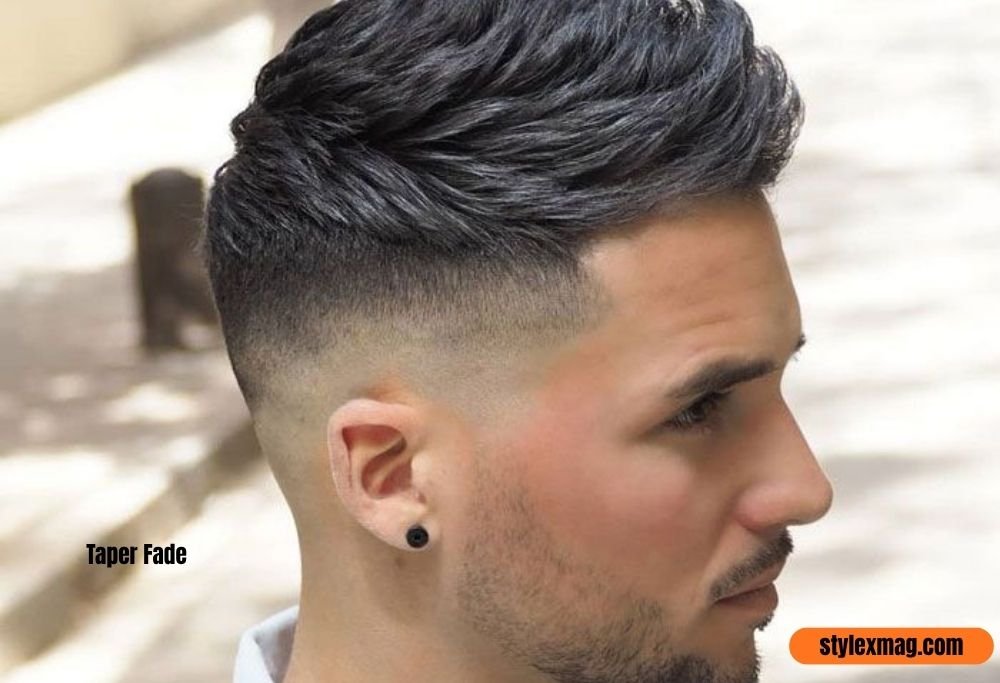
The taper fade never reaches skin. Hair remains at the base, usually trimmed to a short guard length rather than shaved bare. Fade Haircuts for Men This makes it the most forgiving fade to grow out, and it suits conservative settings where a bald fade might feel too bold. Many guys pick a taper for their very first fade because mistakes blend in rather than standing out.
Burst Fade
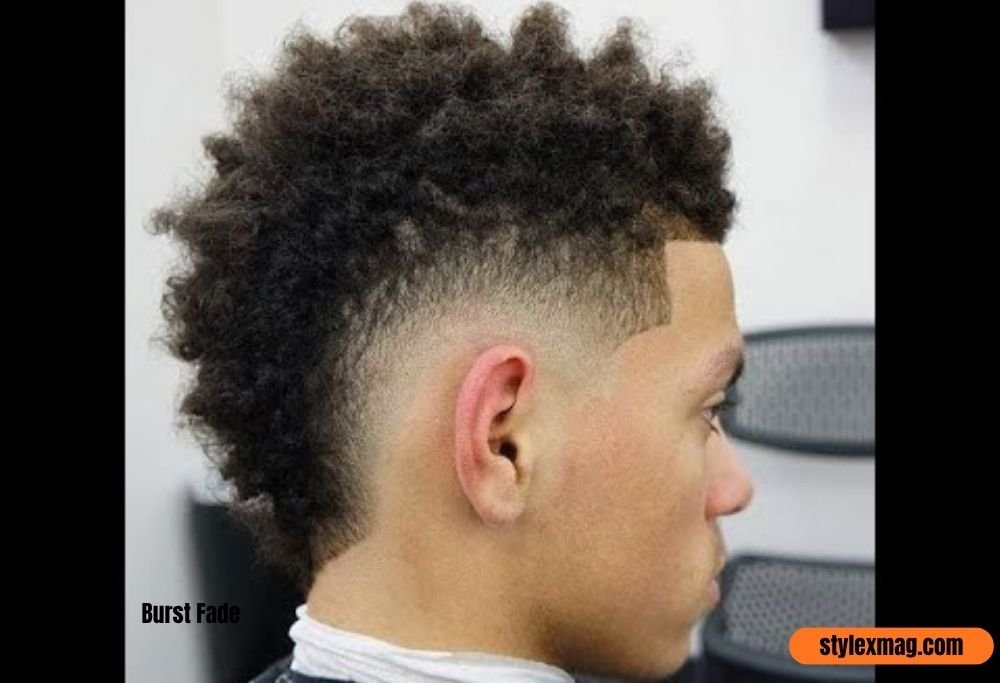
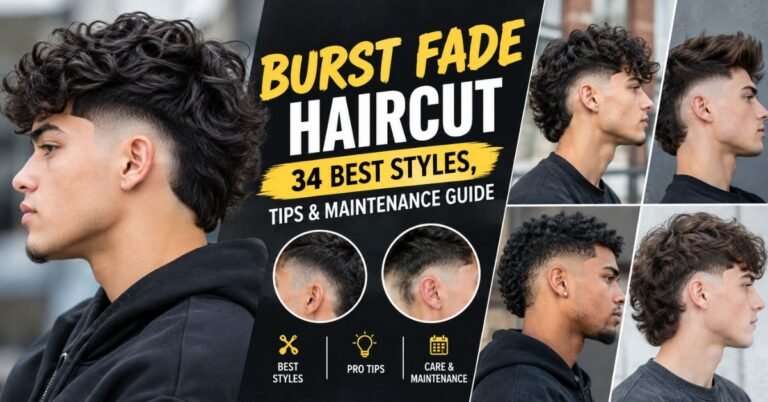
Instead of a straight horizontal line, a burst fade curves in a semicircle around your ear. Fade Haircuts for Men The back stays a bit longer than a standard fade allows, which is exactly why this shape pairs so well with mullets and mohawks. If you’ve got curly hair or wavy hair, the burst shape tends to follow your natural growth pattern better than a straight line would.
Drop Fade
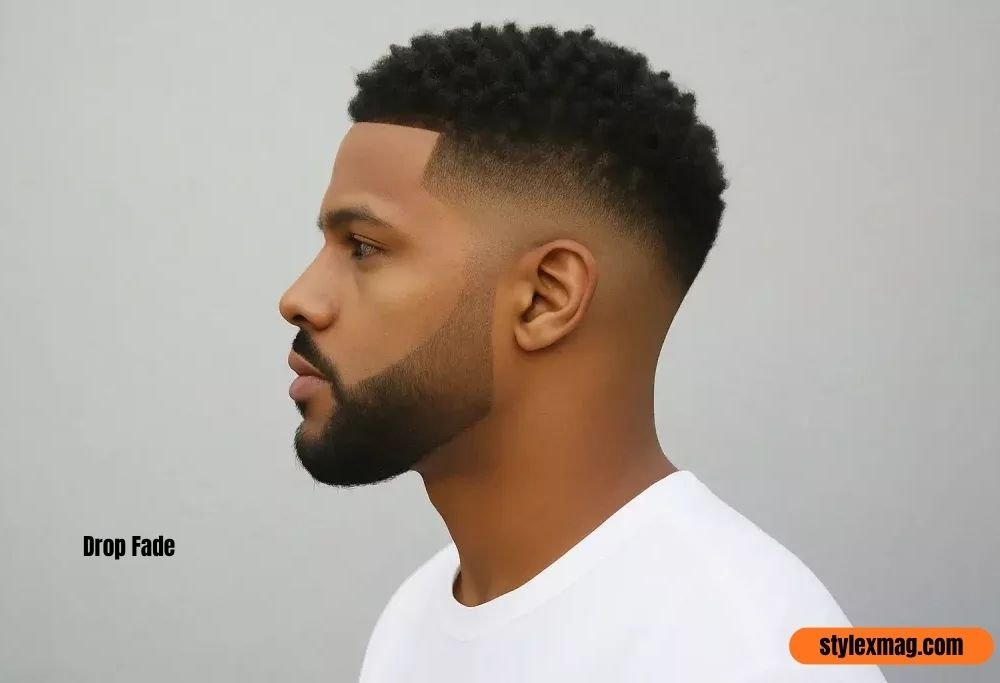
A drop fade takes whatever height you choose and drops the line lower behind the ear, creating a curved silhouette when viewed from the back. Fade Haircuts for Men From the front, it can look identical to a regular fade. Turn around, though, and the difference is obvious. This shape works particularly well with thick hair and gives barbers room to sculpt something a little more artistic near the back of the head.
Read More: 40 Best Mid Fade Haircuts for Men: Styles, Types & Ideas for 2026
How Do the Fade Types Compare?
Reading about seven fades in a row can blur together fast, so here’s a side-by-side view. This table lines up each style by starting point, closeness, and how often you’ll need a touch-up to keep it looking sharp.
| Fade Type | Starting Point | Closeness | Maintenance |
| Low Fade | Above the ear | Skin or taper | Every 3-4 weeks |
| Mid Fade | Temple | Skin or taper | Every 2-3 weeks |
| High Fade | Above temple | Skin or taper | Every 1-2 weeks |
| Skin Fade | Any height | Bare skin | Every 1-2 weeks |
| Taper Fade | Neckline | Hair remains | Every 3-4 weeks |
| Burst Fade | Arc around ear | Skin or taper | Every 2-3 weeks |
| Drop Fade | Any height | Skin or taper | Every 2-3 weeks |
Notice how height and closeness stack together. A high taper fade looks nothing like a low taper fade, even though both avoid bare skin. Once you see the pattern, picking a combination gets a lot less overwhelming.
How Do You Choose the Right Fade for You?
There’s no single “best” fade. The right one depends on your hair texture, your daily routine, and honestly, how often you’re willing to sit in a barber chair. Fade Haircuts for Men Five factors decide most of this for you, and once you run through them, the decision usually makes itself.
Skip any one of these factors, and you risk walking out with a cut that looks great on day one and messy by day ten. Take a few minutes with each section below before you book your next appointment.
By Hair Density and Texture
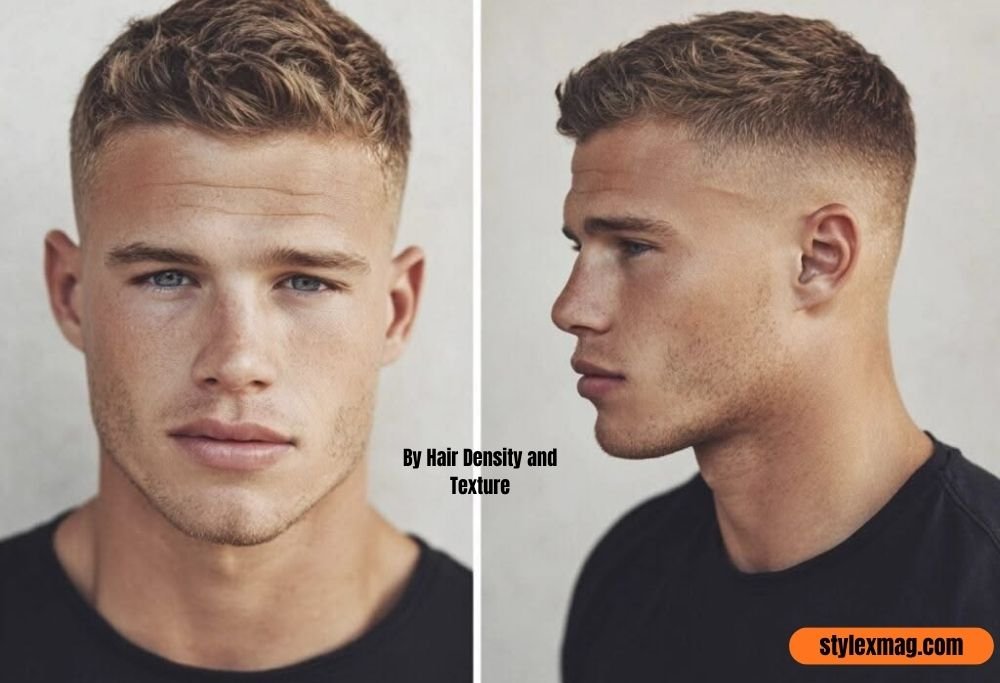
Thick hair handles almost any fade well, and a high fade creates especially sharp contrast against dense strands. Thin hair tells a different story. A high fade on fine hair can expose more scalp than you’d like, drawing attention to density instead of the cut itself. If your hair leans thin, stick to a low or mid height. Curly hair and coily textures work well with a burst fade or drop fade, since both shapes follow natural growth patterns rather than fighting them.
By Face Shape
Face shape changes how a fade reads visually. A fade haircut for round face shapes benefits from added height, since it creates the illusion of length. A fade haircut for square face shapes pairs well with softer, rounded fade lines rather than sharp geometric ones.
Guys with a fade haircut for oval face shapes have the most flexibility; almost anything works. For a fade haircut for oblong face shapes, lower heights help avoid making the face look longer than it already is. Fade Haircuts for Men A fade haircut for triangle face shapes benefits from volume up top and a tighter fade below, which balances a narrower forehead against a wider jaw; that’s the general logic behind most triangle face shape hairstyles male guides, and it’s also the best fade for triangle face shapes overall.
By Lifestyle or Setting (Work, Casual, Formal)
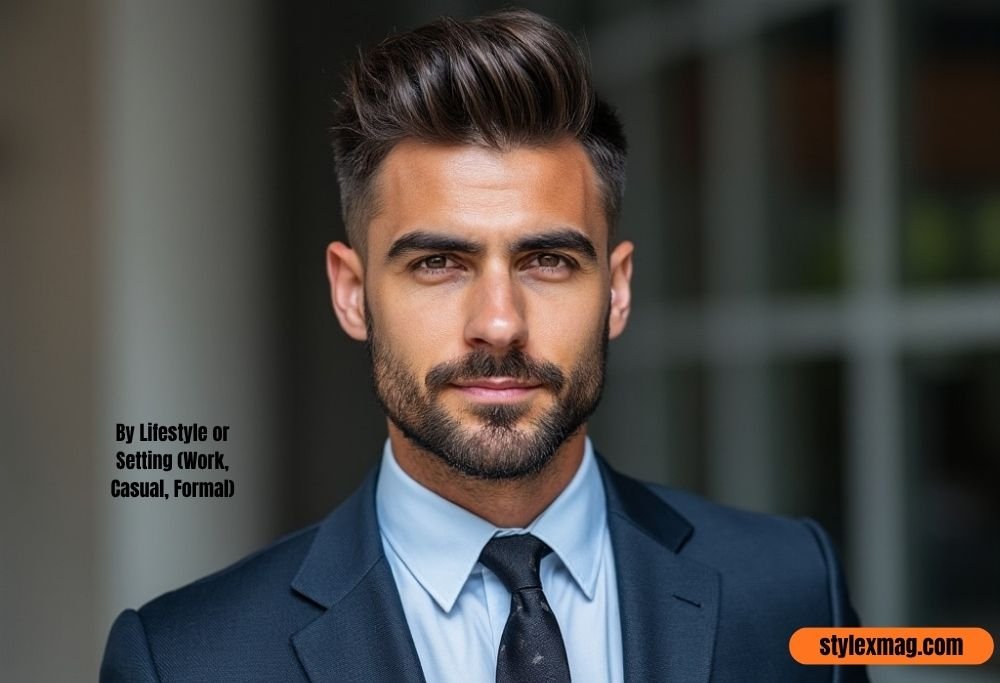
Corporate offices, law firms, and finance roles tend to favor a low fade or taper fade. Both stay conservative and never look out of place in a boardroom. Creative fields and tech offices give you more room, and a mid fade hits that sweet spot between sharp and relaxed. If you work somewhere with real freedom to express yourself, a high fade or burst fade makes a statement, provided you can keep up with the maintenance it demands.
By Maintenance Commitment
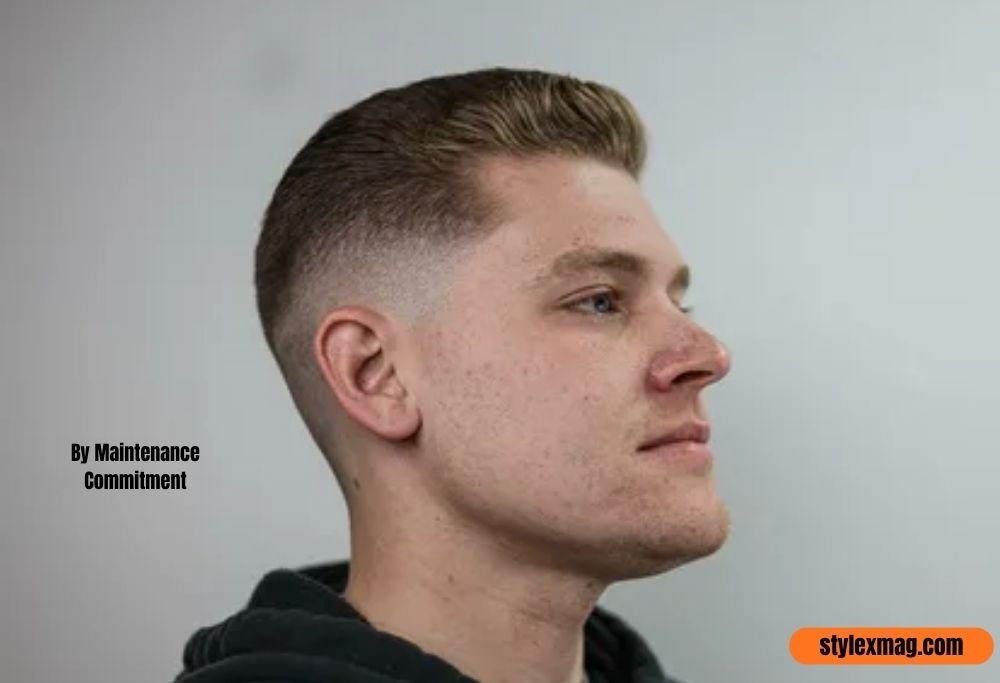
Be honest about your schedule before you commit to a bold fade. A high fade or skin fade needs a barber visit every one to two weeks to stay sharp. Miss that window, and the cut loses its shape fast. A low fade or taper stretches to three or four weeks without looking unkempt, since the gradual transition absorbs new growth more forgivingly. Choose the height your calendar can actually support, not just the one you like in photos.
By Hairstyle on Top
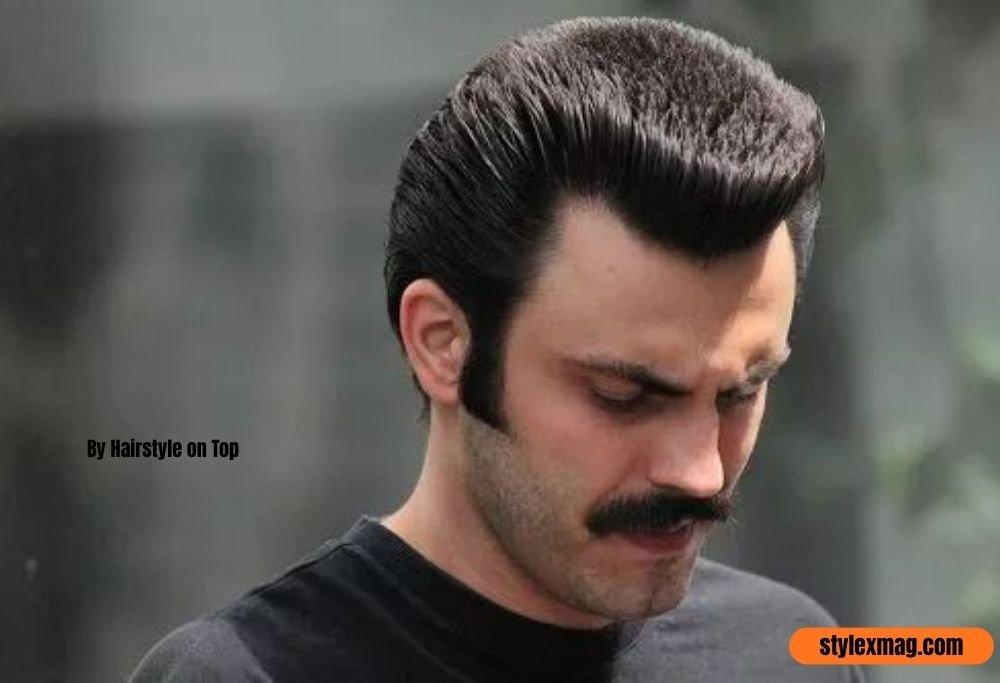
The top length you’re keeping shapes which fade pairs best underneath it. A fade with textured crop or fade with messy hair on top works at almost any fade height, since texture adapts easily. A fade with quiff or fade with pompadour needs real height and volume on top, so a mid or high fade haircut gives it the contrast it needs.
A fade with slick back or fade with comb over calls for a low or mid fade, since a sharp part line needs clean sides rather than bold ones. A fade with fringe or fade with side part tends to sit nicely with a mid fade, while a fade with buzz cut or fade with crew cut keeps things simple with a low fade throughout.
If you’re growing a fade with beard, most barbers will blend the two together so the fade line and beard line meet without an awkward gap.
How Do You Communicate Your Fade to Your Barber?
Here’s where most fade disasters actually happen. Saying “give me a fade” leaves seven different haircuts on the table, and your barber has to guess which one you mean. Say “low taper fade, straight around” instead, and there’s no room for confusion. Specify all three variables every time: height (low, mid, high), closeness (skin, shadow, or taper), and shape (straight, drop, or burst).
A shadow fade deserves a quick mention here, since it sits between a taper and a skin fade; it leaves a light layer of stubble rather than bare skin, which softens the transition further. Bring a reference photo if you’ve got one, but describe the cut in words too. Photos show the result, not the instruction, and two barbers can read the same image differently. If you have thick, curly, or coily hair, mention that your hair shrinks once it dries; ask your barber to judge the height based on dry hair, not fresh-out-of-the-sink length.
How Often Should You Get a Fade Touched Up?
Your fade type sets its own clock, and ignoring that clock changes the shape of the cut, not just its tidiness. A high fade or skin fade haircut grows out fast because there’s so little length to begin with. A low fade haircut or taper stretches much further before it needs attention. The table below keeps these windows straight so you’re not guessing.
| Fade Type | Touch-Up Window | Why |
| Skin fade / bald fade | 1-2 weeks | Bare skin shows growth within days |
| High fade | 1-2 weeks | High contrast makes growth obvious fast |
| Mid fade / burst fade | 2-3 weeks | Moderate contrast allows some grow-out |
| Low fade / taper fade | 3-4 weeks | Subtle blend absorbs new growth easily |
Between visits, keep your sideburns and hairline trimmed at home with a small trimmer. Skip heavy product on the faded sides, since buildup makes uneven growth more noticeable and speeds up that messy, grown-out look.
How Much Does a Fade Haircut Cost?
Prices swing a lot depending on where you live. In the United States, expect to pay somewhere between $25 and $45 for a standard fade at a typical barbershop. In the United Kingdom, that range runs closer to £15 to £30. Australia and Canada land in a similar bracket once you convert currencies, usually falling between $30 and $50 in local terms.
Detailed work pushes the price higher almost everywhere. A bald fade with a design shaved into the side, or a fade paired with intricate beard work, can add another $10 to $20 onto the base price. City matters too; a fade in a major metro area typically costs more than the same cut in a small town, simply because rent and demand run higher for the barber.
Can You Fade Your Own Hair at Home?
Technically, yes. Practically, it’s tough. The hardest part of any fade is the blend, and blending the back of your own head without seeing it clearly is close to impossible. Most home attempts end up with visible lines exactly where the barber’s steady hand would have smoothed things out.
If you want to try anyway, start with a low fade or taper fade, since both forgive small mistakes better than a skin fade ever will. Use a handheld mirror positioned against a wall mirror so you can actually see the back of your head while you work. Go slow, use a longer clipper guard than you think you need, and remember you can always cut more off later; you can’t add hair back once it’s gone.
FAQ’s
Which fade haircut is best?
A mid fade is one of the most versatile choices, working well with most hairstyles and face shapes.
For a sharper look, a skin fade or high fade can add more contrast.
What is a 2 fade haircut?
A 2 fade uses a #2 clipper guard (about ¼ inch) as the shortest length before gradually blending upward.
It gives a clean, defined look without exposing as much scalp as a skin fade.
Which is better, taper or fade?
A taper gives a subtle, natural finish around the sideburns and neckline, while a fade creates a more noticeable blend.
Choose a taper for a classic look and a fade for a sharper, modern style.
What does a 3:2:1 fade look like?
A 3:2:1 fade gradually transitions from a #1 at the bottom to #2 and then #3 higher up the sides.
The result is a smooth, blended fade with more length and less scalp exposure.
Final Thoughts
Fade haircuts remain one of the most versatile and timeless choices in men’s grooming, and it’s easy to see why.
Whether you prefer a low fade for a subtle, professional look, a mid fade that balances style and manageability, or a high fade for something bold and edgy, there’s a variation to suit every face shape, hair type, and personal style.
Pairing a fade with textured crops, slick backs, curls, or a beard adds even more room for customization, making it a go-to option for men who want a clean, sharp appearance that’s easy to maintain.
At the end of the day, the best fade haircut is one that fits your lifestyle, complements your features, and reflects your personality.
Regular touch-ups (every 2–4 weeks) keep the look crisp, and communicating clearly with your barber about fade height and blending style ensures you get exactly the results you want.
Simply put, fade haircuts for men aren’t just a trend, they’re a grooming staple that continues to evolve while staying effortlessly stylish.
StyleXMag Editorial Team shares the latest haircut and hairstyle ideas, from modern fades and comb overs to curly, long, slick-back, and face-shape styles. Our goal is to make finding your next look simple, useful, and inspiring.